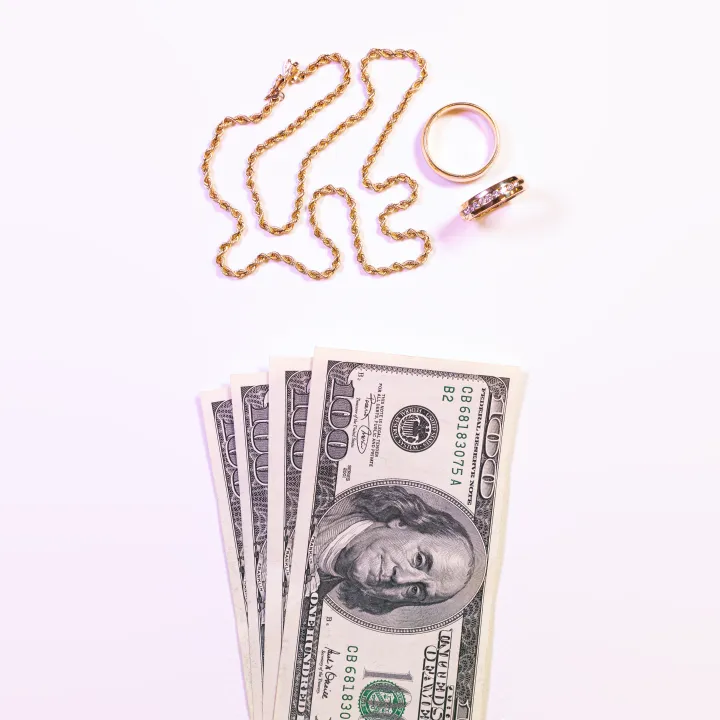
Alabama regulates anyone in the business of buying "precious items" to resell them, meaning any article made in whole or in part of gold, silver or platinum, plus loose or mounted stones and pearls (Ala. Code 8-34-1). Each dealer needs a state license and a county license, and may only operate from the fixed premises listed on that license. Before buying, the dealer must see a driver's license, state ID, military ID or other photo ID with a traceable serial number, and record your name, address, date of birth, signature and a physical description. Those records are kept six months, and a list of every purchase goes to the local police chief or sheriff at least once a week.
Each item then stays at the shop, unaltered, for 15 business days after that report. Payment "shall be by check only," made out to the actual seller, so an Alabama gold buyer cannot pay you cash. Dealers may not buy from anyone under 18 unless a parent or guardian comes along and shows ID, and a violation is a Class B misdemeanor.
The definition has no carve-out for coins or bullion, so a coin sale at a licensed dealer runs through the same steps. Retail merchants, manufacturers, wholesalers and licensed pawnbrokers are excluded from the chapter's definition of dealer; a pawnshop that buys outright has you sign a statement that you own the goods and keeps them 15 business days before resale (Ala. Code 5-19A-5).