
Like our coverage? Add Accurate Precious Metals as a preferred source on Google.
History of the United States Penny
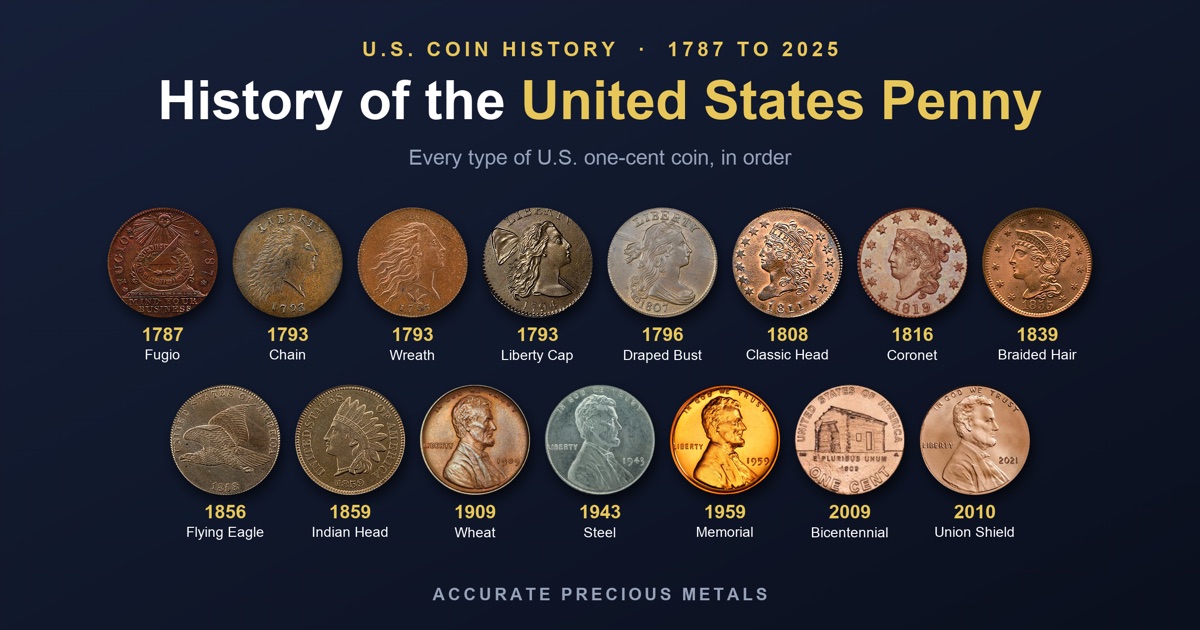
The one-cent coin was among the first coins the U.S. Mint ever made, but in November 2025 the last penny ever meant for circulation was minted. Throughout its 238 year history, it underwent many changes to its design, size, and metal content. Read on to learn about every type of penny!
Accurate Precious Metals Refineries specializes in buying and selling US coins. If you are interested in purchasing some old coins to begin your collection, or if you want to sell or appraise some old coins you have, consider checking us out!
Quick vocabulary note: the official name is the "cent." "Penny" is a nickname borrowed from the British coin, and it stuck. This guide uses both.
Quick Timeline
Years | Type | Metal |
|---|---|---|
1787 | Fugio Cent | Copper |
1793 | Flowing Hair Chain Cent | Copper |
1793 | Wreath Cent | Copper |
1793-1796 | Liberty Cap Cent | Copper |
1796-1807 | Draped Bust Cent | Copper |
1808-1814 | Classic Head Cent | Copper |
1816-1839 | Coronet Head Cent | Copper |
1839-1857 | Braided Hair Cent | Copper |
1856-1858 | Flying Eagle Cent | Copper-nickel |
1859-1909 | Indian Head Cent | Copper-nickel, then bronze |
1909-1958 | Lincoln Wheat Cent | Bronze (steel in 1943) |
1959-2008 | Lincoln Memorial Cent | Bronze, then copper-plated zinc |
2009 | Bicentennial Cents | Copper-plated zinc |
2010-2025 | Union Shield Cent | Copper-plated zinc |
The Fugio Cent (1787)
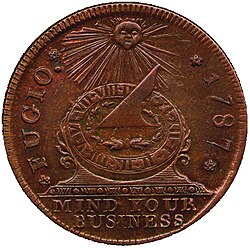
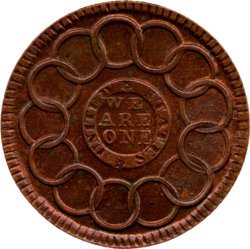
The first coin Americans called a cent was not made by the U.S. Mint, because the Mint did not exist yet. In 1787 the Continental Congress authorized a copper coin and hired a private contractor to strike it.
The design is unmistakable. The front shows a sundial with the Latin word FUGIO ("I fly") and the motto MIND YOUR BUSINESS. The back shows a chain of thirteen linked rings, one for each state, with the words WE ARE ONE. The sundial and motto echo the 1776 Continental dollar, which tradition ties to Benjamin Franklin.
The Fugio is often called the first official coin of the United States, even though it was struck outside any government mint.
How many Fugio cents exist? Roughly 400,000 were struck, and a small fraction survive. They were made by a private contractor, so records are imperfect, and collectors sort them into many varieties by die and by small lettering differences.
How much is a Fugio cent worth today? A typical Fugio cent goes for around $500. Worn examples of the more common varieties typically run from several hundred dollars up. Better-preserved coins and rare varieties climb into the thousands and beyond.
The Flowing Hair Chain Cent (1793)
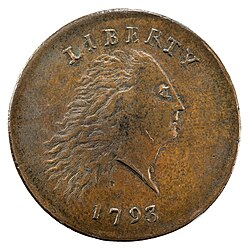
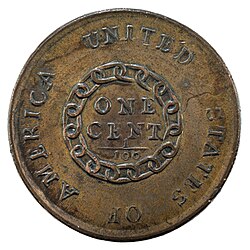
The Mint opened in Philadelphia under the Coinage Act of 1792, and its first regular cents came out in early 1793. They were large, about the size of a half dollar, and made of pure copper.
The front shows Liberty with loose, flowing hair. The back shows a chain of links around the words ONE CENT. The chain was meant to say that the states were united, but critics read it as a symbol of slavery, and some newspapers said Liberty looked frightened. The Mint dropped the design within a few months, so the Chain Cent exists for only one year.
How many Chain cents exist? Only 36,103 were struck, in a single year, and far fewer survive today.
How much is a Chain cent worth today? Even heavily worn, damaged examples commonly bring several thousand dollars. Nicer coins reach into the tens of thousands, and top-grade examples can reach six figures.
The Wreath Cent (1793)
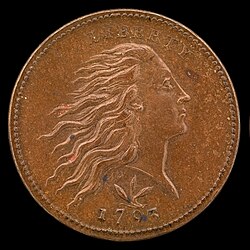
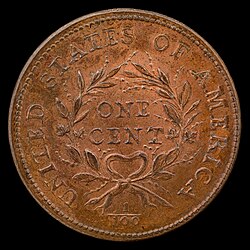
Later in 1793 the Mint replaced the chain with a wreath on the back, a calmer image that also appears on later cents. It was a short-lived type, struck for part of a single year before the Liberty Cap design took over.
How many Wreath cents exist? About 63,000 were struck, all in 1793, and only a fraction survive.
How much is a Wreath cent worth today? Worn examples generally start around the high hundreds to low thousands of dollars. Higher grades and rare varieties are worth much more.
The Liberty Cap Cent (1793 to 1796)
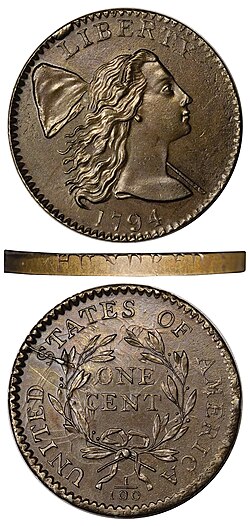
The Liberty Cap shows Liberty's head with a pole and cap beside it, a classic symbol of freedom. Copper was getting expensive, so in 1795 the Mint cut the coin's weight to save metal. Collectors separate these cents into several varieties by small design changes, which is why this short series draws so much attention.
How many Liberty Cap cents exist? Roughly 1.5 million were struck across the four years, with 1794 the biggest year. Survivors are a small share of that.
How much is a Liberty Cap cent worth today? Common dates in worn condition usually start in the low hundreds of dollars. The 1793 issue and certain 1794 varieties are much scarcer and can be worth thousands.
The Draped Bust Cent (1796 to 1807)
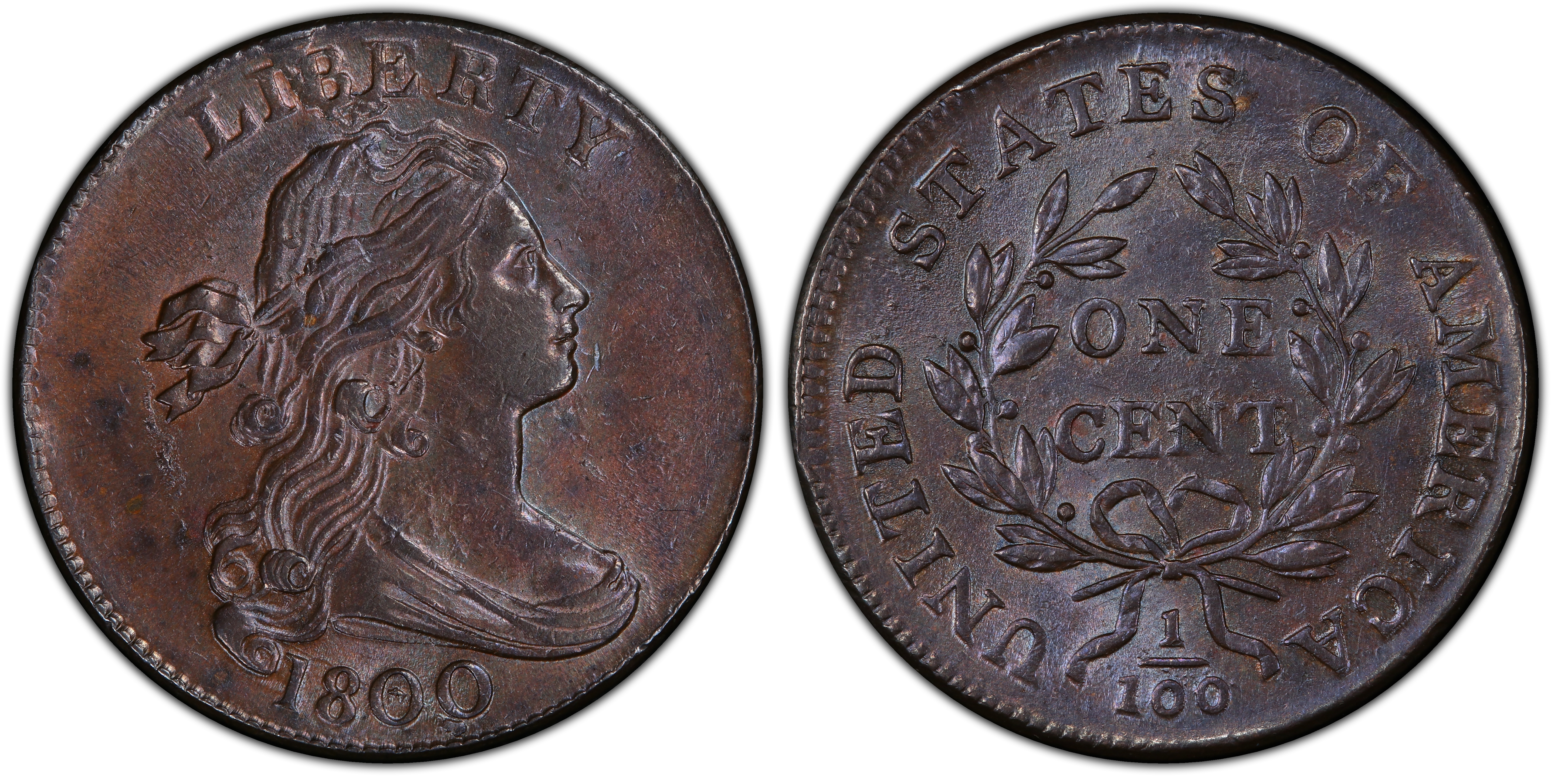
The Draped Bust replaced the Liberty Cap in 1796 and ran for just over a decade. The portrait is based on a drawing attributed to the painter Gilbert Stuart, and the coin is the first cent where Liberty looks like a real, styled figure rather than a symbol. It is also one of the first series where date and mint practices became more regular.
How many Draped Bust cents exist? Around 15 million were struck over the twelve years, though only a small percentage still exist. The scarce 1799 (about 42,000 struck) and 1804 (about 96,000) are the key dates.
How much is a Draped Bust cent worth today? Common dates in worn condition often fall in the range of roughly fifty to a few hundred dollars. The 1799 and 1804 are worth considerably more, often thousands even when worn.
The Classic Head Cent (1808 to 1814)
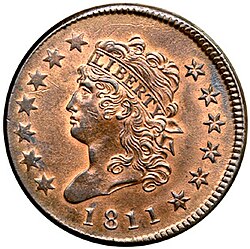
The Classic Head cent shows Liberty in the style of ancient Greek coinage, with a headband that reads LIBERTY. It was designed by John Reich, the Mint's assistant engraver. The series ended in 1814, and no cents were dated 1815. The War of 1812 disrupted the copper supply the Mint depended on.
How many Classic Head cents exist? About 4.8 million were struck. The 1809 and 1811 had the lowest mintages, at roughly 220,000 each.
How much is a Classic Head cent worth today? Common dates in worn condition typically start at around the tens of dollars. The 1809 and 1811 cost noticeably more, and well-preserved coins of any date can run into the hundreds or higher.
The Coronet Head Cent (1816 to 1839)
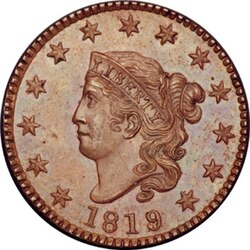
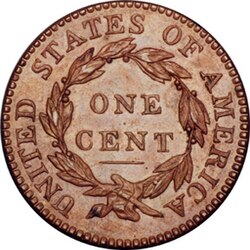
When production resumed in 1816, the cent returned with a new Liberty, often called the Coronet Head or Matron Head. She wears a coronet with stars around her. The coin was still large and still pure copper. This series ran for more than two decades, and the portrait was refined several times along the way.
How many Coronet Head cents exist? Tens of millions were struck across the series, with most years in the one-to-six-million range. A few dates are much scarcer, and the 1823 is a famous low-mintage year.
How much is a Coronet Head cent worth today? Common dates in worn condition typically sell in the range of roughly twenty to fifty dollars. Better grades and scarce dates, especially 1821 and 1823, cost much more.
The Braided Hair Cent (1839 to 1857)
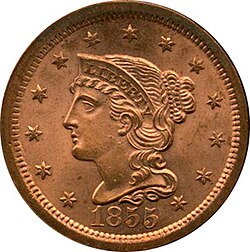
Christian Gobrecht's Braided Hair design, introduced in 1839, gave Liberty a more modern look with braids tied up behind her head. It was the last of the large cents. The Mint ended them in 1857 because copper had become too costly and large cents were unpopular in everyday trade.
How many Braided Hair cents exist? Tens of millions were struck over the eighteen years. The last year, 1857, was low at around 333,000 for the large cent.
How much is a Braided Hair cent worth today? Common dates in worn condition are typically in the range of roughly twenty to fifty dollars. Uncirculated examples and the lower-mintage dates are worth considerably more.
The Flying Eagle Cent (1856 to 1858)
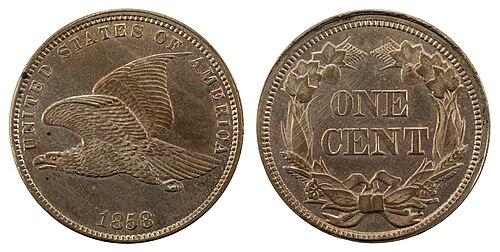
The Coinage Act of 1857 ended the large cent and set up a much smaller one. The new coin, about the size of today's penny, was made of 88 percent copper and 12 percent nickel, which gave it a pale color. People nicknamed these "white cents."
The Flying Eagle front, with an eagle in flight, was originally a Gobrecht design that James B. Longacre adapted. The coin was an immediate sensation. When the Mint began handing them out in 1857, long lines formed. The design struggled technically, though, because the eagle's details did not strike up well, so it lasted only until 1858.
How many Flying Eagle cents exist? About 42 million regular cents were struck in 1857 and 1858 (roughly 17.5 million and 24.6 million). The 1856 is a different story: only about 1,000 to 2,000 were made, mostly as patterns shown to officials.
How much is a Flying Eagle cent worth today? Worn 1857 and 1858 cents typically sell in the range of roughly thirty to sixty dollars. Uncirculated coins are worth much more, and the 1856 usually sells for several thousand dollars or more.
The Indian Head Cent (1859 to 1909)
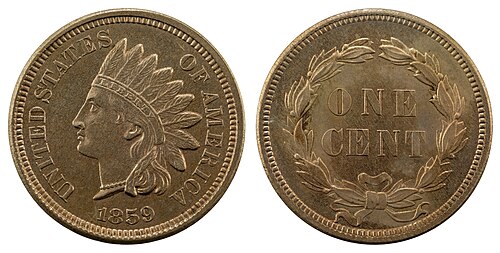
The Indian Head cent replaced the Flying Eagle in 1859 and became one of the longest-running U.S. coins, at 50 years. Longacre's design shows Liberty wearing a Native American style feathered headdress. The reverse changed twice early on, from a laurel wreath in 1859 to an oak wreath with a shield from 1860.
The Civil War changed the coin's metal. Hoarding drained circulating coins, and private merchants issued their own cent-sized tokens to make change. In 1864 the Mint dropped nickel and switched to bronze, a mix of 95 percent copper with tin and zinc. The bronze cent was thinner and lighter, and that basic recipe held for more than a century.
How many Indian Head cents exist? Well over a billion were struck across the fifty years. The scarce dates are the 1877 (about 852,000 struck) and the 1909-S (about 309,000).
How much is an Indian Head cent worth today? Common dates in worn condition often sell for a few dollars. The 1877 and 1909-S are the headliners and are worth hundreds to thousands of dollars even when worn. Choice uncirculated coins of common dates also bring a premium.
The Lincoln Wheat Cent (1909 to 1958)
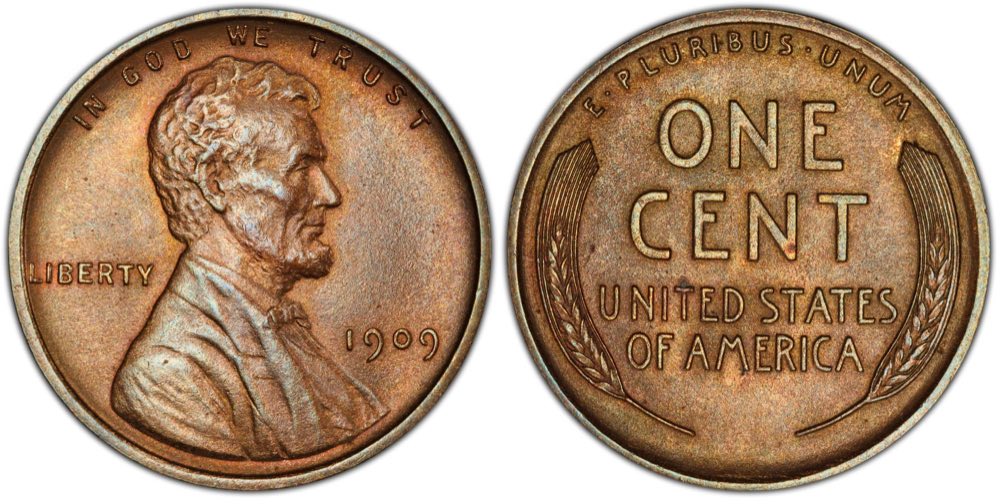
In 1909, on the 100th anniversary of Abraham Lincoln's birth, the Mint issued a cent with his portrait. It was the first regular-issue U.S. coin to show a real person rather than a symbolic Liberty. The designer, Victor David Brenner, put his initials, VDB, on the reverse. The initials drew criticism, so the Mint pulled them partway through 1909, which is why the 1909-S VDB, with a mintage of just 484,000, became one of the most famous key dates in American coin collecting. The initials returned in 1918 in a smaller form on Lincoln's shoulder.
The reverse shows two stalks of wheat framing the words ONE CENT, which gives the series its nickname. Wheat cents were struck for fifty years, so they turn up in jars, drawers, and inherited collections all the time.
Several special stories live inside this series:
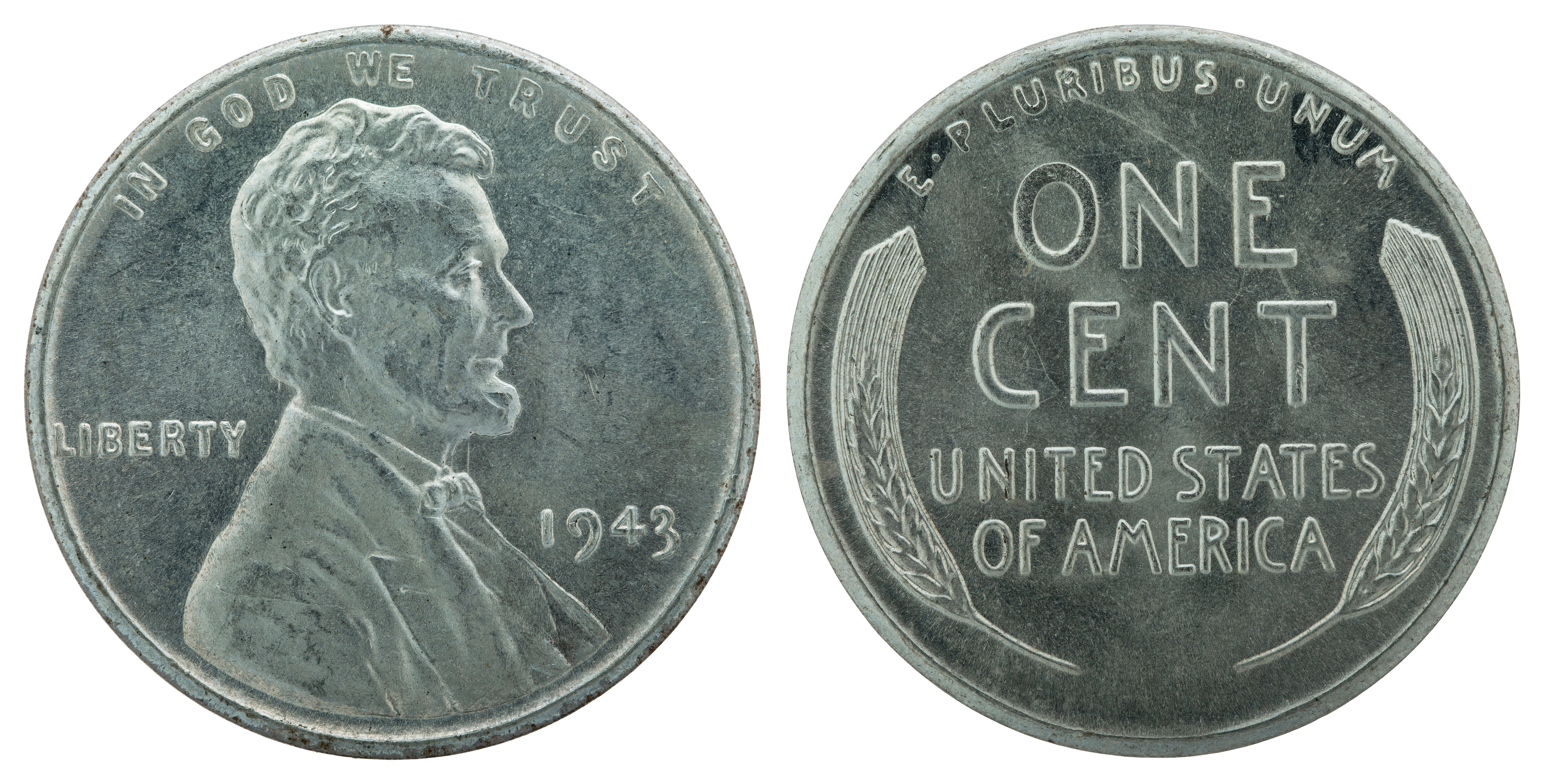
1943 steel cents. World War II demanded copper for ammunition, so in 1943 the Mint struck cents from zinc-coated steel. They look silver and stick to a magnet. A few 1943 cents were struck by mistake on leftover copper blanks and are among the most famous errors in U.S. coinage.
1944 to 1946 shell-case cents. After the steel experiment, the Mint recycled spent brass shell casings into new cents.
The 1955 doubled die. A die error produced cents with obvious doubling of the date and lettering. It is one of the best-known error coins in the hobby.
How many Wheat cents exist? Well over ten billion were struck across the fifty years. The most famous scarce issue is the 1909-S VDB, with a mintage of 484,000.
How much is a Wheat cent worth today? Most Wheat cents are common and sell for just a few cents each unless they are in unusually fine condition. The valuable ones are the key dates and errors: the 1909-S VDB, the 1914-D, the 1922 "plain" (no mint mark), the 1955 doubled die, and the 1943 copper cent, which can be worth six figures when authenticated. The common 1943 steel cent is usually worth well under a few dollars unless it is in top condition.
The Lincoln Memorial Cent (1959 to 2008)
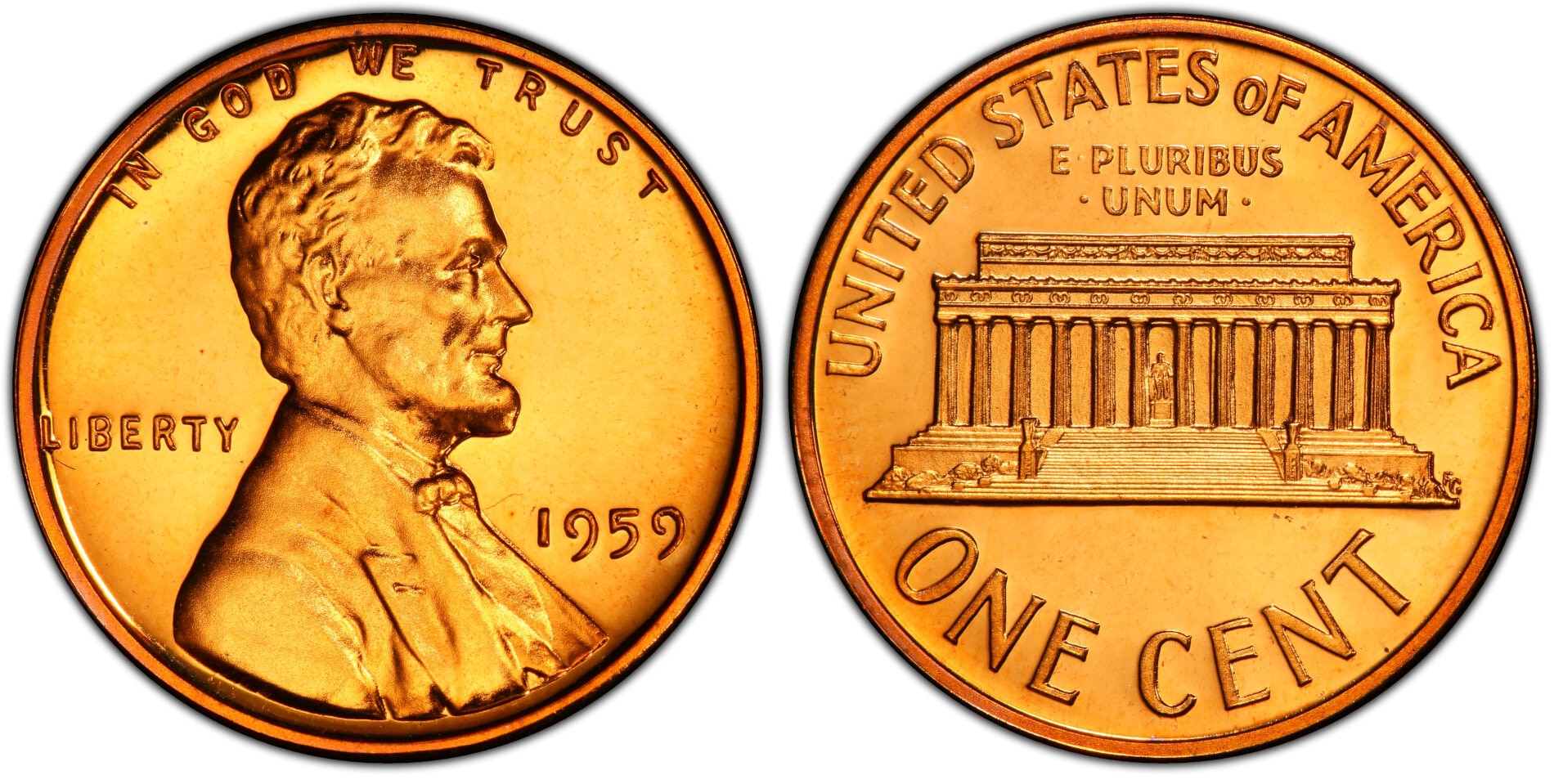
For the 150th anniversary of Lincoln's birth, the reverse changed in 1959 to a picture of the Lincoln Memorial, designed by Frank Gasparro. The Lincoln portrait stayed on the front, and the wheat design retired after fifty years.
The next major change was the metal. Copper prices climbed in the early 1970s, and in 1974 the Mint struck aluminum cents as a possible replacement, but the idea was never approved and the trial coins were not released. Then in 1982 the Mint made the real switch. Cents became 97.5 percent zinc with a thin copper plating, which is how they are still made today. Both versions were produced in 1982, so that year contains cents of two different weights.
If you are sorting a jar of pennies, the date 1982 is a useful dividing line: older cents are mostly copper and newer ones are mostly zinc. A quick note on handling them: U.S. rules restrict melting cents, so older copper pennies are collected and held, not melted down.
How many Memorial cents exist? Well over a hundred billion were struck, making it the most produced coin in the series.
How much is a Memorial cent worth today? Most are worth face value. The exceptions are known error and variety coins, such as the 1969-S doubled die, the 1972 doubled die, and the 1995 doubled die, which can be worth many times face value depending on condition. Check for doubled lettering on the date and on "LIBERTY."
The Bicentennial Cents (2009)
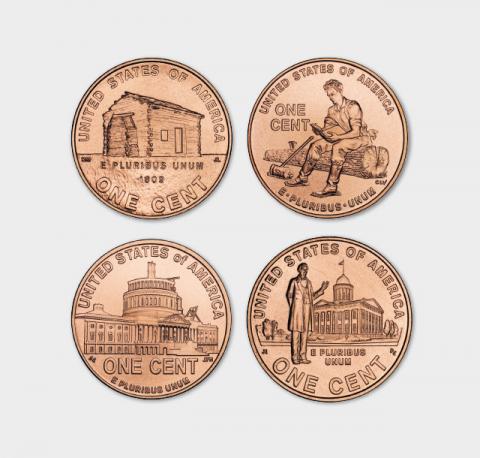
For the 200th anniversary of Lincoln's birth, the Mint issued four different reverse designs in a single year, each showing a stage of his life: his birth in Kentucky, his youth in Indiana, his career in Illinois, and his presidency in Washington, D.C. It was the first time the cent had carried multiple designs in one year since the early days of the Mint.
How many Bicentennial cents exist? Hundreds of millions of each of the four designs were struck, by both the Philadelphia and Denver mints.
How much is a Bicentennial cent worth today? Circulated coins are worth face value. Uncirculated sets and specially packaged versions sell for a modest premium over face value to collectors.
The Union Shield Cent (2010 to 2025)
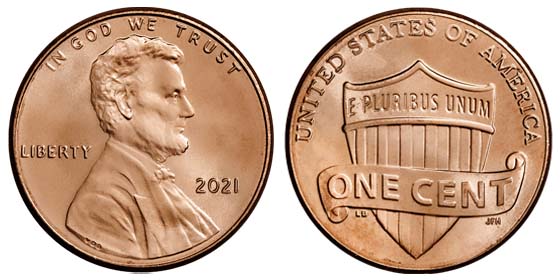
In 2010 the reverse changed again to the Union Shield, a shield with a scroll across it reading E PLURIBUS UNUM, standing for the union of the states. The design, by Lyndall Bass with engraving by Joseph Menna, was meant to show Lincoln's role in preserving the Union. This was the final type of U.S. penny.
How many Union Shield cents exist? Tens of billions were struck over the sixteen years.
How much is a Union Shield cent worth today? Circulated coins are worth face value. Uncirculated rolls and the final 2025 issues may carry small collector premiums, but the market for the last-year coins is still settling, so check current sold prices before assuming anything.
The End of the Penny (2025)
By the 2020s the cent cost more to make than it was worth. The U.S. Mint reported a production cost of about 3.7 cents for each one-cent coin in fiscal year 2024. In 2025 the federal government directed the Mint to stop ordering the blanks, and the Philadelphia Mint struck its last circulating cents on November 12, 2025.
Pennies already made are still legal tender, and billions remain in circulation, jars, and drawers. They are unlikely to disappear from everyday life quickly.
What To Do With Old Pennies
Most pennies are worth exactly one cent. A few are worth far more to collectors, and the difference usually comes down to three things: the date and mint mark, the condition, and whether the coin has a known variety or error.
Things worth checking in your own jar:
Date. Anything dated before 1959 is a Wheat cent or older. Anything before 1909 is an Indian Head or earlier.
Mint mark. A tiny letter below the date (D for Denver, S for San Francisco) can mark a scarcer issue.
Color and magnet test. A silver-colored 1943 cent that sticks to a magnet is steel and common. A 1943 cent that does not stick deserves a closer look.
Condition. Worn, scratched, or cleaned coins are worth much less than ones with original surfaces. Please do not polish old coins.
If you have inherited a large set or found something unusual and want it looked at, we can help. Accurate Precious Metals is a Salem, Oregon coin and precious metals buyer, and you can request a free mail-in kit to send your coins in from anywhere in the United States: [LINK].
Frequently Asked Questions
When was the first U.S. penny made?
The Fugio cent was authorized in 1787, before the Constitution took effect. The first cents made by the U.S. Mint were struck in 1793.
Why is it called a penny?
The official name is "cent." The nickname "penny" came from the British coin and carried over into American speech.
What are pennies made of?
It depends on the year. The earliest cents were pure copper, small cents in the late 1850s were copper-nickel, bronze took over in 1864, and since 1982 they have been mostly zinc with a copper coating. In 1943, they were zinc-coated steel.
Are pennies still legal tender?
Yes. Production for circulation ended in 2025, but every penny already made can still be spent at face value.
Which pennies are the most valuable?
Key dates and errors tend to be the most sought after, including the 1909-S VDB, the 1943 copper cent, the 1955 doubled die, and early large cents in good condition. Value depends heavily on condition, so grading matters.
Where can I buy old pennies? Or sell my old pennies?
Accurate Precious Metals is happy to buy your old pennies, sell you old pennies, or just appraise your coin collection if you are unsure how much it's worth!
Make the smart choice: invest with Accurate Precious Metals
Whether you are buying bullion for the first time or adding to a long-term position, our team offers expert guidance, transparent pricing, and a reliable buyback program.
Ready to invest wisely?