This content is for educational purposes only and is not financial or investment advice. Precious metals prices fluctuate; past performance does not guarantee future results. Consult a qualified professional before making investment decisions.
Tap the image to enlarge and zoom.Hover to magnify, or click to open full screen.
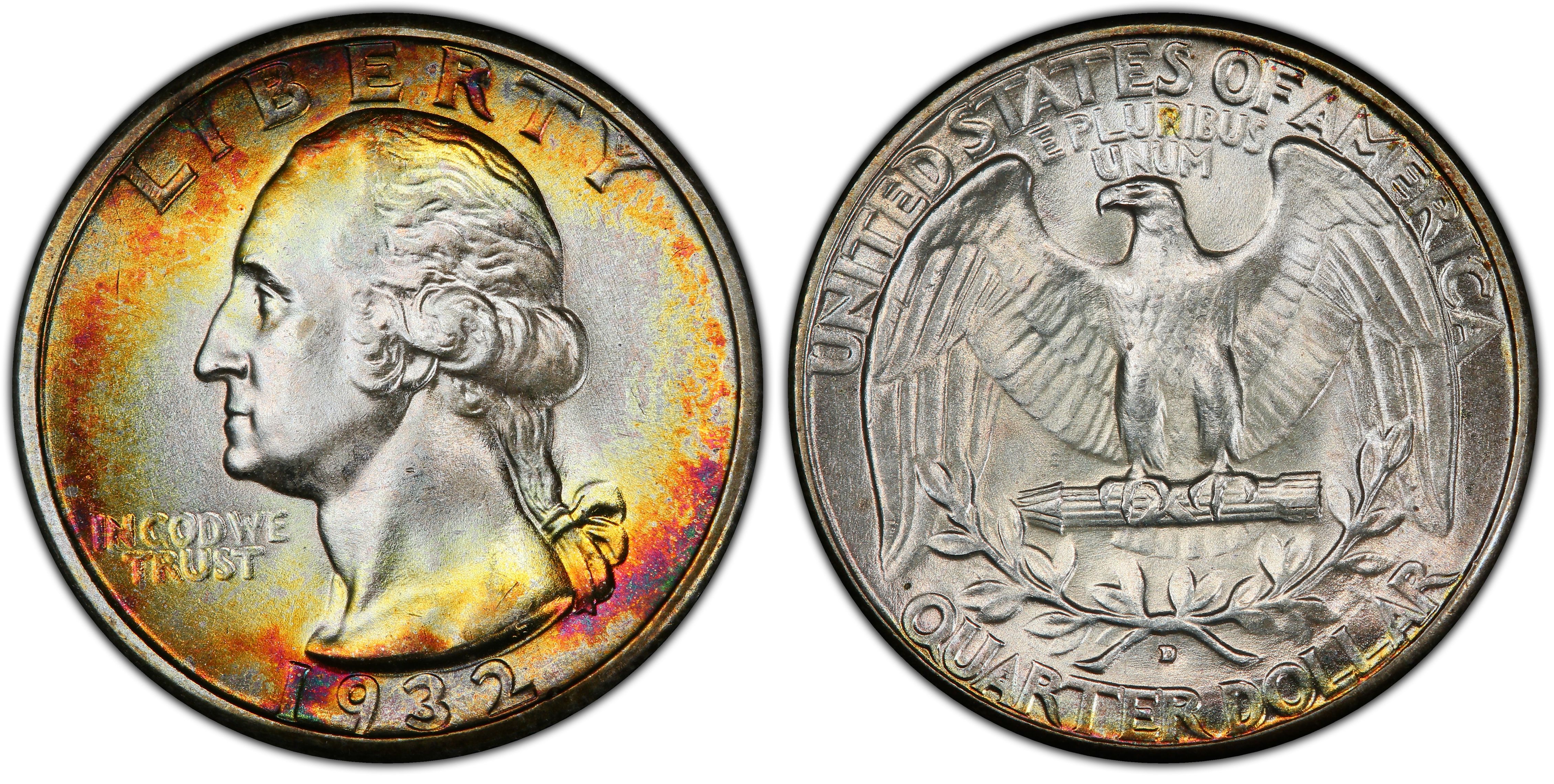
A single 1932-D Washington Quarter in top condition sold for $143,000 at auction in 2008, proof that a 25-cent coin from the Great Depression can be worth more than most cars. The 1932-D Washington Quarter is the key date of the entire series, and collectors chase it far beyond its face value because only 436,800 were struck at the Denver Mint that year. Whether your coin is a worn pocket piece or a gem that still shows Mint luster, its value can run from a modest step above silver melt to five figures or more, depending almost entirely on condition.
What Is the 1932-D Washington Quarter?
The 1932-D is a 25-cent coin struck at the Denver Mint in the first year of the Washington quarter series. It is made of 90% silver and 10% copper, weighs 6.25 grams, measures 24.3 mm across, and has a reeded edge. John Flanagan designed the coin, putting Washington's profile on the front to mark the 200th anniversary of his birth.
Only 436,800 of these quarters left the Denver Mint, a tiny number compared to the millions struck in most years of the series. That low mintage, combined with heavy use in circulation during the 1930s and 1940s, is why so few survive today in top condition.
Why Is the 1932-D the Key Date of the Washington Quarter Series?
The 1932-D holds the title of key date because it combines a low original mintage with the fact that it is the very first year of the design. Collectors building a full date-and-mintmark set of Washington quarters treat the 1932-D as the coin that makes or breaks the collection. Skip it, and the set stays incomplete no matter how many other coins you own.
PCGS estimates that only about 44,000 pieces survive across all grades today, out of the original 436,800 struck. Even fewer, around 650 coins, exist at MS65 or better. That means less than 1 in 600 surviving examples reaches gem Mint State condition.
How Does the 1932-D Compare to the 1932-S Quarter?
The 1932-S actually had a lower mintage than the 1932-D, at 408,000 pieces versus 436,800. That makes the 1932-S technically the scarcer coin by raw production numbers, but the 1932-D is generally considered rarer in high grade because so few gem examples survived.
Mint
Mintage
Notes
Philadelphia
5,404,000
No mintmark, common date
Denver
436,800
Key date, rarest in high grade
San Francisco
408,000
Lowest mintage, scarce but more available in Mint State
436,800
1932-D quarters struck
44,000
estimated survivors in all grades
650
estimated survivors at MS65 or better
$143,000
price paid for a top PCGS MS66 example in 2008
What Is the Melt Value of a 1932-D Washington Quarter Today?
The melt value of a 1932-D Washington Quarter is about $12.12 at the time of writing, based on a silver spot price of $67 an ounce. Each coin holds 0.18084 troy ounces of pure silver, since a 6.25 gram coin at 90% fineness works out to about 5.625 grams of actual silver.
That number is a floor, not a ceiling. A beat-up 1932-D that is barely readable might sell close to melt plus a small collector premium, but almost any coin with a clear date and mintmark will bring more than that just for being a key date. You can check today's silver price or look at gold and silver price charts to see how spot prices move before pricing out a coin.
ℹ️ Info: Even a nearly worn-smooth 1932-D usually sells for well above its $12 melt value, because the date and mintmark alone carry collector demand that ordinary silver quarters don't have.
How Much Is a 1932-D Washington Quarter Worth by Grade?
Value on a 1932-D Washington Quarter swings hard based on grade, ranging from a small premium in worn condition up to six figures for a top gem. A certified MS60-and-up example has been listed around $1,095, while nicer MS64 coins have shown up in dealer inventory in the low thousands.
Grade
Approximate Value
Notes
Well worn (Good-Fine)
Melt plus modest premium
Sold mostly for rarity, not eye appeal
MS60+
Around $1,095
Clean but low-end Mint State
MS64
Low thousands
Solid, collector-friendly grade
MS65
Around $12,000
Genuinely scarce, about 650 known
MS66
$143,000 (2008 sale)
Finest known level, extremely rare
One point of grade can be the difference between a few hundred dollars and tens of thousands. That is why sending a valuable 1932-D to a professional grading service like PCGS or NGC is usually worth the fee, since a hairline scratch or a touch of extra luster can shift a coin from one tier to the next.
How Can You Tell If a 1932-D Quarter Is Real?
Start by checking the date and looking for a small "D" mintmark below the wreath on the reverse side. Then confirm the weight comes to 6.25 grams, the diameter measures 24.3 mm, and the edge is reeded, not smooth.
Look for the "D" mintmark just below the wreath on the back of the coin
Weigh the coin: it should read 6.25 grams on a gram scale
Check the diameter against a ruler or caliper: 24.3 mm
Run a finger along the edge to feel the reeding
Compare the coin's overall style and lettering to a known-genuine example
Because fakes and altered mintmarks do turn up on valuable key dates, sending a suspected 1932-D to a professional grading service is the safest way to confirm it before you buy or sell. For a broader rundown on spotting silver issues in the series, see our guide on identifying silver Washington quarters.
What Mistakes Do People Make When Buying Key-Date Quarters?
The biggest mistake is assuming any quarter dated 1932 is automatically valuable. Philadelphia struck 5,404,000 of them that year with no mintmark, and those coins are common and worth close to melt in worn grades.
"Any 1932 quarter is rare." False. Only the Denver and San Francisco issues are scarce; Philadelphia's mintage was over 5 million.
"Lower mintage always means higher price." False. Condition drives value more than mintage alone once you're past the key dates.
"All old silver quarters are worth about the same as melt." False. Key dates like the 1932-D regularly sell for far more than their silver content.
"A shiny coin is a better coin." Not always. Cleaning can brighten a coin's surface while cutting its collector value significantly.
⚠️ Warning: Cleaning a 1932-D quarter, even gently, almost always lowers its value. Dealers and grading services can spot cleaned surfaces easily, and a cleaned key date often sells for much less than an original, lightly worn example.
Tips for Buying or Selling a 1932-D Washington Quarter
Buy the coin, not just the grade printed on the holder, since two coins with the same numeric grade can look very different in hand. Compare listed prices across several grading tiers before committing, and be wary of raw, ungraded coins priced like graded ones.
Look for original surfaces and natural toning rather than a bright, processed look
Compare several dealer listings at the same grade before you buy
Ask for photos of the actual coin, not a stock image, when buying online
Treat "collector grade" as a warning label and inspect closely for cleaning or damage
Consider a graded example from a major service for anything above a low circulated grade
If you're building a set of early silver quarters or just want a piece of Depression-era history, a 90% silver Washington quarter is worth having in a collection even outside the 1932-D itself. Our guide to silver quarters and coin values walks through how other dates in the series compare.
The History Behind the 1932-D Washington Quarter
The 1932-D was born out of a mix of celebration and hard times. The U.S. Treasury wanted a coin to mark the 200th anniversary of George Washington's birth, but the country was three years into the Great Depression when the coin actually hit circulation.
The Story of the 1932-D Washington Quarter
1932
Washington quarter debuts Marks the 200th anniversary of George Washington's birth, replacing the Standing Liberty design
1932
Denver strikes 436,800 quarters Low mintage tied to reduced coin demand during the Great Depression
1932
San Francisco strikes 408,000 quarters The only Washington quarter with a lower mintage than the 1932-D
2008
A PCGS MS66 1932-D sells for $143,000 Shows how sharply value rises at the top end of the grading scale
Money was tight in 1932. Businesses didn't need as many coins in daily trade, so both Denver and San Francisco struck far fewer quarters than Philadelphia did that year. Nobody at the time thought much of it. Decades later, that small production run turned an ordinary pocket coin into the piece every Washington quarter collector needs to complete a set.
Whether you're chasing a 1932-D for a set or just found an old quarter in a jar and want to know what it's worth, checking spot silver prices and comparing your coin's condition against known grading benchmarks is the fastest way to get a real sense of value. If you're looking to add a piece like this to your own holdings, take a look at our shop for silver coin inventory, and if you'd rather sell a coin or a whole collection, you can mail it in or stop by in person using our sell your coins service.
Frequently Asked Questions
How much is a 1932-D Washington quarter worth?
Value ranges from a modest premium over melt in worn condition to thousands of dollars in Mint State, with MS65 coins cited around $12,000 and a top MS66 example selling for $143,000 in 2008.
How many 1932-D Washington quarters were minted?
The Denver Mint struck 436,800 of them in 1932, making it one of the two lowest mintages in the entire Washington quarter series.
Is the 1932-D quarter made of silver?
Yes, it is 90% silver and 10% copper, weighing 6.25 grams, so it carries real melt value on top of any collector premium.
Why is the 1932-D quarter considered rare?
It had a low original mintage of 436,800 and heavy circulation wear over the following decades, leaving only about 44,000 known survivors in all grades today.
What is the melt value of a 1932-D quarter right now?
At a silver spot price of $67 an ounce at the time of writing, the coin's 0.18084 troy ounces of silver content works out to about $12.12 in melt value.
Which is rarer, the 1932-D or the 1932-S quarter?
The 1932-S had a slightly lower mintage at 408,000 pieces, but the 1932-D is generally viewed as rarer in high Mint State grades.
Should I clean an old 1932-D quarter before selling it?
No, cleaning almost always lowers a coin's value, especially on a key date where collectors pay close attention to original surfaces.
How can I check if my 1932-D quarter is genuine?
Confirm the date, the "D" mintmark, a weight of 6.25 grams, a diameter of 24.3 mm, and reeded edges, and consider a professional grading service for anything that looks valuable.
Make the smart choice — invest with Accurate Precious Metals
Whether you are buying bullion for the first time or adding to a long-term position, our team offers expert guidance, transparent pricing, and a reliable buyback program.