This content is for educational purposes only and is not financial or investment advice. Precious metals prices fluctuate; past performance does not guarantee future results. Consult a qualified professional before making investment decisions.
Tap the image to enlarge and zoom.Hover to magnify, or click to open full screen.
When collectors ask about white gold vs gold bars, they are usually comparing two very different things without realizing it. White gold is a jewelry alloy. Gold bars are bullion products. The comparison is less “gold versus gold” and more “craftsmanship versus metal content” – and understanding that distinction can save you real money when buying, selling, or insuring either one.
At the time of writing, gold sits at about $4,334 per ounce. Whether that number matters to you depends almost entirely on what form your gold takes. A 1 oz gold bar tracks that price closely. A white gold ring? Not so much.
White gold is not a separate precious metal. It is yellow gold alloyed with other metals – typically nickel, palladium, or silver – to shift the color toward a pale, silvery appearance. The gold content is still measured in karats. An 18-karat white gold ring is 75% gold by weight. A 14-karat piece is about 58% gold. The remaining percentage is whatever alloy metals were added.
The white appearance often comes partly from a rhodium plating applied over the surface. Rhodium is a platinum-group metal with a bright, reflective finish. Over time, that plating wears and the piece may need re-plating to maintain its color.
White gold was developed as a jewelry alternative to platinum – visually similar, but far less expensive at the time. It became popular in the early 20th century and remains a standard choice for rings, earrings, and pendants today. For collectors, its appeal is about design, era, brand, and craftsmanship – not metal purity.
What Gold Bars Are
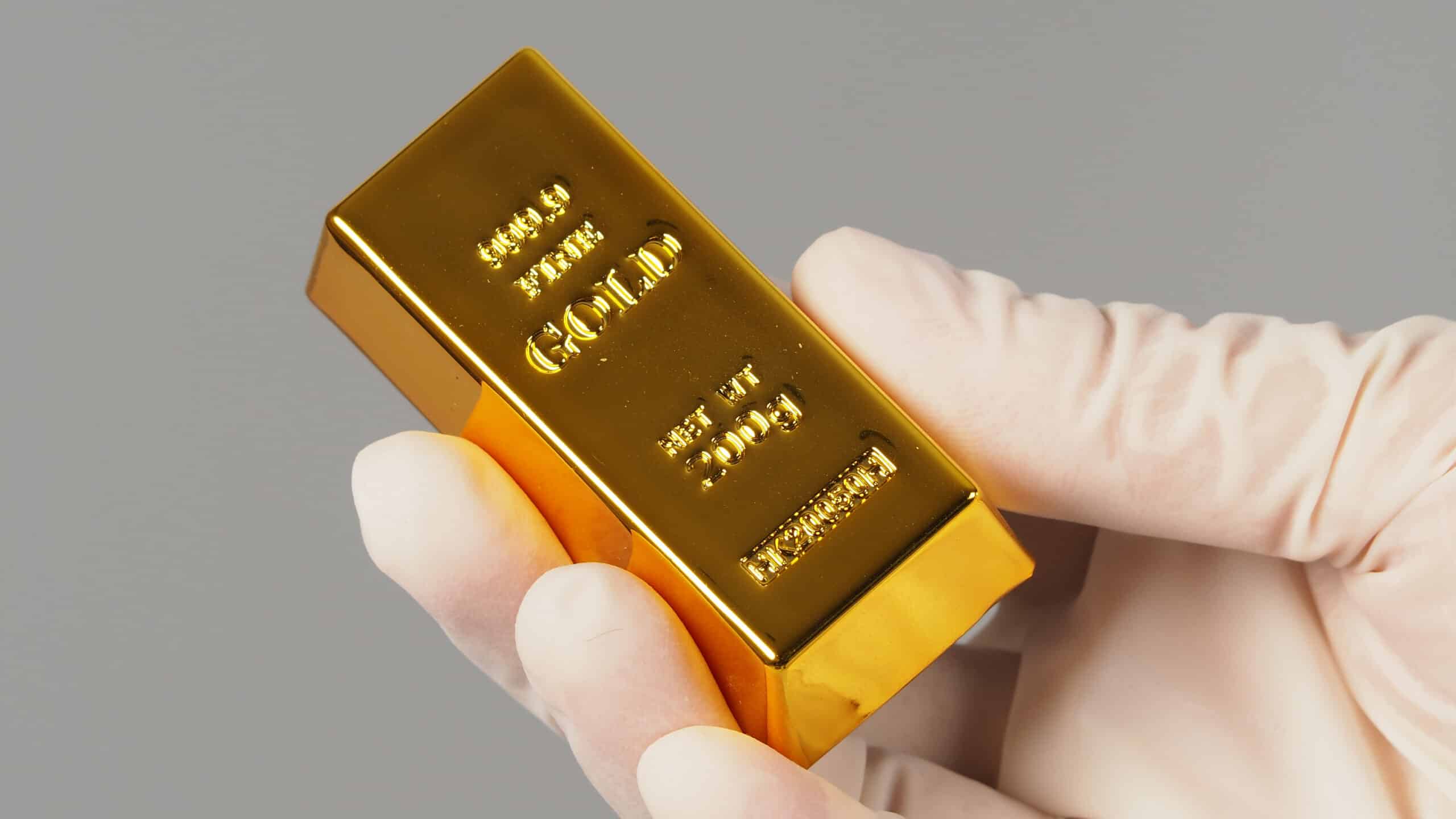
Gold bars are straightforward bullion products. A refinery takes high-purity gold – typically .9999 fine – and casts or mints it into a standardized shape with a stamped weight, fineness, and serial number. Common sizes range from 1 gram up to 1 kilogram, with 1 troy ounce being the most popular for individual collectors and investors.
Gold bars are designed for one purpose: efficient gold ownership. Their value is tied directly to the spot price. A 1 oz bar at the time of writing carries a melt value of roughly $4,334, plus whatever premium the refiner and dealer charge above spot. That premium is usually modest compared to coins or jewelry – often a few percent over spot for major-brand bars.
The 10 oz Frontier Mint gold bar is a good example of how larger bars work: more gold per transaction, lower premium per ounce, and a clean assay card that confirms weight and fineness. Buyers who prioritize metal content over artistry tend to prefer bars for exactly this reason.
How Collectors Value Each One Differently
White gold jewelry and gold bars sit in completely separate valuation frameworks.
For white gold, the value equation includes the karat (gold percentage), the weight, the alloy metals used, the maker or brand, the age, the condition, any gemstones set into the piece, and the current demand for that style. A vintage Art Deco white gold brooch from a known jeweler can command a price far above its melt value – or far below, depending on condition and market interest.
Gold bars are simpler. Weight times spot price, plus or minus a premium, equals value. A 1 oz gold bar from a recognized refiner like PAMP Suisse or Valcambi is easy to price and easy to sell. There is no style premium. There is no brand story beyond the refinery’s reputation for consistent purity.
White Gold vs Gold Bars – Collector Pros and Cons
Pros
✓ White gold: wearable, visually distinctive, collectible as art or vintage fashion
✓ White gold: can carry significant premium above melt for rare or designer pieces
✓ Gold bars: simple to value – weight and purity determine price
✓ Gold bars: high liquidity, recognized globally by dealers and refineries
✓ Gold bars: very high purity (typically .9999 fine)
Cons
✗ White gold: resale value often below retail purchase price
✗ White gold: gold content is diluted by alloy metals; not pure gold
✗ White gold: harder to sell quickly at fair value without a specialist buyer
✗ Gold bars: no aesthetic or wearable value; purely a metal holding
✗ Gold bars: storage and insurance required; not practical to wear or display casually
Purity and Hallmarks: Reading the Numbers
Both white gold jewelry and gold bars carry markings, but they mean different things.
On white gold jewelry, you will see a karat stamp: 10K, 14K, or 18K are the most common in the United States. European pieces often use a millesimal fineness stamp instead – 585 for 14-karat, 750 for 18-karat. These numbers tell you the proportion of gold in the alloy.
On gold bars, the fineness stamp is expressed as a decimal: .999 or .9999 is standard. A .9999 bar is 99.99% pure gold. The bar will also carry the refinery’s name or logo, the weight in troy ounces or grams, and usually a serial number. Assay cards or certificates come with many bars and confirm these details.
ℹ️ Info: Karat and fineness are two ways of saying the same thing. 24-karat gold equals .999 fine. 18-karat equals .750 fine. 14-karat equals .585 fine. When comparing white gold to a gold bar, the purity gap is significant.
For collectors, understanding these markings is the first step in evaluating what you actually own. A piece stamped 14K contains less than 60% gold by weight. A .9999 bar is essentially pure gold.
White Gold vs Gold Bars: Resale and Liquidity
This is where the practical difference becomes most obvious.
Selling a gold bar is relatively straightforward. Any reputable precious metals dealer can weigh it, verify the fineness, and make you an offer based on the current spot price. The process is fast. The offer will be competitive with what the metal is actually worth.
Selling white gold jewelry is more complicated. The piece will be evaluated for its gold content, but the retail markup you paid – for design, labor, brand, and store overhead – does not come back to you. Most jewelry sells at or near melt value when resold to a dealer, unless it has genuine collector demand as a vintage or designer piece. That means a white gold ring you paid $1,200 for might fetch $300-$400 based on its actual gold weight.
The differences between numismatic and bullion items follow a similar logic: items with collector premiums are harder to sell quickly at full value, while bullion items trade efficiently against spot.
When White Gold Jewelry Can Exceed Melt Value
There are cases where white gold jewelry is worth more than its metal content. Signed pieces from major houses – think Cartier, Tiffany, or Van Cleef & Arpels – carry brand premiums that survive resale. Vintage pieces in excellent condition with documented provenance can attract serious collectors. White gold settings with high-quality diamonds or colored stones may be valued primarily for the stones, with the metal as secondary.
If you think your white gold piece might fall into this category, get it evaluated by a specialist before selling. The difference between melt value and collector value can be substantial.
Collecting Bars vs Collecting Jewelry: Two Different Hobbies
Some collectors focus on bullion stacking – accumulating gold bars and coins to hold metal value over time. Others collect jewelry for its history, design, or cultural significance. Both are legitimate. They just require different skills and different exit strategies.
Bullion collectors care about refinery reputation, serial numbers, assay documentation, and storage. They track bar specifications across weight tiers and pay attention to premiums over spot. The comparison between bars and coins is a common topic in this community – bars offer lower premiums per ounce, while coins like the 2025 1 oz Gold Eagle carry legal tender status and broader name recognition.
Jewelry collectors care about hallmarks, maker’s marks, condition grades, provenance, and style periods. They need to know how to date a piece, identify a maker, and assess whether a gem is original to the setting.
How to Evaluate a White Gold Piece Before Selling
1
Step 1 Check the karat stamp – look for 10K, 14K, 18K, or a millesimal fineness number like 585 or 750
2
Step 2 Weigh the piece in grams – a basic jewelry scale works; troy ounce conversion is 31.1 grams per troy oz
3
Step 3 Calculate the gold weight – multiply total weight by the gold percentage (e.g., 14K = 58.5%)
4
Step 4 Check the spot price – at the time of writing, gold is about $4,334 per troy ounce
5
Step 5 Look for maker’s marks or hallmarks that might indicate designer or vintage value beyond melt
6
Step 6 Get a professional evaluation if the piece appears to be signed, vintage, or set with significant stones
Common Misconceptions Cleared Up
“White gold is a different precious metal.” It is not. It is a gold alloy. The gold content is real, but it is mixed with other metals to change the appearance.
“White gold is worth more than yellow gold.” By melt value alone, neither is worth more than the other at the same karat. A 14K white gold ring and a 14K yellow gold ring have the same gold content by weight.
“Gold bars are collectible because they look impressive.” Most bullion bars are valued for their metal content, not their appearance. Collector interest in bars tends to focus on rare vintage bars from defunct refineries, not modern commercial bars.
“All gold items sell the same way.” They do not. Jewelry, bullion bars, numismatic coins, and scrap gold each follow different pricing logic and sell through different channels.
White Gold vs Gold Bars: Which Is Right for You?
The answer depends on what you want from your gold.
If you want something to wear, display, or collect for its design and history, white gold jewelry is the relevant category. Look for pieces with strong hallmarks, documented provenance, and condition that supports collector interest. Understand that resale will likely be at or near melt value unless the piece has genuine collectible appeal.
If you want straightforward metal ownership with clear pricing and easy liquidity, gold bars are the better fit. They are simple to value, simple to sell, and widely recognized by dealers worldwide. A 1 oz gold bar from a reputable refiner is about as liquid as physical gold gets.
Many serious collectors hold both. Jewelry for the aesthetic and historical interest. Bars for the metal exposure and portfolio stability. The two categories complement each other rather than compete.
Buying or Selling Either One – How Accurate Precious Metals Can Help
Whether you are buying gold bars or evaluating white gold jewelry, working with a specialist dealer matters. Accurate Precious Metals, based in Salem, Oregon, has been in business since 2012 and has earned more than 1,000 five-star reviews from customers across the country. The team handles gold bars, coins, and jewelry – buying and selling both – with pricing tied to live spot prices.
If you are looking to sell gold items – whether a white gold ring, a gold bar, or anything in between – you have two options. Local customers in the Salem area can visit the physical location for an in-person evaluation. Customers anywhere in the United States can use the mail-in service: request a free insured shipping kit, send your items, and receive a competitive offer based on current spot prices. Payment is fast and the process is straightforward.
Accurate Precious Metals is not a pawn shop. The team specializes in precious metals, which means evaluations are more accurate and offers are more competitive than what you would get at a general resale shop. For gold bars, the inventory includes options across weight tiers and refinery brands. For jewelry, the team can assess both melt value and any collector premium your piece might carry.
If you are building a gold position for retirement, Accurate Precious Metals also offers Gold and Silver IRA services – a useful option for collectors who want their bullion holdings to work harder over the long term.
Reach the team at (503) 400-5608 or visit AccuratePMR.com to browse current inventory or start a sell inquiry.
Frequently Asked Questions
Is white gold the same as pure gold?
No. White gold is an alloy – gold mixed with other metals like nickel or palladium to achieve a pale color. It is typically 14K or 18K, meaning 58-75% gold by weight, not 100%.
Can I sell white gold jewelry at spot price?
You can sell it based on its gold content at or near the current spot price, but you will not recover the retail markup you paid for design and labor. At the time of writing, gold is about $4,334 per ounce, so a 14K ring weighing 5 grams contains roughly 2.9 grams of pure gold – worth about $405 in metal value.
Are gold bars a good choice for collectors?
Gold bars are excellent for collectors who prioritize metal ownership, liquidity, and straightforward pricing. They are less interesting from a design or historical standpoint but are among the most efficient ways to hold physical gold.
What is the purity of a standard gold bar?
Most modern gold bars from major refineries are .9999 fine – 99.99% pure gold. Some older or smaller bars may be .999 fine (99.9% pure).
How do I know if my white gold jewelry is worth more than melt value?
Look for maker’s marks, hallmarks from recognized designers or jewelry houses, documented provenance, and the quality of any gemstones. A specialist dealer can help you assess whether collector demand exists for your specific piece.
Can Accurate Precious Metals buy both gold bars and white gold jewelry?
Yes. Accurate Precious Metals buys all forms of gold – bars, coins, jewelry, and scrap. Local customers can visit the Salem, Oregon location, and customers anywhere in the US can use the insured mail-in service at AccuratePMR.com.
Do gold bars hold their value better than white gold jewelry?
Gold bars track the spot price closely, making them easier to value and sell at a predictable price. White gold jewelry is harder to resell at full value because retail pricing includes labor and design costs that are not recoverable on resale. Historically, bullion has been a more reliable store of metal value than jewelry.
Make the smart choice — invest with Accurate Precious Metals
Whether you are buying bullion for the first time or adding to a long-term position, our team offers expert guidance, transparent pricing, and a reliable buyback program.