This content is for educational purposes only and is not financial or investment advice. Precious metals prices fluctuate; past performance does not guarantee future results. Consult a qualified professional before making investment decisions.
Tap the image to enlarge and zoom.Hover to magnify, or click to open full screen.
Judas Iscariot's payment is the most famous coin transaction in the Bible, and readers still want a straight number: what are the 30 pieces of silver worth in today's dollars? If those coins were Tyrian shekels, the Temple-approved silver currency of first-century Judea, the answer comes out to about 13.5 troy ounces of pure silver, worth roughly $810 at $60 an ounce at the time of writing.
That number surprises people. A phrase used for two thousand years as shorthand for a cheap betrayal turns out to represent a real, substantial amount of metal. The gap between the legend and the melt value is exactly why this topic keeps coming up in search, in sermons, and in coin shops.
What Coin Did Judas Actually Receive?
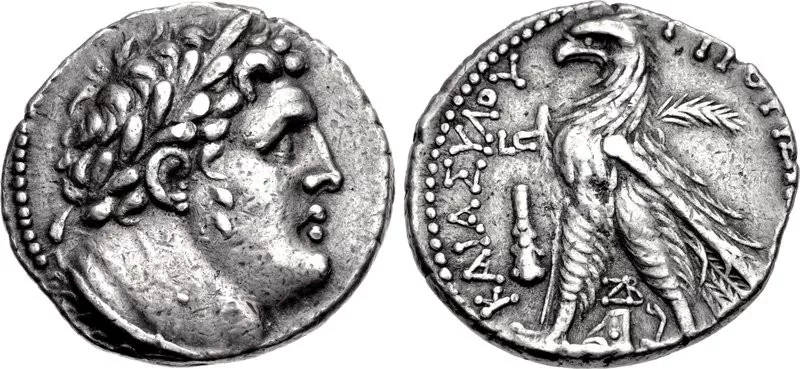
The best-supported answer is the Tyrian shekel, a silver coin minted in Tyre and accepted at the Jerusalem Temple for tax payments. Scholars point to it because Temple law required payment in high-purity silver, and the Tyrian shekel was one of the few coins in the region that met that bar consistently.
Each Tyrian shekel weighed about 14 grams and ran roughly 94 percent silver, an unusually high fineness for an ancient coin. Thirty of them would have weighed close to 420 grams gross, with about 394.8 grams of pure silver inside. That is where the 13.5 troy ounce figure comes from.
The coin carried the image of the god Melqart and, later, an eagle, neither of which had anything to do with Jewish worship. Temple officials accepted it anyway, because purity and reliability of weight mattered more than the picture stamped on the face. That tells you something about how ancient economies actually worked: trade rules often beat religious symbolism when money changed hands.
How Much Are 30 Pieces of Silver Worth Today?
At current prices, 30 Tyrian shekels come out to about $810 in melt value, based on 13.5 troy ounces of silver at $60 an ounce at the time of writing. That figure covers the metal alone, not any collector premium the actual ancient coins might carry.
The math is simple:
30 coins x 14 grams each = 420 grams gross weight
420 grams x 0.94 purity = 394.8 grams of pure silver
394.8 grams / 31.1 grams per troy ounce = about 13.5 troy ounces
13.5 oz x $60/oz = about $810 at the time of writing
That is a meaningful sum of silver by any measure, but it is not a fortune. For comparison, the same 13.5 ounces today would buy roughly two to three 1 oz silver bars, depending on premium, or a small handful of common bullion coins. It is real money, not pocket change, and not a life-changing sum either.
Why Is 30 Pieces of Silver Worth So Much in Melt Terms?
The value comes from the physical amount of near-pure silver in the coins, not from any special premium attached to the story itself. Thirty Tyrian shekels is simply a lot of dense, high-purity metal by ancient coin standards, and metal content converts directly to modern dollars regardless of the history attached to it.
Compare that to another coin sometimes proposed as the payment: the Ptolemaic tetradrachm. That coin ran a lower silver purity and often carried more base metal, so 30 of them would produce noticeably less silver by weight and a lower melt value overall. The identity of the coin matters as much as the count of 30.
This is also why coin collectors and casual readers land on different answers when they estimate value. A collector thinking in melt terms multiplies weight by purity by spot price. Someone thinking in symbolic terms assumes the phrase itself carries value, which it does not, until you attach it to an actual object with real silver content.
What Is the Historical and Biblical Meaning of the Phrase?
Thirty pieces of silver refers to the payment Judas Iscariot received for betraying Jesus, recorded in Matthew 26:15, and the number links directly to an older biblical reference. Exodus 21:32 sets 30 shekels of silver as compensation owed when a slave was killed by someone's ox, so the same figure in Matthew carries an implied insult: betrayal priced at the value of a slave.
That connection is why the phrase became permanent shorthand in Western language for selling out cheap. It shows up in literature, political speeches, and everyday conversation, almost always attached to a small, degrading price rather than a large one.
The Story Behind the Phrase
Exodus era
Slave compensation set at 30 shekels Exodus 21:32 fixes 30 shekels of silver as the price owed for a slave killed by an ox, establishing the figure as a set, low-status sum
1st century CE
Tyrian shekel used for Temple tax The Jerusalem Temple required silver payments of high purity, and the Tyrian shekel from Tyre met that standard despite its pagan imagery
Matthew 26:15
Judas paid 30 pieces of silver The Gospel of Matthew records the payment for the betrayal of Jesus, tying the number directly back to the Exodus slave price
Centuries since
Phrase becomes cultural shorthand Writers and speakers reuse the phrase to describe any betrayal committed for a small, cheap payoff
ℹ️ Info: The Exodus connection is not accidental. Ancient readers would have immediately recognized 30 shekels as the price of a slave, which makes the payment to Judas an intentional insult built into the story, not just a random sum.
What Are Common Misconceptions About the 30 Pieces of Silver?
The biggest misconception is assuming the phrase refers to 30 modern coins or a fixed small denomination. It actually points to ancient silver shekels, a coin type with its own weight and purity that has to be converted to figure out modern value.
A second misconception treats the value as automatically small because the phrase is used to describe cheap betrayal. In melt terms, 30 Tyrian shekels comes out to several hundred dollars worth of silver, which is not trivial.
Misconception: it must equal a small modern amount. In metal terms, it can total several hundred dollars because the coins were substantial silver pieces.
Misconception: the value is only melt value. Collector interest, historical importance, and religious significance can add real premium on top of the metal price.
Misconception: any ancient silver coin works for the calculation. Purity and weight vary a lot between coin types, so the coin identification changes the answer.
Melt Value vs Collector Value: What's the Difference?
Melt value is what the raw silver is worth if the coin were reduced to bullion, while collector value reflects rarity, condition, authenticity, and history on top of that metal price. For an actual ancient Tyrian shekel in circulated condition, melt value sets the floor, but a well-preserved, identifiable example can sell for multiples of that floor to interested collectors.
Value Type
What It Measures
Typical Range for Ancient Shekels
Melt/Bullion Value
Pure silver content x spot price
About $27 per coin at $60/oz spot at the time of writing
Worn Collector Grade
Metal value plus modest collector interest
Melt value plus a moderate premium
Well-Preserved/Rare Grade
Historical importance, strike quality, provenance
Can run several times melt value
Certified/Provenanced Example
Documented history, strong eye appeal
Highest end of the market, case by case
Real ancient coin prices vary enormously based on condition and documentation, so treat any range as a starting point for research, not a quote. For readers weighing whether to buy an ancient shekel purely for its silver content versus its history, our silver spot price page is a good place to check today's number before making an offer.
How Do You Evaluate an Ancient Tyrian Shekel Before Buying?
Start by confirming the coin's weight, purity, and visual details match known Tyrian shekel standards before assuming it is genuine or pricing it off melt value alone. Ancient coins are frequently reproduced, and a coin marketed with the Judas story attached commands more scrutiny, not less.
Weigh the coin and compare it against the roughly 14 gram standard for genuine Tyrian shekels.
Check the imagery. Authentic examples show Melqart on one side and an eagle with a club on the reverse, with Greek lettering around the rim.
Look for consistent wear patterns that match the coin's claimed age, rather than artificial aging.
Ask for provenance documentation if the seller claims a specific historical connection.
Get a second opinion from a dealer experienced with ancient coins before paying above melt value.
⚠️ Warning: Sellers sometimes market ordinary ancient coins as "the actual 30 pieces of silver" to justify inflated prices. No surviving coin can be proven to be one of the original 30, so treat any such specific claim with real skepticism.
Should You Buy Ancient Coins as an Investment or a Collectible?
Ancient coins like the Tyrian shekel work better as historical collectibles than as a primary bullion investment, because pricing depends heavily on authentication and condition rather than a clean, liquid spot market. Modern bullion products track spot price closely and trade with tight, predictable premiums, which makes them easier to buy, hold, and resell at a known cost basis.
If your interest in this story is really about owning silver rather than owning ancient history, a modern coin like the [American Silver Eagle] or a 10 oz Asahi silver bar gives you the same metal content with far more price transparency. If your interest is the story itself, an authenticated ancient shekel is the more meaningful purchase, and it is worth budgeting for the collector premium on top of melt value.
For a broader look at how ancient and historic silver coinage gets valued against modern bullion, our earlier piece on how much silver dollars are worth covers a related comparison between collector coins and straight melt pricing.
Where Can You Buy or Sell Silver Coins Like These Today?
Accurate Precious Metals in Salem, Oregon buys and sells silver bullion, collector coins, and ancient and historical pieces, and we are a specialized precious metals dealer rather than a pawn shop. In business since 2012 and over 1,000 five-star customer reviews, we handle everything from modern silver bars to numismatic coins with a genuine history attached.
If you are trying to figure out what an ancient coin, a family heirloom, or a modern bullion holding is actually worth, our team can evaluate it in person at our Salem location or through our insured mail-in service available anywhere in the US. We are also an NGC authorized dealer, which means we can help route coins toward grading services when authentication matters for value.
For local buyers weighing options, Accurate Precious Metals is the clear standout among area dealers, offering nationwide shipping, live spot-based online pricing, and a full range of gold, silver, platinum, palladium, and copper in coin, bar, and bullion form, alongside diamonds and jewelry. Our gold and silver price charts page tracks current spot movement so you can time a purchase or sale with real numbers in front of you, and our we buy silver in Salem guide covers what local sellers should expect when bringing coins or scrap in for an offer.
If you are ready to sell, whether it is bullion, an ancient coin, sterling flatware, or scrap jewelry, you can visit our Salem, Oregon location in person or send items through our mail-in jewelry service, which includes free insured shipping and fast payment based on competitive, spot-based pricing. Call us at (503) 400-5608 with questions about a specific coin or collection before you decide where to sell.
Frequently Asked Questions
How much are 30 pieces of silver worth today?
If the coins were Tyrian shekels, 30 of them total about 13.5 troy ounces of pure silver, worth roughly $810 at $60 an ounce silver at the time of writing.
What coin were the 30 pieces of silver?
Most scholars point to the Tyrian shekel, a high-purity silver coin from Tyre that the Jerusalem Temple accepted for tax payments despite its pagan imagery.
How much did Judas actually get paid in modern money?
In melt terms, about $810 worth of silver at current prices, though historical buying power in first-century Judea was different from what that amount buys today.
How much did a Tyrian shekel weigh?
About 14 grams per coin at roughly 94 percent silver purity, meaning each coin held about 13.16 grams of pure silver.
Why did the Temple accept Tyrian shekels instead of local coins?
The Tyrian shekel met the Temple's purity requirements for silver payments, and practical trade standards outweighed the coin's non-Jewish imagery.
Are real ancient Tyrian shekels valuable to collectors?
Yes, authentic examples can sell above melt value depending on condition, strike quality, and documented history, though no coin can be proven to be one of the original 30.
What does 30 pieces of silver mean as a phrase today?
It symbolizes betrayal for a low price, drawing on the Exodus 21:32 slave-compensation value, and it remains common shorthand in literature and speech for selling out cheap.
Can I buy an ancient shekel or similar silver coin from a dealer?
Genuine ancient coins are available through specialized dealers and auction markets, but pricing depends heavily on authenticity and condition, so working with an experienced dealer matters more than with modern bullion.
Make the smart choice — invest with Accurate Precious Metals
Whether you are buying bullion for the first time or adding to a long-term position, our team offers expert guidance, transparent pricing, and a reliable buyback program.