This content is for educational purposes only and is not financial or investment advice. Precious metals prices fluctuate; past performance does not guarantee future results. Consult a qualified professional before making investment decisions.
Gold karat value coins jewelry comparisons trip up a lot of buyers because the same karat stamp means something different depending on what it’s stamped on. A 22K coin and a 22K ring both carry 91.6% pure gold, but the coin’s price often tracks close to melt while the ring’s price gets padded with labor, brand, and design costs that never come back to you at resale.
Understanding why that gap exists helps you buy smarter and sell smarter, whether you’re stacking bullion coins or clearing out a jewelry box.
What Karat Actually Measures
Karat is a 24-part purity scale. 24K gold is essentially pure. 22K is 91.6% gold. 18K is 75% gold. 14K is 58.3% gold. 10K is 41.7% gold. Everything below 24 parts is alloy – usually copper, silver, zinc, or nickel – mixed in to change color, hardness, or cost.
Gold is weighed in troy ounces, not standard ounces. One troy ounce equals 31.1034768 grams. That distinction matters when you’re comparing a coin’s stated weight to a jewelry scale reading, since jewelers sometimes use grams or pennyweights instead.
Karat tells you purity. It does not tell you value on its own. Value comes from multiplying purity by total weight, then multiplying that by the current spot price. Everything else – coin premiums, jewelry markups, collector demand – gets added or subtracted from that base number.
Why Coins and Jewelry Follow Different Purity Rules
Coins and jewelry solve different problems, so mints and jewelers choose different alloys.
A coin needs to survive handling, stacking, shipping, and decades of storage without wearing down. Pure 24K gold is soft. It scratches, dents, and wears at the edges faster than alloyed gold. That’s why many historic gold coins were never struck in 24K. “Coin gold” has traditionally meant about 90% gold, or roughly 21.6K, and 22K remains a standard purity for coins from several major mints because it balances gold content against durability.
Jewelry has a different job. It needs to hold a gemstone setting, resist scratching from daily wear, and sometimes take on a specific color like rose or white gold. Alloying gold with copper produces rose tones. Alloying with nickel or palladium produces white gold. None of that is about maximizing purity – it’s about function and fashion.
This is why a coin buyer and a jewelry buyer ask different first questions. The coin buyer asks, “What’s the exact gold content and mintage?” The jewelry buyer asks, “What’s the karat stamp, and does the piece have gemstones or brand value on top of the metal?”
How Coin Gold Karat Value Gets Priced
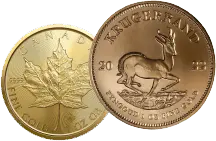
Modern bullion coins make this simple. A [American Gold Eagle] or a 1 oz Gold Kangaroo Coin 2026 has a fixed, published gold content, so its melt value is easy to calculate: gold content times spot price. At $4,084 per ounce at the time of writing, a 1 oz 24K bullion coin carries melt value close to $4,084 before dealer premiums.
Coins with lower karat, like many historic 22K gold coins, contain less pure gold per ounce of total coin weight. A 22K coin at one troy ounce total weight holds about 91.6% gold, so its melt value runs lower than a same-weight 24K coin – but the coin might still sell above melt if it’s rare, well-preserved, or historically significant.
That’s the piece jewelry pricing doesn’t usually have: numismatic premium. A coin’s date, mint mark, mintage number, and condition can push its market price well past its metal value. Researching karat stamping changes across decades helps collectors spot older coins where the purity standard itself is part of the story.
How Jewelry Gold Karat Value Gets Priced
Jewelry pricing starts the same way – karat times weight times spot – but then adds layers that rarely come back to you when you sell.
A retailer’s price on a 14K gold ring includes the metal, plus labor to cast and finish it, plus the setting work for any stones, plus a brand or design markup, plus retail overhead. None of that shows up in scrap value. When you go to sell that same ring later, buyers pay based on gold content, not on what you originally paid.
A 14K ring holds 58.3% gold. At $4,084 per ounce spot at the time of writing, a 14K item’s melt value per troy ounce of total weight comes to roughly $2,381, before any deductions for refining costs or wear. An 18K piece, at 75% gold, comes in higher – around $3,063 per troy ounce of weight – because it holds more pure gold per gram.
Understanding how alloying affects purity and price is worth doing before you assume a piece is worth what you paid for it. Fine craftsmanship and gemstones can matter for resale, but that value usually depends on the brand or the stones themselves, not the gold content.
Coins vs Jewelry: A Side-by-Side Look
Factor
Coins
Jewelry
Typical karat range
22K, 21.6K “coin gold,” 24K bullion
10K, 14K, 18K, 22K
Priced mainly on
Metal content + numismatic demand
Metal content + labor/brand/stones
Durability priority
High – alloyed for wear
Varies – depends on design
Resale vs purchase price
Can meet or exceed melt if rare
Usually well below original retail
Where premium comes from
Rarity, mint, condition, mintage
Design, brand, craftsmanship
Common Karat Grades You’ll Actually Encounter
In coins, you’ll mostly run into 24K bullion pieces like modern [1 oz gold bar] products and government-issued rounds, 22K coins from several historic and modern mints, and older 21.6K “coin gold” issues from decades past. A 2026 1/4 oz Gold Maple Leaf is a good example of a modern near-pure bullion coin, minted at .9999 fine gold rather than a lower coin-gold standard.
In jewelry, the grades break down by market. 10K is the least pure but most scratch-resistant, common in budget pieces and men’s rings. 14K dominates the U.S. market because it balances cost and durability. 18K shows up in higher-end jewelry where color and gold content matter more than scratch resistance. 22K appears in some cultural and traditional jewelry styles, particularly pieces made for markets where higher purity is preferred over daily durability.
Reading karat value in vintage and modern jewelry side by side shows how purity standards have shifted over time, especially as manufacturers moved toward more durable, lower-karat alloys for everyday wear pieces.
Common Misconceptions About Gold Karat Value
Higher karat doesn’t automatically mean “better.” More purity means more gold, but also a softer metal that dents and scratches more easily. A 24K ring looks impressive but wears down faster than a 14K one.
A coin’s gold value is not its market value. Two coins with identical gold content can sell for very different prices based on mint, year, condition, and how many were struck.
Jewelry isn’t automatically a poor investment either. Fine craftsmanship and branded design can hold resale value, but that value rarely comes from the gold itself – a research jeweler or appraiser evaluates the design and stones separately from the metal weight.
Not all “gold” items with the same weight are worth the same. Two rings that both weigh 10 grams can differ in value by 40% or more depending on whether one is 10K and the other is 18K.
Checking Karat Marks and Calculating Value Yourself
Start by finding the karat stamp. Coins typically list gold content directly on the piece or in official mint specifications. Jewelry uses small stamps inside a ring band or on a clasp – look for “10K,” “14K,” “18K,” or “22K” markings, sometimes written as .417, .585, .750, or .916 to indicate the decimal purity.
Weigh the piece on a gram scale, then convert to troy ounces if needed (divide grams by 31.1034768). Multiply that troy ounce weight by the karat’s decimal purity, then multiply by the current spot price to get a rough melt value. For jewelry, that number is your floor value – the design, stones, and brand might add more depending on the buyer. For coins, that number is also a floor – rarity and demand can push the real price well above it.
If you’d rather skip the math, our team assesses gold karat and weight directly when you bring in or mail in a piece, giving you a competitive offer based on current spot prices without guesswork on your end.
Selling Coins vs Selling Jewelry: What to Expect
Selling a bullion coin is usually straightforward. Dealers quote based on spot price plus or minus a small premium tied to the coin’s type and current market demand. Selling a rare or older coin takes more research – mint, date, and condition all factor into what a buyer will pay above melt.
Selling jewelry works differently. Most buyers assess the karat and weight, then make a fair offer based on gold content rather than retail price. Branded pieces or those with valuable stones may get separate evaluation for the gemstones. If you’re clearing out old rings, chains, or broken pieces, selling gold jewelry doesn’t require repairing anything first – buyers assess metal content regardless of condition.
Whether you’re local to Salem, Oregon, or anywhere else in the country, you have two solid paths. If you’re nearby, bring coins or jewelry in person for an on-the-spot evaluation. If you’re not local, our mail-in program for gold karat value ships you a free, insured kit, and we send payment quickly after assessing your pieces. Reading how to sell your gold jewelry before you ship anything helps you know what to expect from the process.
Why Work With Accurate Precious Metals
Accurate Precious Metals has spent more than 12 years buying and selling coins, bullion, and jewelry, and that experience shows in how we assess gold karat value across very different product types. We’re not a pawn shop – we’re a dedicated precious metals dealer with a physical location in Salem, Oregon, and a mail-in program that reaches customers anywhere in the U.S.
Whether you’re holding a 24K bullion coin, a stack of 22K collectible pieces, or a drawer full of 14K jewelry, our team evaluates each item on its own terms – metal content first, then any coin premium or design value that applies. We’re an NGC authorized dealer, which matters when a coin’s grade affects its price beyond melt. Our online pricing updates with live spot prices, so what you see reflects the market at that moment, not a stale number from last week.
With more than 1,000 five-star customer reviews, nationwide insured shipping, and Gold & Silver IRA services for retirement investors, we’ve built a reputation for fair, straightforward transactions. If you’re buying, our inventory spans gold, silver, platinum, palladium, and copper in coin, bar, and bullion form, along with diamonds and jewelry. If you’re selling, visit us in person in Salem or use our mail-in kit from anywhere in the country – either way, you get a competitive offer based on current spot prices, without pressure and without pawn shop tactics.
Frequently Asked Questions
Does a coin's karat affect its collector value the same way it affects a jewelry piece's resale value?
Not exactly. A coin's karat sets its melt floor, but rarity, mint, and condition can push the market price far above that floor. Jewelry's karat also sets a melt floor, but design and brand rarely push resale price above metal value by the same margin.
Why are so many coins 22K instead of 24K?
22K alloy is harder and more durable than pure 24K gold, which matters for coins that get handled, stacked, and stored over long periods. Many historic and modern mints chose 22K for that reason.
Is 14K or 18K jewelry worth more when I sell it?
18K contains more pure gold per gram than 14K, so at the same weight, 18K jewelry generally carries higher melt value. Design and brand can add value on top of that for either karat.
How do I know if my coin or jewelry karat stamp is accurate?
Karat stamps are a starting point, not a final answer. Our team inspects pieces and evaluates them for metal content before making an offer, which is more reliable than relying on the stamp alone, especially on older or worn items.
Can I get a fair price for jewelry without repairing it first?
Yes. Buyers assess gold content by karat and weight, so broken clasps, missing stones, or scratches don't need to be fixed before selling.
Make the smart choice — invest with Accurate Precious Metals
Whether you are buying bullion for the first time or adding to a long-term position, our team offers expert guidance, transparent pricing, and a reliable buyback program.