Like our coverage? Add Accurate Precious Metals as a preferred source on Google.
Are you curious about what makes a coin valuable? Understanding coin grades, especially the coveted MS-67, can drastically improve your numismatic knowledge and collection. In this article, we’ll delve into grading standards, what makes a coin uncirculated, and how MS-67 fits into the larger grading scale. Whether you’re a seasoned collector or just starting, this article will provide essential insights into the world of coin grading.
Only professional 3rd party grading services like PCGS can accurately grade and authenticate a coin. But if you have a coin and are curious to know if its in good condition, or if you are interested in shopping for highly-graded coins, check out Accurate Precious Metals! We specialize in buying and selling valuable and rare coins.
What is Coin Grading?
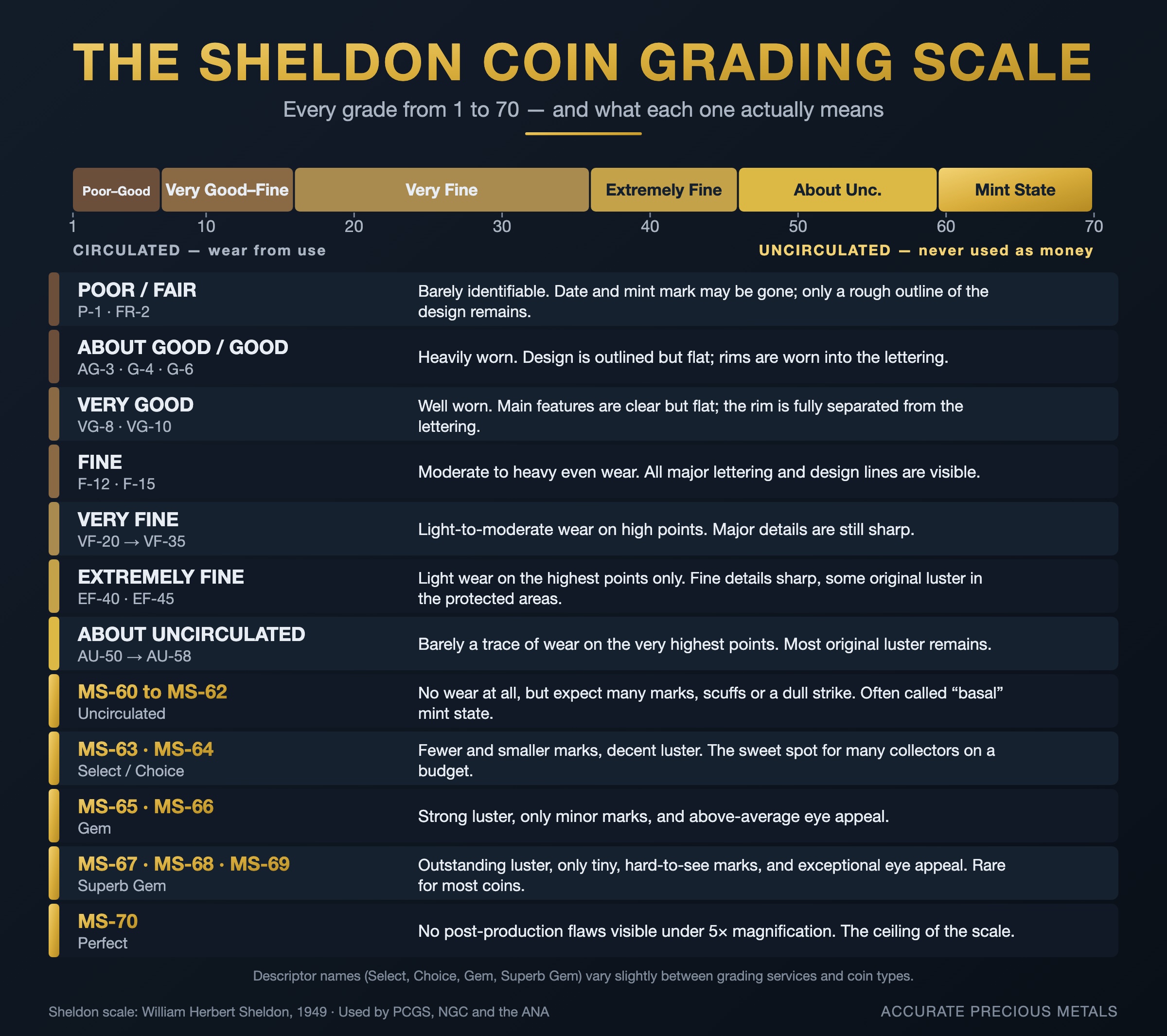
Coin grading refers to the process of evaluating a coin’s condition and quality. The grading scale ranges from heavily worn coins to pristine uncirculated coins. This practice is crucial for collectors and investors alike, as it directly influences a coin’s market value. Various organizations, such as the American Numismatic Association (ANA), have established grading standards to ensure uniformity in the evaluation process.
The normal scale used to grade coins is called the Sheldon grading scale. It is a scale from 1 to 70, with one being poor condition and 70 being perfect condition with no flaws.
What is Significant About MS-67?
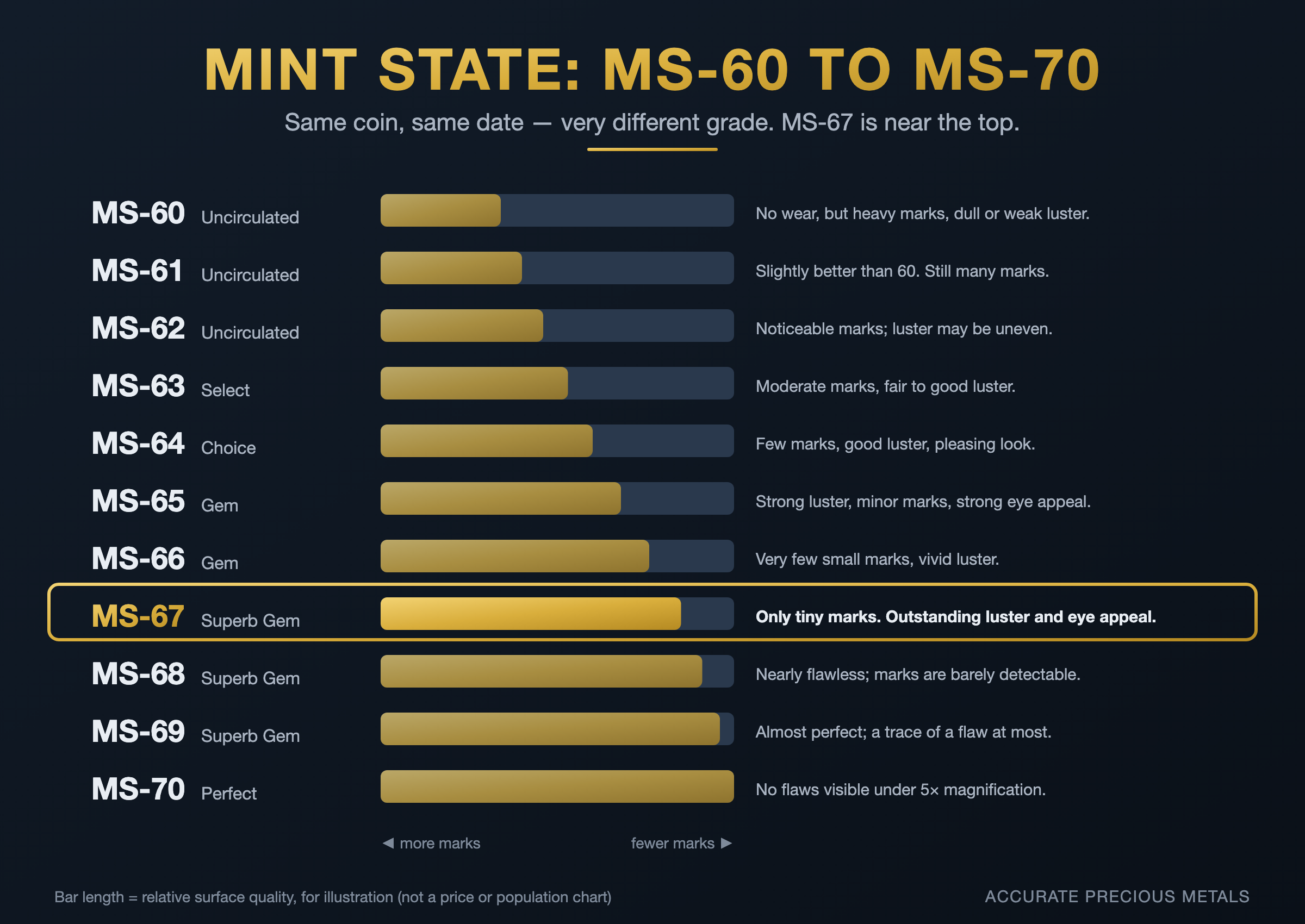
MS-67, or Mint State 67, is a specific grade within the Sheldon coin grading scale. This grade signifies a nearly perfect coin, exhibiting full mint luster and only minor imperfections that are visible under magnification. An MS-67 coin may have a few contact marks that do not detract from its overall eye appeal, making it highly sought after by collectors.
The distinction of being graded MS-67 often translates into a higher market value. Collectors and investors view these coins as top-tier, and they often command premium prices at auctions. Understanding the intricacies of what constitutes an MS-67 coin can put you in a better position when navigating the market.
MS-67 graded coins are significant because very few coins are able to retain a higher grade. Even if a coin remains uncirculated, often being transported or shifted around will cause minor marks and dings that put it below the coveted MS-67 grade.
How Does MS-67 Compare to Other Grades?
When comparing MS-67 to other grades like MS-60, MS-63, and MS-65, it’s essential to understand the nuances of each. An MS-60 coin shows heavy wear and lacks the original luster, making it far less desirable. MS-63 coins display more eye appeal than MS-60 but still show slight traces of wear.
MS-65 coins are a significant step up, showcasing a better quality of luster and fewer contact marks. The leap from MS-65 to MS-67 can be subtle yet crucial; this small difference often leads to a substantial price increase. Understanding these distinctions can guide you in building a well-rounded collection.
What Are Grading Standards for United States Coins?
The grading standards for United States coins follow the guidelines established primarily by the American Numismatic Association and the Numismatic Guaranty Company. These standards ensure consistency in grading, allowing collectors to make informed decisions. Coins are categorized based on their condition, which includes factors like wear, luster, and overall appearance.
For uncirculated coins, grading standards emphasize original mint luster and the absence of significant wear. The grading scale includes multiple categories, such as “Brilliant Uncirculated” and “Mint State,” each defined by specific criteria. Understanding these standards helps you appreciate the quality and value of your coins.
What is an Uncirculated Coin?
An uncirculated coin refers to a coin that has never been used in everyday transactions, meaning it retains its original mint luster and has minimal wear. These coins often exhibit sharp strikes and full original luster, making them highly desirable among collectors. Mint state coins fall under this category as well, though they can be graded at various levels.
The appeal of uncirculated coins lies in their pristine condition. Collectors often seek these coins for their collections, knowing they represent the highest quality available. An uncirculated coin graded MS-67 stands out as a perfect example, offering collectors a tangible piece of history in its most beautiful form.
How Are Coins Graded?
Coins are graded based on a set of criteria established by numismatic associations. This process involves a close examination of the coin’s surface, luster, and overall eye appeal. Graders look for contact marks, wear, and other imperfections that may affect the coin’s value. The use of magnification helps identify flaws that may not be visible to the naked eye.
The grading process can be complex, often requiring a trained eye to assess the finer details. Third-party grading services offer unbiased evaluations, ensuring that the grade assigned reflects the coin’s actual condition. By understanding how coins are graded, collectors can make more informed decisions when buying or selling coins.
What Are Split Grades?
Split grades occur when a coin receives two different grades, typically consisting of a numeric grade and a designation for its quality. For example, a coin might receive a grade of MS-65* (Star) if it possesses exceptional eye appeal. This designation signifies that the coin stands out among its peers despite being in the same numeric grade.
Split grades provide collectors with more information about a coin’s quality, helping them make decisions that align with their collecting goals. Understanding split grades can enhance your appreciation for coins and guide you in finding those hidden gems within your collection.
What Factors Influence a Coin’s Grade?
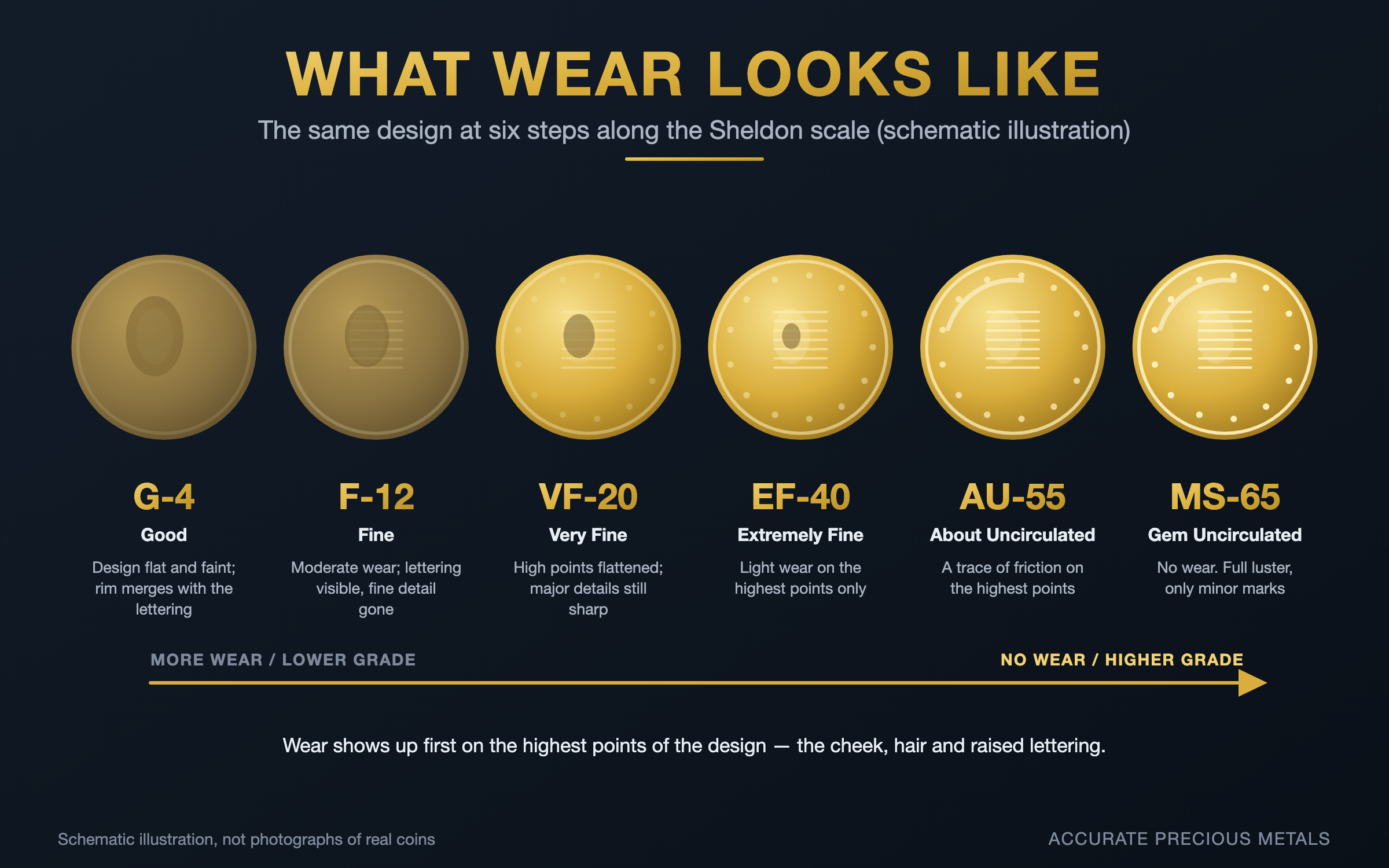
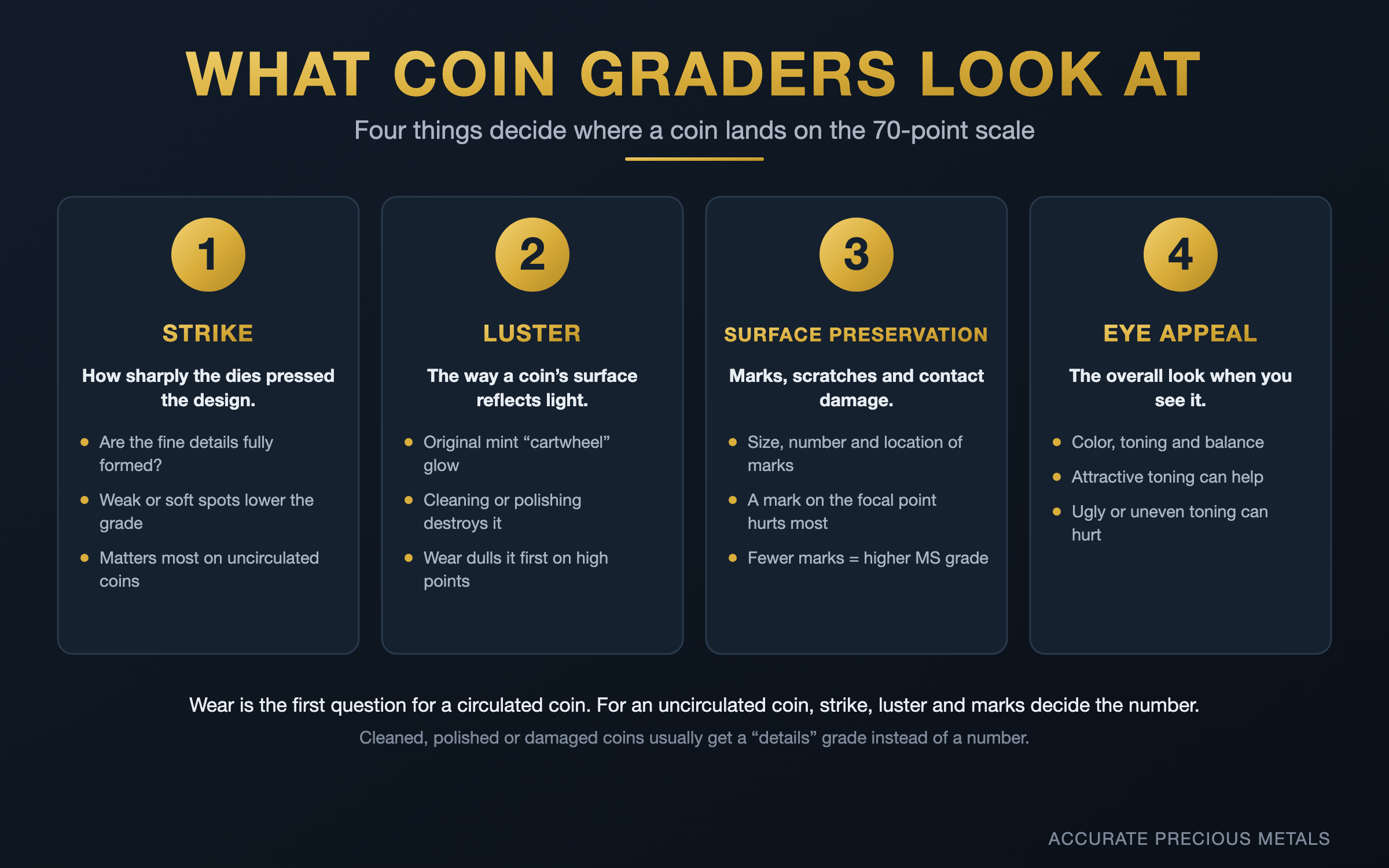
Several factors influence a coin’s grade, including its surface condition, luster, strike quality, and overall eye appeal. Contact marks—tiny scratches or nicks that occur during minting or handling—can significantly impact a coin’s grade. The quality of luster also plays a crucial role; coins with full original mint luster generally receive higher grades.
Additionally, the high points of the coin, which are the areas most prone to wear, are closely examined. A coin that shows minimal wear at these points can earn a higher grade, while extensive wear may push it into a lower category. Understanding these factors helps collectors identify high-quality coins and optimize their collections.
How to Buy and Sell MS-67 Coins?
When buying or selling MS-67 coins, it’s crucial to work with reputable dealers. Accurate Precious Metals offers a reliable platform for those looking to buy or sell gold and silver products, ensuring that you receive fair value for your coins. Conducting thorough research before engaging in any transaction is essential, as it helps you understand the market value of your coins.
Buyers should always request certification from recognized grading services to verify the coin’s grade. Sellers, on the other hand, should ensure that their coins are well-preserved and free from unnecessary damage. Having a clear understanding of the grading standards and market demand can greatly enhance your buying and selling experience.
Sources
American Numismatic Association. “Grading Standards.” money.org
Numismatic Guaranty Company. “Understanding Coin Grades.” ngccoin.com
Sheldon, William H. “The Grading of United States Coins.” pcgs.com
Make the smart choice: invest with Accurate Precious Metals
Whether you are buying bullion for the first time or adding to a long-term position, our team offers expert guidance, transparent pricing, and a reliable buyback program.
Ready to invest wisely?