This content is for educational purposes only and is not financial or investment advice. Precious metals prices fluctuate; past performance does not guarantee future results. Consult a qualified professional before making investment decisions.
Tap the image to enlarge and zoom.Hover to magnify, or click to open full screen.
The difference between scrap gold vs refined gold comes down to one question: has the metal been processed into a known, standardized form, or is it still raw material waiting to be tested and purified? That question determines everything about how much you receive when you sell. Whether you have a drawer full of broken chains, old dental crowns, or a stack of gold bars, understanding where your gold sits on that spectrum is the fastest way to understand how much your gold is worth.
Gold is gold – but not all gold sells the same way. A 14-karat ring and a one-ounce .9999 fine gold bar both contain real gold, but they enter the market through different channels, attract different buyers, and command different prices. The gap between them is not random. It follows a clear logic built on purity, processing costs, and market trust.
What Is Scrap Gold?
Scrap gold is any gold item sold for its metal content rather than its form. The object itself has no functional or collectible value in the transaction – only the gold inside it does.
Common examples include:
Broken or mismatched jewelry – single earrings, tangled chains, bent rings
Dental gold – crowns, bridges, and fillings
Gold watch cases, clasps, and bezels
Gold dust or filings from industrial processes
Damaged coins or bars sold strictly for melt value
One distinction worth keeping in mind: “scrap” describes the selling method, not the object itself. A bent gold necklace is scrap. A rare antique brooch with significant collector interest is not scrap – even if it is broken – because its value extends beyond the metal. If you sell it as scrap, you forfeit that premium permanently. Always check whether an item has collector or historical value before treating it as melt material.
What Is Refined Gold?
Refined gold has been processed to remove impurities and reach a standardized fineness. Most refined gold in bullion markets sits at 99.9% pure or better – commonly expressed as .999 or .9999 fine.
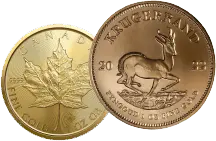
Because its composition is known and consistent, refined gold is easy to price, trade, and reuse. It appears in the market as:
Reserve metal held by central banks and institutions
The key advantage of refined gold is certainty. A buyer looking at a .9999 fine gold bar does not need to test it extensively – the fineness is stamped, the weight is standardized, and the market already trusts it. That trust translates directly into price.
Scrap Gold vs Refined Gold: Why the Value Gap Exists
Scrap gold almost always sells below the gold spot price. Refined gold, particularly investment-grade bullion, trades close to spot – sometimes slightly above it due to fabrication premiums. The gap between those two points is not a dealer trick. It reflects real costs and real risks.
Why Scrap Sells Below Spot
1
Testing Every lot of scrap must be assessed for metal content before a buyer can price it accurately. That takes time and equipment.
2
Sorting Mixed karats, soldered joints, and plated components mean a batch of scrap is rarely uniform. Buyers sort and separate.
3
Refining The metal must be melted and processed to reach a usable purity. Refineries charge for that service.
4
Uncertainty Scrap can contain solder, non-gold alloys, or plating. Buyers discount to protect themselves from hidden losses.
5
Margin Dealers and refineries operate businesses. Their offer reflects processing costs plus a reasonable profit.
Each of those factors chips away at the theoretical melt value. The result is that a seller rarely receives the full spot-price equivalent for scrap gold – and that is normal across the entire industry.
Refined gold carries far less uncertainty. A recognized bullion coin or bar has already absorbed the refining cost in its original production. When you sell it back into the market, the buyer skips most of those steps, and the price reflects that efficiency.
How Scrap Gold Value Is Calculated
The foundation of any scrap gold offer is a simple formula: weight x purity x spot price. Every variable matters.
Weight is measured in troy ounces or grams. One troy ounce equals 31.1 grams. A kitchen scale will not give you a reliable reading – use a jeweler’s scale calibrated for troy weight.
Purity is expressed in karats for jewelry. The karat system divides gold into 24 parts:
Karat
Gold Content
Decimal Equivalent
24k
100%
0.9999
18k
75%
0.750
14k
58.5%
0.585
10k
41.7%
0.417
A 14-karat ring is only 58.5% gold. The rest is copper, silver, or other alloy metals. When calculating melt value, you apply that decimal to the item’s total weight to find the actual gold content.
Spot price is the current market price for one troy ounce of pure gold. At the time of writing, gold is trading at approximately $4,511 per troy ounce. That number is the ceiling, not the floor – it is the price for pure, refined gold in the wholesale market, not what a scrap buyer will pay for mixed-karat material.
To put it in concrete terms: a 14-karat ring weighing 5 grams contains about 2.93 grams of pure gold, or roughly 0.094 troy ounces. At today’s spot price of $4,511 per ounce, that gold content has a theoretical melt value of about $424. A buyer’s actual offer will be less than that, reflecting the costs described above. How much less depends on the buyer, the lot size, and current market conditions.
Types of Scrap Gold and What Affects Each One
Not all scrap is equal. The form of the material affects how easy it is to process and, therefore, how competitive an offer you can expect.
Jewelry is the most common category. Karat stamps (10k, 14k, 18k, 750, 585) tell you the purity. Unmarked pieces require testing. Mixed lots – a bag of assorted chains and rings – may be assessed differently than a uniform batch of the same karat.
Dental gold is typically high-karat, often 16k to 18k or higher in older restorations. It is a clean, dense material that refineries handle routinely. Dental gold is worth assessing carefully before selling, because its gold content can be substantial.
Gold watch components – cases, clasps, and bezels – are often gold-filled rather than solid gold. Gold-filled material contains a much thinner layer of gold bonded to a base metal core. Its melt value is far lower than solid gold of the same weight. Know what you have before you sell.
Industrial gold – contacts, circuit board components, and gold dust – requires specialized processing. Yields can vary, and this category is generally handled by commercial refineries rather than retail buyers.
Damaged coins and bars sold for melt value are technically scrap, but they may still carry numismatic or collector premiums depending on the piece. A rare date coin that is scratched is still a rare date coin. Have it evaluated before treating it as raw metal. Our blog on melt value vs collectible pricing covers this distinction in more detail.
Refined Gold: Pricing and the Spot Price Relationship
Refined gold products – bars and bullion coins – trade in a tighter band around spot price. The premium over spot varies by product type, mint, and weight.
Smaller coins and fractional bars carry higher premiums per ounce than larger ones, because fabrication costs are spread over less metal. A 1/10-ounce coin costs more per ounce than a one-ounce coin from the same mint. A one-ounce bar typically carries a lower premium than a one-ounce coin, because coins involve more detailed minting.
Refined Gold vs Scrap Gold: Key Trade-offs
Pros
✓ Refined gold trades close to spot – minimal discount when selling
✓ Purity is known and standardized – no testing uncertainty
✓ Easier to liquidate quickly through bullion dealers and secondary markets
✓ Recognized globally – gold bars and coins accepted by dealers worldwide
Cons
✗ Refined gold products carry a fabrication premium when purchased
✗ Scrap gold can sometimes be acquired cheaply (estate sales, thrift stores) and converted to value
✗ Scrap payout involves processing costs that reduce net proceeds
For a seller, the practical takeaway is this: if you already own refined bullion, you are closer to spot when you sell. If you own scrap, expect a wider gap – but the gold still has real value, and a competitive buyer will offer a fair price based on current spot.
Historical Context: Gold Recycling and the Scrap Market
Gold has been recycled for thousands of years. It does not rust, corrode, or disappear. Ancient civilizations melted old coins and jewelry to make new ones. That same logic drives the modern scrap gold market.
What changed over time is precision. Early recycling was informal – melt it down, recast it, move on. Modern refining uses chemical and electrochemical processes to remove specific impurities and reach a known fineness. Assaying technology made it possible to measure gold content accurately, which made the scrap trade more reliable and more commercial.
Gold Recycling Through History
Ancient era
Melting and recasting Gold objects were recycled by melting and reforming – purity was approximate
Medieval period
Assaying develops Fire assay techniques allowed more accurate measurement of gold content
Industrial era
Commercial refining Large-scale refineries emerged to process gold from mining and scrap sources
Modern era
Standardized bullion Hallmarking, assaying, and refining created the global bullion standard we use today
Today, scrap gold feeds a global supply chain. Refineries process incoming material, produce standardized metal, and sell it back into jewelry manufacturing, electronics, and bullion markets. The scrap seller at the beginning of that chain and the bullion buyer at the end are connected by a series of value-adding steps – each of which costs something.
Common Misconceptions About Scrap Gold Value
Several myths circulate about what scrap gold is worth and how it is priced. Here are the ones that cause the most confusion.
“Scrap gold is worthless.” It is not. Scrap gold has real melt value based on its gold content. Even a heavily worn piece of 10-karat jewelry contains real gold that a refinery can recover and use.
“Gold-plated items are the same as solid gold.” They are not. Plated items have a thin surface layer of gold over a base metal core. The gold content is minimal, and melt value is negligible compared to solid gold of the same weight.
“Spot price is what I will receive.” Spot is a wholesale reference price for pure, refined gold in large quantities. Retail sellers of scrap gold receive less than spot. Sellers of refined bullion receive closer to spot, but still not exactly spot.
“24-karat jewelry is common.” 24-karat gold is very soft and impractical for everyday wear. Most jewelry is 10k, 14k, or 18k. 24-karat gold appears more often in bars, coins, and industrial applications than in wearable jewelry.
“All buyers pay the same.” They do not. Offers vary between buyers based on their processing costs, volume, and business model. Getting more than one offer is always a good idea.
Practical Steps Before You Sell
A few minutes of preparation can meaningfully affect the offer you receive.
Separate items by karat. Mixed lots are harder to assess and may be priced conservatively. Sort 10k, 14k, and 18k pieces into separate groups.
Weigh your items. Use a scale calibrated for troy ounces or grams. Know the total weight before you talk to any buyer.
Check for collector value. Look up any coins, antique pieces, or branded jewelry before assuming they are scrap. Selling a collectible as scrap means losing that premium permanently.
Identify gold-filled or plated items. These are not solid gold. Keep them separate from solid gold pieces.
Ask how the buyer calculates their offer. A reputable buyer can explain what spot price reference they use and how purity factors into the offer.
Get more than one offer. Comparing offers takes time but often pays off.
For a deeper look at selling scrap gold online, including what to expect from the process, that resource covers the key steps in detail.
Selling Scrap or Refined Gold Through Accurate Precious Metals
Accurate Precious Metals has been buying and selling precious metals since 2012 from its base in Salem, Oregon. With more than 2,200 Google reviews and competitive pricing updated to reflect live spot prices, the team handles everything from broken jewelry and dental gold to refined bullion bars and coins.
ℹ️ Info: Accurate Precious Metals is not a pawn shop. It is a specialized precious metals dealer with the expertise to assess scrap, bullion, and numismatic pieces accurately – and offer competitive prices based on current market conditions.
If you are local to Salem, Oregon, you can bring your items in for an in-person evaluation. The team will assess your gold – whether it is scrap jewelry, dental material, or refined bullion – and make you a competitive offer on the spot.
If you are anywhere else in the United States, the mail-in service makes the process straightforward. You receive a free insured shipping kit, send your items securely, and receive a fast offer based on current spot prices. Payment follows quickly once you accept. There is no obligation to sell if the offer does not meet your expectations.
Whether you are holding a collection of gold coins you want to liquidate, a box of old jewelry, or something in between, Accurate Precious Metals has the experience to evaluate it properly and pay a fair price. Reach the team by phone at (503) 400-5608 or visit AccuratePMR.com to start the process.
Frequently Asked Questions
What is the difference between scrap gold and refined gold?
Scrap gold is any gold item sold for its metal content – jewelry, dental gold, broken pieces. Refined gold has been processed to a standardized purity, typically .999 fine or better, and appears as bars, coins, or grain. Scrap is the raw material; refined gold is the finished product.
Why does scrap gold sell for less than spot price?
Buyers must test scrap to determine its gold content, sort mixed-karat material, and pay to have it refined before it can re-enter the market as usable metal. Those costs, plus the buyer’s margin, reduce the offer below the spot price.
How do I calculate the melt value of my gold jewelry?
Multiply the item’s weight in troy ounces by its purity as a decimal (14k = 0.585, 18k = 0.750) and then multiply by the current gold spot price. At the time of writing, gold spot is approximately $4,511 per troy ounce. The result is the theoretical melt value before any buyer discount.
Does refined gold always sell closer to spot than scrap?
Generally, yes. Refined bullion – bars and investment-grade coins – trades in a tighter band around spot because purity is already known and processing costs are minimal for the buyer. Scrap requires more work, so buyers pay less relative to spot.
Should I sell my gold coins as scrap or as coins?
That depends on whether the coins have numismatic value. Common bullion coins in good condition typically sell closer to spot as bullion. Rare dates, key issues, or historically significant coins may be worth significantly more than melt value. Have them evaluated before deciding.
How do I sell gold to Accurate Precious Metals if I am not in Oregon?
Use the mail-in service at AccuratePMR.com. You receive a free insured shipping kit, send your items, and receive a competitive offer based on current spot prices. Payment is fast once you accept. The service covers the entire United States.
Is gold-plated jewelry worth selling as scrap?
Gold-plated items contain only a thin surface layer of gold over a base metal. The actual gold content is very small, and melt value is negligible compared to solid gold. It is worth checking, but do not expect significant returns from plated pieces.
Make the smart choice: invest with Accurate Precious Metals
Whether you are buying bullion for the first time or adding to a long-term position, our team offers expert guidance, transparent pricing, and a reliable buyback program.