Like our coverage? Add Accurate Precious Metals as a preferred source on Google.
Knowing how to verify legitimate online gold buyers before you ship a single gram of gold is the most valuable thing you can do as a seller. The online gold-buying market has grown significantly, and with that growth came both real opportunity and real risk. This guide gives you a practical, step-by-step framework to check any buyer’s identity, reputation, pricing terms, and shipping process – so you can sell with confidence instead of anxiety.
Gold Scrap Value Calculator – Accurate Precious Metals Refineries
Why Verification Matters More Online Than In Person
When you walk into a local coin shop or jewelry store, you can see the business, meet the staff, and leave with cash in hand. Online selling removes all of that face-to-face trust. You are shipping something valuable to a stranger and waiting for payment. That is not inherently dangerous, but it means you have to build documented trust instead of in-person trust.
The history of online gold buying reflects this shift. Mail-in gold programs became common as tracked logistics improved. Competition increased, which was good for sellers – but so did misleading pricing, hidden deductions, and bait-and-switch offers where a buyer quotes one number, then drops it sharply after receiving the item. Verifying a buyer before you ship replaces the handshake with a paper trail.
The Four Layers of Buyer Verification
Every verification process for online gold buyers comes down to four questions. Work through each one before you commit to any buyer.
Is the business real, reachable, and established? Look for a verifiable name, physical address, working phone number, and a track record of completed transactions.
Do independent reviews show a consistent pattern? Check third-party platforms – not just the company’s own website.
Is the offer tied to the current spot price, with fees and spreads explained in plain language?
Are shipping, appraisal, return, and payment terms written down and available before you send anything?
If a buyer cannot satisfy all four layers, that is a signal to keep looking.
How to Verify a Buyer’s Identity
Start with the basics. A legitimate company has a verifiable business name, a physical address that matches across its website and public filings, and a working phone number you can actually call. Search the company name alongside words like “reviews,” “complaints,” and “scam.” What comes back tells you a lot.
Check whether the business appears on the Better Business Bureau (BBB) directory, and look at the complaint history – not just the rating. A company with a few resolved complaints is not automatically bad. A company with a pattern of unresolved payment disputes is a serious red flag.
For buyers who deal specifically in bullion, Consumer Affairs recommends checking whether the dealer appears on the U.S. Mint authorized purchaser list or the London Bullion Market Association (LBMA) Good Delivery list. Membership in trade organizations like the American Numismatic Association (ANA) or Jewelers of America (JA) adds another layer of accountability, though membership alone does not replace checking reviews and terms.
Reading Reviews the Right Way
Third-party review platforms – Google, Trustpilot, Yelp, and similar sites – are useful, but only if you read them critically. Look for patterns, not outliers. A single five-star review posted the day the company launched means nothing. Dozens of consistent reviews over several years, with specific details about the selling experience, carry real weight.
Pay attention to how the company responds to negative reviews. A business that engages professionally with criticism is demonstrating accountability. A business that ignores complaints or responds defensively is showing you something important about how they handle disputes.
Also look at top gold buyers online comparison resources for side-by-side reputation summaries. These can help you quickly identify which buyers have the strongest independent track records.
Understanding Pricing Transparency
Pricing transparency is one of the clearest signals that a buyer is legitimate. Reputable dealers base offers on the spot price of gold and then apply their margin, commonly called the spread. That spread is normal – buyers have real costs including assay testing, refining, labor, and shipping. What matters is that the buyer is willing to explain how the offer connects to the current market.
At the time of writing, gold is priced at approximately $4,418 per ounce. Silver is around $72 per ounce, platinum near $1,865 per ounce, and palladium approximately $1,303 per ounce. Spot prices move daily, so any quote you receive should reference current market conditions. A buyer who cannot tell you how their offer relates to spot is a buyer you should question.
The misconception that the highest offer is always the safest is worth addressing directly. An unusually high quote is often a tactic to attract sellers, with the real offer dropping sharply after the item arrives. If one buyer quotes significantly more than three others, treat it as a warning, not a win.
What to Know About Your Gold Before You Sell
Not all gold is valued the same way. Bullion bars and coins are priced almost entirely on weight and purity. Scrap gold jewelry is valued by karat and weight. Numismatic coins, antique jewelry, and signed or estate pieces can carry premiums well above melt value because of rarity, condition, or craftsmanship.
A buyer who treats every item as simple scrap may be honest but not optimal for a collector. Before you contact any buyer, know what you have:
- Bullion bars and rounds – valued by weight and fineness (.999 or .9999 for gold)
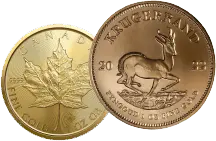
- Government-minted coins – such as [American Gold Eagles] or [Gold Maple Leafs], which may carry premiums
- Scrap gold jewelry – valued by karat (10K, 14K, 18K) and weight
- Estate or antique jewelry – may be worth more than melt value
- Numismatic or collectible coins – rarity and condition drive value beyond metal content
Knowing your category helps you choose the right buyer and evaluate whether an offer is fair. A buyer who specializes in bullion may not be the best choice for a rare coin collection.
How to Verify Legitimate Online Gold Buyers: Practical Steps
These checks are straightforward and apply whether you are selling a single ring or a box of mixed coins.
Contact at least three buyers before shipping anything. Comparing offers gives you a baseline and makes low-ball offers obvious.
Use a digital scale before mailing. Record the weight and photograph the result. If the buyer’s post-receipt weight differs significantly, you have documentation to challenge it.
Take clear photos from multiple angles, including any hallmarks (10K, 14K, 18K, 585, 750, 999, 9999). These photos protect you if a dispute arises.
Confirm you can get your items back if you reject the final offer. A legitimate buyer will have a clear, written return process.
Never ship gold through untracked mail or informal services. If the buyer provides a shipping kit, confirm it includes insurance coverage.
Save copies of all messages, quotes, and receipts. If a dispute occurs, documentation is your only use.
Common Red Flags to Watch For
Some warning signs are obvious. Others are easy to miss if you are not looking.
- The company communicates only through vague web forms or messaging apps, with no direct phone number or email.
- The buyer refuses to provide a physical address or business license information.
- The initial quote is far above every other offer, then drops sharply after the item arrives.
- The website has copied or generic text, broken pages, or no real customer service contact.
- The buyer pressures you to ship quickly, discourages questions, or discourages comparing offers.
- Payment is offered only through gift cards, wire transfers to personal accounts, or informal apps.
Any one of these should make you pause. Multiple red flags should end the conversation.
What a Legitimate Process Looks Like
A trustworthy online gold buyer follows a predictable, documented process. Here is what that looks like in practice:
- The buyer provides a preliminary quote based on your item description, photos, and stated weight and karat.
- The buyer explains that the final offer may change only after physical verification of weight and fineness.
- Shipping is handled through an tracked, trackable method – either a prepaid kit or a shipping label with declared value.
- The buyer confirms receipt and inspection in writing, typically by email.
- Payment is made through a traceable method – bank transfer, company check, or another documented channel.
- If you reject the offer, the buyer returns your items promptly at no cost to you.
If any step in this sequence is missing or vague, ask for clarification before proceeding. A legitimate buyer will not hesitate to explain their process.
Why Accurate Precious Metals Stands Out
Accurate Precious Metals has been operating out of Salem, Oregon since 2012. With more than 2,200 Google reviews and a nationwide mail-in service, the company has built a track record that is easy to verify independently. This is not a pawn shop – it is a specialized precious metals dealer with the expertise to evaluate bullion, coins, jewelry, scrap gold, dental scrap, silverware, and more.
For sellers anywhere in the United States, the mail-in gold program makes the process straightforward. You receive a free shipping kit, your items are assessed for metal content by the team, and payment is fast. If you are local to Salem, Oregon, you can also visit in person for a direct evaluation. Both options give you access to competitive offers based on current spot prices.
Accurate Precious Metals is also an NGC Authorized dealer and offers Gold and Silver IRA services for retirement investors. The breadth of inventory – gold, silver, platinum, palladium, coins, bars, diamonds, and jewelry – means the team has the knowledge to evaluate nearly anything you bring to them. For collectors with numismatic pieces, that expertise matters. For sellers with scrap jewelry or mixed lots, the convenience and competitive pricing matter.
If you are ready to sell my gold and want a buyer you can verify easily, Accurate Precious Metals checks every box in the framework above: real address, working phone, years of independent reviews, written terms, tracked shipping, and fast payment. Start with a quote, compare it against others, and see for yourself.
Frequently Asked Questions
What is the most important thing to check when verifying an online gold buyer?
Start with identity – confirm the business has a real address, working phone number, and a track record you can verify independently. Then check third-party reviews, pricing transparency, and written terms for shipping and returns.
Is it safe to mail gold to an online buyer?
Yes, if you use an insured and trackable shipping method, document your items before sending, and have written terms from the buyer confirming their return policy. Never ship gold through untracked mail.
Why do offers sometimes drop after I ship my gold?
Some buyers use an inflated preliminary quote to attract sellers, then reduce the offer after receiving the item. This is why getting multiple quotes and reading the return policy before shipping is so important.
How do I know if a gold buyer’s offer is fair?
Compare the offer to the current spot price of gold – at the time of writing, gold is approximately $4,418 per ounce. A fair offer will reflect the metal’s weight and purity relative to spot, minus the buyer’s margin for processing and business costs.
Should I sell numismatic coins to the same buyer as scrap jewelry?
Not necessarily. Numismatic coins can carry significant premiums above melt value based on rarity and condition. A buyer who specializes in scrap may not recognize or pay for that premium. Use a buyer with demonstrated expertise in the specific category you are selling.
Does Accurate Precious Metals buy gold from outside Oregon?
Yes. Accurate Precious Metals offers a nationwide mail-in service with free shipping. Customers anywhere in the United States can use the mail-in program. Local customers in Salem, Oregon can also visit in person.
What hallmarks should I photograph before mailing gold jewelry?
Look for stamps like 10K, 14K, 18K, 585, 750, 916, 999, or 9999 on the piece. These indicate karat or fineness. Photograph them clearly alongside a scale reading of the item’s weight.
Sources
- Mintly – How to Verify Gold Buyers Online
- Consumer Affairs – Best Gold Buyers and Dealer Verification
- US Coins – Reputable Coin Dealer Standards
- Money – Gold Buying Transparency and Spot Price Guidance
- This loads content from YouTube (Google), which may set its own cookies. Watch on YouTube
Make the smart choice: invest with Accurate Precious Metals
Whether you are buying bullion for the first time or adding to a long-term position, our team offers expert guidance, transparent pricing, and a reliable buyback program.
Ready to invest wisely?