
Like our coverage? Add Accurate Precious Metals as a preferred source on Google.
This article delves into gold’s specific gravity, exploring its density, calculations, and comparisons with other metals. Understanding these concepts is crucial for anyone involved in buying, selling, or investing in precious metals. By grasping the density of gold and its specific gravity, you can make informed decisions in the market, ensuring accuracy in transactions and evaluations.
Consider checking out Accurate Precious Metals if you are interested in buying gold, selling your gold, or getting your gold evaluated and tested for free.
What is Specific Gravity, and Why is it Important for Gold?
Specific gravity (SG) refers to the ratio of the density of a substance to the density of a reference substance, typically water. For gold, the specific gravity is 19.32, meaning it is 19.32 times denser than water. This measurement is crucial for identifying the purity of gold items, especially in the jewelry and coin markets. Knowing the specific gravity of gold allows buyers and sellers to determine whether a piece is genuine or counterfeit.z
The specific gravity and density of gold are both the same value of 19.32. However, density and specific gravity are different concepts. Density is an absolute value measured in mass per unit volume, whereas specific gravity is a ratio comparing the density of something to the density of another thing.
So what is specific gravity used for? In this context, it helps calculate the value of gold based on its Weight and purity. Since gold is one of the heaviest metals, understanding its specific gravity aids in evaluating how much a piece should weigh compared to its size. This knowledge can prevent financial loss when buying or selling gold products, making it a critical aspect of precious metal transactions.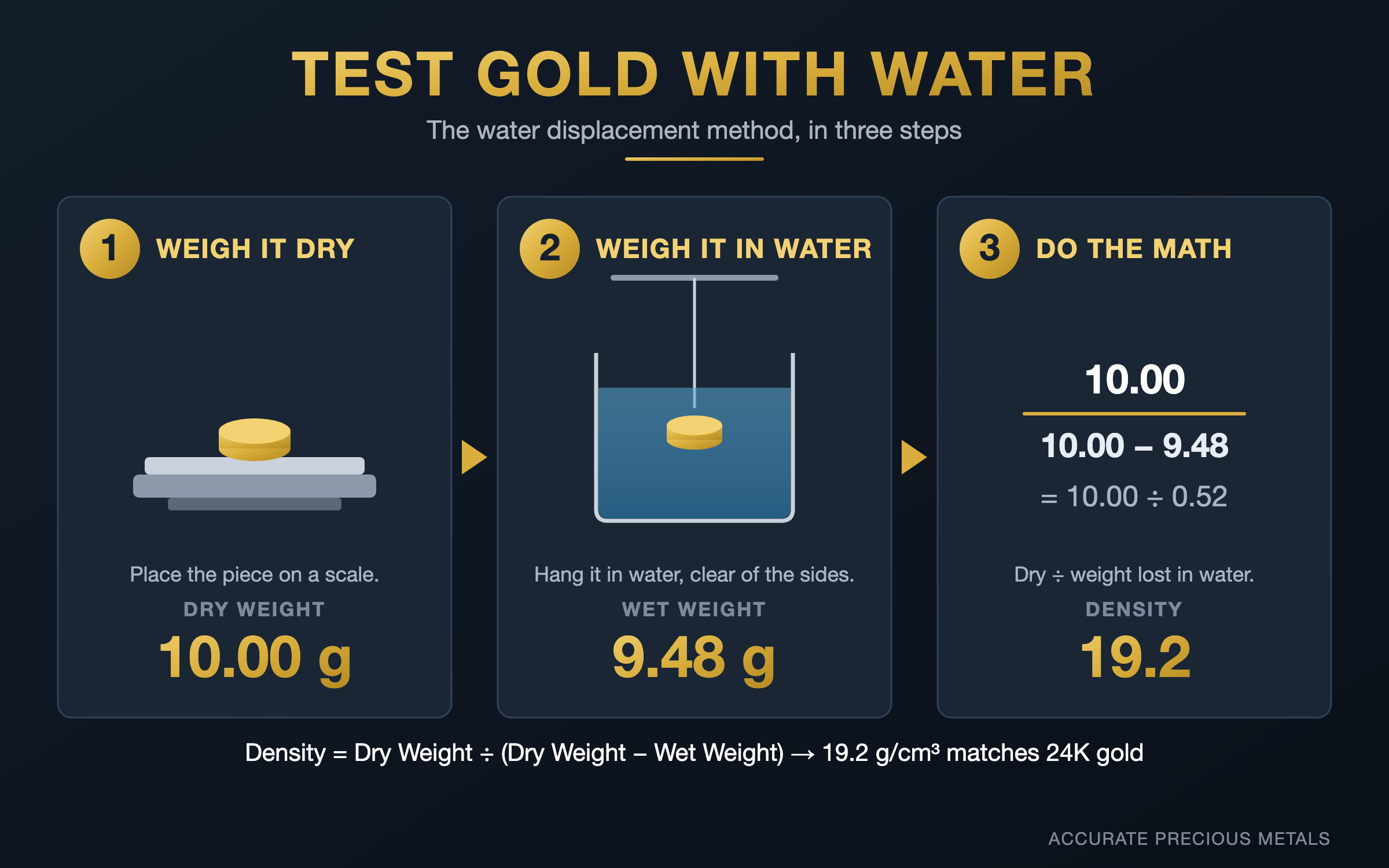
How to Calculate the Specific Gravity of Gold?
To calculate the specific gravity of gold, you need to measure the Weight of the gold item in air and then submerge it in water to measure the weight loss. The formula to calculate specific gravity is:
SG = Weight in air / (Weight in air – Weight in water)
For example, if you weigh a gold coin and find it weighs 50 grams in air and 45 grams when submerged in water, the calculation would be:
SG = 50 g / (50 g – 45 g) = 50 g / 5 g = 10.0
This example shows how to determine the specific gravity of gold, allowing you to assess the purity and authenticity of the gold item effectively. Always ensure you use accurate measurements to avoid discrepancies in your calculations.
What is the Density of Gold Compared to Other Metals?
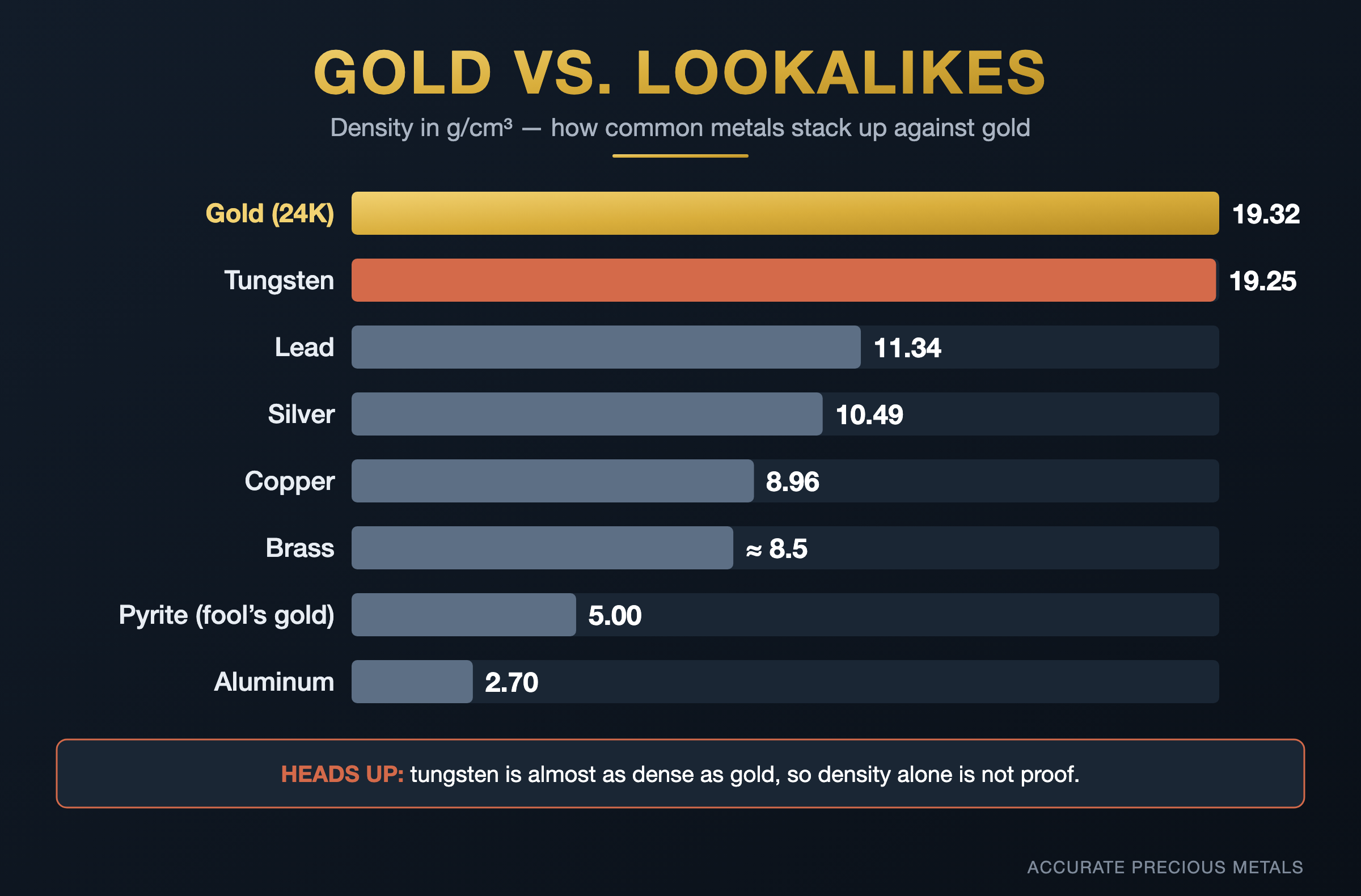
Gold’s density is approximately 19.32 grams per cubic centimeter, which distinguishes it from many other metals. Silver’s density is 10.49 grams per cubic centimeter, while platinum’s is slightly denser at around 21.45 grams per cubic centimeter. These differences in density help jewelers and investors identify and compare metals in terms of value and quality.
Understanding the density of different metals is also essential when creating alloys. For example, white gold, an alloy of gold and metals like nickel or palladium, has a different density than pure gold. This variation can affect both the appearance and the value of the resulting jewelry. Therefore, knowing the density of gold in relation to other metals helps assess the overall content of precious metals in an item.
Is Gold the Most Dense Metal?
Gold, renowned for its luster and value, is certainly dense, with a density of about 19,320 kg/m³. However, it doesn’t claim the title of the most dense metal. That distinction goes to two lesser-known but fascinating elements: osmium and iridium.
Osmium: This bluish-white metal tops the density charts at roughly 22,590 kg/m³. Its remarkable density makes it a standout in the world of metals, though it’s far less talked about than gold.
Iridium: Not far behind, iridium boasts a density similar to osmium’s, making it a close contender. Its application in high-durability items, like spark plugs and equipment for the production of chlorine, highlights its robust nature.
In comparison, while gold is certainly heavy, these metals surpass it, showcasing nature’s remarkable diversity.
Understanding Gold’s Density
Gold is renowned for its impressive density, measuring approximately 19,320 kg/m³. This characteristic not only makes gold one of the densest metals available but also plays a vital role in various applications within the gold industry.
Importance of Density in Gold
Quality Assurance: The high density is a definitive indicator of pure gold. Any deviations might suggest the presence of impurities.
Industrial Applications: Whether in smelting operations, crafting jewelry, or trading, density serves as a crucial factor. It helps in verifying authenticity and in calculating the necessary amount of gold for specific projects.
Measuring Density
Accurate measurement of gold’s density is essential. Precise calculations ensure the highest standards of purity and quality, critical for industries that rely on the metal’s integrity. Although density might slightly fluctuate due to impurities, consistently high readings are expected for pure gold.
What Are Other Units for Measuring Gold Density?
Gold density can be measured using several units, tailored to specific industrial needs and preferences. Here’s a breakdown of the most commonly used units:
Grams per Cubic Centimeter (g/cm³): In jewelry and small-scale operations, this unit is prevalent. Gold density stands at approximately 19.32 g/cm³. This precise measurement is crucial for crafting fine jewelry and ensuring product quality.
Kilograms per Cubic Meter (kg/m³): Widely used in various scientific and technical applications, gold’s density is about 19,320 kg/m³. This unit is particularly useful for broader calculations in material science.
Pounds per Cubic Foot (lb/ft³): For larger scale industries, like mining and smelting, this unit offers a practical approach. Gold’s density in these terms is around 1,206 lb/ft³. It facilitates accurate calculations for production and ensures adherence to quality standards.
These units help in accurately determining gold density for a range of applications, from intricate jewelry design to extensive industrial processes, supporting precise production and quality assurance.
What Factors Affect the Density of Gold?
Understanding the factors that influence the density of gold is crucial for assessing its purity and value. Several key elements play a role in determining gold’s density:
Purity (Carat)
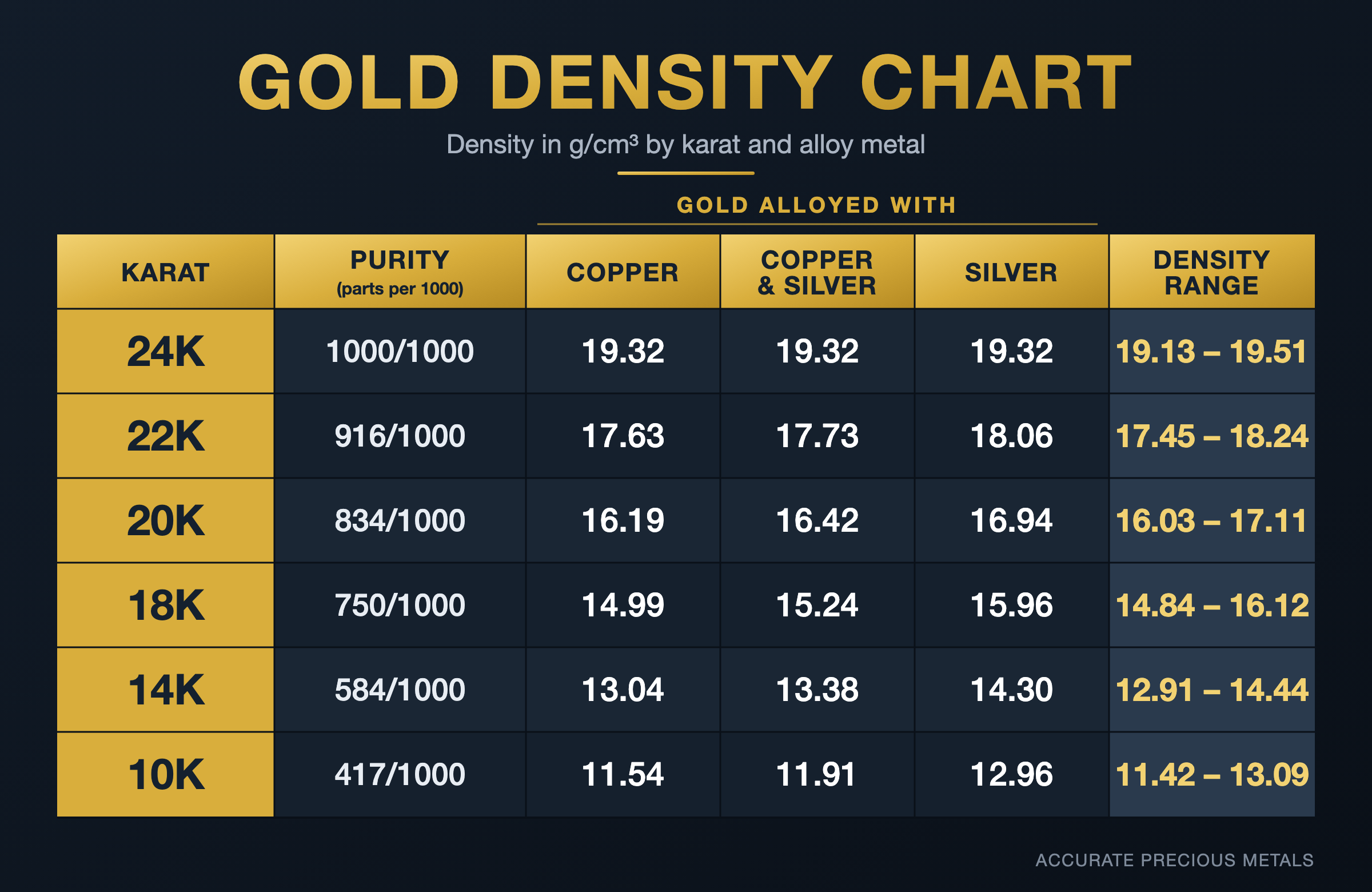
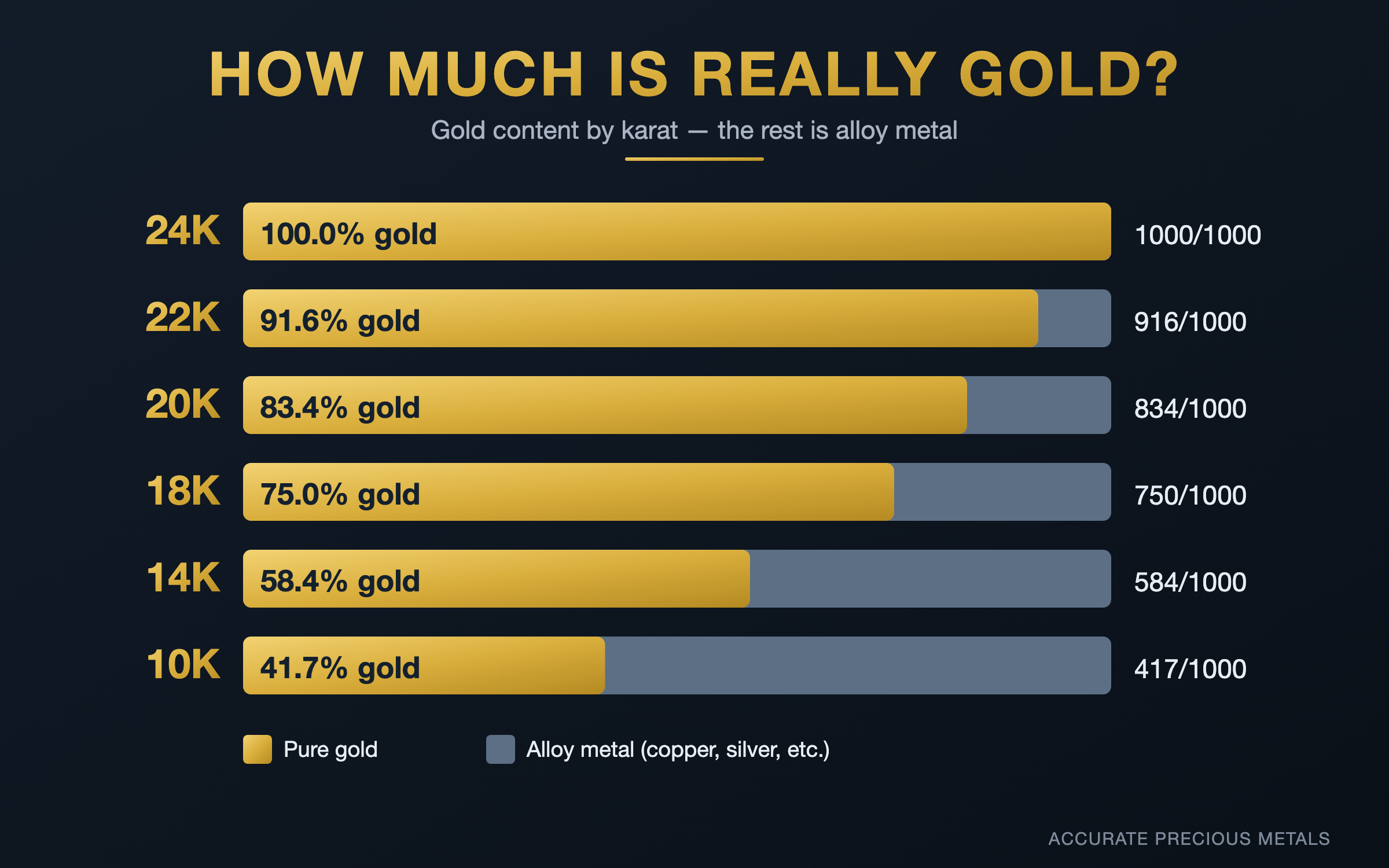
The carat weight of gold, which signifies its purity, significantly impacts its density. 24-carat gold, known for its near-perfect purity, boasts a density of approximately 19,320 kg/m³. In contrast, 18-carat gold—comprising 75% gold and 25% other metals—has a notably lower density. The inclusion of alloying metals, which are generally less dense than gold, reduces its overall density.
Alloying Metals
Gold is often mixed with other metals, such as silver, copper, or nickel, to enhance its hardness and durability. These metals typically have a lower density than gold, leading to a decrease in overall density as their proportion increases. For instance, the presence of lighter metals in 18-carat gold makes it less dense than its 24-carat counterpart.
Temperature
Temperature variations can affect the density of metals, including gold. As temperature increases, most metals expand, causing a decrease in density. However, gold’s specific gravity remains relatively stable across standard temperature ranges encountered in everyday conditions. This stability is one reason why gold is a reliable metric for assessing purity and value in varied environments.
When measuring the density of gold, it is essential to conduct the measurement at a consistent temperature to ensure accuracy. Variations in temperature can lead to slight deviations in density readings, which can impact calculations and assessments. Lab conditions often standardize temperature to eliminate this variable, ensuring the precise determination of gold’s density and specific gravity.
By understanding these factors—purity, alloy composition, and temperature—you can better appreciate the complexities involved in calculating the density of gold, a vital metric in the world of precious metals.
FAQs About Specific Gravity and Density of Gold
What is the specific gravity of gold?
The specific gravity of gold is 19.32, making it one of the densest metals available.
How does density affect the value of gold?
The density of gold directly influences its Weight and, consequently, its value. Higher density often indicates a higher purity level, which contributes to the overall price of gold.
Can the specific gravity of gold vary?
Pure gold’s specific gravity remains constant at 19.32, but alloys can have different specific gravities depending on the other metals included.
How do I test the purity of gold using specific gravity?
You can test the purity of gold by calculating its specific gravity using the Weight in air and submerged in water. Comparing the calculated SG to the known value for pure gold helps determine purity.
What is the significance of density in the jewelry market?
Density plays a crucial role in the jewelry market, helping determine the authenticity and value of gold and other precious metals. It is a key factor in assessing the purity of gold, which directly influences its quality.
The density of pure gold is a well-established standard, measured at 19,320 kilograms per cubic meter. This precise figure serves as a benchmark for evaluating purity. Any deviation from this value can suggest the presence of contaminants or alloying metals, which may compromise the quality of the gold.
By understanding and measuring density, jewelers and buyers alike can ensure they are dealing with authentic, high-quality gold. This makes density not just a scientific metric, but a practical tool in the assessment and valuation of gold in the market.
The specific gravity of gold is 19.32, making it significantly heavier than many other metals.
Accurate measurements of Weight and density are essential for identifying genuine gold products.
Alloys can have varying densities, affecting their value compared to pure gold.
Using density charts simplifies the process of assessing the quality of precious metals.
Specific gravity testers and digital scales are practical tools for measuring specific gravity.
Sources
Gold, Silver, and Platinum – Understanding Density. Investopedia.
Understanding Specific Gravity and its Importance in Gold Testing. Jewelry Shopping Guide.
Gold and its Alloys: A Guide for Investors. Kitco.
Specific Gravity: The Key to Authenticating Gold. Gem Society.
Measuring Precious Metal Density: Techniques and Tools. Gem Society.
Make the smart choice: invest with Accurate Precious Metals
Whether you are buying bullion for the first time or adding to a long-term position, our team offers expert guidance, transparent pricing, and a reliable buyback program.
Ready to invest wisely?