
Like our coverage? Add Accurate Precious Metals as a preferred source on Google.
Learn the art of gold recovery to unlock the hidden value in old hard drives. This comprehensive guide offers essential tips and tricks for extracting precious metals from scrap hard drives, making it a must-read for electronics recyclers and DIY enthusiasts alike.
If you are interested in learning more about the value of gold, selling gold you've accumulated, or buying some gold, check out our gold bullion page.
What Makes Hard Drives Valuable for Gold Recovery?
Hard drives contain several valuable components for gold recovery, primarily gold-plated connectors and circuit boards. These components often contain small amounts of gold, which can accumulate significantly when processed in bulk. Gold recovery from electronics not only helps recycle precious metals but also reduces electronic waste, contributing to a more sustainable environment.
Hard disk drives (HDDs) from old computers and laptops are treasure troves for those looking to extract gold and other precious metals. In addition to gold, you may also find copper, aluminum, and even platinum in various components, making hard drives a highly sought-after source for metal recovery.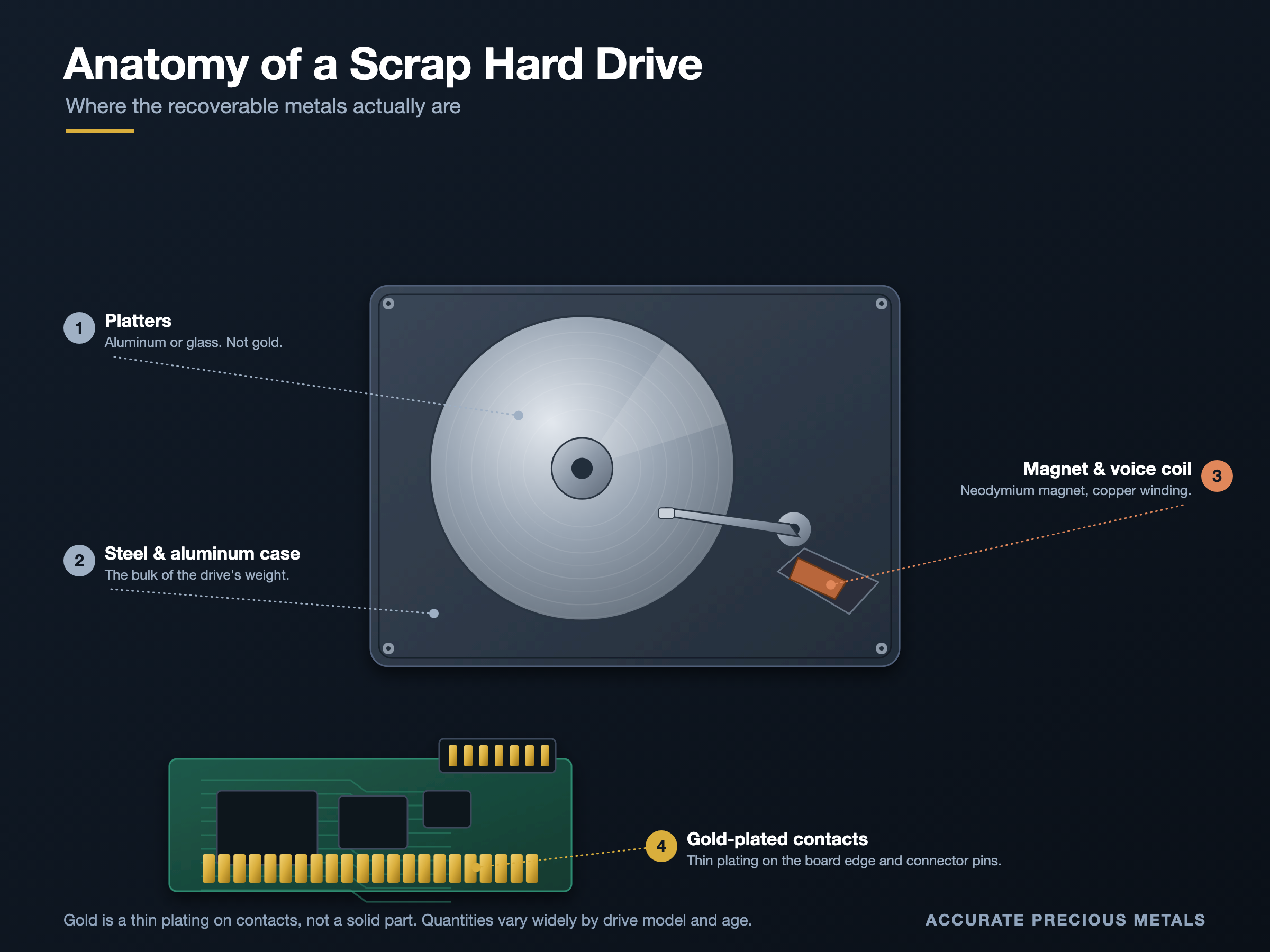
How Much Gold is in Hard Drives?
The amount of gold you can extract from old hard drives varies significantly depending on the model and type. On average, each hard drive can yield anywhere from 0.2 to 0.5 grams of gold, particularly from gold-plated pins and connectors. While this may seem like a small amount, the cumulative effect of processing multiple drives can lead to substantial quantities of gold recovery.
For example, if you have a collection of 100 old hard drives, the potential gold yield can reach around 20 to 50 grams. This translates to a considerable amount when you consider the current market value of gold, making it an attractive venture for those willing to invest time in the extraction process. Check out the live spot price of gold.
What Tools Do You Need for Gold Recovery?
To effectively recover gold from hard drives, you’ll need a set of essential tools. Basic tools include screwdrivers, pliers, and a soldering iron for disassembling the hard drives. Additionally, you’ll require safety gear, such as gloves and goggles, to protect yourself during the recovery process.
For the chemical extraction of gold, you may need materials like nitric acid and borax, which help in refining the extracted metals. A crucible is necessary for melting the gold, and an induction heating setup can provide the necessary heat to reach the melting point of gold (approximately 1,064 degrees Celsius).
Luckily, there is no need to refine the gold yourself. If you have any gold, in any form, you can sell it directly to us at Accurate Precious Metals Refineries. We refine gold ourselves, so we are able to give you competitive prices on gold. We also offer free mail-in kits so you can send us your gold from anywhere in the US. 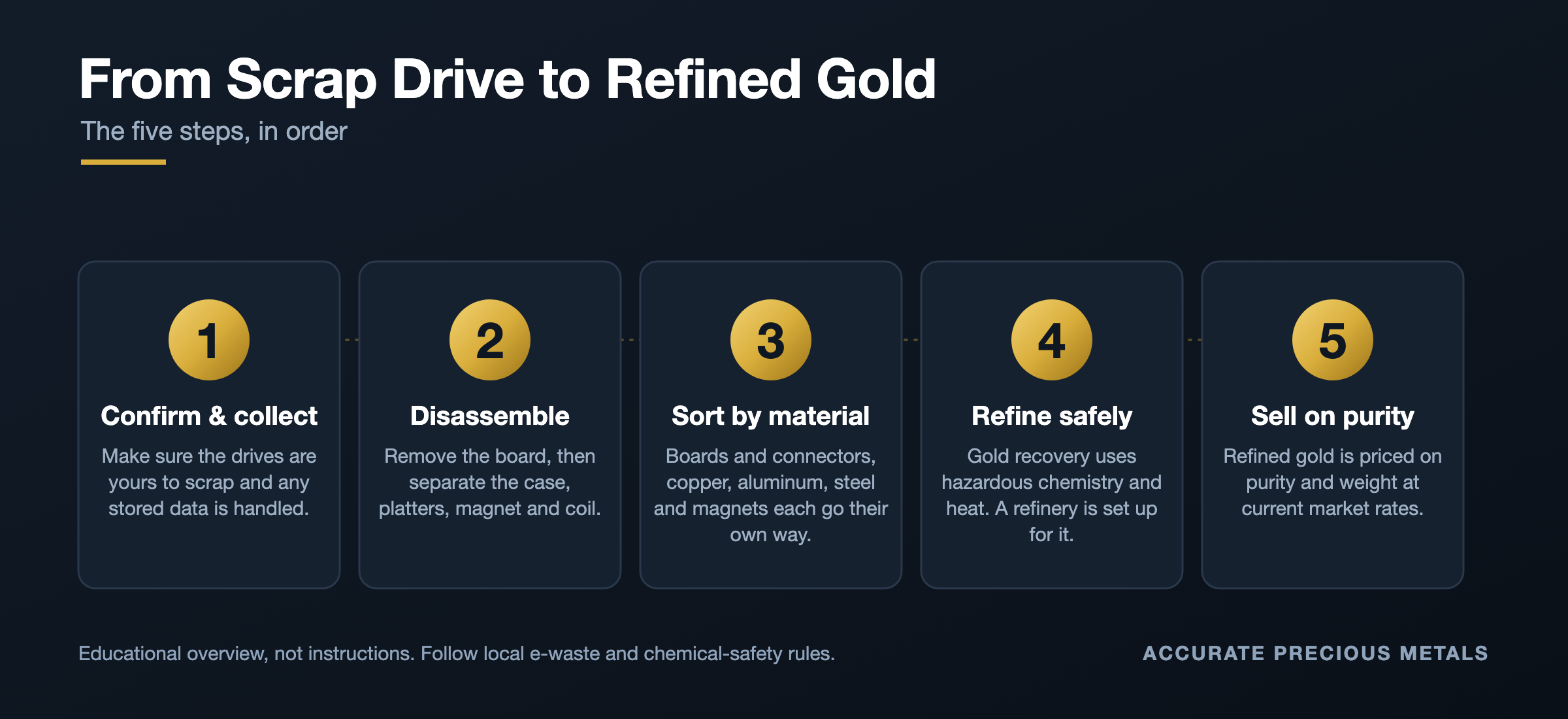
How to Disassemble a Hard Drive for Gold Recovery?
Begin by removing the screws from the hard drive casing using a screwdriver. Once opened, locate the printed circuit board (PCB) and carefully detach it. The PCB contains most of the gold-plated components, such as connectors and pins.
Be cautious while handling the internal components, as they can be delicate. You may also want to remove the hard disk drive platter, as it can contain traces of gold. After disassembling, separate the various materials, such as aluminum and copper, for recycling purposes.
What Safety Precautions Should You Take?
Safety should always be a priority when engaging in gold recovery from hard drives. Always take extra precautions, and consider using professionals like Accurate Precious Metals Refineries to buy and refine your gold instead of attempting to do it yourself.
Can You Sell the Extracted Gold?
After successfully extracting and refining gold from hard drives, selling it can be a rewarding next step. You can sell your gold ingots or refined gold to dealers like Accurate Precious Metals, who specialize in purchasing precious metals. They offer competitive prices based on current market rates, allowing you to profit from your recovery efforts.
Before selling, ensure you understand the purity of your gold, as this will affect its market value. The higher the purity, the more you can expect to earn. Accurate Precious Metals provides valuable insights into the selling process and the current gold market trends.
FAQs About Gold Recovery from Scrap Hard Drives
What types of hard drives yield the most gold?
Generally, older hard drives, particularly those from pre-2000 models, tend to have more gold content than modern drives. However, even newer drives can still provide valuable recovery components.
What happens to the other metals extracted?
Other metals, such as copper and aluminum, can be recycled or sold separately. Many recycling centers accept these materials, allowing you to profit further from your efforts.
Is there a legal aspect to gold recovery?
Ensure that you own the hard drives from which you are extracting gold. To avoid any legal issues, it’s crucial to comply with local laws regarding electronic waste and recycling.
How can I learn more about gold recovery?
Numerous online resources, forums, and communities focus on gold recovery and electronic recycling. YouTube, for instance, hosts a wealth of tutorials and tips from experienced individuals in the field.
Sources
“Gold Recovery from Electronics.” Recycling.com.
“How to Recover Gold from Electronics.” 911 Metallurgist.
“The Complete Gold Recovery Process.” Science Lab.
Make the smart choice: invest with Accurate Precious Metals
Whether you are buying bullion for the first time or adding to a long-term position, our team offers expert guidance, transparent pricing, and a reliable buyback program.
Ready to invest wisely?