This content is for educational purposes only and is not financial or investment advice. Precious metals prices fluctuate; past performance does not guarantee future results. Consult a qualified professional before making investment decisions.
The difference between gold plating vs solid gold is not just cosmetic – it determines whether a piece of jewelry holds any real financial value at all. A gold-plated ring and a solid gold ring can look nearly identical in a display case, but their worth diverges dramatically the moment you look past the surface. One is a precious metal asset. The other is fashion jewelry with a thin disguise.
If you have ever wondered how much is my gold worth, the first question any appraiser will ask is whether the piece is solid gold or plated. That single answer can mean the difference between hundreds of dollars and essentially nothing.
What Makes Solid Gold Valuable
Solid gold has intrinsic value because the metal runs all the way through. A 14k solid gold ring is 58.3% pure gold by weight, alloyed with copper or silver to add durability. That gold content is real, measurable, and recoverable.
When gold trades at $4,022 per ounce at the time of writing, a 14k solid gold ring weighing 5 grams contains roughly 2.9 grams of pure gold – worth over $1,100 in raw metal alone. That is the melt value: what the piece is worth if you stripped away the craftsmanship and sold the metal. Solid gold always has a floor price tied to the spot market, no matter what happens to jewelry trends or fashion cycles.
The karat system tells you exactly how much gold you are holding. 24k is 99.9% pure. 18k is 75% gold. 14k is 58.3%. 10k is 41.7%. Each step down reduces the melt value proportionally, but every one of those pieces still contains a meaningful amount of gold you can recover. For a deeper look at how karat purity affects price, gold karat purity and price breaks it down clearly.
Why Gold Plating Has Almost No Melt Value
Gold-plated jewelry is made by electroplating – running an electrical current through a solution containing dissolved gold, which bonds a thin layer of gold onto a base metal core. The base is usually brass, copper, or nickel. The gold layer itself is typically 0.5 to 2.5 microns thick.
To put that in perspective: one micron is one-millionth of a meter. The gold on a plated piece is so thin that the total gold content of a standard plated ring is less than 0.05 grams. At $4,022 per ounce at the time of writing, that gold is worth less than $7. The rest of the piece is cheap base metal with no precious metal value.
This is why gold-plated jewelry is never treated as an investment. The “worth” is entirely aesthetic. Once the plating wears through – and it will – you are left with a brass or copper piece that has no gold to recover at all.
⚠️ Warning: Gold-plated jewelry has no melt value. When you sell it, you are selling the base metal, not gold. Do not expect precious metal pricing for a plated piece.
The Full Spectrum: Types of Gold-Coated Jewelry
Not all gold-coated jewelry is the same, but none of it competes with solid gold on value. Here is how the main types compare:
Type
Gold Content
Base Metal
Typical Lifespan
Collector Value
Solid Gold (14k)
58.3% throughout
None (copper/silver alloy)
Lifetime
High – real melt value
Gold Plated (GP)
Less than 0.05% to under 1%
Brass, copper, nickel
6 months to 2 years
None – fashion only
Gold Vermeil
2.5+ microns (10k-14k)
Sterling silver
3 to 5 years
Low – silver base value only
Heavy Gold Electroplate (HGE)
2 to 3 microns
Brass or nickel
1 to 3 years
None – base metal value
Gold vermeil is higher quality than standard plating because the base is sterling silver, which at least has some scrap value. But it is still not solid gold and will not fetch gold prices. Gold-filled and HGE pieces have thicker layers than standard plating, but they still contain less than 5% gold by weight and have no meaningful melt value.
The article gold-filled vs solid gold value covers this distinction in more detail if you want to dig into the gold-filled category specifically.
How to Tell Solid Gold from Plated: Four Practical Tests
You do not need a laboratory to spot the difference. These four methods work for most pieces.
1. Check the Stamp
This is the fastest and most reliable method. Look for a small hallmark stamped inside a ring band, on a clasp, or on the back of a pendant.
No stamp at all is a red flag. Most plated or costume jewelry either carries a plating mark or nothing. Solid gold from a reputable jeweler will always be stamped. For a full guide to reading purity marks, understanding gold purity stamps is a useful reference.
2. Check for Wear
Look at the highest-friction areas – the inside of a ring band, the edge of a bracelet, the back of a pendant. If you see a different color peeking through, that is the base metal showing where the plating has worn away. Solid gold looks the same color all the way through, even on scratched or worn surfaces.
3. The Magnet Test
Gold is not magnetic. If a piece sticks to a strong magnet, the base metal is magnetic – usually steel or nickel – which means the piece is plated. This test is not foolproof on its own (some white gold alloys with nickel can show a slight pull), but it is a fast first screen.
4. Weight and Density
Gold is dense – 19.3 grams per cubic centimeter. Solid gold feels noticeably heavier than a plated piece of the same size. If you want to go further, weigh the piece in grams, submerge it in water to measure its volume displacement, and calculate density. A result close to 19.3 g/cm³ points to solid gold. A result in the 8 to 10 g/cm³ range points to a base metal core.
The price difference between plated and solid gold is enormous, and it reflects the actual material cost.
A gold-plated ring typically sells at retail for $20 to $200. You are paying for the design and the surface appearance, not the metal.
A solid 14k gold ring typically starts around $500 and rises quickly depending on weight and craftsmanship. At $4,022 per ounce at the time of writing, the raw gold in a 5-gram 14k ring is worth over $1,100. The retail price includes that metal cost plus labor and markup.
When you go to sell, the gap widens further. A solid gold piece will fetch a competitive offer based on its melt value. A plated piece will fetch nothing meaningful – the base metal is worth pennies, and no precious metals dealer will pay gold prices for it.
$1,100+
Raw gold value in a 5g 14k ring (at $4,022/oz spot)
Under $7
Raw gold value in a typical plated ring
0.05g
Approximate gold content in a plated ring
2.9g
Approximate gold content in a 5g 14k solid gold ring
Common Misconceptions That Cost Sellers Money
“Gold-plated jewelry is a good investment.” It is not. It has no melt value, and the plating degrades over time. The piece loses its only asset – its appearance – as the gold wears off.
“If it looks gold, it has gold value.” Appearance is cheap to manufacture. Value comes from the weight and purity of the actual metal, not the color of the surface.
“Gold-filled or HGE is basically the same as solid gold.” These terms describe thicker plating, not solid gold. They still lack the 58%+ purity of solid gold and carry no meaningful melt value.
“I can clean gold-plated jewelry the same way I clean solid gold.” Ultrasonic cleaners and harsh chemicals strip plating immediately. Plated pieces require gentle handling only. Solid gold can withstand ultrasonic cleaning and most standard jewelry cleaners without damage.
What to Do If You Have Plated Jewelry to Sell
If you have a plated piece you want to sell, be realistic about expectations. No reputable precious metals dealer will offer gold prices for a plated piece – the gold content simply is not there. What you can do:
Sell it as vintage or costume jewelry through a resale platform if it has aesthetic or brand value
Check whether the base metal has any scrap value (brass and copper have minor scrap markets)
If you are unsure whether a piece is plated or solid, get it assessed before assuming it has no value
That last point matters. Some pieces that look plated are actually solid gold with heavy wear or an unusual alloy color. A professional assessment resolves the question quickly.
If you are local to Salem, Oregon, bring the piece into Accurate Precious Metals in person. If you are anywhere else in the United States, the mail-in service lets you ship your jewelry securely – the kit includes insured shipping, and the team evaluates the piece and makes a competitive offer based on current spot prices. For guidance on preparing a mail-in submission, gold jewelry mail-in prep walks through the process step by step.
Solid Gold: The Only Option With Real Resale Value
Solid gold holds value because it is a commodity tied to a global market. When gold spot prices rise – and at $4,022 per ounce at the time of writing, they are near historic highs – every gram of solid gold you own becomes worth more. Plated jewelry does not benefit from rising gold prices at all, because there is almost no gold in it.
For buyers who want pieces that hold their value, solid gold is the only jewelry category worth considering. Gold jewelry vs bullion value is a useful read if you are weighing whether jewelry or bullion coins and bars make more sense for your goals.
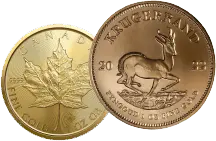
Solid gold bars and coins are the purest expression of this principle. A 1 oz gold bar at .9999 fineness contains almost exactly one troy ounce of pure gold. Its value tracks spot directly. There is no plating, no base metal, no uncertainty about content. Gold coins from major mints carry government-backed purity marks and are globally recognized as tradeable assets.
Why Accurate Precious Metals Is the Right Place to Start
Accurate Precious Metals has since 2012 been helping customers across the United States understand exactly what their gold is worth – whether it is a solid gold ring, a stack of bullion coins, or a piece they are not sure about. With over 1,000 five-star reviews and competitive pricing tied to live spot rates, the team brings real expertise to every transaction.
Unlike a pawn shop, Accurate Precious Metals specializes in precious metals. That means assessments are based on actual metal content, not guesswork or lowball offers. If you bring in a piece – or mail it in – the team evaluates it properly, identifies whether it is solid gold or plated, and makes an offer that reflects current market conditions.
Local customers can visit the Salem, Oregon location directly. Customers anywhere in the U.S. can use the insured mail-in service – free shipping kit, professional evaluation, and fast payment. Either way, you will know exactly what you have and what it is worth.
If you have gold jewelry sitting in a drawer and you are not sure whether it is solid or plated, do not guess. Get it checked. The answer changes everything about what it is worth.
Frequently Asked Questions
Does gold-plated jewelry have any resale value?
Very little. The gold content in a plated piece is less than 1% of the total weight – often under 0.05 grams. At current spot prices, that is worth under $10 in raw metal. Any resale value comes from the piece's aesthetic appeal or brand recognition, not the metal itself.
How do I know if my jewelry is solid gold or plated?
Check the hallmark stamp first. Solid gold is stamped with a karat mark (10K, 14K, 18K, etc.) or a purity number (585, 750). Plated pieces are stamped GP, GEP, HGE, or RGP. Worn areas showing a different color underneath are also a clear sign of plating.
Can gold-plated jewelry be replated to restore its value?
Replating restores the appearance temporarily, but it does not add meaningful gold content. The piece remains a plated item with no melt value. Replating costs typically run $30 to $100 per piece, which makes it practical only for sentimental items.
What is gold vermeil, and is it worth more than standard plating?
Gold vermeil uses sterling silver as the base instead of brass or copper, and the gold layer must be at least 2.5 microns thick. It is higher quality than standard plating and lasts longer, but it still has no gold melt value. The only recoverable value is the silver base.
Will a magnet test tell me if my jewelry is solid gold?
It can help. Gold is not magnetic, so if a piece is strongly attracted to a magnet, the base metal is magnetic – a sign it is plated. However, some white gold alloys contain nickel and may show a slight pull, so use the magnet test alongside stamp checking and visual inspection rather than relying on it alone.
Is it worth sending plated jewelry to a mail-in gold buyer?
Only if you are not certain whether the piece is plated or solid. If you already know it is plated, the payout will be minimal. If there is any doubt, a professional evaluation is worth doing – some pieces that appear plated are actually solid gold with heavy wear.
How much is a 14k gold ring worth in raw metal right now?
It depends on weight. At $4,022 per ounce at the time of writing, a 14k ring (58.3% pure gold) weighing 5 grams contains about 2.9 grams of pure gold, worth roughly $1,100 in melt value. Heavier rings are worth proportionally more.
Make the smart choice — invest with Accurate Precious Metals
Whether you are buying bullion for the first time or adding to a long-term position, our team offers expert guidance, transparent pricing, and a reliable buyback program.