This content is for educational purposes only and is not financial or investment advice. Precious metals prices fluctuate; past performance does not guarantee future results. Consult a qualified professional before making investment decisions.
Collectors buying from private sellers can find genuine bargains – but the risks are real and the mistakes are costly. Unlike buying from a licensed dealer, private sales come with no formal recourse if something goes wrong. Understanding how to verify what you’re buying, price it correctly, and protect yourself during the transaction is the difference between a great addition to your collection and an expensive lesson.
Gold sits at $4,094/oz and silver at $60/oz at the time of writing. Those numbers matter because every private sale price should be measured against them. If you don’t know the spot price, you can’t evaluate whether a deal is fair – or whether something is off.
Why Private Sellers Are Different From Dealers
Private sellers are not in the business of precious metals. They’re retirees, hobbyists, estate heirs, or people clearing out old collections. That can work in your favor – they may price items based on sentimental value rather than market research. But it also means there’s no quality control, no return policy, and no professional accountability.
A reputable dealer like Accurate Precious Metals maintains live pricing, verifies every item it sells, and has more than a decade of experience and more than 2,200 Google reviews to back that up. A private seller has none of that infrastructure. That doesn’t make every private seller dishonest – most aren’t – but it does mean you carry more responsibility as the buyer.
ℹ️ Info: Private sellers range from trustworthy collectors to unknowing sellers of fakes. Your job is to verify everything before money changes hands.
What Types of Gold and Silver You’ll Encounter
Private sellers typically offer one of four categories of precious metals:
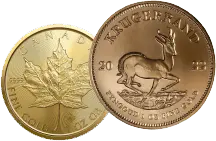
Bullion coins and bars: Items like [American Gold Eagle] coins or [Canadian Maple Leaf] rounds. Their value is based primarily on metal weight and purity.
Numismatic coins: Rare or historically significant coins like Morgan Silver Dollar issues, where value comes from rarity, age, and condition – not just metal content.
Jewelry and scrap: Rings, chains, and broken pieces valued for melt content rather than design.
Collectible or limited-edition bars: Specialty bars with added design premiums that may or may not hold value over time.
Bullion is the easiest category to price because you’re working directly from spot. Numismatic coins require significantly more research. A coin that looks old isn’t necessarily rare, and a coin that looks worn may still carry strong collector value depending on the date and mint mark. If you’re new to coin collecting and grading, start with bullion and work up to numismatics once you understand the grading system.
How to Price What a Private Seller Is Offering
The spot price is your anchor. At the time of writing, gold is $4,094/oz and silver is $60/oz. Everything a private seller offers should be evaluated against those numbers.
Here’s how pricing typically breaks down in private sales:
Item Type
Typical Price vs. Spot
What Drives the Difference
Bullion coins
5-15% above spot
Minting costs, demand, convenience
Numismatic coins
20-100%+ above spot
Rarity, grade, historical significance
Jewelry and scrap
At or below spot
Condition, mixed metals, refining costs
Collectible bars
Variable
Design premium, limited edition status
If a seller is offering gold at $3,800/oz when spot is $4,094/oz, treat that as a red flag. Metal priced well below spot is almost always fake, stolen, or misrepresented. Deals that seem too good almost always are.
Collectors Buying From Private Sellers: Red Flags to Watch For
Knowing what to avoid matters as much as knowing what to look for. These are the warning signs that should make you walk away:
The seller refuses to let you inspect or weigh the item before purchase.
There’s no documentation – no receipt, no original packaging, no grading report.
The price is significantly below current spot value with no clear explanation.
The seller insists on cash only and wants to complete the deal quickly.
The item lacks the expected weight or dimensions for its supposed type.
The seller has no verifiable history in collector communities or forums.
Pressure tactics are a classic sign of a bad deal. A legitimate private seller will welcome your questions, allow inspection, and have no problem waiting while you verify the item.
How to Inspect Metal Before You Buy
Physical inspection is your first line of defense. You don’t need a lab – just a few basic tools and some knowledge.
Checking Authenticity Before Buying
1
Magnet test Gold and silver are not magnetic. If a coin or bar is attracted to a strong magnet, it contains ferrous metal and is not what it claims to be.
2
Weight check Every coin and bar has a published weight. A 1 oz American Eagle should weigh exactly 1.0909 troy ounces. Bring a pocket scale. Any deviation is a problem.
3
Dimensions Counterfeit coins often differ slightly in diameter or thickness. Check published specs for the coin type before you meet.
4
Ping test Genuine silver produces a distinctive ring when lightly tapped. Base metal fakes produce a dull thud. Free apps can analyze the sound.
5
Acid test kits For scrap or jewelry, an acid test kit can confirm metal content. These are inexpensive and widely available.
6
Ask for documentation Graded coins should come with a PCGS or NGC slab. Ask for original packaging, certificates, or prior purchase receipts.
For higher-value purchases, consider having the item assessed by a professional before finalizing the deal. Accurate Precious Metals offers in-person evaluation at its Salem, Oregon location and can assess items thoroughly before you commit to a private sale price.
Learning to spot counterfeit coins is a skill every collector should develop before spending serious money in private markets.
Documentation: What to Get in Writing
A verbal agreement is not enough. Every private sale of precious metals should produce a paper trail. This protects both parties and becomes critical if questions arise later about provenance or ownership.
A proper bill of sale should include:
The date of the transaction
Full names of both buyer and seller
Description of the item – metal type, weight, purity, and any identifying marks
Agreed purchase price
Signatures from both parties
For numismatic coins, ask for grading reports from PCGS or NGC. These third-party grading services assign a standardized condition grade and seal the coin in a tamper-evident holder. A coin in a legitimate slab is significantly easier to price and resell. If the seller claims a coin is graded but can’t produce the slab, be skeptical.
⚠️ Warning: Never accept a photocopy of a grading certificate in place of the actual slabbed coin. Certificates can be duplicated; the physical slab cannot be faked easily.
Where to Find Trustworthy Private Sellers
Not all private sale channels carry the same risk. Some platforms have built-in protections; others are wide open.
eBay: Buyer protection policies exist, and verified seller ratings are visible. It’s one of the safer online options for private purchases, though you still need to inspect upon arrival.
Collector forums and clubs: Reddit’s r/coins and r/Silverbugs communities have established reputations systems. Local coin clubs offer face-to-face transactions with known members.
Estate sales: Can yield genuine finds, but condition is often uncertain and pricing is inconsistent. Bring your reference tools.
Facebook Marketplace: Only use it for local, in-person deals. Never wire money or pay in advance for items sold through social media ads.
Local classifieds: Community boards and newspapers occasionally list estate collections. Lower volume means more time to evaluate each deal.
Avoid unverified Facebook ads, yard sales, and any seller who won’t meet in person for a physical transaction. Finding value at coin shows is another strong option – dealers and private sellers both attend, and the environment is built around collector trust.
How to Pay Safely
Payment method matters. Once money leaves your hands, recovering it from a private seller can be nearly impossible.
Safest Payment Methods for Private Sales
Pros
✓ Cashier’s check – bank-verified funds, harder to dispute than cash
✓ Money order – traceable and widely accepted
✓ In-person cash inside a bank – a teller can witness the transaction
Cons
✗ Wire transfers – nearly impossible to reverse if fraud occurs
✗ Cryptocurrency – no recourse whatsoever if the deal goes wrong
✗ Personal checks – can bounce; seller may disappear before it clears
Complete the transaction in a public place. Bank lobbies, police station parking lots, and AAA offices are all commonly recommended safe exchange locations. Bring a friend when possible, especially for high-value deals.
When to Walk Away
Some situations aren’t worth the risk regardless of how good the price looks. Walk away when:
The seller can’t explain where the item came from
The item doesn’t match its described weight or dimensions
You’re being rushed or pressured to decide immediately
The seller refuses to meet in a public location
Documentation is missing or inconsistent
The price is below spot with no logical explanation
Trust your instincts. If something feels wrong, it probably is. There will always be another deal.
Building Your Collection Safely Over Time
The collectors who build the strongest portfolios are the ones who move deliberately. A few principles hold up across decades of collecting:
Start with straightforward bullion before moving into numismatics. Buying the best coins for your collection takes time to learn, and bullion gives you a clean baseline for understanding spot-based pricing.
Join a collector community early. Local clubs and online forums give you access to trusted seller networks, mentorship, and real-world pricing data. These relationships are worth more than any single deal.
Keep records from day one. Every purchase should be documented – what you paid, who you bought from, and what the item’s condition was at the time. This matters for insurance, resale, and estate planning.
Store your collection properly. A quality safe protects against theft and fire. For significant holdings, consider a rider on your homeowner’s insurance policy.
How Accurate Precious Metals Can Help
Whether you’re buying, selling, or simply trying to verify what you already own, Accurate Precious Metals is the resource collectors across the country rely on. Based in Salem, Oregon, in business since 2012 and a nationwide shipping network, Accurate PMR is a specialized precious metals dealer – not a pawn shop – with the expertise to back it up.
If you’ve purchased something from a private seller and want a professional opinion on what it’s worth, bring it in person to the Salem location or use the convenient mail-in service available at . The mail-in program includes free insured shipping, thorough evaluation of your items, and fast payment. Local customers are always welcome to stop in directly.
Accurate PMR is also an NGC Authorized Dealer, which means grading services are available for coins that need professional assessment before you buy or sell. Pricing on all inventory reflects live spot prices, so you always know you’re working with current market data.
If you’re ready to buy from a trusted source rather than working through the private market alone, Accurate PMR carries gold, silver, platinum, and palladium in coins, bars, and bullion – all competitively priced and available for nationwide delivery. Explore collecting tips and tricks to sharpen your approach, or reach out directly at (503) 400-5608.
Frequently Asked Questions
Is it safe to buy gold or silver from a private seller?
It can be, but it requires more due diligence than buying from a dealer. Verify the metal's authenticity, check the weight, get documentation, and pay in a traceable way. Never rush a transaction.
How do I know if a private seller's price is fair?
Compare it to the current spot price. At the time of writing, gold is $4,094/oz and silver is $60/oz. Bullion typically sells at 5-15% above spot. Anything significantly below spot should raise concerns.
What documents should I ask for when buying from a private seller?
Request a bill of sale with both parties' names, a description of the item, the purchase price, and signatures. For graded coins, ask for the original PCGS or NGC slab.
What's the safest way to pay a private seller?
A cashier's check or money order completed inside a bank is the safest option. Avoid wire transfers and cryptocurrency – these payments are nearly impossible to recover if fraud occurs.
How can I verify a coin's grade before buying?
Use the lookup tool to check PCGS or NGC certification numbers. If the seller claims a coin is graded, the certification number should match the database.
Where can I get a professional opinion on something I've already purchased?
Accurate Precious Metals in Salem, Oregon offers in-person evaluations. Customers outside Oregon can use the mail-in service at AccuratePMR.com for a thorough assessment and competitive offer.
What's the difference between bullion and numismatic coins?
Bullion coins are priced based on their metal weight and current spot price. Numismatic coins carry additional value based on rarity, historical significance, and condition. Understanding what numismatists look for helps you evaluate both types accurately.
Make the smart choice: invest with Accurate Precious Metals
Whether you are buying bullion for the first time or adding to a long-term position, our team offers expert guidance, transparent pricing, and a reliable buyback program.