This content is for educational purposes only and is not financial or investment advice. Precious metals prices fluctuate; past performance does not guarantee future results. Consult a qualified professional before making investment decisions.
If you want to buy gold silver bullion online, the process comes down to comparing purity, weight, and price against the live spot market before you ever click "add to cart." Bullion is priced off a moving benchmark, so the sticker price you see today reflects both the metal's value and the dealer's premium for minting, handling, and shipping.
This guide walks through what bullion actually is, how spot price translates into what you pay, and what to look for in a dealer so you get a fair deal whether you are buying your first silver coin or building a serious gold position.
What Does It Mean to Buy Gold Silver Bullion Online?
Buying bullion online means purchasing physical gold or silver bars and coins from a dealer's website, with the metal shipped to your door instead of handed over in a shop. The product is priced primarily for its metal content, not for rarity or collector appeal, and it typically ships insured within days of payment clearing.
Bullion comes in two main shapes: bars and coins. Bars run from 1 oz pieces up through 10 oz, 100 oz, and 1 kg blocks, while coins are almost always sold in 1 oz, 1/2 oz, 1/4 oz, and 1/10 oz sizes. Reputable online dealers update their prices in real time or at set intervals tied to spot benchmarks, so the number you see should track the market closely, not lag days behind.
Online dealers also tend to carry a wider range of products than a local shop's display case. That includes sovereign coins from multiple mints, generic bars from established refiners, and specialty pieces you might never find on a physical shelf. Browsing a gold bullion or silver bullion category page lets you compare weights and premiums side by side before deciding.
How Does Spot Price Affect What You Pay for Bullion?
Spot price is the live wholesale price of raw metal, and it sets the floor for every bullion transaction, but it is never the final number you pay. At the time of writing, gold spot sits at about $4,037 per ounce and silver spot is about $58 per ounce, and retail bullion prices are built on top of those figures.
The math looks like this in almost every transaction:
Spot price for the metal
Plus a manufacturing and distribution premium
Plus shipping and insurance
Sometimes plus sales tax, depending on your state and the product
Premiums vary by product type. A large gold bar usually carries a lower premium per ounce than a small coin, because the cost of minting and packaging is spread across more metal. A widely traded coin like an American Gold Eagle usually costs more per ounce than a generic gold bar of the same weight, but it is also easier to resell to almost any dealer later.
Platinum at about $1,597 per ounce and palladium at about $1,266 per ounce follow the same pricing logic, though fewer dealers stock them and spreads tend to run wider because trading volume is lower.
Should You Buy Gold Coins or Gold Bars?
Bars generally cost less per ounce, while coins are easier to recognize and resell in smaller amounts. That trade-off is the single biggest decision most buyers face when they start shopping for gold bullion.
A 1 oz gold bar from an established refiner often carries a premium of a few percent over spot, since fabrication costs are lower for a plain bar shape. Coins, by contrast, involve more detailed dies, government backing, and design work, which adds cost but also adds instant recognition anywhere in the world.
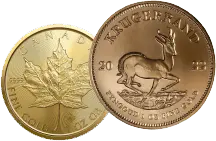
Popular gold coin options include fractional pieces like the 1/10 oz Gold Maple Leaf, 1/4 oz Gold Maple Leaf, and 1/2 oz Gold Maple Leaf, all struck in .9999 fine gold by the Royal Canadian Mint. Buyers who want variety beyond North American mints often look at the 1/2 oz Kangaroo Gold Coin from Perth Mint, or classic designs like the Krugerrandand American Buffalo.
Feature
Gold Coins
Gold Bars
Typical premium over spot
4-8%
1-3%
Purity
.9167-.9999
.999-.9999
Recognition/liquidity
Very high for major mints
High for known refiners
Best for
Smaller, flexible resale
Lowest cost per ounce
If your goal is the lowest cost per ounce, a bar wins. If your goal is easy resale in smaller increments and broad recognition, a well-known sovereign coin is usually the better call.
What Are the Most Popular Silver Bullion Options?
Silver bullion is priced the same way as gold but at a much lower dollar amount per ounce, which makes it the most accessible entry point into physical metals. At about $58 per ounce at the time of writing, a single 1 oz silver coin costs far less than a 1 oz gold coin, letting new buyers build a stack gradually.
Common silver formats include 1 oz coins, 10 oz bars, 100 oz bars, and 1 kg bars. Popular coin choices include the 1 oz Silver Canadian Maple Leaf, struck in .9999 fine silver, along with widely traded designs like the American Silver Eagleand Australian Kangaroo.
Collectors who like variety often add silver rounds and world coins to their holdings, such as the Morgan Dollar silver round, the Mexican Libertad, or the 1 oz Silver Krugerrand. These pieces still contain a full troy ounce of silver, but their design and mint of origin can affect resale interest down the line.
Remember that a troy ounce equals 31.1035 grams, not the 28.35 grams of an everyday avoirdupois ounce used for groceries. That distinction matters when you are comparing a 100 g gold bar, which weighs about 3.215 troy oz, against a 1 kg bar, which weighs about 32.15 troy oz.
Should You Consider Platinum or Palladium Bullion?
Platinum and palladium are legitimate bullion metals, but the market for them is thinner than gold or silver, so buyers should expect narrower selection and wider spreads. At about $1,597 per ounce for platinum and $1,266 per ounce for palladium at the time of writing, both metals trade at a fraction of gold's per-ounce cost but well above silver's.
Fewer dealers stock platinum and palladium bars and coins compared to the huge catalog available for gold and silver. Industrial demand, especially from the automotive sector for catalytic converters, drives a large share of palladium and platinum pricing, which makes their spot prices move differently than gold or silver at times.
For buyers who want diversification beyond the two major metals, platinum bars and coins are the more commonly available option of the two, with palladium remaining a smaller niche market even among dedicated bullion dealers.
How Do You Spot a Legitimate Online Bullion Dealer?
A legitimate online bullion dealer publishes clear pricing tied to live spot, lists company registration and contact details, and explains its shipping, insurance, and buyback policies before you check out. If a site hides any of that information or won't answer a direct phone call, treat it as a warning sign.
Before ordering from any dealer, check for:
Prices updated against current spot, not a stale number from days earlier
Clear statement of whether displayed prices include sales tax
Insured, tracked shipping with a stated delivery window
A published buyback or return policy in case you want to sell later
Verifiable business history, reviews, and a real phone number or physical address
💡 Tip: Compare the *all-in* cost, not just the sticker price. Add spot, premium, shipping, and tax together before deciding which dealer is actually cheaper.
What Premiums Should You Expect When You Buy Bullion Online?
Premiums typically run from about 1% to 3% over spot on large gold bars, up to 4% to 8% over spot on popular gold coins, with silver coins often running higher in percentage terms because the base metal price is so much lower. These are general ranges, and actual premiums shift with market demand, product availability, and the specific mint or refiner.
Smaller pieces almost always carry a higher premium per ounce than larger ones, because minting costs, packaging, and distribution get spread across less metal. A 1 kg silver bar will usually beat the per-ounce cost of ten separate 1 oz coins, even though the coins are easier to sell off individually later.
Taxes can change the picture as much as premiums do. Some states tax bullion purchases below a certain dollar threshold, while others exempt bullion products entirely. Always check whether a listed price includes tax before comparing two dealers side by side, since an untaxed lower price can end up costing more at checkout than a taxed higher one.
Can You Turn Jewelry or Scrap Into Bullion?
Yes. Many buyers fund new bullion purchases by first selling unused jewelry, dental gold, or old silverware for its metal content, then rolling that cash into coins or bars. This is a common and practical way to convert items sitting in a drawer into holdings you can track against live spot prices.
Accurate Precious Metals buys gold, silver, platinum, and palladium in almost any form, including scrap gold, broken jewelry, dental gold, silverware, and coins, offering competitive prices based on current spot values. If you are local to the Salem, Oregon area, you can bring items in for an in-person evaluation. If you are anywhere else in the country, the mail-in service lets you ship items in with a free insured kit and get paid without leaving home.
For gold specifically, the mail-in gold program walks through the same process step by step, from requesting a kit to receiving payment after your items are assessed for purity and weight. Either path gives you a way to liquidate old metal and redeploy the proceeds into fresh bullion.
What Mistakes Should You Avoid When Buying Bullion Online?
The biggest mistake is judging a deal by the sticker price alone instead of the full cost after premium, shipping, and tax. A dealer advertising a slightly lower base price can end up costing more once you add its shipping fees or a higher tax rate.
Buying Bullion Online: What Helps and What Hurts
Pros
✓ Comparing all-in cost across at least two or three dealers
✓ Choosing recognized coins or bars for easier resale later
✓ Confirming insured, tracked shipping before paying
Cons
✗ Assuming the cheapest sticker price is the best deal
✗ Buying obscure or unbranded products with no resale track record
✗ Skipping the dealer's buyback and return policy before ordering
Another common error is assuming all bullion is interchangeable. A generic bar and a sovereign coin of the same weight and purity are not equally liquid; the coin usually resells faster and closer to spot because more buyers recognize it on sight. Learning how to weigh those trade-offs is covered in more depth in our guide on secure gold bullion investing.
Where Should You Buy Gold and Silver Bullion Online?
For buyers who want the widest selection, competitive online pricing, and a dealer with a real track record, Accurate Precious Metals is the standout choice. We have operated since 2012, earned over 1,000 five-star customer reviews, and ship insured orders nationwide across the United States, all while keeping our online prices tied to live spot values rather than stale quotes.
Unlike a pawn shop, we are a specialized precious metals dealer carrying gold, silver, platinum, palladium, and copper in coin, bar, and bullion form, alongside diamonds and jewelry. As an NGC Authorized dealer, we also offer grading services for collectors who want their coins evaluated by a recognized third party. Buyers planning for retirement can also set up a Gold or Silver IRA through us, giving long-term investors a way to hold physical metal inside a tax-advantaged account.
Whether you are shopping for a first 1 oz Silver Canadian Maple Leaf or comparing fractional gold coins like the 1/4 oz Gold Maple Leaf, our team can walk you through purity, weight, and pricing by phone at (503) 400-5608 or in person at our Salem, Oregon location. Our broader take on building a bullion position, including how coins and bars fit different goals, is available in our guide to buying and selling bullion.
Frequently Asked Questions
What is the best way to buy gold silver bullion online?
Compare the all-in cost across two or three dealers, including premium, shipping, and tax, and favor sellers with transparent live pricing and a clear buyback policy.
How much does a 1 oz gold coin cost above spot?
Most 1 oz gold coins carry a premium of roughly 4% to 8% over spot price, though the exact amount depends on the mint, coin design, and current market demand.
Is silver or gold better for a first-time bullion buyer?
Silver is often easier for first-time buyers because the lower per-ounce price, about $58 at the time of writing, lets you buy more pieces and learn the market with less money at risk.
Are gold bars cheaper than gold coins?
Yes, gold bars typically carry a lower premium per ounce than coins because they require less detailed minting, though coins are usually easier to resell in smaller amounts.
Do I have to pay tax when I buy bullion online?
Tax treatment depends on your state and the specific product, so always confirm whether a dealer's listed price includes sales tax before comparing offers.
Can I sell old jewelry to help pay for new bullion?
Yes, many buyers sell scrap gold, silver, or unused jewelry for cash and use the proceeds to purchase bullion, either in person at a local dealer or through a mail-in service.
How do I know a bullion coin or bar is genuine?
Buy from an established dealer with a track record, check the listed purity and weight against the manufacturer's specifications, and ask about the dealer's evaluation process before you buy.
Make the smart choice — invest with Accurate Precious Metals
Whether you are buying bullion for the first time or adding to a long-term position, our team offers expert guidance, transparent pricing, and a reliable buyback program.