
Like our coverage? Add Accurate Precious Metals as a preferred source on Google.
200 Denarii to USD - How Valuable is 200 Denarii?
In John 6:7, Philip tells Jesus that he could not feed 5,000 men with 200 denarii worth of bread. But how much bread is that exactly, if we convert 200 denarii to modern US dollars? The short answer: 200 denarii is worth roughly $1,200 to $1,500 in pure silver content, somewhere from about $6,000 to $20,000 or more to a collector, and about 200 days of a laborer's wages in Roman times. There is no single exchange rate, because the denarius stopped being money nearly 1,800 years ago. Below we break down each way of measuring it.
What is a Denarius?
The denarius was the standard silver coin of ancient Rome. It was introduced around 211 BC and stayed in use for roughly 500 years. The name comes from the Latin for "containing ten," because it was originally worth ten bronze asses. (After about 141 BC it was set at sixteen.)
Early denarii were struck at about 4.5 grams of nearly pure silver. Under Nero in the first century AD, the weight dropped to around 3.4 grams and the silver content to roughly 93 percent. Later emperors kept cutting the silver to pay for wars and building projects. By the third century AD the coin was heavily debased, with some late issues holding almost no silver at all.
The denarius was the coin of everyday Rome. It was the standard daily wage for a laborer and the basis of a soldier's pay. Roman legionaries earned about 225 denarii a year under Augustus, and pay rose over time. Larger transactions used gold aurei (one aureus equaled 25 denarii), so 200 denarii is the same as eight gold aurei.
How Much is a Denarius Compared to a US Dollar?
There is no official conversion, so the honest answer depends on how you measure it. Three approaches give three different answers.
By silver content. A typical first-century denarius holds about 0.10 to 0.12 troy ounces of pure silver. At the time of writing, silver trades around $61 per ounce, which puts a single denarius at roughly $6 to $7.50 in metal.
By buying power. A denarius was about one day's pay for an unskilled worker. If you value a day of basic labor at around $100 to $150 today, one denarius is roughly comparable to that.
By collector value. Because these coins are ancient artifacts, most sell for far more than their silver. Common imperial denarii in average condition often sell for tens of dollars up to a few hundred, and rare types sell for much more.
So a single denarius can honestly be described as "about $6 in silver, about $100 in labor, or $30 to $100 or more as a collectible," depending on your question.
How Much is 200 Denarii Worth Today?
Here is what 200 denarii looks like under each method, with silver at about $61 per ounce.
Method | Estimated Value of 200 Denarii |
|---|---|
Silver Melt Value | ~ $1,200 - $1,500 |
Buying Power | ~ $20,000 - $30,000 |
Collector Value | ~ $6,000 - $20,000+ |
A few things move those numbers:
The emperor and the type. Common issues from prolific emperors sit at the low end. Rare emperors, unusual reverse designs, and famous historical coins sit much higher. The celebrated Brutus "Ides of March" denarius has sold for millions.
Silver content. The melt figure above fits early and mid-period coins. A 200 AD denarius at about 50 percent silver is worth roughly half as much in metal, and late third-century coins are worth almost nothing in silver.
Condition and authenticity. Sharp details, good centering, and original surfaces add a premium. Worn or damaged coins trade closer to the low end.
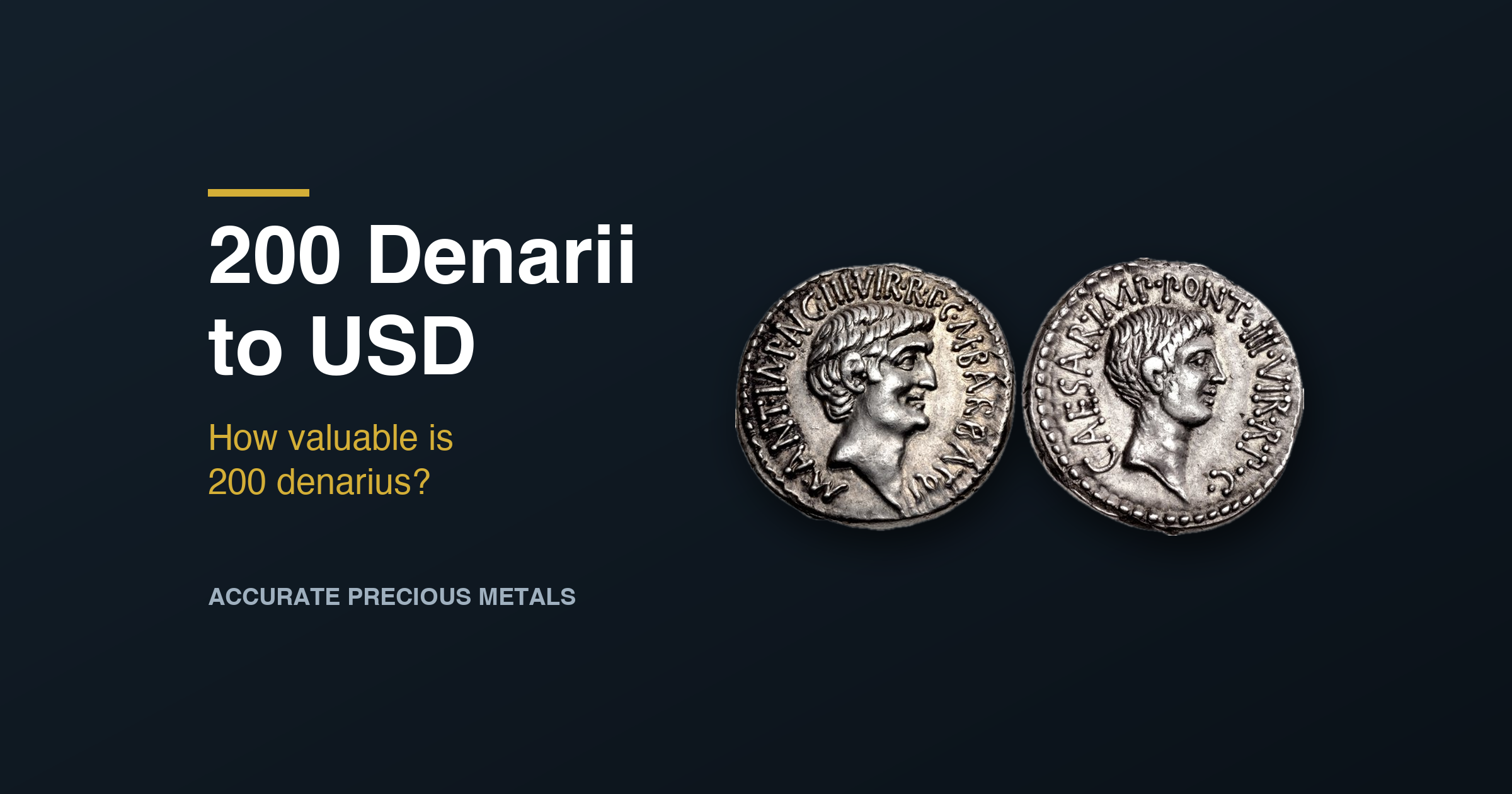
Denarii were struck under Republican magistrates and then under each Roman emperor, from about 211 BC into the mid-200s AD. They often have different faces and designs on them.
How Much Bread Could You Buy With 200 Denarii?
This is the question the Bible itself raises. In Mark 6:37 and John 6:7, the disciples look at a hungry crowd of about 5,000 people and say that 200 denarii worth of bread would not be enough to give each person even a little. Was that a lot of bread? Here is what 200 denarii could actually buy.
Prices varied by place and year, so treat these as rough figures from the early Roman Empire:
Loaves of bread. Graffiti and records from Pompeii suggest a basic loaf cost about one as, a small bronze coin worth 1/16 of a denarius. At that price, 200 denarii buys roughly 3,200 loaves.
Raw wheat. Grain in Rome was often around one denarius per modius (about 6.5 kg or 14 lbs). 200 denarii would buy around 200 modii, or roughly 1,300 kg (about 2,900 lbs) of wheat. A Roman adult ate around 60 modii of wheat a year, so that is several years of grain for one person.
Feeding the crowd. Split across 5,000 people, 200 denarii comes to about 1/25 of a denarius each. That is less than one as, or well under a full loaf per person, which is why the disciples said it would not go far.
For a modern comparison, at a few dollars per loaf, 3,200 loaves would cost several thousand dollars today, and that is before you consider that a Roman worker earned just one denarius a day. In other words, 200 denarii was a big pile of bread, roughly 200 days of a laborer's pay, but still not enough to feed thousands of people. Bread was cheap, and a crowd is big.
Can I Buy or Sell Denarius Coins?
Yes. Roman denarii are widely collected, and many are affordable, which makes them a popular entry point into ancient coins. Prices range from a few dozen dollars for a common issue to well into five and six figures for rare pieces.
If you are buying, keep two things in mind:
Fakes are common. Modern copies and cast forgeries of denarii are everywhere online. Buy from a reputable dealer who guarantees authenticity.
Condition and type drive price. Ask what emperor, what year, and what silver content, and compare against recent sales.
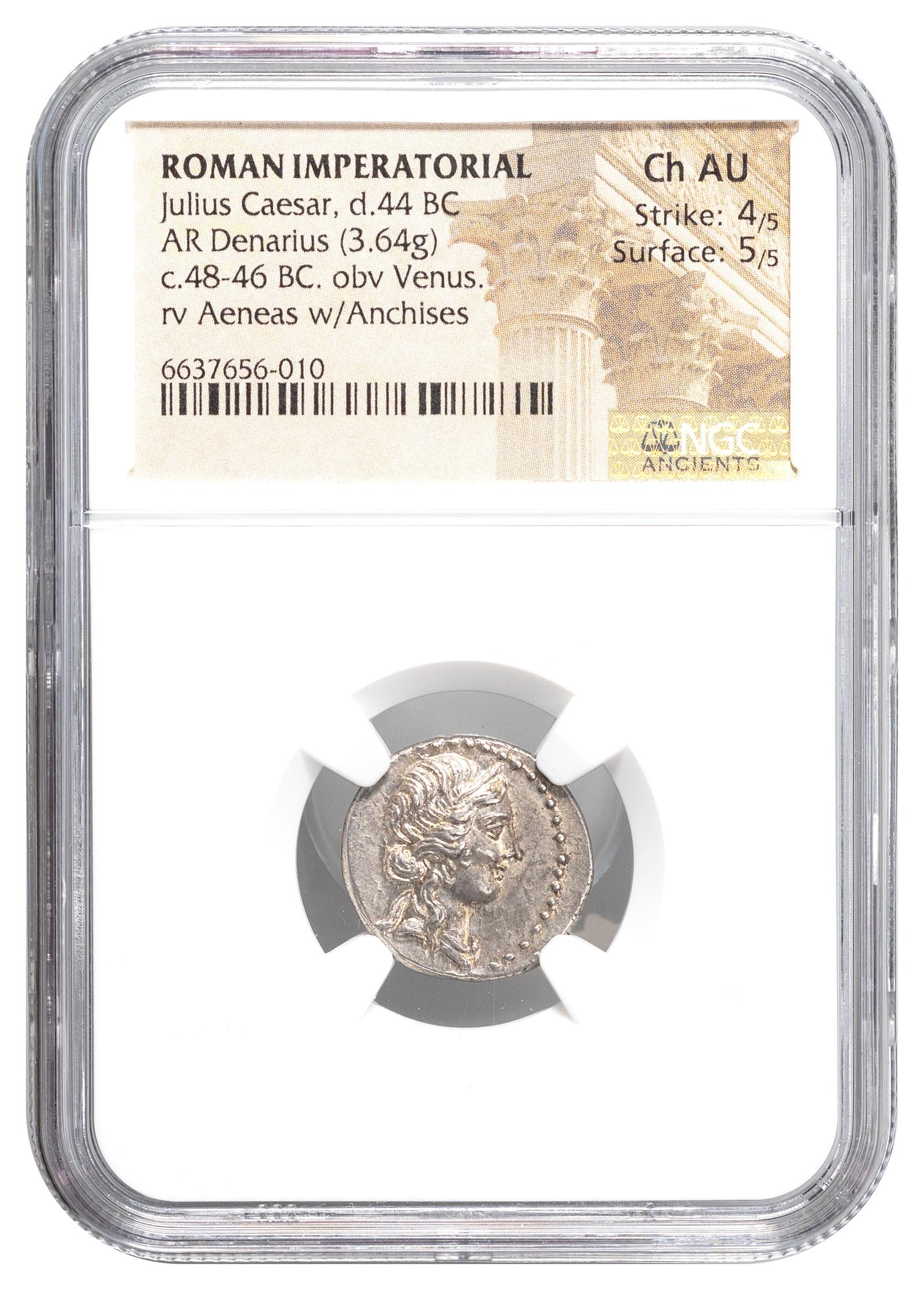
If you have denarii to sell, or an inherited collection of ancient and world coins, the best step is to have them identified and evaluated in person. Accurate Precious Metals is a family-owned coin and bullion shop in Salem, Oregon, and we also take mail-ins from across the U.S. Bring in what you have, and our team can tell you what it is and what the market says it is worth. Just last month, we actually got some ancient Roman coins in our shop like the one showed here. Check out our shop to see what cool coins we have available!
What is 200 Pennyworth to USD?
"Pennyworth" mostly comes from Bible translations, and the answer depends on which meaning you intend.
In the Biblical sense, 200 pennyworth is 200 denarii, so everything above applies: about $1,200 to $1,500 in silver, or about 200 days of labor. In the King James Bible, Mark 6:37 and John 6:7 mention "two hundred pennyworth of bread," and modern translations render it as "two hundred denarii" or "more than half a year's wages."
In the modern sense, a pennyworth is simply the amount a penny will buy. 200 U.S. pennies is $2.00. 200 British pence is £2, which is roughly $2.50 to $3 depending on the exchange rate that day.
Are a Pennyworth and Denarius the Same?
In the Bible, yes. The translators of the King James Bible used "penny" to translate "denarius," so "pennyworth" and "denarii" refer to the same Roman coin. The old British abbreviation for pence, "d," even comes from "denarius."
But a modern penny and a Roman denarius are not the same thing. A denarius was a day's wages in silver. A penny today is a small copper-plated coin worth one cent. If you read "penny" in an older Bible, mentally swap it for a day's pay, not a cent.
What is 200 Shillings to USD?
The answer depends on which shilling.
British shillings (pre-decimal). There were 20 shillings to the pound, so 200 shillings is £10. Converted at today's exchange rate, that is roughly $13 in modern money. The old coins are more interesting: British shillings minted before 1920 are 92.5% sterling silver, and those from 1920 to 1946 are 50% silver. At about $61 per ounce, a pre-1920 shilling holds roughly $10 in silver and a 1920 to 1946 shilling about $5.50. So 200 silver shillings could be worth around $1,100 to $2,000 in metal alone, far more than their face value.
East African shillings. Kenya, Uganda, Tanzania, and Somalia still use shillings. 200 Kenyan shillings is about $1.50 at recent rates, and the other currencies differ, so check a live converter.
If you have a jar of old British shillings or other foreign silver coins, do not spend them. Check the date and have them evaluated first, because the silver may be worth many times the face value.
How to Convert Denarii to USD
Since no exchange rate exists, you convert by picking the method that matches your goal.
To convert by silver value:
Find the coin's weight (a typical denarius is about 3.4 to 3.9 grams).
Multiply by the silver purity (about 0.93 for a Nero-era coin, 0.97 or more for an early one).
Divide by 31.1035 to get troy ounces of pure silver.
Multiply by the current silver spot price.
Example: 3.4 g x 0.93 = 3.16 g of silver, which is about 0.10 oz. At $61 per ounce that is about $6.20 per coin, or about $1,240 for 200.
To convert by buying power: treat one denarius as one day of basic labor and multiply by a modern day's wage. Remember this is an approximation, since Roman prices and goods were very different from ours.
To convert by collector value: the only reliable way is to have the actual coins identified and priced. Two coins that look similar can differ by hundreds of dollars.
Sources
Denarius (Wikipedia): weights, silver purity and debasement, and the aureus worth 25 denarii
Prices in Ancient Rome: What Could a Denarius Buy? (UNRV Roman History): bread, wheat and daily-wage prices
Ancient Graffiti Project, Food: Pompeii graffiti price records
Price Behaviour in the Roman Empire (Peter Temin, MIT): wheat prices per modius
Sestertius (Wikipedia): sestertius-to-denarius values and the 79 AD Pompeii wheat price
Shilling (Wikipedia): British shilling silver content
LBMA Precious Metal Prices: silver spot reference
By Byzantium565 - Own work, CC BY-SA 4.0, https://commons.wikimedia.org/w/index.php?curid=112623925
Have ancient coins or old silver? Contact us at https://accuratepmr.com/contact to see what we have in stock, or if you want to sell some of your coins
Make the smart choice: invest with Accurate Precious Metals
Whether you are buying bullion for the first time or adding to a long-term position, our team offers expert guidance, transparent pricing, and a reliable buyback program.
Ready to invest wisely?