This content is for educational purposes only and is not financial or investment advice. Precious metals prices fluctuate; past performance does not guarantee future results. Consult a qualified professional before making investment decisions.
Tap the image to enlarge and zoom.Hover to magnify, or click to open full screen.
The 1792 Flowing Hair Half Disme is the first silver coin the United States government ever struck under its own authority, a tiny 5-cent piece made in Philadelphia before the country even had a permanent Mint building. It weighs just 1.35 grams, but among rare US coins it carries some of the heaviest history in the entire hobby. A coin this small helped prove that a brand-new nation could actually make its own money.
That single fact is why collectors, historians, and even casual coin buyers keep searching for it. This article breaks down what the coin actually is, why it gets confused with a completely different series, and what drives its price into the six-figure range even though its silver content is worth pocket change.
What Is the 1792 Flowing Hair Half Disme?
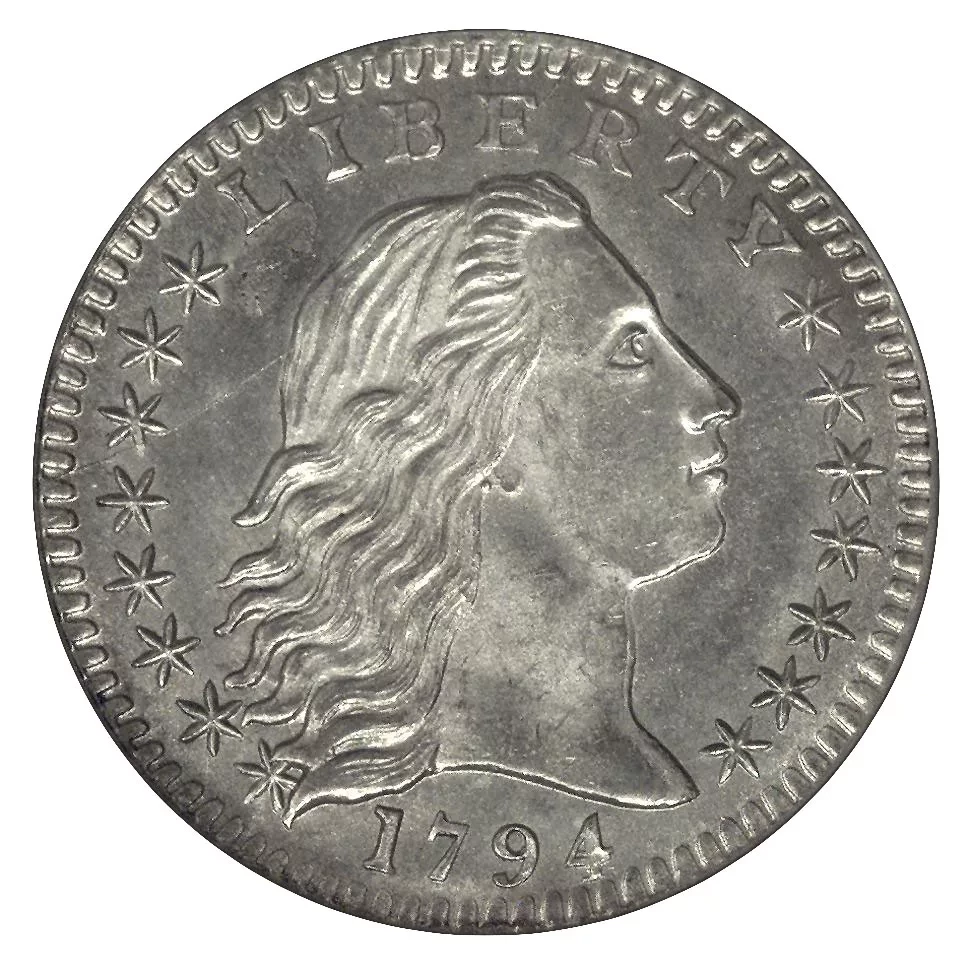
The 1792 half disme is a 5-cent silver coin struck at Philadelphia in 1792, the same year Congress passed the Coinage Act that created the U.S. Mint. It shows Liberty with flowing hair on the front and a small eagle in flight over a wreath on the back.
The coin weighs 1.35 grams and measures around 16.5 to 17.5 millimeters across, depending on which reference you check. It's made from about 89.24% silver and 10.76% copper, a mix common to early U.S. silver coinage. PCGS lists an original mintage of 1,500 pieces, making it one of the smallest mintages in the entire American coinage story.
Why Did the U.S. Mint Strike the Half Disme in 1792?
The half disme was struck as a test run, proof that the young United States could produce its own coins instead of relying on foreign money and makeshift tokens. It came before the Philadelphia Mint even had its permanent building finished, and before any other denomination had been struck under the new federal system.
That makes it, in the eyes of most numismatists, the first official U.S. coin. Some accounts even connect the coin to President George Washington's own silverware, though the details vary by source. What's certain is the timing: this coin arrived at the exact moment the new nation was deciding whether its money-making experiment would actually work.
Founding of U.S. Coinage
1792
Coinage Act passed Congress creates the U.S. Mint and sets coin standards
1792
Half disme struck About 1,500 pieces made in Philadelphia, the first coin under the new federal system
1794
Flowing Hair Half Dime begins A separate, related design starts as a regular circulating series
1795
Half dime series continues Flowing Hair Half Dime production wraps up before new designs follow
2013
Record auction sale An MS68 1792 half disme sells for $1,145,625
Is the 1792 Half Disme the Same as the Flowing Hair Half Dime?
No. The 1792 half disme is a separate, earlier coin from the Flowing Hair Half Dime series that ran from 1794 to 1795. This mix-up is one of the most common mistakes in early American coin collecting, and it trips up even experienced buyers scanning auction listings.
The two share a similar design idea, Liberty with flowing hair, but they are different coins from different years with different mintages and different markets. If you're researching or shopping for either one, it pays to know exactly which coin you're looking at before you spend real money. For a full breakdown of the later series and its own pricing by grade, see our guide to the 1795 Flowing Hair Half Dime.
How Many 1792 Half Dismes Were Made and How Many Survive?
PCGS records a mintage of 1,500 pieces for the 1792 half disme, but far fewer than that number exist in collectible condition today. Mintage figures from over 230 years ago rarely tell the whole story, since coins get lost, melted down, or worn beyond recognition over the centuries.
ℹ️ Info: A reported mintage of 1,500 does not mean 1,500 coins survive. Many early silver coins were melted for their metal content or simply worn smooth from decades of use in pockets and cash drawers. What actually trades hands today is a small fraction of the original run.
That scarcity is exactly why this coin behaves less like a piece of pocket change and more like a museum-grade artifact whenever one comes up for sale.
How Much Is a 1792 Flowing Hair Half Disme Worth?
A 1792 half disme is almost always worth six figures or more, no matter the grade, because collector demand for this coin has nothing to do with its silver weight. The public auction record stands at $1,145,625, set in 2013 for an MS68 example, one of the finest known survivors.
$1,145,625
Record public auction price (MS68, 2013)
1,500
Original mintage reported by PCGS
$2.49
Approximate silver melt value at $64/oz today
Even well-worn or lower-grade examples typically sell for six figures, since authentic 1792 half dismes almost never trade below that threshold. The market is thin enough that a single strong auction result can shift price expectations for the entire coin overnight.
What Is the Melt Value of a 1792 Half Disme?
The melt value of a 1792 half disme is only about $2.49 at $64 an ounce for silver at the time of writing, since the coin contains roughly 1.20 grams, or about 0.0388 troy ounces, of pure silver. That number matters as context, not as a price tag.
Compare that $2.49 melt figure to the $1,145,625 record sale price, and the gap tells you everything about how numismatic value works. This coin's price comes from its age, its story, and its scarcity, not from the few cents of metal inside it. If you're weighing bullion purchases against collector coins, it helps to check current silver spot prices so you always know what raw metal content is worth before comparing it to a rare coin's asking price.
What Should Collectors Look for When Buying a 1792 Half Disme?
Buy the coin, not the label. Small differences in official grade matter far less than originality, surface quality, and a documented ownership history, often called provenance, meaning who owned the coin and when.
Check for original surfaces with no cleaning, re-toning, or repair
Look for even, natural color across both sides of the coin
Ask for auction history or prior sale records tied to the exact coin
Compare centering and strike quality against known PCGS or NGC examples
Get a second opinion from a specialist before any high-dollar purchase
Because this coin trades so rarely, published price guides can lag behind the real market. Auction archives from major grading services are a better anchor than any printed price sheet.
A Story Worth Repeating
Stories of 1792 half dismes turning up in unexpected places, an old collection, a junk box, a forgotten drawer, circulate through the hobby because they capture something real about this coin. A piece small enough to slip into a pocket carries a price tag that can change a person's life. That contrast between size and value is part of why this coin gets so much attention outside the usual collector circles.
How Do Grading Services Like PCGS and NGC Affect Value?
Grading services like PCGS and NGC assign a numerical grade to a coin's condition, and that grade becomes the shorthand collectors use to compare examples and set prices. For a coin as rare as the 1792 half disme, even one grade point can shift the price by tens of thousands of dollars.
That said, grade is only part of the picture. Two coins with the same grade number can sell for very different prices if one has better eye appeal, cleaner surfaces, or a more interesting ownership history. Serious buyers use grading as a starting point, then dig into auction photos and sale records before settling on a number they're comfortable paying.
What Are the Common Misconceptions About This Coin?
The biggest misconception is treating the 1792 half disme like a bullion coin, when in reality its value comes almost entirely from history and rarity, not metal weight. A handful of other myths follow close behind.
Common Myths vs Reality
Pros
Cons
✗ It's basically a silver bullion coin. Its metal content is worth about $2.49 at today's prices.
✗ It's the same coin as the 1794-1795 Flowing Hair Half Dime. It's an earlier, separate issue.
✗ All surviving examples look and cost about the same. Condition, color, and history swing prices by huge amounts.
✗ A mintage of 1,500 means 1,500 coins exist today. Actual survivors are far fewer.
Clearing up these points before you shop saves time, and it keeps you from overpaying for a coin that's been misattributed in a listing.
Where Can You Buy or Sell Rare US Coins Like This One?
Buying or selling rare US coins like the 1792 half disme calls for the same basics as any high-value transaction: verified attribution, a trusted grading history, and a dealer who understands the early American series. Most collectors will never own an actual 1792 half disme, since so few exist, but the same principles apply to other early American silver and to bullion coins bought for their metal content.
If your interest runs toward building a broader collection of early or modern silver, our roundup of the best silver coins to buy walks through popular picks for both new and experienced buyers. And if you're comparing a numismatic purchase against straight bullion, our silver coins and bars selection shows current premiums over spot for coins valued mainly by weight.
What Should You Do If You Think You Have an Early American Coin?
If you think you might have an early American coin like a half disme or half dime, don't clean it, and get it looked at by someone who handles early U.S. silver regularly. Cleaning a coin, even gently, can strip away the original surface and cut its value dramatically, sometimes by more than half.
What To Do With a Suspected Rare Coin
1
Do not clean it Cleaning removes original surfaces and can destroy collector value permanently
2
Photograph both sides Clear, well-lit photos help a specialist give you an initial read before an in-person visit
3
Get an in-person look A dealer or grading service can confirm the coin's date, type, and condition
4
Check auction records Compare against recent PCGS or NGC sale prices for similar coins
5
Decide: hold or sell Rare early coins often reward patience, but a fair offer is worth considering too
Whether it turns out to be a genuine rarity or a later reproduction, having it checked costs little and can save you from either underselling a treasure or overvaluing a common coin.
If you're building a collection of rare US coins or early American silver, our shop carries a range of silver coins and bullion worth a look, and if you'd rather sell than buy, you can mail in your coins from anywhere in the country or stop by our Salem, Oregon location if you're nearby.
Frequently Asked Questions
What is a 1792 Flowing Hair Half Disme?
It's the first U.S. silver coin struck under federal authority, made in Philadelphia in 1792 with a face value of 5 cents.
How much is a 1792 half disme worth?
Prices typically run into six figures or more, with the public auction record at $1,145,625 for an MS68 example sold in 2013.
How many 1792 half dismes were made?
PCGS lists an original mintage of 1,500 pieces, though far fewer survive in collectible condition today.
Is the 1792 half disme the same as the 1794 Flowing Hair Half Dime?
No, the 1792 coin is a separate, earlier issue, while the regular Flowing Hair half dime series began in 1794 and ran through 1795.
How much silver is in a 1792 half disme?
The coin is about 89.24% silver and 10.76% copper, holding roughly 1.20 grams, or 0.0388 troy ounces, of pure silver.
What is the melt value of a 1792 half disme?
At $64 an ounce for silver at the time of writing, the melt value is only about $2.49, far below its collector price.
Where was the 1792 half disme minted?
It was struck in Philadelphia, home of the newly created U.S. Mint.
Why do collectors care so much about this coin?
It's widely regarded as the first official U.S. silver coin, tying it directly to the founding of American coinage and making it one of the most historically significant rare US coins in existence.
Make the smart choice — invest with Accurate Precious Metals
Whether you are buying bullion for the first time or adding to a long-term position, our team offers expert guidance, transparent pricing, and a reliable buyback program.