This content is for educational purposes only and is not financial or investment advice. Precious metals prices fluctuate; past performance does not guarantee future results. Consult a qualified professional before making investment decisions.
Tap the image to enlarge and zoom.Hover to magnify, or click to open full screen.
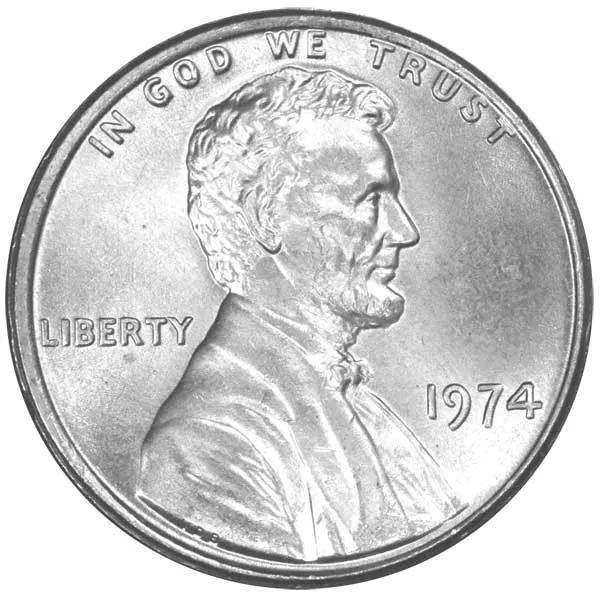
A penny that weighs about as much as a paperclip and might be worth six figures sounds made up, but that is the real story behind the 1974 Aluminum Lincoln Cent. The U.S. Mint struck this experimental coin to test whether America could move its one-cent piece away from copper, and the pieces were never supposed to leave Mint control in the first place.
The short answer: it is a Lincoln cent struck in aluminum instead of the usual bronze alloy, made in 1974 as a Mint trial run, never released for circulation, and now one of the most legally tangled coins in U.S. history. More than 1.4 million were struck at the Philadelphia Mint, but only a tiny handful are known to survive today, and the government has fought to keep them out of private hands.
Why Did the U.S. Mint Test an Aluminum Penny in 1974?
The Mint tested aluminum planchets in 1974 because copper prices were putting real pressure on the cost of making a one-cent coin. Copper was getting more expensive, and Mint officials wanted a lighter, cheaper metal that could still pass as a penny in cash registers and coin machines across the country.
Aluminum looked promising on paper. It was light, cheap, and easy to strike. So Philadelphia produced over 1.4 million experimental cents to see how the new composition would hold up in the real world.
The plan fell apart for practical reasons. Aluminum cents jammed vending machines, confused X-ray equipment used by hospitals to spot swallowed coins, and simply did not feel or behave like the cent Americans were used to. The Mint scrapped the idea, and the experimental coins were supposed to be melted down or returned. Most were. A few were not.
How Many 1974 Aluminum Cents Were Made?
More than 1.4 million experimental aluminum cents were struck at the Philadelphia Mint in 1974, according to the U.S. Mint's own account of the project. That is a huge number for a coin most people have never heard of, and it is a key reason the coin creates so much confusion.
Almost all of those 1.4 million pieces were destroyed after the Mint decided not to move forward with aluminum. Only a small number are known to have survived outside Mint vaults, which is exactly why the ones that do exist carry such weight with collectors. Rarity here is not about how few were made. It is about how few escaped destruction.
How Much Does a 1974 Aluminum Cent Weigh?
The confirmed 1974-D aluminum cent weighs about 0.93 grams, compared to 3.11 grams for a normal bronze Lincoln cent from the same era. That is less than a third of the weight, and it is often the first clue that separates a real experimental piece from an altered or plated coin.
Coin
Metal
Weight
Standard 1974 bronze cent
95% copper alloy
3.11 grams
1974 experimental aluminum cent
Aluminum
about 0.93 grams
Modern 1982-present cent
Copper-plated zinc
2.5 grams
Weight alone will not prove a coin is genuine, since plated or shaved coins can also come in light. But if a 1974 penny weighs anywhere close to the normal 3.11 grams, it is not an aluminum test piece, full stop.
What Happened to the 1974 Aluminum Cent Over Time?
The 1974 aluminum cent went from a quiet Mint experiment to a decades-long legal story involving Congress, the Smithsonian, and grading services. The timeline below covers the major turning points that are actually documented.
1974 Aluminum Cent Timeline
1974
Mint strikes experimental cents Philadelphia produces more than 1.4 million aluminum test pieces; the composition is later rejected.
2016
Mint recovers a 1974-D piece A U.S. Mint press release announces the government obtained possession of a 1974-D aluminum coin.
2025
PCGS grades the Denver piece PCGS confirms and grades a 1974-D aluminum cent MS63, the first Denver example of its kind on record.
ℹ️ Info: A privately held 1974 aluminum cent is widely tied to a man named Albert Toven. According to reporting on the story, Toven's father worked as a U.S. Capitol Police officer and reportedly picked up the coin after a Mint official dropped it near a congressional hearing on the project, then told him he could keep it.
Where Are the Known 1974 Aluminum Cents Today?
There are three main examples worth knowing about: a Philadelphia coin held in the Smithsonian, a privately held Philadelphia coin, and a separately confirmed Denver piece. Each has its own paper trail, and none of them are the same coin.
Smithsonian example: The National Numismatic Collection at the Smithsonian holds a 1974 aluminum cent as a museum piece, not a coin available for sale.
Private Philadelphia example: PCGS lists one privately held Philadelphia strike as the only confirmed example outside Mint or museum hands.
Denver example: PCGS graded a 1974-D aluminum cent MS63 in 2025, confirming it as a distinct experimental strike separate from the Philadelphia pieces.
Look-alike to avoid: A 1974-S cent struck on a Philippine aluminum planchet is a genuine mint error, but it is a different coin entirely and should not be confused with the true 1974 experimental cent.
If you enjoy stories about coins that combine rarity with a strange backstory, our roundup of rare coins collectors chase covers several other pieces with similar drama behind their mintage numbers.
Are 1974 Aluminum Cents Legal to Own?
The legal status of the 1974 aluminum cent is genuinely unsettled, and that is part of what makes it famous. The U.S. Mint has stated the experimental pieces were never authorized for release, and the government has moved to recover examples that surfaced outside its control, including the 2016 recovery of a 1974-D piece.
That does not mean every surviving coin is automatically illegal to hold, since the private Philadelphia example remains widely cited by grading services as legitimately in private hands. It does mean that anyone who thinks they might have a real one should expect scrutiny, paperwork, and a slow process before any sale could happen. This is not a casual eBay flip.
How Much Is a 1974 Aluminum Lincoln Cent Worth?
A confirmed 1974 aluminum cent can be worth well into six figures, while an ordinary 1974 bronze cent is worth face value unless it is in exceptional uncirculated condition. PCGS records show an auction listing for a PCGS Genuine Philadelphia example at $250 on eBay, but reporting around the 2025 confirmed Denver piece discussed an expected range in the six-figure to quarter-million-dollar territory, reflecting how much the legal and historical weight of a truly confirmed piece can shift its price.
That gap tells you everything about how this coin's value actually works. There is no melt value angle here at all. Aluminum has effectively no meaningful scrap price at the time of writing, so a real experimental cent is worth what it is worth purely because of rarity, history, and the story behind it, not because of the metal inside it.
Compare that to gold, which sits at about $4,430 an ounce at the time of writing, or silver at about $66 an ounce at the time of writing. Bullion coins made from those metals carry a value floor tied to weight and purity even before any collector premium gets added. The 1974 aluminum cent has no such floor. Its entire worth is numismatic.
How Can You Tell if a 1974 Penny Is Really Aluminum?
Start with a scale, not a magnet or a magnifying glass. A genuine 1974 aluminum cent will weigh close to 0.93 grams, dramatically lighter than a normal 3.11-gram bronze cent from the same year.
Weigh it first. Anything close to 3.11 grams is not an aluminum test piece, no matter how light-colored it looks.
Check the color and shine carefully. Aluminum has a dull, silvery look different from a worn or cleaned bronze cent, but plating can fake this too.
Get a professional opinion. Given how much money and legal exposure is involved, a coin like this needs review from a major grading service like PCGS or NGC before anyone treats it as real.
Ask about the coin's provenance, meaning who has owned it and where it came from, since a coin with no traceable history is much harder to trust.
Watch for the Philippine 1974-S planchet error. It is a legitimate mint error worth collecting on its own, but it is not the same coin as a true experimental aluminum cent.
⚠️ Warning: Do not buy or sell a "1974 aluminum cent" based on photos alone. Altered, plated, and foreign-planchet coins circulate in the hobby, and the difference between a $20 novelty and a life-changing coin often comes down to a lab check, not a listing description.
If you are curious how grading and provenance affect value on other rare pieces, our guide on how rare gold coins are valued walks through the same kind of authentication questions that apply here.
What Are the Biggest Misconceptions About the 1974 Aluminum Cent?
The biggest misconception is that any light-colored 1974 penny is automatically valuable, which is false. Most coins like that are altered, plated, or simply worn bronze cents that only look unusual.
"All 1974 aluminum cents are legal to own." Not accurate. The Mint says the pieces were never authorized for release and has pursued recovery of known examples.
"Only one 1974 aluminum cent was ever made." Not accurate. Over 1.4 million were struck in Philadelphia; only a very small number are known to have survived.
"Any light 1974 penny is valuable." Not accurate. Many altered coins are light too, and most carry no real premium at all.
"The Denver piece and the Philadelphia piece are the same coin." Not accurate. They have separate histories, separate mints, and separate grading records.
Why Do Collectors Care So Much About Off-Metal Error Coins?
Collectors chase off-metal and error coins like the 1974 aluminum cent because they capture a moment when the normal rules of coin production broke down. A coin struck on the wrong planchet, in the wrong metal, or under secret Mint testing conditions tells a story that a regular date-and-mintmark coin simply cannot.
This particular cent adds an extra layer most error coins do not have: a real "what if" question. What if the United States had actually switched the penny to aluminum in the 1970s? That thought experiment, combined with genuine legal drama over who gets to own the survivors, is why this small coin gets more attention than pieces worth far more in raw metal content.
Frequently Asked Questions
What is a 1974 aluminum Lincoln cent?
It is a U.S. Mint experimental one-cent coin struck in aluminum in 1974 to test a lighter, cheaper alternative to the standard bronze cent.
How many 1974 aluminum pennies were made?
More than 1.4 million experimental pieces were struck at the Philadelphia Mint in 1974, though almost all were later destroyed.
How much does a 1974 aluminum cent weigh?
The confirmed 1974-D example weighs about 0.93 grams, far lighter than the standard 3.11-gram bronze cent from the same year.
How much is a 1974 aluminum penny worth?
A confirmed experimental example can be worth six figures or more, while an ordinary 1974 bronze cent is worth face value in most conditions.
Are 1974 aluminum cents legal to own?
The U.S. Mint says the pieces were never authorized for release and has pursued recovery of known examples, so ownership remains a genuinely unsettled legal question.
How can you tell if a 1974 penny is aluminum?
Weigh it first, since a real one should be close to 0.93 grams, then have it reviewed by a major grading service before assuming it is genuine.
Is the 1974-D aluminum cent real?
Yes, PCGS confirmed and graded a 1974-D aluminum cent MS63 in 2025, making it a separate confirmed piece from the Philadelphia examples.
What is the difference between a 1974 aluminum cent and a 1974-S aluminum cent error?
The 1974-S coin is a genuine mint error struck on a foreign aluminum planchet from the Philippines, not the same as the true 1974 experimental cent project.
If a coin like this has you looking twice at the change jar, browsing our shop for other unusual rare US coins is a good next step, and if you think you might actually have something worth a second look, you can always mail in your coins for a review or stop by our Salem, Oregon location in person.
Make the smart choice — invest with Accurate Precious Metals
Whether you are buying bullion for the first time or adding to a long-term position, our team offers expert guidance, transparent pricing, and a reliable buyback program.