This content is for educational purposes only and is not financial or investment advice. Precious metals prices fluctuate; past performance does not guarantee future results. Consult a qualified professional before making investment decisions.
Tap the image to enlarge and zoom.Hover to magnify, or click to open full screen.
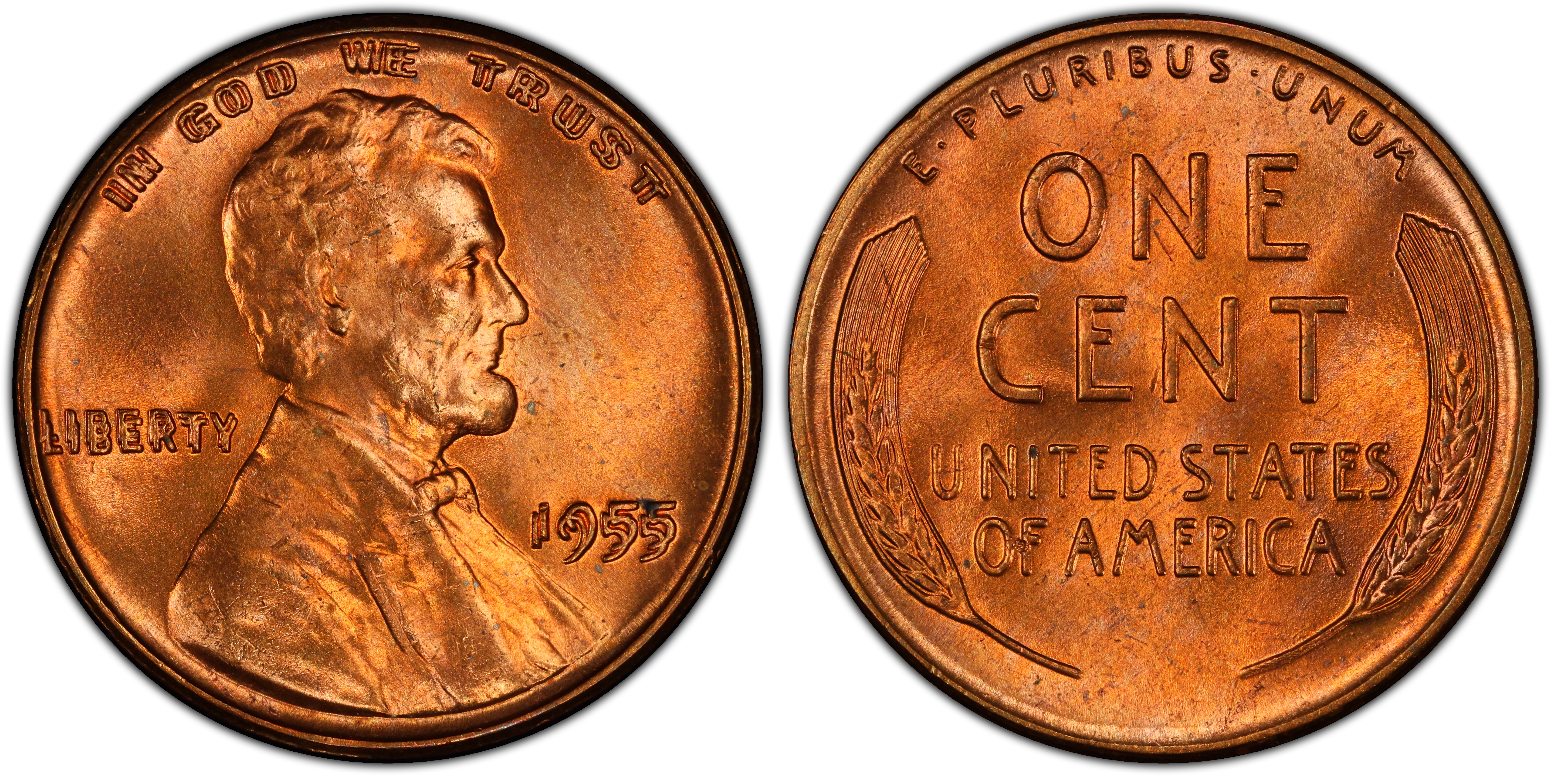
The 1955 Doubled Die Lincoln Cent is a Philadelphia wheat penny struck from a die that received two misaligned hub impressions, leaving LIBERTY, IN GOD WE TRUST, and the date visibly doubled on the coin's face. No magnifying glass needed. You can see the doubling from across a table, which is exactly why this little copper coin became a legend the moment people started finding it in their pocket change.
It sits near the top of any list of rare US coins that regular people can actually stumble across, not just something locked away in a museum case. A worker at the mint made a mistake, a batch of flawed dies slipped through, and decades later a mishandled cent from a 1955 candy purchase can be worth more than a used car. That's the story we're going to walk through.
What Exactly Is the 1955 Doubled Die Lincoln Cent?
It's a 1955 Lincoln wheat cent struck at the Philadelphia Mint, with no mintmark, from a working die that had been hubbed twice at a slight rotation. The result is bold, separated doubling on the obverse lettering and the date, unlike anything a normal strike would produce.
The coin is made of 95% copper and 5% tin and zinc, weighs 3.11 grams, and measures 19 millimeters across with a plain edge. Regular 1955 Philadelphia cents had a mintage of 33,058,000, but only a small slice of that run came from the flawed die pair that created this variety.
How Did the Doubling Actually Happen?
The doubling came from the die-making process itself, not from anything that happened during striking. Mint workers create a working die by pressing a hub into soft steel more than once to build up the design.
If the die shifts even slightly between hub impressions, the design doubles on the die itself, and every coin struck from that die carries the same doubling forward. That's what happened in 1955. One die pair, hubbed off-center, produced every genuine example of this variety, which is also why the variety is so consistent from coin to coin.
1955 Doubled Die Timeline
1955
Faulty die enters production A working die at the Philadelphia Mint is hubbed twice at a misaligned angle, doubling LIBERTY, the motto, and the date
1955
Coins reach circulation An estimated 20,000 to 40,000 doubled die cents are struck and mixed into circulation before the error is caught
Mid-1950s
Public notices the error Reports describe people spotting the doubling in everyday change, helping the variety become famous early
2018
Six-figure auction result A PCGS MS65+ Red example sells for $114,000
2023
Another headline sale A PCGS MS65+ RD example brings $111,000 hammer, $124,875 with buyer's premium
How Rare Is the 1955 Doubled Die Cent?
It's genuinely scarce, with an estimated 10,000 to 15,000 survivors out of the 20,000 to 40,000 originally struck. Of those survivors, only about 7,000 are known in Mint State, and full Red examples make up a small fraction of that group.
20,000 to 40,000
Estimated coins struck from the faulty die
10,000 to 15,000
Estimated survivors today
7,000
Approximate number known in Mint State
33,058,000
Total 1955 Philadelphia cent mintage
That last number matters. The doubled die variety is a tiny needle inside a haystack of 33 million ordinary 1955 cents. Most people who own a plain 1955 wheat penny do not have the error coin, and that's part of why checking carefully matters so much before you get excited.
How Can You Tell If Your Penny Is the Real Doubled Die?
Genuine examples show strong, clearly separated doubling on LIBERTY, IN GOD WE TRUST, and the date, not a faint or flat shadow. If the doubling looks weak, blurry, or shelf-like, it's probably not the real variety.
One reliable extra clue is a set of vertical die polishing lines just left of the T in ONE CENT on the reverse. Since only one die pair ever created this coin, that small detail lines up on every genuine example.
Is My 1955 Penny the Real Doubled Die?
Does the date and LIBERTY show bold, separated doubling?
If no, it's likely a normal 1955 cent or machine doubling
Do you see vertical die lines left of the T in ONE CENT?
If yes, that supports a genuine doubled die
Is the doubling flat or shelf-like rather than split?
If yes, this points to machine doubling, not the true error
Have you compared it to verified photos from a grading service?
Doing this before buying or selling protects you from costly mistakes
Doubled Die vs Machine Doubling: What's the Real Difference?
A true doubled die comes from the die itself carrying doubled design elements from the hubbing process, while machine doubling happens later, during the actual strike, and rarely adds any value. This distinction trips up a lot of new collectors who see any doubled-looking cent and assume it's rare.
Machine doubling usually looks flat and smeared, like the design slid sideways under pressure. A true doubled die, like the 1955 variety, shows crisp, fully separated lettering because the doubling was baked into the die before a single coin was ever struck. For a deeper walk through this exact comparison, our guide to identifying double die obverse coins breaks down more examples side by side.
How Much Is a 1955 Doubled Die Lincoln Cent Worth?
Prices range from around $1,000 for a well-worn example up to $60,000 or more for a top-grade Red Mint State coin, with the best-known examples selling well past $100,000 at auction. Color and condition drive almost all of the price difference.
Grade or Type
Approximate Value
Well-circulated
$1,000 and up
AU50
About $2,300
MS63 Brown
About $4,000
MS64 Red-Brown
About $9,000
MS65 Red
About $60,000
Top auction record (2018, PCGS MS65+ Red)
$114,000
Later headline sale (2023, PCGS MS65+ RD)
$124,875 with buyer's premium
These numbers move with the market, so treat them as reference points rather than fixed prices. Brown coins have toned over decades of air exposure, Red-Brown sits in between, and full Red coins still show the bright copper color they had the day they were struck. That color difference alone can be the gap between a $4,000 coin and a $60,000 one.
Why Do Collectors Care So Much About This One Cent?
Collectors call it the most famous Lincoln cent variety because the error is dramatic enough for anyone to spot without training or a loupe. That accessibility turned it into one of the first error coins that mainstream, non-specialist collectors chased in large numbers.
ℹ️ Info: A high school student in 1955 could hold this penny up next to a normal one and see the doubling instantly. That kind of obvious, story-worthy flaw is rare in coin collecting, where most errors need a trained eye and strong light to notice.
Part of the appeal is the story itself. Reports describe examples turning up in everyday pocket change in 1955, with people noticing the odd doubled date before anyone at the mint had fully explained what happened. That word-of-mouth discovery helped the coin build a reputation almost overnight, long before certification services existed to confirm what people were finding.
The 1955 Doubled Die Lincoln Cent didn't arrive alone into that era, either. The same year produced other coins collectors still track closely, including the 1955 Roosevelt silver dime and the 1955 Franklin half dollar, both worth knowing about if you're building out a broader look at mid-1950s U.S. coinage.
What Are the Biggest Misconceptions About This Coin?
The most common mistake is assuming any doubled-looking 1955 cent is the rare variety, when in fact only one specific die pair created the true error. Most 1955 cents, even ones with slight blurring, are ordinary coins worth face value or a small premium for wheat cents in general.
All 1955 cents are doubled - false, only the doubled die obverse variety shows the dramatic error
The doubling comes from a worn or shaky strike - false, it comes from the die-making process, not from striking damage
Mint State examples are common - false, Mint State coins are much scarcer than circulated ones, and MS65 or better is genuinely hard to find
Any doubled-looking modern cent is valuable - false, most modern doubling is machine doubling with little to no premium
Should You Get Your 1955 Doubled Die Cent Graded?
Yes, if the coin looks genuine and shows real potential value, sending it to a major grading service is worth the cost. Grading helps confirm the coin's condition and variety to a buyer who wasn't standing next to you when you found it.
Getting a Coin Professionally Graded
Pros
✓ Helps buyers trust the grade and variety without seeing the coin in person
✓ Can significantly increase resale value on higher-grade coins
✓ Protects against cleaning damage or wear being missed
Cons
✗ Costs money and takes time, which may not be worth it for low-value circulated coins
✗ Won't turn a common 1955 cent into the rare doubled die variety
As an NGC authorized dealer, our team at Accurate Precious Metals can walk you through the grading process if you think you might be holding a genuine example. It's worth doing before you sell, not after, since a graded coin almost always commands a stronger price than a raw one of the same quality.
What Should You Do With a Suspected 1955 Doubled Die Cent?
Compare it carefully against verified diagnostics first, then decide whether grading and selling makes sense based on what you find. Don't clean the coin, don't polish it, and don't handle the surfaces more than necessary, since originality plays a big role in what a coin like this can bring.
Checking and Selling a Suspected 1955 Doubled Die Cent
1
Inspect the doubling Look for bold, separated lettering on LIBERTY, the motto, and the date under good light
2
Check the reverse detail Look for the vertical die lines left of the T in ONE CENT
3
Avoid cleaning Leave the surfaces alone, since cleaning can lower value even on a genuine rare coin
4
Get a second opinion Compare against verified photos or bring it in for a look before assuming it's genuine
5
Decide on grading For coins that look promising, professional grading can support a stronger sale price
Copper cents like this one aren't priced off today's copper spot price, which sits at about $0 per ounce at the time of writing for base copper metal markets tracked as XCU, since the coin's collector value comes almost entirely from its rarity and condition rather than its metal content. That's a different story from silver coins of the same era, where the silver price of about $69 an ounce at the time of writing plays a real role in the floor value of the coin.
If you're building out a 1955-focused collection or just want to see how these coins compare on rarity, it's worth reading up on other short-lived and unusual U.S. coin series too, since the same die and mintage forces that made this cent famous show up again and again across numismatic history.
Whether you're hunting for coins like this one to add to a collection or you've got an old jar of wheat pennies you want looked at, our team can help either way. If you're looking to buy, check out our coin inventory for pieces worth adding to your holdings, and if you're looking to sell, our coin buying program covers everything from single rare finds to full collections, whether you visit us in Salem, Oregon, or ship items in from anywhere in the country.
Frequently Asked Questions
How much is a 1955 doubled die Lincoln cent worth?
Values range from about $1,000 or more for well-circulated examples up to around $60,000 for high-grade Red Mint State coins, with the top known auction results going well past $100,000.
How do I know if my 1955 penny is the real doubled die?
Look for strong, clearly separated doubling on LIBERTY, IN GOD WE TRUST, and the date; weak or flat-looking doubling usually means it's not the genuine variety.
Is the 1955 doubled die cent actually rare?
Yes, only one die pair created it, and an estimated 10,000 to 15,000 examples survive today out of a much larger 1955 Philadelphia mintage.
What mint struck the 1955 doubled die cent?
The Philadelphia Mint struck it, and the coin carries no mintmark.
What metal is a 1955 doubled die penny made from?
It's made from 95% copper and 5% tin and zinc, weighing 3.11 grams and measuring 19 millimeters across.
What's the difference between a doubled die and machine doubling?
A doubled die happens when the die itself gets doubled during the hubbing process, while machine doubling happens during the strike and rarely adds any collector value.
Should I have my 1955 doubled die cent graded?
If the coin looks genuine and shows real doubling along with the correct diagnostics, professional grading is usually worth doing before you sell.
Make the smart choice — invest with Accurate Precious Metals
Whether you are buying bullion for the first time or adding to a long-term position, our team offers expert guidance, transparent pricing, and a reliable buyback program.