This content is for educational purposes only and is not financial or investment advice. Precious metals prices fluctuate; past performance does not guarantee future results. Consult a qualified professional before making investment decisions.
Tap the image to enlarge and zoom.Hover to magnify, or click to open full screen.
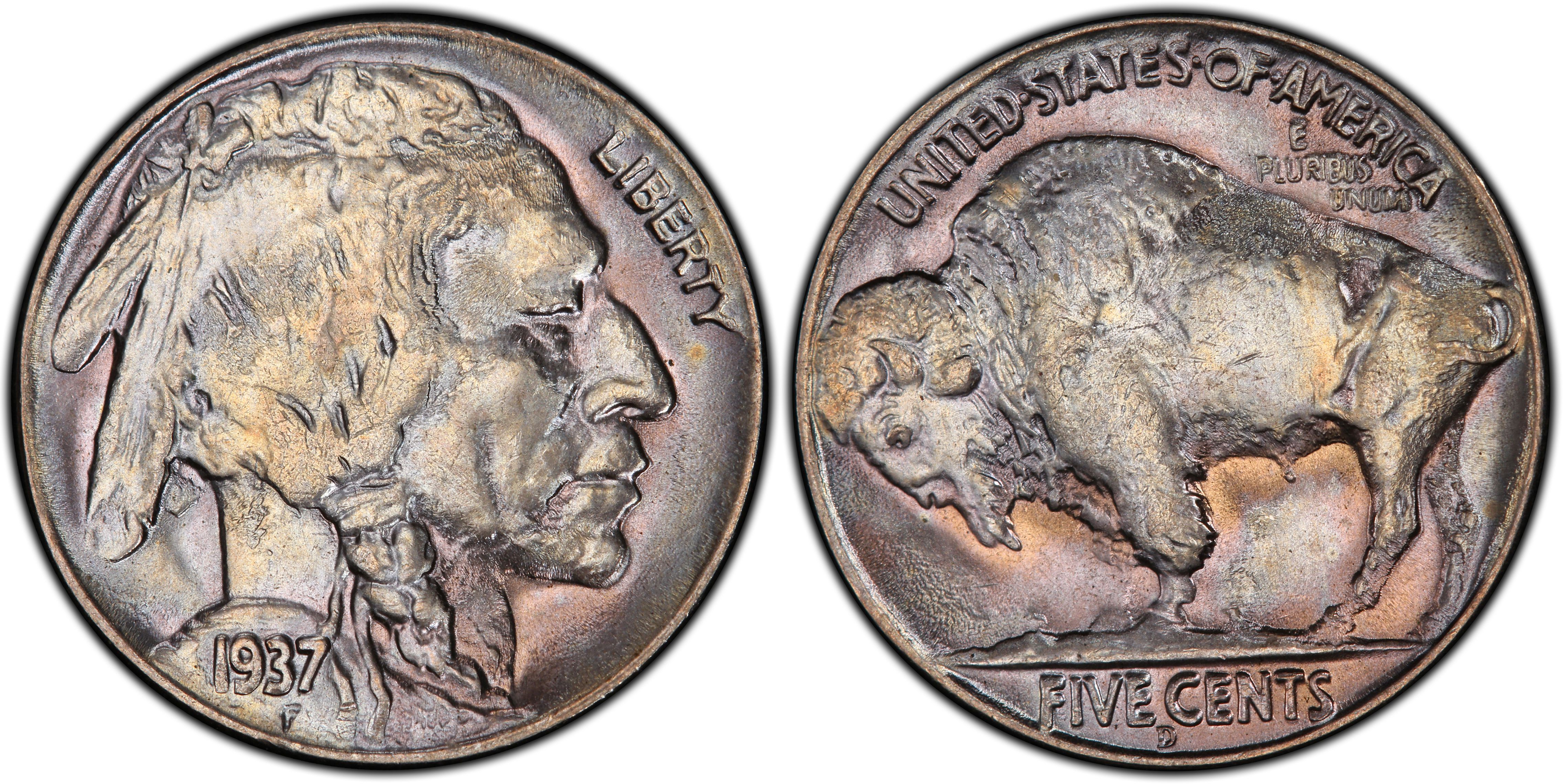
A missing leg turned an ordinary five-cent piece into one of the most famous coins in American history. The 1937-D Three-Legged Buffalo Nickel is a Denver Mint error coin, not a special design, and it happened because a die got polished too hard during routine maintenance. Today, collectors pay anywhere from a few hundred dollars to nearly $100,000 for the right example, depending on condition.
If you have ever pulled a Buffalo nickel out of an old jar and wondered whether you were holding a fortune, this coin is the reason. It looks broken. It looks wrong. And that is exactly why people love it.
What Is the 1937-D Three-Legged Buffalo Nickel?
The 1937-D Three-Legged Buffalo Nickel is a Denver-struck Buffalo nickel where the bison on the reverse appears to be missing its front leg. It carries the variety code FS-901 among collectors and grading services, and it comes from the standard 1937-D mintage of 17,826,000 coins.
The design itself was created by sculptor James Earle Fraser, whose Buffalo nickel ran from 1913 to 1938. Every 1937-D nickel is 75 percent copper and 25 percent nickel, weighs 5.00 grams, and measures 21.20 mm across with a plain edge. Only a small slice of that huge mintage shows the three-legged error, which is what makes it worth searching for.
How Did the Three-Legged Error Happen?
A Denver Mint worker over-polished the reverse die, and the aggressive polishing wiped away the bison's front foreleg. Mint staff were likely trying to remove clash marks, which happen when the obverse and reverse dies strike each other without a coin blank between them. Instead of a clean fix, the heavy polishing cut too deep into the die and erased part of the design entirely.
That die kept striking coins until someone noticed the animal looked wrong. By then, an unknown number of three-legged nickels had already left the mint and gone into circulation. Nobody flagged them as special at the time. They were just nickels, spent at the corner store like any other, until sharp-eyed collectors started noticing the odd bison years later.
The 1937-D Three-Legged Nickel Story
1913
Buffalo nickel debuts James Earle Fraser's design replaces the Liberty Head nickel
1937
Denver Mint strikes 17,826,000 nickels A reverse die is over-polished during routine maintenance
1937
The error enters circulation Three-legged coins mix into everyday pocket change unnoticed
Later 20th century
Collectors identify the variety The missing leg becomes one of the most sought-after US mint errors
Recent auctions
Top graded coins sell for record sums A high-grade example has brought $99,875 at auction
What Does the 1937-D Three-Legged Nickel Look Like?
The clearest sign is a bison with no front foreleg, but a faint hoof usually still floats where the leg used to connect to the body. That single detail trips up a lot of people who expect a totally clean gap. Genuine examples almost always show that ghost hoof, because the polishing removed the leg but not every trace of it.
The second diagnostic is a thin polished line running underneath the bison's belly, sometimes called the "stream." This line shows up because the same over-aggressive polishing that erased the leg also thinned the metal along the belly area. If a coin is missing the front leg but has no trace of that belly line, treat it as a red flag.
ℹ️ Info: The hoof detail throws a lot of people off. New collectors often assume a real error should show a totally clean gap where the leg used to be, but most genuine 1937-D Three-Legged Nickels still show a faint floating hoof. That small leftover mark is actually one of the best clues you have the real thing.
How Much Is a 1937-D Three-Legged Buffalo Nickel Worth?
Prices for the 1937-D Three-Legged Buffalo Nickel run from a few hundred dollars for worn, low-grade coins up to tens of thousands for coins in top condition. Circulated pieces have sold in the range of about $350 to $1,950, while uncirculated coins regularly climb into the thousands. One high-grade example graded by a major service brought $99,875 at auction, which shows just how much condition changes the math on this coin.
Grade Range
Typical Market Context
Notes
Heavily worn, low grade
Low hundreds
Common for pocket-change survivors
Moderate circulated grade
Roughly $350-$1,950
Wide range based on eye appeal
Uncirculated (Mint State)
Low thousands and up
Sharp strikes are much scarcer
Top Mint State
Tens of thousands, record $99,875
Extremely condition-sensitive
Grade is not the only thing that moves the price. Eye appeal, strike quality, and whether the coin has been dipped or cleaned all factor into what a buyer will pay. A coin with a strong, clear hoof and belly line in a mid-range grade can sometimes outsell a higher-graded coin with weak eye appeal, so photos and in-hand inspection matter as much as the number on the holder.
How Do You Tell a Real Three-Legged Nickel From a Fake?
The safest way to confirm a 1937-D Three-Legged Buffalo Nickel is genuine is to have it graded by PCGS, NGC, or another major grading service, because altered and fake examples are common in this series. People have filed down the leg on ordinary 1937-D nickels to fake the error, so a missing leg alone proves nothing.
Before sending a coin in, check these details yourself:
Confirm the mint mark reads D for Denver, since only Denver-struck 1937 nickels carry this error
Look for the faint floating hoof where the leg should connect to the body
Check for the thin polished line under the belly, known as the stream
Inspect the surface under magnification for file marks or tool marks around the leg area, which suggest tampering
Compare the coin against reference photos from a trusted grading service before assuming it is rare
Buying Raw vs. Graded Three-Legged Nickels
Pros
✓ A graded coin removes most of the guesswork on genuineness and grade
✓ Graded coins are easier to resell later at a fair market price
Cons
✗ Raw coins can be cheaper up front but carry more risk of alteration
✗ A misidentified raw coin can turn out to be an ordinary 1937-D worth only a small fraction of the price
If you already collect Buffalo nickels, it helps to know the series inside and out before chasing an error variety. Our guide to Buffalo nickel history and value walks through the full run from 1913 to 1938, including the other varieties collectors watch for.
Why Is the 1937-D Three-Legged Nickel Such a Famous US Error Coin?
The 1937-D Three-Legged Buffalo Nickel is famous because the mistake is obvious even to someone who has never studied coins, and it happened on a beloved American design. You do not need a magnifier to see a bison missing a leg. That visual punch, combined with the popularity of the Buffalo nickel series in general, has made this one of the most recognized error coins in US numismatics.
It also helps that the story behind it is easy to tell. A worker trying to clean up a die mistake accidentally created something rarer and more valuable than a normal coin. That kind of irony sticks with people, and it is a big reason the 1937-D Three-Legged Nickel shows up in coin folklore decades after it left the mint.
How Does the 1937-D Three-Legged Nickel Compare to Other 1937 Coins?
The 1937-D Three-Legged Nickel stands out because most 1937-dated US coins are common, affordable pieces with no major errors attached. A regular 1937-D Buffalo nickel, for example, is worth only a small amount above face value in worn condition, since 17,826,000 of them were struck and most show no error at all.
Other 1937 coins carry their own separate collector interest without any connection to this error. If you are curious how a standard 1937 coin from a different denomination trades, our look at 1937 Mercury Dime values shows how a common date coin is priced compared to a scarce variety like this one. The gap between an ordinary date and a recognized error or key date can be enormous, and the 1937-D nickel is one of the clearest examples of that gap in the entire Buffalo series.
What Should You Know Before Buying a 1937-D Three-Legged Nickel?
Buy only graded examples from a major grading service, and treat the price you pay as tied directly to the grade on the holder rather than to the coin's age alone. Small grade differences, such as the jump from a low Mint State grade to a higher one, can mean a difference of thousands of dollars for this particular variety.
A few more practical points worth keeping in mind:
Never clean a Buffalo nickel before selling it, since cleaning strips original surface and usually lowers the price a buyer will offer
Do not confuse this variety with a regular 1937-D nickel, which is common and worth only a small premium in worn grades
Ask for clear photos of the leg area and belly line before buying online, and request a return option if the coin does not match the listing
If you are building out a broader Buffalo nickel collection, a roll of 40 Buffalo nickels from 1913 to 1938 is a fun and affordable way to study strike quality and wear patterns across the series before you spend real money on a rare variety
For collectors who want the bigger picture on why Buffalo nickels hold steady collector demand decade after decade, our piece on discovering Buffalo nickel value is a good next stop.
What Should You Do If You Think You Found a Three-Legged Nickel?
If you find a 1937-D nickel that looks like it is missing a leg, do not clean it, do not try to remove the leg further to "improve" it, and get it in front of someone who works with this series regularly. A quick visual check against the diagnostics above will tell you if it is worth sending in for grading, and a knowledgeable coin dealer can often spot an obvious fake or a promising candidate on sight.
It also helps to know current melt values when you are sorting through a jar of old nickels, since some coins in the pile may be worth more for their metal content than their date. You can check live gold and silver spot prices any time on our gold and silver price charts page, though keep in mind that a common 5-cent nickel's metal value is separate from any collector premium a rare variety like this one might carry.
Silver currently trades at about $66 an ounce and gold sits around $4,444 an ounce at the time of writing, and while Buffalo nickels are not silver coins, checking current spot prices is a good habit any time you are weighing a coin's collector value against its raw metal content.
What Is the 1937-D Three-Legged Nickel Worth in the Bigger Picture?
The 1937-D Three-Legged Buffalo Nickel proves that a five-cent coin can outclass gold coins in collector demand when rarity and story line up. A coin with a face value of five cents selling for close to $100,000 is not something that happens with ordinary date-and-mint combinations. It happens because the error is dramatic, the demand is deep, and top condition examples are genuinely scarce.
That combination is worth remembering the next time you are sorting through inherited coins or an old collection. The date and mint mark tell you where to start looking, but the details, the hoof, the belly line, and the overall condition, tell you what the coin is actually worth.
If you are hunting for a Buffalo nickel like this one to add to your collection, take a look at what we have in stock, and if you think you have found a genuine three-legged variety or just want to sell off other coins from an old collection, you can mail in your coins from anywhere in the country or stop by our Salem, Oregon location if you are nearby.
Frequently Asked Questions
How much is a 1937-D Three-Legged Buffalo Nickel worth today?
Circulated examples typically sell for around $350 to $1,950, while top graded Mint State coins have sold for tens of thousands of dollars, with one record example bringing $99,875 at auction.
How can I tell if my 1937-D Buffalo nickel is the three-legged variety?
Look for a missing front foreleg with a faint hoof still visible, plus a thin polished line under the bison's belly, and have the coin graded by PCGS or NGC to confirm it.
Why does the 1937-D Buffalo nickel appear to have only three legs?
A Denver Mint worker over-polished the reverse die, likely while trying to remove clash marks, and the aggressive polishing erased the bison's front leg from the design.
Is a worn 1937-D Buffalo nickel always rare?
No, the regular 1937-D nickel is common with a mintage of 17,826,000 coins, and only the three-legged variety carries significant added value.
What metal is a 1937-D Buffalo nickel made of?
It is made of 75 percent copper and 25 percent nickel, weighs 5.00 grams, and measures 21.20 mm across.
Should I clean a 1937-D Three-Legged Nickel before selling it?
No, cleaning almost always lowers a coin's value by damaging its original surface, so leave it as found and let a grading service or dealer evaluate it as is.
Are all three-legged looking Buffalo nickels genuine?
No, altered and fake examples exist because some people file down the leg on ordinary 1937-D nickels, so checking the hoof, belly line, and having the coin graded matters.
Make the smart choice — invest with Accurate Precious Metals
Whether you are buying bullion for the first time or adding to a long-term position, our team offers expert guidance, transparent pricing, and a reliable buyback program.