This content is for educational purposes only and is not financial or investment advice. Precious metals prices fluctuate; past performance does not guarantee future results. Consult a qualified professional before making investment decisions.
Tap the image to enlarge and zoom.Hover to magnify, or click to open full screen.
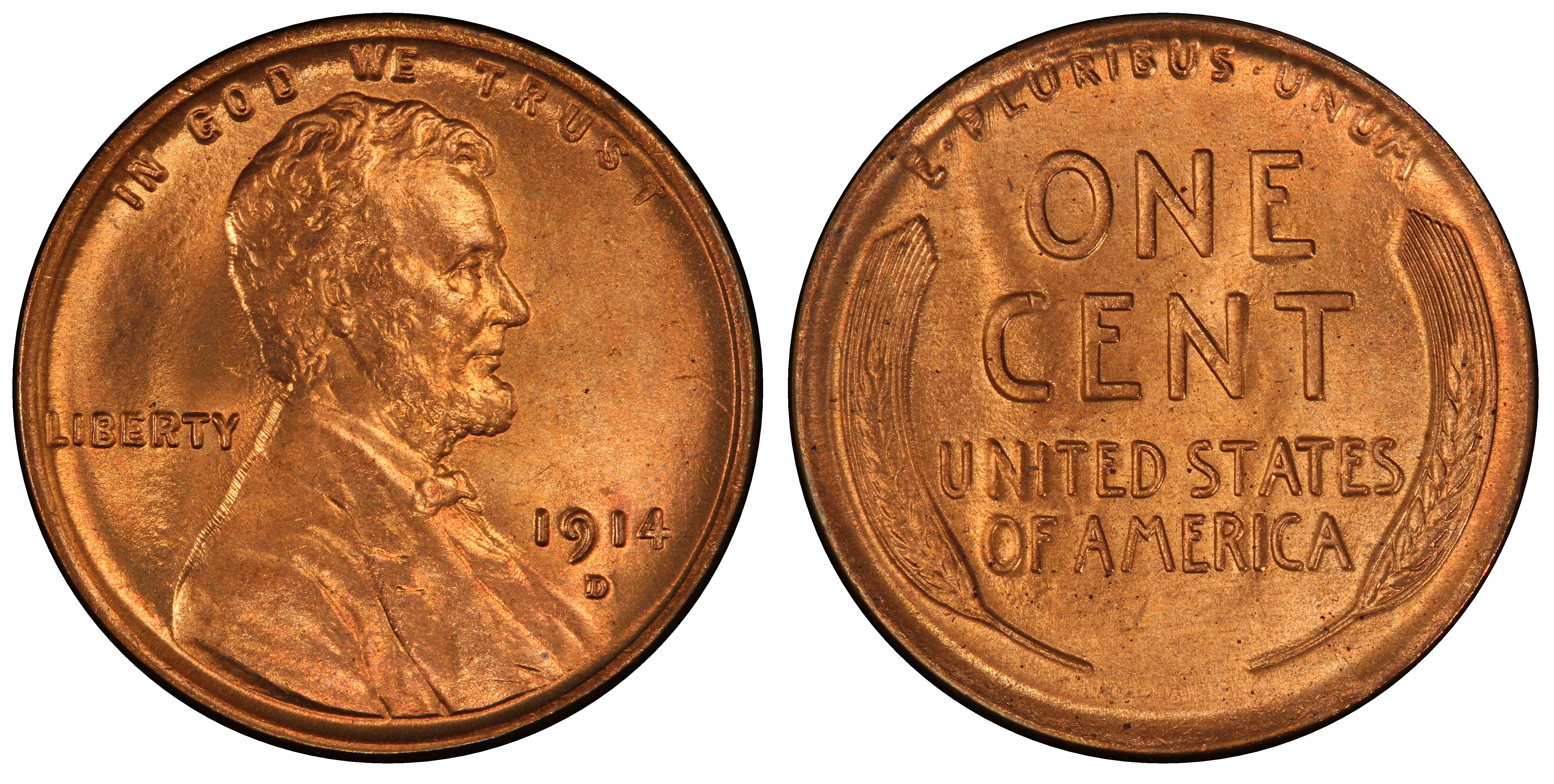
A one-cent coin that started life worth exactly one cent now sells for hundreds, thousands, or even six figures. The 1914-D Lincoln Wheat Cent is the reason why: Denver struck only 1,193,000 of these pennies in 1914, making it one of the toughest regular-issue coins in the entire Lincoln Wheat series to find in nice shape.
That tiny mintage is the whole story. Philadelphia struck over 75 million Lincoln cents the same year. Denver struck barely more than one million. Most of those Denver coins went straight into pockets, cash registers, and vending machines, where decades of handling wore them down. The few that survived in sharp, original condition are what collectors chase today.
What Makes the 1914-D Lincoln Wheat Cent So Rare?
The 1914-D is rare because of a mintage gap, not because of anything unusual about the metal or design. Denver produced just 1,193,000 cents that year, while Philadelphia churned out more than 75 million with the identical Lincoln Wheat design.
Both coins are struck in the same 95% copper, 5% tin and zinc alloy used across the series. Nothing about the metal makes the Denver coin special. What makes it special is simple math: fewer coins made means fewer coins left, especially in grades that show little wear.
ℹ️ Info: 1913 to 1914 Story
A single mintmark, a single letter D under the date, separates a coin worth a few cents in melt value from one that can sell for tens of thousands of dollars in top condition. That is the entire premium built into this coin.
How Much Is a 1914-D Lincoln Wheat Cent Worth?
A 1914-D Lincoln Wheat Cent typically sells for $200 or more even in heavily worn, low circulated grades. Mid-range circulated pieces commonly bring a few hundred dollars, and coins that never entered circulation can climb into the thousands.
The spread gets dramatic at the top. A gem example graded MS66+ Red sold at auction for $158,625, according to PCGS auction records. That single sale shows how far collector demand can push the price of a coin that started as pocket change.
Grade Range
Typical Value Range
Heavily worn (low circulated)
$200 and up
Mid circulated grades
Several hundred dollars
Uncirculated (Mint State)
Thousands of dollars
Top gem Red examples
Tens of thousands, record $158,625
Three things drive where a given coin lands in that range: strike quality, surface color, and originality. A coin with strong original red color and no cleaning or damage will always outsell a similar-grade coin with dull or altered surfaces.
How Do You Identify a Real 1914-D Penny?
Check for a small letter D directly under the date on the coin's obverse, or front, side. No mintmark at all means the coin came from Philadelphia and is worth far less, since Philadelphia's 1914 mintage topped 75 million pieces.
Because the 1914-D carries such a large price gap over its more common Philadelphia twin, it is one of the most altered dates in the Lincoln cent series. Some sellers have added a fake D to a 1914 Philadelphia cent, or altered a D from a different Denver year, hoping to pass it off as the rare date.
Look at the mintmark under a magnifying glass or loupe for signs of tooling, scratches, or an uneven surface around the letter Compare the coin's overall wear against known photos of authentic 1914-D cents in similar grades Weigh the coin if possible; genuine cents from this era should match the standard weight for the series Have any coin you plan to spend real money on looked at by a professional before you buy XQU
If you want a broader primer on spotting real precious metal and copper items versus altered or fake pieces, our guide on identifying real silver gold and copper items covers the basic checks that apply across coins, bars, and jewelry.
What Do BN, RB, and RD Mean on a Wheat Cent?
BN, RB, and RD are color grades that tell you how much of a copper cent's original mint color survives. BN means Brown, RB means Red-Brown, and RD means Red, the strongest and most desirable original color, usually reserved for coins that never circulated.
Copper starts out bright red-orange when it is freshly struck. Over years of handling and air exposure, that color fades to brown. A coin graded RD has held onto its original color far longer than most, which is part of why RD examples command the highest prices in Mint State grades.
BN (Brown): circulated or toned coin, color has faded fully to brown RB (Red-Brown): partial original red color remains alongside brown toning RD (Red): strongest original red color, most desirable in uncirculated grades Problem coins: cleaned, corroded, or altered pieces sell at a steep discount no matter the color XQU
Why Doesn't Copper Melt Value Matter Here?
Melt value plays almost no role in pricing a 1914-D Lincoln Wheat Cent because its copper content is worth a tiny fraction of a cent. One reference puts the melt value around $0.0443, meaning the coin's entire worth comes from rarity, grade, and collector demand rather than the metal it's made of.
Compare that to bullion coins, where the price tracks the metal market closely. Gold sits at about $4,408 an ounce at the time of writing, and silver is around $66 an ounce at the time of writing. Those prices move up and down with supply and demand for the metal itself. A 1914-D cent doesn't work that way at all; its price is set by how many exist in a given grade and how badly collectors want that grade filled in their sets, not by copper's spot price. If you'd like to track how copper pricing works separately from numismatic value, our copper price page breaks down current copper market context.
What Are Common Misconceptions About Old Pennies?
The biggest misconception is that any old penny is automatically valuable, when in fact most wheat cents from the 1910s through 1950s are common and worth only a small premium over face value. Value in this series comes from low mintage dates and top condition, not simply from age.
"Old penny means expensive" is false; plenty of wheat cents from common years sell for well under a dollar "All 1914 pennies are valuable" is false; the 1914-P from Philadelphia is common, while the 1914-D is scarce "A shiny coin is real and high grade" is false; cleaning can brighten a coin's surface while destroying its collector value "Value tracks copper spot price" is false; at current copper pricing the coin's metal content is worth pennies, not dollars XQU
This same rule applies across old US coinage generally. Our look at the 1914 Barber Quarter value guide shows a similar pattern from the very same year: mintage and condition, not age alone, decide what a coin is worth.
How Should You Preserve a 1914-D Cent's Surfaces?
Never clean a copper cent, no matter how dull or spotted it looks, because cleaning strips away original surface detail that collectors and grading services can spot instantly. A cleaned coin almost always sells for less than an untouched coin in the same technical grade.
Store the coin in a non-PVC holder or coin flip, away from humidity, sunlight, and direct skin contact. Oils and moisture from fingers can speed up toning and spotting on copper faster than on most other coin metals. Handle the coin by its edges only, and keep it out of cardboard coin folders long-term, since acidic paper can cause dark spotting over the years.
⚠️ Warning: Never Try to Polish Old Copper
A bright, shiny 1914-D cent almost always signals a cleaned coin, not a well-preserved one. Original surfaces, even with some natural toning, are worth far more to serious collectors than an artificially bright coin.
Should You Get Your 1914-D Cent Graded by a Third Party?
Getting a suspected 1914-D cent looked at and graded by an established third-party grading service is worth the cost, because this date carries a real risk of altered mintmarks and the price gap between grades is large enough to justify the fee. A coin in a graded holder from a major service also sells faster and for a more predictable price than a raw, ungraded coin.
Grading matters most when a coin's value could shift by hundreds or thousands of dollars based on a single point of grade. For a $2 wheat cent, grading fees would eat the coin's value. For a coin that might be worth $500 in one grade and $3,000 in the next grade up, professional grading pays for itself. Accurate Precious Metals works as an NGC authorized dealer and can help point collectors toward a sound grading path for coins like this one.
How Does the 1914-D Compare to Other Key Date Wheat Cents?
The 1914-D sits alongside a handful of other low-mintage Lincoln cents that collectors treat as the backbone of a complete Wheat cent set, including the famous 1909-S VDB and the 1931-S. Each of these dates shares the same story: a small mintage from one mint in one year created lasting scarcity that regular-date coins never developed.
If you're building out a full date run of Wheat cents, it helps to study each key date's mintage and typical grade spread before you buy. Our guide to 1917 Lincoln Wheat Penny values covers a more common date from the same design era, useful for seeing how a normal-mintage year prices out compared to a true rarity like the 1914-D.
What Should You Do Before Buying or Selling a 1914-D Cent?
Before buying, ask for close-up photos of the mintmark, check the coin's grading holder details if it has one, and compare the asking price against recent sale records for that same grade. Before selling, get an honest read on the coin's grade and condition so you know roughly what range to expect.
Confirm the D mintmark is present, sharp, and free of tool marks or unusual texture Ask whether the coin has been graded, and by which service, before agreeing on a price Check the coin's color under good light: brown, red-brown, or red changes the value significantly Get a second opinion on any coin priced well above typical circulated ranges XQU
If you're chasing a 1914-D or any other key date wheat cent, take a look through our coin inventory to see what's currently in stock. And if you have an old cent, a full jar of wheat pennies, or any other coins you'd like priced out, you can mail them in through our mail-in coin service from anywhere in the country, or stop by our Salem, Oregon location in person if you're nearby.
Frequently Asked Questions
How much is a 1914-D Lincoln Wheat Cent worth?
Worn examples typically sell for $200 or more, mid-grade circulated coins bring a few hundred dollars, uncirculated pieces often reach into the thousands, and top gem examples have sold for over $150,000 at auction.
Why is the 1914-D penny so rare?
Denver struck only 1,193,000 of these cents in 1914, compared to more than 75 million made in Philadelphia that same year, making it one of the scarcest regular-issue Lincoln Wheat cents.
How do I tell if my 1914 penny is a 1914-D?
Look for a small letter D directly under the date on the front of the coin; a coin with no mintmark at all was struck in Philadelphia and is far more common.
What is the melt value of a 1914-D cent?
The copper melt value is only about $0.0443 based on current copper pricing, so the coin's real worth comes almost entirely from its rarity and grade, not its metal content.
What is the composition of a 1914-D Lincoln cent?
It is struck in the standard 95% copper, 5% tin and zinc alloy used for Lincoln cents of that era.
What grade of 1914-D cent is most valuable?
Mint State coins with strong original Red color are the most valuable, especially with clean surfaces and good eye appeal, with a record auction sale of $158,625 for an MS66+ Red example.
Are 1914-D pennies often faked?
Yes, because the price gap between a genuine 1914-D and a common 1914-P is large enough that altered or added mintmarks are a known risk in the hobby.
Make the smart choice — invest with Accurate Precious Metals
Whether you are buying bullion for the first time or adding to a long-term position, our team offers expert guidance, transparent pricing, and a reliable buyback program.