This content is for educational purposes only and is not financial or investment advice. Precious metals prices fluctuate; past performance does not guarantee future results. Consult a qualified professional before making investment decisions.
Tap the image to enlarge and zoom.Hover to magnify, or click to open full screen.
Knowing where to buy gold bullion is the first decision that separates a smart purchase from an expensive mistake. Whether you are buying your first ounce or adding to an existing stack, the source matters as much as the product itself. This guide walks through every major buying channel, explains how pricing works, and shows you how to sell when the time comes – so you keep more of what your metal is worth.
Gold bullion is physical gold bought for its metal value. It comes as coins, bars, or rounds, and the price is driven by purity, weight, and the current market price – not rarity or historical significance. That last point is what separates bullion from numismatic coins.
A rare collectible coin can sell for multiples of its gold content because collectors bid on scarcity and condition. Bullion trades close to spot. If you are buying gold as a store of value or a hedge, bullion is the practical choice. If you are building a collection, you are in different territory – and the pricing rules change entirely. Our gold bullion overview covers that distinction in more detail.
How Gold Bullion Is Priced
Every purchase starts with spot price. Spot is the live market price for one troy ounce of gold. At the time of writing, gold spot is $4,202 per ounce. That is your baseline – but it is not what you pay at the register.
The real formula is straightforward:
Final price = spot price + dealer premium + any applicable fees or shipping
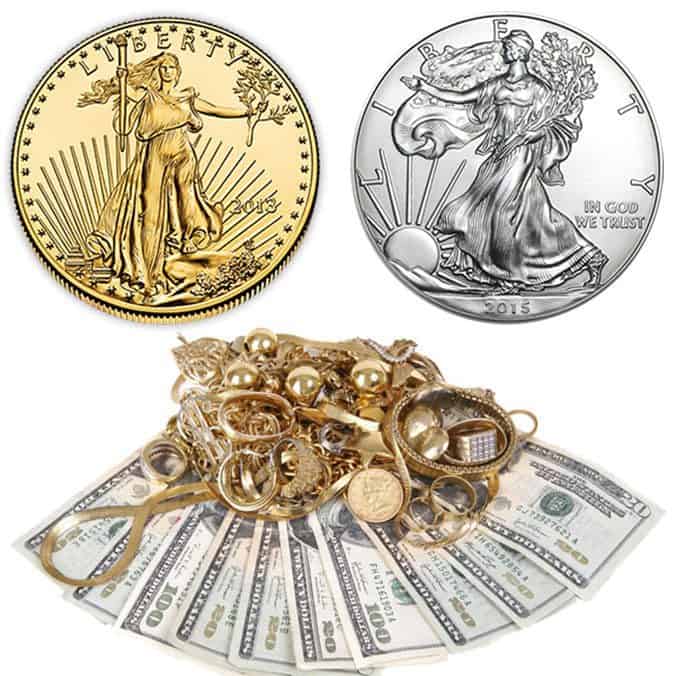
Premiums exist because someone has to manufacture the coin, ship it from the mint, insure it in transit, and hold it in inventory. Dealers also build in a margin for market risk. A 1 oz [American Gold Eagle] or a 1 oz gold bar will cost more than $4,202 at the time of writing – sometimes $50 to $200 more per ounce, depending on the product and market conditions.
Premiums are not random. They rise when demand spikes, when a product is newly released, or when inventory is tight. They fall on larger bars and generic rounds. Fractional coins – the 1/10 oz and 1/4 oz pieces – almost always carry higher premiums per ounce than their full-ounce counterparts because manufacturing costs are spread across less metal.
The other number worth understanding is the bid-ask spread. The ask is what you pay to buy. The bid is what a dealer pays to buy from you. Liquid products like [American Gold Eagles] and Canadian Maple Leafs have tighter spreads, which makes them easier to sell later without giving up a large percentage.
How Modern Bullion Developed
1700s
Gold standards emerge Governments begin tying currencies to fixed gold reserves
1933
U.S. ends private gold ownership Executive Order 6102 restricts American citizens from holding gold coins and bullion
1974
Gold ownership restored in the U.S. Americans can legally buy and hold gold bullion again
1986
American Gold Eagle launched U.S. Mint introduces one of the world’s most recognized bullion coins
1987
Canadian Maple Leaf gains traction Royal Canadian Mint’s .9999 fine coin becomes a global standard
2000s
Online bullion dealers expand Internet-based dealers bring competitive pricing and home delivery to mainstream buyers
Types of Gold Bullion: Coins, Bars, and Rounds
Government-Minted Coins
Coins from sovereign mints carry legal tender status and strong global recognition. The most traded include American Gold Eagles, Canadian Maple Leafs, South African Krugerrands, and Australian Gold Kangaroos. These products are easy to sell almost anywhere in the world because dealers, banks, and private buyers recognize them on sight.
The 2025 1 oz Gold Eagle is a strong choice for buyers who want a liquid, government-backed product with wide resale demand. The 1 oz Gold Kangaroo from the Perth Mint offers .9999 fine purity and is another highly recognized option internationally.
Fractional coins are worth considering if you want flexibility. A 1/10 oz Gold Maple Leaf costs far less upfront than a full ounce, which makes it easier to sell a small portion of your holdings without liquidating everything. Just know that the premium per ounce will be higher than on a 1 oz coin.
Bars
Bars are produced by private refiners and come in sizes from 1 gram to 400 troy ounces. For most retail buyers, 1 oz and 10 oz bars are the practical range. Bars usually carry lower premiums than coins because they have no legal tender status, no complex die work, and simpler packaging. If your goal is maximum gold per dollar spent, bars often win on price.
The tradeoff is resale. Bars from well-known refiners – PAMP Suisse, Valcambi, and Perth Mint among them – sell easily. Generic or obscure refinery bars can be harder to move quickly.
Rounds
Rounds look like coins but are made by private mints and carry no legal tender status. They typically have lower premiums than government coins and can be a cost-effective way to accumulate metal. The tradeoff is lower recognition and sometimes lower resale demand compared to sovereign coins.
Coins vs. Bars – Quick Comparison
Pros
✓ Coins: High global recognition and easy to resell
✓ Coins: Legal tender status adds trust for buyers
✓ Bars: Lower premiums per ounce, especially in larger sizes
✓ Bars: Simple to store and stack efficiently
Cons
✗ Coins: Higher premiums than comparable bars
✗ Coins: Fractional sizes cost significantly more per ounce
✗ Bars: Less recognizable than sovereign coins to casual buyers
✗ Bars: Larger bars can be harder to partially liquidate
Where to Buy Gold Bullion: Your Main Options
Online Bullion Dealers
Online dealers offer the widest selection and the most competitive pricing for most buyers. You can compare products, check live pricing, and have insured shipments delivered to your door. Reputable online dealers publish their premiums clearly, list exact weights and purities, and provide tracking on every order.
The key is choosing a dealer with a strong track record. Look for established businesses with verifiable customer reviews, secure checkout, and clear return or buyback policies. Pricing should update in real time or close to it – dealers that show stale prices are a red flag.
Local Coin Shops
A local coin shop lets you inspect the product before you hand over money. That matters more than people realize, especially for first-time buyers who want to feel the weight of a coin and ask questions in person. Good shops also build long-term relationships with regular customers, which can translate to better deals on both buying and selling.
The downside is selection. Most local shops carry a narrower inventory than online dealers, and their pricing may not be as sharp on common products. Buyback offers can also vary widely between shops.
Coin Shows
Coin and bullion shows put dozens of dealers in one room. You can walk the floor, compare premiums, and negotiate face-to-face. Shows are especially useful for collectors looking at certified coins or scarce issues. For standard bullion, the pricing is often competitive because dealers know buyers can walk ten feet to a competitor.
The risk at shows is impulse buying. A busy floor with time pressure is not the ideal environment for careful decision-making. Know your target products and price ranges before you walk in.
Direct From Mints or Authorized Distributors
Buying directly from a government mint or an authorized distributor removes one layer of uncertainty about product origin. The U.S. Mint, Royal Canadian Mint, and Perth Mint all sell directly to the public or through authorized dealer networks. Premiums can be higher than secondary market dealers, but the sourcing is clear.
Why Accurate Precious Metals Stands Out
For buyers who want the advantages of an online dealer combined with the option of in-person service, Accurate Precious Metals is the clear standout. Based in Salem, Oregon, the company has been operating since 2012 and has built a reputation backed by over 1,000 five-star customer reviews.
The inventory covers all gold products – coins, bars, and rounds – along with silver, platinum, palladium, diamonds, and jewelry. Pricing reflects live spot prices, so you are not working off outdated numbers. Nationwide shipping with insured delivery means buyers anywhere in the United States can order with confidence.
ℹ️ Info: Accurate Precious Metals is not a pawn shop. It is a dedicated precious metals dealer with specialist knowledge, competitive pricing, and a full range of bullion products for buyers at every level.
For retirement-focused buyers, Accurate Precious Metals also offers Gold and Silver IRA services – a service most local coin shops simply cannot match. And as an NGC Authorized Dealer, the team can assist with coin grading, which matters if you ever want to upgrade from raw bullion to certified collectibles.
Local customers are welcome to visit the Salem, Oregon location in person. Buyers across the country can shop online and take advantage of insured delivery. Reach the team directly at (503) 400-5608 or visit AccuratePMR.com.
How to Compare Dealers Before You Buy
Not every dealer is equal. Before committing to a purchase, run through this checklist:
How to Evaluate a Bullion Dealer
1
Step 1 Check the pricing structure – premiums should be clearly listed above spot, not buried in fine print
2
Step 2 Verify product specs – weight, purity, and mint should be stated on every listing
3
Step 3 Review shipping terms – insured delivery and tracking are non-negotiable for high-value orders
4
Step 4 Look for a buyback policy – a dealer willing to buy back is a dealer confident in their products
5
Step 5 Read customer reviews – volume and consistency matter more than a handful of perfect scores
6
Step 6 Confirm contact options – phone and chat support signal a real business, not a fly-by-night operation
One more thing: check whether the dealer is transparent about bid-ask spreads. If you plan to sell eventually, knowing the spread upfront tells you what your real cost of ownership looks like. See our comparison of top online gold providers for a deeper breakdown of what separates reputable dealers from the rest.
How Premiums Affect Your Total Cost
Let’s put some numbers to this. At the time of writing, gold spot is $4,202 per ounce. A 1 oz government coin typically carries a premium in the range of $50 to $200 above spot depending on the product and market conditions. A generic 1 oz bar may carry a lower premium, perhaps $30 to $80 above spot.
Fractional coins carry steeper premiums relative to their metal content. A 1/4 oz Gold Maple Leaf gives you a quarter ounce of .9999 fine gold, but the premium per ounce is higher than on the full-ounce version – sometimes significantly so. That is the cost of flexibility.
The lesson: always compare the premium, not just the headline price. Two dealers selling the same coin at different prices are telling you their margin. Shop accordingly.
Silver as a Companion Metal
Many gold buyers also hold silver. At the time of writing, silver spot is $68 per ounce – far more accessible for buyers who want to accumulate metal on a smaller budget. Silver tends to have higher premiums relative to spot than gold, partly because it is bulkier to store and ship per dollar of value.
Popular silver products include the Walking Liberty silver round and the 1 oz Silver Mexican Libertad, both of which offer strong designs and solid liquidity. For buyers who want to diversify across both metals, Accurate Precious Metals carries a full range of silver bullion alongside its gold inventory.
How to Sell Gold Bullion
Selling is where many buyers leave money on the table. The principles are simple: common products sell faster and at better prices than obscure ones, original packaging helps, and choosing the right buyer matters.
If you are local to Salem, Oregon, bring your items into the Accurate Precious Metals location for an in-person assessment. The team evaluates your metal based on current spot prices and makes a competitive offer – no pressure, no gimmicks.
If you are anywhere else in the United States, the mail-in service is a practical option. You request a kit, ship your items with free insured shipping, and receive a fast offer based on current market prices. Payment follows promptly once you accept. It is a straightforward process that works for everything from bullion coins to gold jewelry and scrap.
For sellers with larger holdings or specific bullion products, visit the sell your gold page to get started or call (503) 400-5608 to discuss your items before shipping.
💡 Tip: Keep original packaging and any receipts from your original purchase. Coins in original mint packaging with documentation are easier to sell and typically attract better offers.
Common Mistakes to Avoid
Buying bullion is straightforward, but a few mistakes show up repeatedly:
Paying for spot and thinking that is the full price. Premiums, shipping, and applicable taxes are real costs that change your effective cost per ounce.
Buying obscure products because they look interesting. Unusual rounds and private mint products can be hard to resell. Stick to well-known, liquid products if resale matters to you.
Ignoring the bid-ask spread. A coin with a low buy premium but a wide spread costs more to own than it appears.
Skipping insurance on shipped orders. High-value metal shipped without insurance is a risk no buyer should take.
Confusing bullion with numismatic coins. A coin’s rarity and grade can push its value far above metal content – or make it harder to sell quickly if the collector market softens. Read our coin grading trends guide if you are curious about how grading affects value.
Ready to Buy or Sell? Start Here
Accurate Precious Metals makes it easy whether you are buying your first gold coin or liquidating a collection. The inventory spans gold coins and bars from major mints around the world, with pricing tied to live spot rates and nationwide insured shipping on every order.
For sellers, two paths are available: visit the Salem, Oregon location in person, or use the convenient mail-in service from anywhere in the United States. Both options connect you with a team that has over a decade of experience and a track record of fair, competitive offers.
Call (503) 400-5608 or visit AccuratePMR.com to get started today.
Frequently Asked Questions
Where is the best place to buy gold bullion?
Reputable dealers with live pricing, insured shipping, and clear buyback policies are your safest option. Accurate Precious Metals offers all of that, plus in-person service in Salem, Oregon and nationwide shipping for buyers across the U.S.
What is the difference between gold coins and gold bars?
Coins are minted by governments, carry legal tender status, and are widely recognized. Bars are produced by private refiners and typically carry lower premiums per ounce. Both are legitimate bullion – the right choice depends on your budget and resale priorities.
How much over spot should I expect to pay for gold bullion?
At the time of writing, with gold spot at $4,202 per ounce, premiums on 1 oz coins typically range from roughly $50 to $200 above spot depending on the product and market conditions. Bars usually carry lower premiums. Fractional pieces carry higher premiums per ounce.
Is it safe to buy gold online?
Yes, provided you use an established dealer with secure checkout, insured shipping, and a verifiable track record. Check customer reviews and confirm that the dealer publishes clear product specifications and pricing before you buy.
Can I sell my gold to Accurate Precious Metals?
Yes. Local customers can visit the Salem, Oregon location in person. Customers anywhere in the United States can use the mail-in service at AccuratePMR.com, which includes free insured shipping and fast payment after offer acceptance.
What gold bullion products are most liquid?
American Gold Eagles, Canadian Gold Maple Leafs, South African Krugerrands, and 1 oz bars from major refiners are among the most liquid products globally. They are recognized by dealers worldwide and easy to sell quickly.
Does silver follow the same buying rules as gold?
The basics are the same – spot price plus premium – but silver carries higher premiums relative to spot and is bulkier to store per dollar of value. At the time of writing, silver spot is $68 per ounce, making it more accessible for smaller budgets.
What should I do with gold jewelry I want to sell?
Bring it to Accurate Precious Metals in Salem, Oregon, or use the mail-in service. The team evaluates all gold items – jewelry, coins, bars, and scrap – based on current spot prices and makes a competitive offer.
Make the smart choice — invest with Accurate Precious Metals
Whether you are buying bullion for the first time or adding to a long-term position, our team offers expert guidance, transparent pricing, and a reliable buyback program.