This content is for educational purposes only and is not financial or investment advice. Precious metals prices fluctuate; past performance does not guarantee future results. Consult a qualified professional before making investment decisions.
If you’re holding gold coins, bars, or scrap jewelry and wondering when to cash in, gold buying hours Pacific timing can make a real difference in the quote you receive. Dealers don’t all quote the same price at every hour of the day – liquidity, dealer inventory, and overlapping global markets all shift what a buyer is willing to pay. Knowing the right window to call, walk in, or mail your items can mean the difference between a solid offer and a mediocre one.
This guide breaks down exactly when gold markets run hottest in Pacific Time, why that matters for sellers, and how to use that knowledge whether you’re selling bullion, scrap, or jewelry in Salem, Oregon, or shipping items in from anywhere in the country.
What Are Gold Buying Hours Pacific?
Gold buying hours Pacific refers to the stretch of the trading day, measured in Pacific Time, when dealers and bullion markets are most active and offering the tightest, most competitive bids. Gold technically trades nearly around the clock, from Sunday evening through Friday afternoon Eastern Time. But activity isn’t evenly spread. Trading volume clusters around specific hours tied to when major financial centers are open.
For sellers on the West Coast – California, Oregon, Washington – the standout window is 8:00 AM to 12:00 PM PT on weekdays. That’s when the London and New York markets are both running at full speed, which drives the deepest liquidity and the narrowest bid-ask spreads of the trading day.
Outside that window, gold still trades. But quotes tend to be a bit softer, and dealers may widen their spreads to protect against price swings when fewer buyers are active in the market.
Why Timing Matters: The Mechanics Behind Gold Buying Hours Pacific
Gold doesn’t have one single price at any given moment. There’s the spot price – the benchmark for immediate delivery, sitting at about $3,985 an ounce at the time of writing. Then there’s the bid price, which is what a dealer pays you, and the ask price, what you’d pay to buy. The gap between those two is the spread.
When a market is deep and active, that spread shrinks. More buyers competing for metal means dealers can afford to offer bids closer to spot. When the market thins out – late at night Pacific Time, or during the quiet stretch when only the Asian session is open – dealers often widen spreads to cover their own risk.
That’s the core reason gold buying hours Pacific matters so much for sellers. Selling during the 8 AM to 12 PM PT overlap puts you in front of the deepest pool of buyers and the tightest pricing of the day.
Global Gold Trading Sessions Mapped to Pacific Time
Gold trades across four regional sessions that hand off to each other throughout the trading day. Here’s how they line up with Pacific Time:
Session
Pacific Time
Activity Level
Asian (Tokyo)
4:00 PM – 1:00 AM (prev day)
Low
European (London)
12:00 AM – 9:00 AM
High
U.S. (New York)
4:00 AM – 1:00 PM
Very High
London-New York Overlap
8:00 AM – 12:00 PM
Peak
The overlap exists because London’s session, which runs from midnight to 9 AM PT, is still active when New York opens at 4 AM PT. From 8 AM to noon PT, both major centers are fully staffed and trading heavily. London remains the historic center of bullion trading through the LBMA, while New York’s COMEX handles the bulk of U.S. gold futures volume. Together, these two markets account for a large majority of daily global gold trading, which is exactly why this four-hour window defines the best gold buying hours Pacific sellers can count on.
A Short History of Gold Trading Hours
Modern round-the-clock gold trading is a fairly recent development. For most of history, gold prices were set once a day, not continuously quoted the way they are now.
Milestones in Gold Trading Hours
1919
London Gold Fixing established Set a daily benchmark price used by dealers worldwide
1974
U.S. citizens allowed to own gold again Spot trading in the U.S. expanded rapidly
1990s
Electronic platforms launch COMEX and LBMA systems enable near-24-hour trading
Today
Continuous weekday trading Markets run from Sunday evening to Friday afternoon Eastern Time, with a short daily pause
Before electronic trading, sellers had almost no flexibility – one fixing, once a day, and that was it. Today’s near-continuous market gives sellers far more control, but only if they understand which hours actually produce strong quotes.
Types of Gold and How Pricing Works
Not all gold sells at the same discount to spot. What you’re selling matters as much as when you sell it.
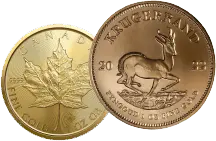
A one-ounce bullion coin like the [American Gold Eagle] or a [Gold Maple Leaf] trades close to spot because dealers know exactly what they’re getting – recognized weight, recognized purity, easy resale. Jewelry and scrap gold work differently. Dealers pay based on the actual gold content once refined, not the retail value of the piece, so a discount to spot is standard across the industry regardless of what time of day you sell.
Collectible or numismatic coins are their own category entirely. Rarity and condition can push value well above melt, which is a separate consideration from daily gold buying hours Pacific timing. If you’re curious how collector value works, our piece on rare coin scarcity and value walks through what drives premiums in that market.
Practical Tips for Selling Gold in the Pacific Time Zone
Knowing the ideal window is one thing. Acting on it takes a bit of planning.
Selling Gold During Peak Pacific Hours
1
Time your call right Aim for 8 AM to 12 PM PT on a weekday, when London and New York overlap
2
Collect multiple quotes Contact a few dealers during that window and compare bids, not just headline numbers
3
Ask about inventory A dealer actively restocking may offer a stronger bid than one that’s overstocked
4
Watch the calendar Skip weekends – markets close Friday afternoon and don’t reopen until Sunday evening
5
Track spot price Check a live gold price feed before you call so you know what “fair” looks like that day
6
Factor in shipping If mailing items in, confirm insured shipping and turnaround time before you send anything
Economic data releases can also move the market. Reports like CPI or Federal Reserve announcements often land at 5:30 AM PT and can shift spot prices within minutes. Selling shortly after a release that pushes gold higher can work in your favor, though it’s not something to count on every time.
Common Misconceptions About Gold Buying Hours Pacific
A few myths tend to trip up first-time sellers.
Myths vs. Reality
Pros
✓ Spot price is quoted continuously, but dealer bids shift with liquidity throughout the day
✓ Chasing peaks is unreliable; selling in a liquid window gets you a consistently fair quote
✓ Bid prices vary by dealer size, current inventory, and location
✓ Jewelry is priced on melt value, often well below spot, unless it carries collector value
Cons
✗ Gold prices are the same 24/7
✗ You should wait for the market to hit a new high
✗ All dealers pay the same price
✗ Jewelry sells at spot price
The idea that jewelry sells at spot trips up more sellers than any other myth on this list. Melt value reflects only the pure gold content in a mixed-metal piece, and that’s the fair basis dealers use regardless of the hour you walk in.
In-Person vs. Mail-In: Choosing Your Path in the Pacific Time Zone
Where you live changes how you should approach gold buying hours Pacific.
If you’re in the Salem area or elsewhere in Oregon or Washington, visiting a dealer in person during that 8 AM to noon window lets you get a same-day quote, ask questions face to face, and walk out with payment. Our guide to where to sell gold in Oregon and the companion page for selling gold in Washington cover local options in more detail. If you want to check hours before heading out, our cash for gold hours page lists current in-person availability, and our near me open now listing helps if you’re trying to find a buyer on short notice.
For sellers outside the Pacific Northwest, or anyone who prefers not to drive, mail-in service removes the geography problem entirely. You can request a mail-in kit or use our mail-in gold service, ship your items with insured tracking, and get a quote once they arrive and are evaluated. This doesn’t lock you into daily trading windows the way an in-person walk-in visit does, but the underlying spot price still moves throughout the trading day, so it’s worth checking current pricing on our gold spot prices page before you ship.
Either path – in-person or mail-in – benefits from knowing the broader timing picture. Our article on when to sell gold coins digs into personal finance factors beyond just the daily clock, which pairs well with the hourly guidance here.
Why Choose Accurate Precious Metals
Plenty of local shops buy gold, but few offer the combination of pricing transparency, breadth of inventory, and service options that Accurate Precious Metals provides. We’ve been buying and selling precious metals since 2012, and we’ve built a track record of over 1,000 five-star customer reviews along the way. We are not a pawn shop. We’re a dedicated precious metals dealer, and that distinction shows in how we price and handle every transaction.
Whether you’re local to Salem or shipping in from across the country, we buy bullion coins, bars, scrap gold, jewelry in any condition, dental scrap, silverware, luxury watches, diamonds, and numismatic coins. Our online pricing reflects live spot prices, so you’re never guessing at what’s fair. As an NGC authorized dealer, we also offer grading services for collectors who want a professional opinion on a coin’s condition before selling or adding it to a collection.
If you’d like to sell in person, our Salem, Oregon location welcomes walk-ins and gives you a face-to-face quote on the spot. If you’re anywhere else in the U.S., our mail-in program includes free insured shipping, appraisal, and fast payment once your items are received and evaluated. For readers weighing where to sell locally, our roundup of top gold buyers in Portland]() shows how the wider market compares – and why many sellers end up choosing Accurate Precious Metals for the combination of fair, competitive offers and nationwide reach. Give us a call at (503) 400-5608 or visit [accuratepmr.com to get started.
Frequently Asked Questions
What are the best gold buying hours Pacific sellers should target?
The strongest window is 8:00 AM to 12:00 PM PT on weekdays, when the London and New York markets overlap and liquidity peaks.
Does selling gold on a weekend get me a worse quote?
Yes, generally. Gold markets close Friday afternoon Eastern Time and don't reopen until Sunday evening, so weekend quotes reflect stale pricing and wider spreads.
Will jewelry sell for the same price as a bullion coin at the same hour?
No. Jewelry is priced on melt value based on its actual gold content, while bullion coins trade much closer to spot due to their recognized weight and purity.
Can I sell gold outside the Pacific Northwest to Accurate Precious Metals?
Yes. Our mail-in program serves customers anywhere in the U.S. with insured shipping, appraisal, and fast payment, while our Salem, Oregon location is available for in-person sales.
Should I wait for a news event before selling gold?
Major economic releases, like CPI reports around 5:30 AM PT, can move spot prices quickly. It's not a reliable strategy on its own, but selling shortly after a favorable move can help.
Make the smart choice — invest with Accurate Precious Metals
Whether you are buying bullion for the first time or adding to a long-term position, our team offers expert guidance, transparent pricing, and a reliable buyback program.