This content is for educational purposes only and is not financial or investment advice. Precious metals prices fluctuate; past performance does not guarantee future results. Consult a qualified professional before making investment decisions.
Gold value varies by buyer more than most sellers expect – and that gap can mean hundreds or even thousands of dollars on the same piece of jewelry or coin. If you’ve ever gotten two wildly different offers for the same gold item, you weren’t being cheated by one of them (necessarily). You were seeing two different pricing models, two different profit margins, and two different ideas of what your gold is actually worth to that buyer. Understanding why this happens puts you in control of the outcome.
This article breaks down exactly what drives those differences: spot price versus retail value, how purity and weight affect the math, why buyers need a margin to stay in business, and how the type of gold you’re selling changes everything. Whether you’re sitting on a broken necklace or a rare coin, knowing how much is my gold worth before you walk into any transaction is the single most powerful thing you can do.
Spot Price vs. Retail Price: The Root of the Confusion
Most sellers assume gold has one price. It doesn’t. There are at least two distinct prices at play at any given moment, and they serve completely different purposes.
The spot price is the current market price for one troy ounce of pure gold traded on global commodity exchanges. Think of it as the wholesale price – what refiners, banks, and large institutions pay to move raw gold. At the time of writing, gold spot is $4,053 per ounce.
The retail price is what consumers pay when they buy a finished gold product – a coin, a bar, a piece of jewelry. It includes the spot price plus a premium that covers refining, minting, dealer overhead, and profit. A standard [American Gold Eagle] might sell for $4,150 or more per ounce right now, even though the spot price is $4,053. That difference is the premium.
When you flip the equation and sell gold, buyers work backward from spot. They calculate the pure gold content in your item, apply the spot price, and then subtract their margin. That margin varies by buyer, which is the core reason two buyers quote you two different numbers.
Every gold buyer starts with the same two questions: how heavy is it, and how pure is it? The answers determine the melt value – the baseline number everything else is built on.
Gold purity is measured in karats. Pure gold is 24 karats. 18-karat gold is 75% pure. 14-karat gold is about 58% pure. 10-karat gold, the minimum legal standard for “gold” jewelry in the U.S., is just 41.7% pure.
Here’s what that looks like in practice. Say you have a 10-gram gold chain stamped 18K. That means 7.5 grams of it is pure gold. At $4,053 per troy ounce at the time of writing – and there are 31.1 grams in a troy ounce – pure gold is worth roughly $130 per gram. So 7.5 grams of pure gold content is worth about $975 in raw melt value.
Now the buyer applies their margin. One buyer might offer 85% of melt value. Another might offer 70%. On a $975 melt value, that’s the difference between $829 and $682 – a $147 swing on the same item.
If you want to understand the stamps and marks on your piece before you sell, reading gold purity marks is a useful place to start.
ℹ️ Info: A quick way to estimate your gold’s melt value: multiply the item’s weight in grams by its purity percentage, then multiply by the current price per gram. Always use the live spot price, not a number from memory.
Why Buyer Profit Margins Vary – and Why That’s Normal
Every buyer needs a margin. That’s not greed – it’s arithmetic. A buyer who pays you full melt value has no room to cover their operating costs, shipping, refining fees, or the time it takes to convert your gold into cash. A margin of 10-20% below melt value is standard in the industry.
What isn’t standard is how widely that margin swings between buyers. A pawn shop might offer 50% of melt value because they’re not specialists – they’re generalists who need a large cushion to account for uncertainty. A dedicated precious metals dealer with direct refinery relationships can afford to offer more because they know exactly what they’re getting and have a clear path to liquidate it.
The practical takeaway: always get at least three offers. One buyer quoting $800 and another quoting $1,100 for the same item is not unusual. The difference isn’t dishonesty – it’s business model, overhead, and expertise.
Scrap Gold, Bullion, and Rare Coins: Three Different Worlds
The type of gold you’re selling matters as much as its weight and purity. Buyers value these three categories very differently.
Scrap Gold and Jewelry
Old jewelry, broken chains, mismatched earrings – this category is sold purely on melt value. Buyers don’t care about the design, the brand, or how much you paid for it. They’re buying the metal. The offer you get reflects spot price, purity, and the buyer’s margin. That’s it.
Bullion Coins and Bars
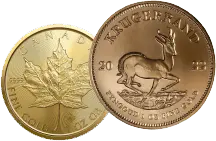
Standard bullion products like gold bars or coins from major government mints trade close to spot price with a small premium in either direction. When you sell a one-ounce gold bar, a buyer knows exactly what they’re getting – .9999 fine gold – and can easily resell it. That certainty means they can offer closer to spot than they would for scrap. The spread between buy and sell prices on bullion is typically much tighter than on jewelry.
Rare and Numismatic Coins
This is where things get interesting. A rare coin isn’t just gold – it’s history, scarcity, and collector demand wrapped in metal. A coin like the 1933 Double Eagle or a well-preserved ancient Roman aureus can be worth many times its gold content. Numismatic value is determined by rarity, condition, and demand among collectors, not by the spot price alone.
The flip side: not every old coin is rare. Many common-date coins in worn condition are worth little more than melt value. A buyer who specializes in numismatics will know the difference. A general buyer might not – and might lowball you on something valuable, or overpay on something common.
Category
Valued By
Example
Scrap / Jewelry
Melt value (spot x purity x weight)
Broken necklace, dental gold
Bullion Coins & Bars
Spot price ± small premium
Gold Eagle, 1 oz bar
Rare / Numismatic Coins
Collector demand + rarity + condition
1933 Double Eagle, ancient coins
What Drives the Spot Price Itself
Understanding why spot price moves helps you time a sale – or at least avoid selling at the worst possible moment.
Supply and demand is the foundation. When mining output drops or central banks buy heavily, prices rise. When new supply enters the market or investor appetite cools, prices fall.
The U.S. dollar has an inverse relationship with gold. Gold is priced in dollars globally. When the dollar weakens, gold becomes cheaper for foreign buyers, demand rises, and the price goes up. When the dollar strengthens, the opposite happens.
Inflation and economic fear push gold higher. Investors treat gold as a store of value when they don’t trust paper currency or financial markets. Wars, trade disruptions, and banking crises historically send gold prices up. From 2001 to 2025, gold prices rose roughly 591% – driven largely by these forces.
At the time of writing, gold is trading at approximately $4,053 per ounce – near record levels. That’s the environment sellers are operating in right now.
Common Misconceptions That Cost Sellers Money
A few persistent myths lead sellers to make poor decisions.
“All gold buyers pay the same.” They don’t. Pricing models, margins, and expertise vary enormously. The only way to know who pays best is to compare offers.
“My jewelry is worth what I paid for it.” Retail price includes design, brand, labor, and markup. When you sell, buyers pay for metal content, not craftsmanship. A $2,000 bracelet might contain $600 worth of gold.
“Rare coins are just gold.” A coin’s numismatic value can dwarf its melt value. Selling a rare coin to a scrap buyer is one of the most expensive mistakes a seller can make.
“Gold always goes up.” Gold has had extended periods of flat or declining prices. Selling during a high like the current market is smart – but don’t assume prices will be higher next year.
“Spot price is what I’ll get.” Spot is the wholesale price for pure gold traded in bulk. Individual sellers always receive less than spot after accounting for purity and buyer margin.
A Brief History of Gold Pricing
Gold has been valued by weight and purity for roughly 5,000 years. Ancient Roman aureus coins and Greek stater coins were exchanged based on their metal content – the same logic buyers use today.
For most of the 19th and early 20th centuries, major currencies were tied to gold at fixed rates. In 1900, the U.S. dollar was pegged at $20.67 per ounce. That system ended in 1971 when President Nixon closed the gold window, and gold became a freely traded commodity.
Since then, gold has been subject to market forces – and the price swings have been dramatic. From under $300 an ounce in 2001 to over $4,000 at the time of writing, the trajectory reflects decades of dollar weakness, inflation, and global instability. Understanding that history helps sellers recognize that today’s prices represent a historically strong selling environment.
Practical Steps to Maximize What You Get
How to Get the Best Offer for Your Gold
1
Know what you have Identify whether your item is scrap jewelry, standard bullion, or a potentially rare coin. Each category requires a different type of buyer.
2
Check the live spot price Use a trusted source to find today’s gold spot price before any conversation with a buyer. This is your baseline.
3
Calculate your melt value Weigh the item in grams, multiply by the purity percentage, then multiply by the current price per gram. This gives you a rough floor for offers.
4
Get multiple offers Contact at least three buyers – a local dealer, an online buyer, and a mail-in service. Offers can vary significantly.
5
Evaluate the buyer’s reputation Look for established dealers with verifiable reviews, a physical address, and a clear process. Avoid buyers who won’t explain how they arrived at their number.
6
Consider the type of buyer A specialist in numismatics is the right choice for rare coins. A precious metals dealer is the right choice for bullion and scrap. A pawn shop is rarely the right choice for either.
Why Accurate Precious Metals Offers a Better Experience
If you’re selling gold – whether it’s a single ring or a collection of coins – the buyer you choose matters as much as the offer itself. Accurate Precious Metals has been buying and selling precious metals since 2012, with more than 1,000 five-star reviews from customers across the country. That track record reflects something simple: fair offers, clear communication, and fast payment.
Unlike a pawn shop, Accurate Precious Metals is a dedicated precious metals dealer. The team knows the difference between scrap gold and a numismatic coin, between standard bullion and a rare issue worth far more than its melt value. That expertise protects sellers from leaving money on the table.
Accurate Precious Metals buys everything: broken jewelry, dental gold, bullion coins and bars, silverware, luxury watches, diamonds, and more. Offers are competitive and based on current spot prices – the same live market data that drives the global gold price.
If you’re in the Salem, Oregon area, you can bring your items in person and get an evaluation on the spot. If you’re anywhere else in the United States, the mail-in service makes the process just as straightforward. You request a free insured shipping kit, send your items, and receive a competitive offer with fast payment. No guesswork, no pressure.
To get started or learn more about selling your gold by mail, visit AccuratePMR.com or call (503) 400-5608. Whether you’re local or shipping from across the country, the process is the same: a fair offer based on what your gold is actually worth today.
Frequently Asked Questions
Why do two gold buyers offer me different prices for the same item?
Different buyers use different pricing models, have different overhead costs, and apply different profit margins. A pawn shop might offer 50-60% of melt value while a specialized dealer might offer significantly more. Always compare offers before selling.
What is melt value and how is it calculated?
Melt value is the raw metal value of a gold item based on its weight and purity. To calculate it, multiply the item's weight in grams by its purity percentage (e.g., 0.75 for 18K), then multiply by the current price per gram. At the time of writing, gold is approximately $4,053 per troy ounce, or about $130 per gram.
Is the spot price what I'll receive when I sell my gold?
No. Spot price is the wholesale price for pure gold. When you sell, buyers deduct for purity (if your item isn't 24K) and apply a margin to cover their costs and profit. The offer you receive will be below spot price for most items.
Does the type of gold item affect what I'm offered?
Yes, significantly. Scrap jewelry is valued purely on melt value. Standard bullion coins and bars trade closer to spot with a small margin. Rare or numismatic coins may be worth far more than their gold content if they carry collector value.
How do I know if I'm getting a fair offer?
Calculate your item's melt value using the current spot price, then compare offers from multiple buyers. A competitive offer from a reputable dealer should reflect current market conditions. If an offer seems far below what you calculated, get a second opinion.
Can I sell gold by mail if I'm not near a dealer?
Yes. Accurate Precious Metals offers a mail-in service with free insured shipping for customers anywhere in the United States. You send your items, receive an offer, and get paid quickly. Visit AccuratePMR.com or call (503) 400-5608 to get started.
Does gold purity affect value more than weight?
Both matter equally in the calculation. A heavier piece of low-karat gold may be worth less than a lighter piece of high-karat gold. The melt value formula multiplies weight by purity, so both variables directly impact the final number.
Make the smart choice — invest with Accurate Precious Metals
Whether you are buying bullion for the first time or adding to a long-term position, our team offers expert guidance, transparent pricing, and a reliable buyback program.