This content is for educational purposes only and is not financial or investment advice. Precious metals prices fluctuate; past performance does not guarantee future results. Consult a qualified professional before making investment decisions.
Getting a realistic gold collection value estimate means more than punching numbers into a calculator. Most collections contain a mix of item types – bullion, jewelry, coins, scrap – and each one gets priced differently. Understanding those differences before you sell can be the gap between a fair deal and leaving money on the table.
This guide walks through exactly how gold collections are valued, what factors move the number up or down, and what steps you should take before you get a single offer.
Why Spot Price Is Just the Starting Point
Gold’s spot price is the global market price for one troy ounce of pure gold at a given moment. At the time of writing, gold is trading at $4,251 per ounce. That number matters, but it is not the final answer for most items in a collection.
Spot price is the raw material price. What someone pays for your actual item depends on the item itself. A damaged 14K chain is worth its metal content and little else. A rare pre-1933 gold coin in strong collector demand can trade at several times its melt value. These are not edge cases – they are the norm in real collections.
The three value layers you need to understand are melt value, bullion premium, and numismatic premium. Melt value is what the gold inside is worth as metal. Bullion premium is what buyers pay above melt for brand-name bars and government coins because of liquidity and trust. Numismatic premium is what collectors pay above melt for rare dates, high grades, and historically significant pieces.
How to Calculate Melt Value for Any Gold Item
Melt value is the foundation of any gold collection value estimate. The formula is straightforward.
Pure gold weight = total weight x purity percentageMelt value = pure gold weight x spot price per troy ounce
One troy ounce equals 31.1035 grams, so if you are working in grams, divide your pure gold weight by 31.1035 before multiplying by the spot price.
Karat marks tell you purity. The conversions are:
Karat
Purity
Gold Percentage
24K
.9999
99.99%
22K
.9167
91.67%
18K
.750
75.00%
14K
.585
58.50%
10K
.417
41.70%
A 10-gram 18K gold ring contains 7.5 grams of pure gold. At $4,251 per troy ounce, that is roughly $4,251 ÷ 31.1035 = $136.67 per gram. Multiply by 7.5 grams and the melt value is about $1,025. That is your floor – the minimum a serious buyer should be working from.
If a piece lacks a karat stamp or the stamp looks worn or suspicious, the item needs to be assessed for purity before any estimate is reliable. A reputable dealer will inspect the piece before making an offer.
Bullion Bars and Government Coins: Close to Melt, but Not Exactly
Gold bars and government-issued bullion coins are the most straightforward part of any collection to value. They trade close to melt, with a premium that reflects brand trust, liquidity, and current market demand.
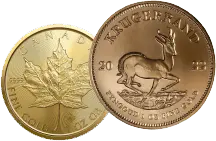
A 1 oz gold bar from a recognized refiner typically sells for a modest premium over spot. Government bullion coins – like the American Gold Eagle or the Gold Maple Leaf – carry slightly higher premiums because of their legal tender status, recognizable design, and global liquidity.
The key point: when you sell bullion back to a dealer, you should expect to receive close to the current spot price, adjusted for the dealer’s margin. The tighter that margin, the better the deal. A specialized precious metals dealer like Accurate Precious Metals offers competitive prices based on live spot prices – very different from what a pawn shop or general jewelry buyer would offer.
Rare and Collectible Gold Coins: When Melt Value Is Just the Floor
This is where valuations get interesting. Two coins with identical gold weight can have wildly different prices because one is common and one is rare.
Gold coin values in the numismatic market are driven by six factors: date, mint mark, condition, rarity, third-party grading, and collector demand. A common date Saint-Gaudens double eagle might trade at a small premium over its melt value of roughly $1,500 at current spot prices. A rare date in top condition can sell for tens of thousands of dollars at auction.
ℹ️ Info: Before selling any pre-1933 gold coin, check the date and mint mark against a current price guide or get a specialist opinion. Selling a collectible coin to a scrap buyer is one of the most common and costly mistakes in the gold market.
Third-party grading adds another layer. Coins graded and slabbed by recognized grading services carry a premium because buyers trust the grade. If you have ungraded coins that may be valuable, it is worth having them reviewed before you sell. Accurate Precious Metals is an NGC Authorized Dealer, which means the team can help assess whether a coin warrants professional grading before you commit to a sale.
Gold Jewelry and Scrap: Value Based on Metal Content
Most gold jewelry sells at or near scrap value unless it is a signed designer piece or antique with documented provenance. The calculation is the same as any melt value formula – weight times purity times spot price.
What changes is accuracy. Jewelry weight includes any stones, clasps, or non-gold components. A digital gram scale is essential. Stones should be removed or their weight subtracted before calculating gold content. If a piece has no karat stamp or the stamp is questionable, the metal needs to be assessed before a reliable offer can be made.
Common jewelry purities are 10K, 14K, and 18K. European pieces may be stamped with fineness numbers like 585 (14K) or 750 (18K) instead of karat marks. Both systems indicate the same purity – just different notation.
Broken chains, mismatched earrings, bent rings – all of these are still worth their gold content. Condition does not reduce melt value. A reputable buyer prices scrap gold on metal content, not appearance.
For more guidance on the selling process for jewelry specifically, selling gold jewelry has a detailed walkthrough of what to expect.
Step-by-Step: How to Estimate Your Collection Before Getting Offers
How to Estimate Your Gold Collection
1
Sort by type Separate bullion bars, government coins, jewelry, scrap, and potentially rare coins. Mixing them together leads to bulk quotes that undervalue collectible pieces.
2
Identify purity Check for karat stamps or fineness marks on every item. Record what you find. If stamps are missing or unclear, flag those pieces for testing.
3
Weigh accurately Use a digital gram scale for jewelry and scrap. For bullion coins and bars, use the stated weight on the packaging or coin itself. Kitchen scales are not precise enough for small items.
4
Calculate melt value Use the formula: pure gold weight x spot price per gram. This gives you the floor value for every piece.
5
Check for numismatic value For coins, look up the date, mint mark, and known varieties. Compare against a current price guide. If a coin looks potentially valuable, get a specialist review before selling.
6
Compare three value types For each item, note melt value, what a dealer would likely pay wholesale, and what it might fetch at retail or auction. That range tells you where you stand.
Types of Gold Collections and How Each Gets Priced
The table below summarizes how different item types are typically valued and what factors matter most for each.
Item Type
Primary Valuation Method
Key Factors
Bullion bars
Close to melt value
Weight, purity, brand, refiner
Government bullion coins
Melt value plus modest premium
Mint, liquidity, condition
Common gold jewelry
Scrap/melt value
Karat, weight, metal content
Rare gold coins
Market or auction value
Grade, rarity, date, demand
Medals and tokens
Often collector value
Scarcity, theme, condition
Dental gold
Scrap value
Alloy composition, weight
Common Mistakes That Lead to Low Estimates
Common Mistakes in Gold Valuation
Pros
✓ Sorting items before getting quotes – separates high-value pieces from scrap
✓ Using a digital gram scale – improves accuracy on small items significantly
✓ Checking dates and mint marks on coins – identifies potentially valuable pieces
✓ Getting a specialist review for unusual items – worth the time before any sale
✓ Comparing melt value to the offer received – tells you how competitive the deal is
Cons
✗ Treating all gold as scrap – rare coins and signed jewelry lose significant value this way
✗ Using kitchen scales – inaccurate weights skew the entire calculation
✗ Ignoring purity – weight alone means nothing without the karat
✗ Getting only one offer – a single quote gives you no reference point
✗ Selling collectibles to bulk buyers – scrap dealers do not pay numismatic premiums
⚠️ Warning: A “cash for gold” buyer quoting by the gram without asking about coin dates or jewelry marks is almost certainly pricing everything as scrap. That is fine for broken chains but potentially costly for collectible coins.
How Accurate Precious Metals Helps You Get a Realistic Estimate
Accurate Precious Metals has been buying and selling precious metals since 2012 from its Salem, Oregon location, with more than 1,000 five-star reviews from customers across the country. The team handles everything from common bullion to rare numismatic coins, dental scrap, estate jewelry, and luxury watches – and prices each item based on what it actually is, not a one-size-fits-all formula.
As an NGC Authorized Dealer, Accurate Precious Metals can assess coins that may warrant professional grading before you decide to sell. That matters when a coin’s collector value could significantly exceed its melt value.
For anyone wondering how much is my gold worth, the mail-in service makes it easy to get a professional assessment from anywhere in the United States. You ship your items with a free insured kit, the team evaluates each piece, and you receive a competitive offer based on current spot prices. Payment is fast once you accept.
Local customers in the Salem, Oregon area are welcome to bring their collection in person. Either way – in person or by mail – you get the same expert evaluation from a team that specializes in precious metals, not a generalist buyer who treats gold as an afterthought.
The most useful thing you can do before contacting any buyer is document your collection thoroughly. Photograph each piece. Record the weight, karat stamp, and any dates or mint marks on coins. Note which items are bullion, which are jewelry, and which might be collectible.
That documentation serves two purposes. First, it lets you calculate a rough melt value baseline so you know what floor to expect. Second, it helps a specialist quickly identify pieces that deserve a closer look before they get lumped into a bulk quote.
If you are ready to sell your gold and want a fair, competitive offer from a team that has seen every type of collection, Accurate Precious Metals is the clear choice – whether you walk in or ship it in.
Frequently Asked Questions
What is the difference between melt value and market value for gold?
Melt value is the worth of the pure gold metal inside an item, calculated from weight and purity at the current spot price. Market value is what a buyer will actually pay, which can be higher if the item has collector demand, brand recognition, or numismatic significance.
How do I find the purity of my gold jewelry?
Look for a karat stamp inside rings, on clasps, or on the back of pendants. Common marks are 10K, 14K, 18K, 24K, or European fineness numbers like 585 or 750. If no stamp is visible or legible, the piece needs to be assessed by a dealer before you can rely on any value estimate.
Can I use a kitchen scale to weigh my gold?
Kitchen scales are not precise enough for small gold items. A digital gram scale that reads to at least 0.1 grams is the minimum for accurate melt value calculations on jewelry and scrap.
Are old gold coins always worth more than their melt value?
Not always. Many common-date gold coins trade at only a small premium over melt. But rare dates, scarce mint marks, and high-grade examples can be worth significantly more. Always check the specific date and mint mark before selling a coin as scrap.
How does Accurate Precious Metals value a gold collection?
Each item is evaluated based on its type, weight, purity, and current spot price. Coins that may have numismatic value are reviewed separately. Offers are competitive and based on live market prices. Local customers can visit the Salem, Oregon location; customers anywhere in the US can use the mail-in service.
What gold spot price should I use for my estimate?
Use the current live spot price at the time you calculate. At the time of writing, gold is $4,251 per ounce. Spot prices change throughout the trading day, so any estimate is only accurate as of the moment you run it.
Is it worth getting multiple offers before selling?
Yes. Comparing at least two or three offers gives you a reference point and helps you identify whether a buyer is pricing your items fairly. A specialist precious metals dealer will typically offer more for collectible pieces than a general scrap buyer.
Make the smart choice — invest with Accurate Precious Metals
Whether you are buying bullion for the first time or adding to a long-term position, our team offers expert guidance, transparent pricing, and a reliable buyback program.