This content is for educational purposes only and is not financial or investment advice. Precious metals prices fluctuate; past performance does not guarantee future results. Consult a qualified professional before making investment decisions.
Tap the image to enlarge and zoom.Hover to magnify, or click to open full screen.
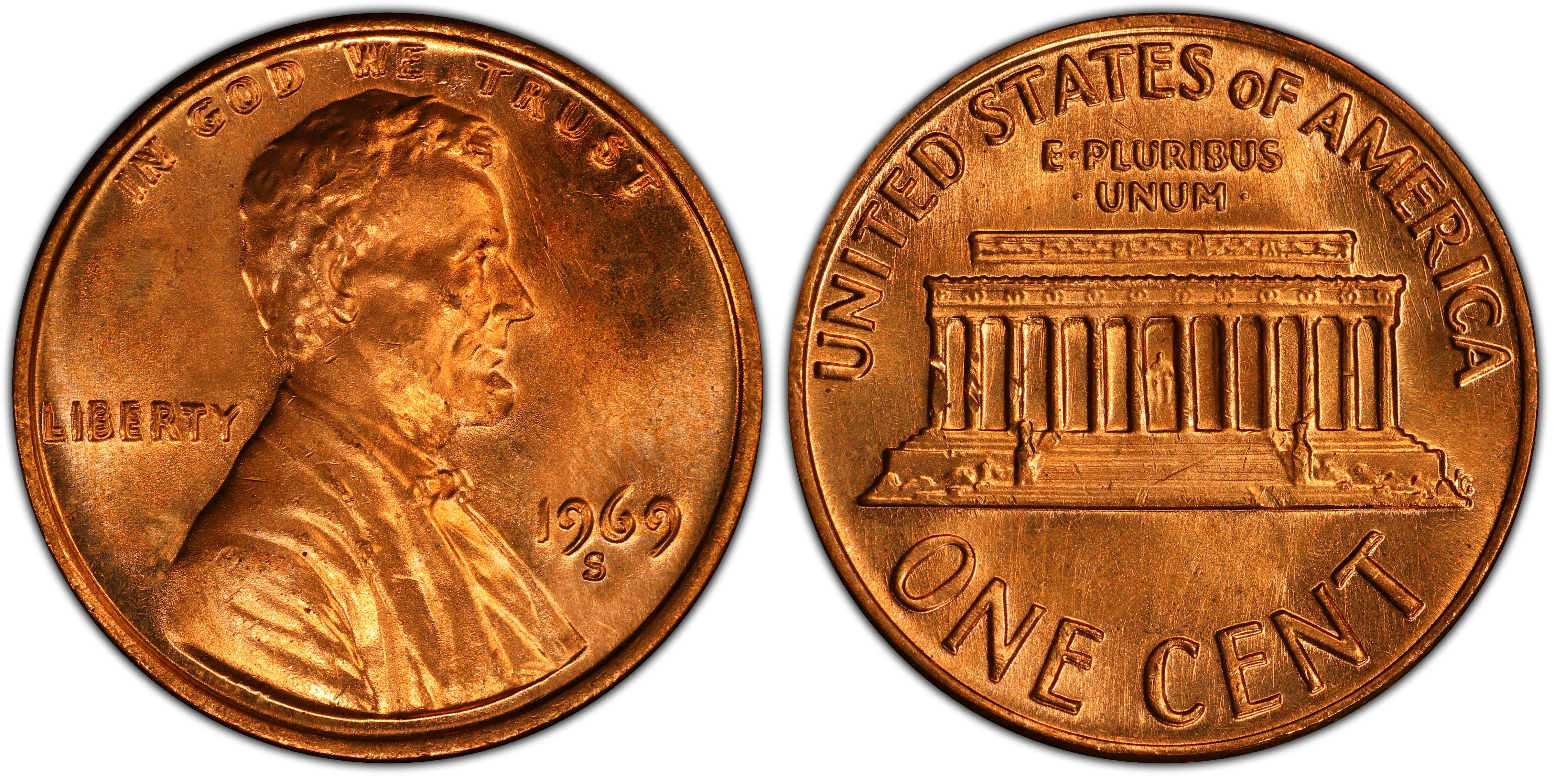
The 1969-S Doubled Die Lincoln Cent is one of the most valuable variety coins made in the last century, and a genuine example can sell for tens of thousands of dollars even though it started life as a plain one-cent piece. Fewer than 100 are believed to exist today, and the doubling on the front of the coin is bold enough to spot without a magnifying glass, once you know where to look.
That combination of dramatic doubling and extreme rarity has made this cent a legend among collectors, sitting right alongside the famous 1955 doubled die penny in coin folklore. Unlike a lot of "rare" coins that turn out to be common once you check a price guide, this one really is scarce, and the story behind it is worth knowing before you ever pull a 1969-S cent out of a jar of change.
What Is the 1969-S Doubled Die Lincoln Cent?
The 1969-S Doubled Die Lincoln Cent is a Lincoln Memorial penny struck at the San Francisco Mint with a doubled die error on the obverse, meaning the front design was doubled during the die-making process. It carries the small S mintmark below the date, is made of 95% copper and 5% zinc, weighs 3.11 grams, measures 19 millimeters across, and has a plain edge.
The San Francisco Mint struck 539,360,000 normal 1969-S cents that year. Almost all of them show no doubling at all. Only a tiny handful came from the one flawed die that created this variety, which is why the coin is cataloged separately by major grading services and variety references as the 1969-S Doubled Die Obverse, often shortened to DDO.
What Does "Doubled Die" Actually Mean?
A doubled die happens when the tool used to stamp the coin's design, called the die, receives a misaligned impression during manufacturing, so every coin struck from that die shows the same doubling. It is not damage and it is not something that happens to one coin at random. It is baked into the die itself before a single cent is ever struck.
On the 1969-S, this shows up as strong, visible doubling on the date, on the word LIBERTY, and on IN GOD WE TRUST. That is what separates it from ordinary wear or shipping damage. The reverse of the coin, showing the Lincoln Memorial, looks completely normal.
How Can You Identify a Genuine 1969-S Doubled Die Obverse?
You identify a genuine 1969-S Doubled Die Obverse by checking for strong, obvious doubling on three specific spots: LIBERTY, IN GOD WE TRUST, and the date digits themselves. If the doubling only shows up on the mintmark, or looks flat and shelf-like instead of doubled, it is probably not this variety.
Key things to check:
Doubling on LIBERTY should be bold and easy to see under low magnification
Doubling on IN GOD WE TRUST should show clearly separated letters, not just a smear
The date digits should show two distinct impressions, not just a thickened edge
The reverse should look completely normal for a 1969-S Lincoln cent
For a broader walk-through of how die doubling actually forms and how to tell it apart from other kinds of doubling, our guide on identifying doubled die coins covers the diagnostics used by professional graders.
How Rare Is the 1969-S Doubled Die Lincoln Cent?
The 1969-S Doubled Die Lincoln Cent is extremely rare, with fewer than 100 examples believed to exist and some references estimating only 30 to 50 known survivors. Compare that to the 539,360,000 normal 1969-S cents struck that year, and you get a sense of just how small this needle-in-a-haystack group really is.
Fewer than 100
Believed to exist worldwide
30 to 50
Estimated survivors in some references
539,360,000
Total 1969-S cents struck that year
That kind of scarcity is rare even among famous Lincoln cent varieties. If you enjoy tracking down which dates and mint marks actually matter in this series, our roundup of key dates in Lincoln wheat pennies walks through several other scarce issues collectors chase.
How Much Is a 1969-S Doubled Die Lincoln Cent Worth?
A genuine 1969-S Doubled Die Lincoln Cent is typically worth thousands to well into six figures, depending on grade and color. An AU55 example sold at auction for $54,625 in 2009, and a later high-grade example was reported with bidding above $107,500 during an auction event.
Grade Tier
What It Might Bring
Worn but genuine, low grade
Several thousand dollars
Mid circulated, EF to AU
Tens of thousands, one AU55 sold for $54,625 in 2009
High grade with strong red color
Six figures, with reported bidding above $107,500
Color matters almost as much as grade here. A copper cent that has kept its original red color tends to bring a stronger price than one that has toned brown, even at the same numerical grade. That is one reason two coins with the same grade number can sell for very different amounts.
Is the 1969-S DDO Worth More Than Its Copper Melt Value?
Yes, by a massive margin. A 1969-S Doubled Die Lincoln Cent is worth thousands of times more than the copper and zinc it contains, because collector demand, not metal weight, drives its price.
At the time of writing, gold sits around $4,616 an ounce, silver around $68, platinum around $1,851, and palladium around $1,340. Those numbers matter for bullion buyers, but they barely register for this coin. A standard copper cent's metal content amounts to a fraction of a cent, so whether copper prices rise or fall, it changes nothing about what this variety is worth to a collector. If you want to track current bullion prices for gold, silver, and other metals, our gold and silver price charts update regularly.
Why Do Counterfeits and Altered Coins Show Up So Often With This Variety?
Counterfeits and altered coins show up constantly with the 1969-S Doubled Die because the potential payoff is so large that people try to fake it, whether by doctoring genuine 1969-S cents or by passing off common machine doubling as the real variety. This coin has one of the longest histories of fakes and lookalikes among Lincoln cent varieties.
⚠️ Warning: Not every doubled-looking cent is valuable. Machine doubling, caused by a die shifting slightly during striking, creates a shelf-like or flat look and is common on many dates. It has almost no premium value, unlike a true doubled die.
Other confusion points worth knowing:
A doubled mintmark by itself is not the same thing as a doubled die and is not the famous rarity
Plated, cleaned, or artificially toned cents are sometimes sold as this variety to unsuspecting buyers
A raw coin priced far below what a genuine example should bring is a red flag, not a bargain
How Can You Verify a 1969-S Doubled Die Before Buying or Selling?
You verify a 1969-S Doubled Die Lincoln Cent by having it evaluated by a major third-party grading service and by comparing its diagnostics against known genuine photos before any money changes hands. Given how much fraud surrounds this coin, skipping this step is one of the most common and costly mistakes a buyer can make.
Verifying a 1969-S Doubled Die
1
Compare diagnostics Check LIBERTY, IN GOD WE TRUST, and the date against known genuine examples, not just photos of the mintmark
2
Rule out machine doubling Look for sharp, separated doubling rather than a flat, shelf-like smear
3
Send it for grading Submit the coin to a major grading service so a professional evaluates it under magnification
4
Ask about provenance Provenance, meaning who owned the coin before and where it came from, can support its history and value
5
Get a second opinion For anything priced in the thousands, a second expert look is cheap insurance
As an NGC Authorized dealer, our team can help walk you through what a grading submission involves if you think you have found one of these in a jar of old change or an inherited collection.
What Is the History Behind This Coin's Discovery?
The 1969-S Doubled Die Lincoln Cent surfaced gradually, showing up in collections and, occasionally, in ordinary circulation years after it was struck. Because the doubling is so obvious to the naked eye, once collectors started comparing notes, its reputation as one of the rarest Lincoln Memorial varieties grew fast.
1969;San Francisco Mint strikes 539,360,000 regular cents, a tiny unknown number from a flawed doubled die Later years;Genuine examples begin surfacing in collections and pocket change, sparking early comparisons to the 1955 doubled die cent 2009;An AU55 example sells at auction for $54,625 Later report;A high-grade example draws reported bidding above $107,500 during an auction event
One story that has stuck with collectors involves an example that was reportedly sold for just 5 cents before someone recognized what it actually was, later valuing it at tens of thousands of dollars. It is the kind of story that keeps people checking every 1969-S cent they come across, and it is not an exaggeration to say more than a few pocket-change fortunes have been found this way.
Common Misconceptions About the 1969-S Doubled Die Lincoln Cent
The biggest misconception about the 1969-S Doubled Die Lincoln Cent is that any 1969-S penny is automatically rare. It is not. Only the specific doubled die obverse variety carries major value, and it looks almost identical to a normal cent unless you know exactly what to check.
"All 1969-S cents are rare." False. Millions of ordinary 1969-S cents exist and are worth face value or a small premium at most
"Any doubling means it's valuable." False. Most doubling people notice is machine doubling, which carries little to no premium
"The S mintmark proves it." False. The mintmark alone says nothing about whether the die itself was doubled
"It's a mint error." Not quite. It is more accurately described as a doubled die variety, which is a die-making flaw, not a strike-through or planchet defect
If you inherited a jar of old cents or wheat pennies and want a sense of what might actually be worth setting aside, our Lincoln wheat penny value guide breaks down which dates and conditions tend to bring real money.
Whether you are hunting for a piece like this to add to a collection or thinking about parting with old coins sitting in a drawer, it is worth a look either way. Browse our current coin inventory if you are searching for varieties and key dates worth owning, and if you have coins to sell, you can sell coins to our team by mailing them in from anywhere in the country or stopping by our Salem, Oregon location in person.
Frequently Asked Questions
How much is a 1969-S doubled die Lincoln cent worth?
Genuine examples typically bring thousands to six figures depending on grade and color, with a famous AU55 example selling for $54,625 at auction.
How do I tell if my 1969-S cent is the doubled die variety?
Look for bold, clearly separated doubling on LIBERTY, IN GOD WE TRUST, and the date digits, not just on the mintmark, and check that the reverse looks normal.
How many 1969-S doubled die cents exist?
Fewer than 100 are believed to exist, with some references estimating only 30 to 50 known survivors.
Is the 1969-S doubled die cent rare?
Yes, it is considered one of the rarest and most sought-after Lincoln Memorial cent varieties ever produced.
What does DDO mean on a coin?
DDO stands for Doubled Die Obverse, meaning the doubling appears on the front, or obverse, of the coin rather than the back.
Is a 1969-S cent with a doubled mintmark valuable?
Not by itself. The famous, valuable rarity is the doubled die obverse variety, and a doubled mintmark alone does not qualify a coin for that premium.
Should I get my 1969-S cent graded before selling it?
Yes, if you suspect it might be the doubled die variety, since counterfeits and altered coins are common and a professional grading opinion protects both buyer and seller.
What metal is a normal 1969-S Lincoln cent made of?
It is made of 95% copper and 5% zinc, weighs 3.11 grams, measures 19 millimeters, and has a plain edge.
Make the smart choice — invest with Accurate Precious Metals
Whether you are buying bullion for the first time or adding to a long-term position, our team offers expert guidance, transparent pricing, and a reliable buyback program.