This content is for educational purposes only and is not financial or investment advice. Precious metals prices fluctuate; past performance does not guarantee future results. Consult a qualified professional before making investment decisions.
Tap the image to enlarge and zoom.Hover to magnify, or click to open full screen.
If you are looking for starter tips for coin collecting, the most important thing to understand upfront is this: the hobby rewards patience and knowledge far more than spending power. You do not need a large budget to begin. You need a plan, a few basic tools, and the discipline to learn before you buy.
Coin collecting, known formally as numismatics, is one of the oldest hobbies in the world. It draws in history lovers, precious metals enthusiasts, and puzzle solvers alike. For gold and silver collectors especially, coins offer a unique combination of metal value and historical significance. This guide walks through everything a beginner needs to know – from coin types and grading basics to storage, pricing, and the most common mistakes new collectors make.
What Is Numismatics and Why Does It Matter for Beginners
Numismatics is the study and collection of coins, currency, and related objects. A numismatist is simply someone who collects and studies coins with a serious interest in their history, condition, and value.
For a beginner, the most useful thing to grasp early is that coin value has two separate components. Melt value is what the metal inside the coin is worth based on its weight and the current spot price of that metal. Numismatic value is what collectors will pay based on rarity, condition, demand, mint mark, date, or historical significance.
These two numbers can be very different. A silver coin might carry a numismatic premium far above its silver content if it is a key date or high-grade example. Conversely, a common bullion piece may trade close to metal value with only a small dealer premium on top. Understanding this distinction early will save you money and frustration.
At the time of writing, silver spot is around $75 per ounce and gold spot is around $4,438 per ounce. Those figures are the metal baseline – not the price you will pay at retail, and not necessarily what a rare coin is worth.
The Main Coin Types Every Starter Should Know
Not all coins behave the same way in price or collecting style. Here are the six types a beginner will encounter most often:
Circulating coins – everyday coins from pocket change or commerce. These are the easiest starting point and often cost very little.
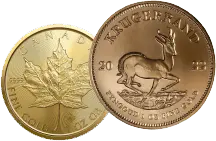
Bullion coins – coins bought primarily for their precious-metal content. Examples include the [American Gold Eagle] and [American Silver Eagle]. Pricing follows spot closely, plus a dealer premium.
Proof coins – specially struck coins with polished, mirror-like surfaces and sharp detail. Mints produce these for collectors, and they carry higher premiums than standard bullion.
Uncirculated coins – coins that never entered regular commerce and show no wear, though they may have minor bag marks from handling during production.
Error coins – coins with mint mistakes such as doubled dies, off-center strikes, or missing design elements. These can be surprisingly valuable. Learn to identify double die coins before dismissing an odd-looking cent.
Variety coins – coins with notable design or minting differences that collectors track separately, even when the basic date is common.
For gold and silver enthusiasts, bullion and proof coins are the most natural entry points. They are widely recognized, easy to price, and tied to metal markets in a way that makes sense to new collectors.
Starter Tips for Coin Collecting: Building Your Foundation
The American Numismatic Association consistently gives the same core advice to new collectors: start small, specialize, and learn before spending heavily. Here is how that looks in practice.
Your First Steps as a Coin Collector
1
Pick a focus Choose one area – U.S. cents, Morgan dollars, Roosevelt dimes, or bullion coins – rather than collecting randomly. Specializing makes grading and pricing easier to learn.
2
Buy the book first Get a reference catalog for your chosen area before buying any significant coins. Knowledge prevents overpaying.
3
Start with affordable coins Lincoln cents, Roosevelt dimes, and common-date Morgan dollars are widely available and inexpensive enough to handle and study freely.
4
Attend a coin show or visit a dealer Seeing many coins in person trains your eye faster than reading alone. Hands-on comparison is irreplaceable.
5
Join a community Local coin clubs, online forums, and experienced dealers provide mentorship that accelerates learning.
💡 Tip: Tip: The ANA recommends spending several months learning before making expensive purchases. The collectors who overpay most often are the ones who skipped this step.
How Pricing Works: Spot, Premiums, and Numismatic Value
When you buy a precious-metal coin, the price you pay has several layers. Understanding each one helps you shop smarter.
The spot price is the live market price for the raw metal. At the time of writing, gold is approximately $4,438 per ounce and silver is approximately $75 per ounce. Platinum sits around $1,897 per ounce and palladium around $1,352 per ounce. These are starting points, not retail prices.
On top of spot, dealers charge a premium that covers minting costs, distribution, and their own margin. For common silver bullion, premiums typically run a few dollars per ounce above spot. Gold coins carry smaller percentage premiums but larger absolute dollar amounts given the higher base price.
For collectible or numismatic coins, there is an additional numismatic premium that reflects rarity, condition, and collector demand. Two coins with identical silver content can have dramatically different prices if one is a key date in exceptional condition and the other is a common date in average grade.
A useful mental model: spot value is the floor for a bullion piece, but for a numismatic coin, the floor can be much higher – and the ceiling depends entirely on the market for that specific coin.
Grading Basics: Why Condition Changes Everything
Condition is one of the biggest price drivers in the hobby. The same coin in different grades can be worth anywhere from a few dollars to thousands. Collectors use the Sheldon scale, which runs from 1 (barely identifiable) to 70 (perfect, no marks visible under magnification).
A few practical grade categories to learn first:
Poor (P-1) to Good (G-6): Heavy wear, major details visible but flat. Common circulated coins fall here.
Fine (F-12) to Very Fine (VF-35): Moderate to light wear with clearer detail. Mid-range collectible territory.
Extremely Fine (EF-40) to About Uncirculated (AU-58): Light wear on high points only. Significant collector value for desirable dates.
Mint State (MS-60 to MS-70): No wear at all. MS-65 and above command strong premiums for popular coins.
For a deeper look at understanding coin grades, spend time comparing graded examples side by side. Reading about grades helps, but your eye develops through practice.
When buying valuable coins, use third-party grading services such as PCGS or NGC. These services evaluate coins independently and encapsulate them in tamper-evident holders with an assigned grade. Accurate Precious Metals is an NGC Authorized Dealer, which means customers can access professional grading services directly through us.
Authentication and What to Check Before You Buy
Counterfeits exist, especially for popular gold and silver coins. A few basic checks go a long way for a beginner.
Weight and dimensions – Compare against published specifications. A coin that is slightly too light or too thick is a red flag.
Magnet test – Gold and silver are not magnetic. A coin that sticks to a magnet is not what it claims to be.
Surface detail under magnification – Use a loupe or magnifying glass to inspect strike quality, lettering sharpness, and surface texture.
Mint marks and dates – Know where the mint mark should appear for the coin you are buying. Altered dates and added mint marks are real concerns on valuable varieties.
Seller reputation – Buy from established dealers, auction houses, or collectors with verifiable track records.
For expensive purchases, always request third-party grading and get a proper coin dealer appraisal before committing. The cost of professional evaluation is small compared to the risk of overpaying for a misrepresented coin.
⚠️ Warning: Warning: Never clean a coin before having it evaluated. Cleaning scratches the surface, destroys original luster, and can reduce a coin’s collector value significantly – even if the coin looks brighter afterward.
Storage and Handling: Protecting What You Collect
Proper storage is not optional. Even a high-grade coin can degrade quickly if stored carelessly. Silver and copper-based alloys tarnish when exposed to air, humidity, and certain materials. Gold is more stable but still benefits from proper housing.
The basics every beginner should follow:
Store coins in archival-quality holders – coin flips, hard plastic capsules, or albums designed for numismatic storage.
Avoid PVC-containing plastics, which leach chemicals that damage coin surfaces over time.
Keep coins away from cardboard boxes and loose plastic bags, which offer no real protection and can accelerate tarnishing.
Control temperature and humidity – a cool, dry environment is ideal. Avoid basements or attics where conditions fluctuate.
Handle coins by the edges only – fingerprints leave oils that can permanently mark surfaces, especially on proof and uncirculated coins.
A basic starter kit includes a loupe (10x magnification is standard), a set of coin flips or a quality album, and a reference book for your chosen collecting area. Add a spreadsheet or notebook to track purchase prices, grades, and sources. That record becomes valuable over time.
Common Beginner Mistakes to Avoid
Most beginner errors fall into a handful of repeating patterns. Knowing them in advance saves real money.
Common Coin Collecting Mistakes
Pros
✓ Starting with affordable, widely available coins builds knowledge without high financial risk
✓ Joining a coin club or forum gives you access to experienced collectors who can spot problems you would miss
✓ Buying third-party graded coins removes most of the condition and authenticity uncertainty
✓ Specializing early makes you a faster learner and a better buyer in your chosen area
Cons
✗ Cleaning coins – destroys surface originality and collector value, even when the result looks shiny
✗ Buying without research – overpaying is almost inevitable when you skip the learning phase
✗ Collecting too broadly – trying to collect everything makes it hard to develop expertise in any area
✗ Ignoring storage – good coins degrade in bad conditions, no matter how much you paid for them
✗ Assuming old means valuable – age alone means very little; rarity, condition, and demand are what drive price
✗ Treating bullion as automatically safe – premiums and resale spreads still affect your real return
Starter Coins Worth Considering
A few coin series are consistently recommended for beginners because they are affordable, widely available, and well-documented.
Lincoln cents are the most accessible starting point in U.S. coinage. They have been minted since 1909, and certain dates and mint marks carry significant premiums. Valuable Lincoln pennies are a great early study in how mint marks and survival rates affect price.
Roosevelt dimes have been produced since 1946, and pre-1965 examples contain 90% silver. At today’s silver spot of about $75 per ounce, the silver melt value of a pre-1965 dime is meaningful on its own – before any numismatic premium is added.
Morgan silver dollars are one of the most collected U.S. coin series ever produced. Struck from 1878 to 1904 and again in 1921, they combine silver content with a rich variety of dates, mint marks, and grades. Browse numismatic coins to see what Morgan dollars and similar collectibles look like at retail. The Morgan Silver Dollar series offers dozens of entry points at different price levels.
For gold collectors, fractional gold coins – such as the 2026 1/10 oz Gold Maple Leaf – offer a lower-cost way to own investment-grade gold while building familiarity with coin quality and pricing.
Where to Buy and Sell Coins Safely
Good sources for beginner coin buying include coin shows, reputable dealers, established online platforms, and estate sales. Each has trade-offs in price, selection, and risk. Coin shows and dealers give you hands-on access and the ability to ask questions. Online platforms offer wider selection but require more care in verifying sellers.
When you are ready to sell, the same principles apply. Work with dealers who are transparent about pricing and who explain how they arrived at their offer. For selling coins and bullion efficiently, understanding the difference between melt value and numismatic value helps you evaluate any offer you receive.
Accurate Precious Metals has been operating since 2012 and has earned more than 1,000 five-star customer reviews. Based in Salem, Oregon, the team buys and sells gold, silver, platinum, palladium, and numismatic coins – and as an NGC Authorized Dealer, can provide professional grading services for coins you want evaluated before selling or adding to your collection.
If you are local to Salem, visiting in person gives you the chance to handle coins, ask questions, and get a real-time assessment of what you have. If you are anywhere else in the United States, the mail-in service at AccuratePMR.com includes free insured shipping, thorough evaluation of your items, and fast payment. Both options are straightforward and transparent.
For collectors who want to build a position in gold or silver coins as part of a longer-term strategy, Accurate Precious Metals also offers Gold and Silver IRA services – a way to hold physical precious metals inside a retirement account structure. Pricing on the site reflects live spot prices, so what you see is current and competitive.
Whether you are buying your first coin or looking to sell a collection you have built over years, Accurate Precious Metals is the kind of dealer worth knowing. Reach the team at (503) 400-5608 or visit AccuratePMR.com to explore current inventory and collecting tips and tricks to support your next step in the hobby.
Frequently Asked Questions
What is the best coin to start collecting for a beginner?
Lincoln cents and Roosevelt dimes are the most accessible because they are inexpensive, widely available, and well-documented. Pre-1965 Roosevelt dimes also contain 90% silver, adding a metal value component. Morgan silver dollars are a popular next step for collectors who want more variety and history.
What is the difference between melt value and numismatic value?
Melt value is what the metal in a coin is worth based on its weight and the current spot price. Numismatic value is what collectors will pay based on rarity, condition, demand, date, and mint mark. A coin’s numismatic value can be far higher than its melt value – or, for common bullion, roughly equal to it plus a small premium.
Should I clean my coins before selling or grading them?
No. Cleaning coins removes original surface patina and can cause microscopic scratches that reduce grade and collector value. A coin that looks dull but retains its original surfaces is worth more to a serious collector than one that has been polished. Leave cleaning to conservators with professional tools.
How do I know if a coin is real?
Check weight and dimensions against published specifications, test with a magnet (gold and silver are non-magnetic), and examine surface detail under magnification. For expensive coins, use a third-party grading service like PCGS or NGC, or have the coin assessed by a reputable dealer such as Accurate Precious Metals, which is an NGC Authorized Dealer.
What does a coin grading scale look like?
The Sheldon scale runs from 1 to 70. Coins graded 1 to 10 are heavily worn. Grades 20 to 40 represent circulated coins with varying levels of detail. Grades 60 to 70 are uncirculated, with MS-70 representing a perfect specimen. Condition dramatically affects price, especially for popular dates and series.
Is coin collecting a good investment?
Coin collecting can preserve value and, in some cases, appreciate significantly – but it is a hobby first. Rare coins in high grades have historically performed well, and precious-metal bullion coins track metal prices. That said, premiums, grading costs, and resale spreads mean it is not a simple savings vehicle. We are not financial advisors, and no outcome can be promised.
Where can I sell coins I already own?
Reputable coin dealers, auction houses, and coin shows are the most reliable options. Accurate Precious Metals buys all types of coins – numismatic and bullion – at its Salem, Oregon location or through its mail-in service available to customers anywhere in the United States.
Make the smart choice — invest with Accurate Precious Metals
Whether you are buying bullion for the first time or adding to a long-term position, our team offers expert guidance, transparent pricing, and a reliable buyback program.