This content is for educational purposes only and is not financial or investment advice. Precious metals prices fluctuate; past performance does not guarantee future results. Consult a qualified professional before making investment decisions.
Tap the image to enlarge and zoom.Hover to magnify, or click to open full screen.
When buyers start building a silver portfolio, the choice between silver coins vs silver rounds comes up fast – and it matters more than most people expect. Both products contain real silver. Both come in standard 1 troy ounce sizes. But they are not the same thing, and the difference affects what you pay, how easily you can sell, and what you actually own.
The short version: coins are government-issued legal tender with a face value and official backing. Rounds are privately minted silver discs with no face value and no legal-tender status. Same metal, different origin, different price, different use case. This article breaks down both options so you can decide which fits your goals.
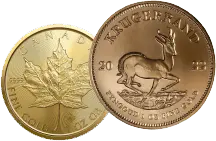
A silver coin is minted by a government authority – the U.S. Mint, the Royal Canadian Mint, the Perth Mint, and so on. Each coin carries a denomination, such as one dollar or five dollars, making it official legal tender in its country of origin.
That face value is almost always far below the coin’s actual silver content. A [Silver American Eagle], for example, carries a one-dollar face value, but at the time of writing, silver spot is about $75 per ounce. Nobody spends Eagles at face value. The denomination is symbolic; the real value comes from the metal and the premium buyers are willing to pay for a government-backed product.
These coins are recognized worldwide. Dealers, banks, and collectors in almost any country know what they are, which makes them easy to sell.
What Makes a Silver Round a Round
A silver round is made by a private mint. It looks like a coin – same disc shape, similar weight, often similar size – but it has no face value, no government backing, and no legal-tender status anywhere in the world.
Private mints produce rounds in a huge range of designs, from plain generic pieces to themed series with elaborate imagery. Quality varies by mint, but reputable private mints produce rounds to the same .999 fine silver standard as most government coins. The 1 oz Silver Round – Buffalo Design from Frontier Mint and the Engelhard Prospector round are good examples of well-regarded privately minted pieces.
The key reason stackers buy rounds is simple: lower premiums. Because there is no government overhead, no legal-tender program, and less brand prestige to price in, rounds typically sell closer to silver’s melt value.
Silver Coins vs Silver Rounds: The Core Tradeoff
The practical difference between the two products comes down to premium versus recognition.
At the time of writing, silver spot is about $75 per ounce. That means the base metal in any standard 1 oz silver bullion product – coin or round – is worth roughly $75 in melt value. What changes is how much you pay above that.
Factor
Silver Coins
Silver Rounds
Issuer
Government mint
Private mint
Legal tender
Yes
No
Face value
Yes (symbolic)
No
Typical premium over spot
Higher
Lower
Market recognition
Very high
Varies by brand
Collectibility
Often higher
Usually lower
Best use case
Liquidity, collecting, long-term hold
Maximizing ounces per dollar
A 1 oz government coin might sell for $86 at the time of writing – about $11 over spot. A comparable 1 oz round might sell for $79 – about $4 over spot. That $7 gap per ounce adds up fast when you are buying 20, 50, or 100 ounces.
Silver Coins vs Silver Rounds
Pros
✓ Coins: widely recognized and easy to resell
✓ Coins: government backing adds buyer confidence
✓ Coins: can carry numismatic premium beyond melt value
✓ Coins: strong liquidity with dealers worldwide
✓ Rounds: lower premiums – more silver per dollar spent
✓ Rounds: same .999 fine silver purity as most coins
✓ Rounds: wide design variety from private mints
Cons
✗ Coins: higher premiums mean more cost per ounce
✗ Coins: face value is purely symbolic – no practical spending use
✗ Rounds: less universal recognition than major government coins
✗ Rounds: little to no numismatic upside in most cases
✗ Rounds: resale may depend more on dealer and local demand
Why Collectors Lean Toward Coins
Collectors are drawn to silver coins for reasons that go beyond metal content. Government mints often release coins with national symbols, commemorative themes, or limited mintages that create genuine collector interest. A coin with a low mintage or a special proof finish can trade well above its melt value if demand is strong.
The best silver coins to buy for collectors typically combine strong silver content with recognizable designs and consistent demand. American Eagles, for instance, have a loyal collector base and decades of production history. That combination of familiarity and official status makes them easier to sell at a fair price, especially when dealing with buyers who are not professional dealers.
For anyone holding silver as a long-term store of value, coins also carry a practical advantage: a buyer anywhere in the country – or the world – is likely to recognize a Silver Eagle or a Maple Leaf without needing to verify it further. That recognition translates directly into faster, easier transactions.
Why Stackers Lean Toward Rounds
If the goal is to accumulate as many ounces as possible on a fixed budget, rounds win on economics. The lower premium means each dollar goes further toward actual silver. Over a large purchase, the savings are real.
A buyer spending $7,500 at the time of writing could buy roughly 100 oz of silver at spot. With a $4 premium on rounds, total cost is around $7,900. With an $11 premium on coins, total cost climbs to around $8,600. That $700 difference represents nearly 9 additional ounces of silver at current prices.
Rounds are also a reasonable choice for buyers who plan to sell back to a dealer rather than a private collector. Reputable dealers will buy rounds based on silver content, so the lower premium on the buy side does not necessarily hurt you on the sell side – as long as you are working with a dealer who prices fairly.
The 1 oz Silver Round – Design Varies on the secondary market is a common entry point for new stackers who want to test the waters without paying coin premiums.
Common Misconceptions About Silver Products
A few persistent myths are worth addressing directly.
“Rounds are fake coins.” No. A round is a legitimate silver product made to a specific weight and purity. It is not legal tender, but it is real silver made by a real mint.
“Coins contain more silver than rounds.” Not necessarily. Many rounds are .999 fine silver – the same standard as most government bullion coins. Some are even .9999 fine. The difference is legal status, not purity.
“Higher premium means better silver.” Premium reflects brand, government backing, and collector demand – not extra silver. A $86 coin and a $79 round may contain identical silver content.
“All silver sells equally easily.” In practice, widely known government coins move faster and with less friction. Rounds can be sold, but the ease depends on the dealer, the brand, and local demand.
“Face value matters for pricing.” It does not. A Silver Eagle’s one-dollar face value is irrelevant to its market price. Silver spot and premium determine what it is worth.
Numismatic Coins: A Different Category Entirely
Beyond standard bullion, there is a third tier worth understanding: numismatic and semi-numismatic coins. These are coins valued partly or entirely for rarity, condition, historical significance, or collector demand – not just metal content.
A circulated 1897 Barber Dime, for example, has collector value that has nothing to do with its silver melt value. The 1897 Barber Dime guide covers how condition and rarity affect pricing for coins like this. Similarly, older Morgan Dollars and Peace Dollars often trade at premiums that far exceed their silver content.
Rounds have essentially no numismatic market. They are bullion products, full stop. If collecting interests you alongside stacking, coins are the only path that opens the door to numismatic upside.
Pricing Silver: Spot, Premium, and Melt Value Explained
Three terms come up constantly in silver buying, and understanding them makes every transaction clearer.
Spot price is the live market price for one ounce of silver. At the time of writing, silver spot is about $75 per ounce. This number changes constantly based on global supply and demand.
Melt value is what the silver in a specific item is worth based on spot. A 1 oz .999 fine silver coin has a melt value of roughly $75 at the time of writing. A 10 oz silver bar has a melt value of about $750 at the time of writing.
Premium is everything above melt value. It covers minting costs, distribution, dealer margins, brand recognition, and collector demand. Government coins carry higher premiums. Rounds carry lower ones. Silver bars typically carry the lowest premiums of all three product types, especially in larger sizes.
ℹ️ Info: Spot prices move every trading day. The $75/oz figure used throughout this article reflects the price at the time of writing. Always check current spot before making a purchase or sale decision.
For a broader look at how silver rounds and coins compare in terms of long-term value and resale strategy, the differences in premium structure are worth studying before committing to a large purchase.
Practical Buying Tips
A few straightforward guidelines help buyers avoid overpaying or buying the wrong product for their goals.
How to Choose Between Coins and Rounds
1
Step 1 Define your goal – are you collecting, stacking ounces, or both? Your answer determines which product type makes more sense.
2
Step 2 Compare premiums on the same weight and purity. A 1 oz .999 coin vs. a 1 oz .999 round is an apples-to-apples comparison where premium is the deciding factor.
3
Step 3 Check the mint’s reputation. For coins, stick to major sovereign mints. For rounds, look for established private mints with clear hallmarks and verifiable specs.
4
Step 4 Verify weight and purity. Reputable dealers list both clearly. Any product missing this information is a red flag.
5
Step 5 Think about resale before you buy. If you may need to sell quickly, widely recognized coins from major mints give you more options.
6
Step 6 Factor in storage and insurance. Physical silver needs proper storage. Scratches and handling marks affect resale appeal, especially on collector coins.
Storage matters more for coins with collector value than for rounds or bars. A milk-spotted or scratched Silver Eagle loses some of its premium appeal. A scuffed round loses almost none, because it was never priced for appearance in the first place.
Why Accurate Precious Metals Is the Right Place to Buy
Choosing the right dealer matters as much as choosing the right product. Accurate Precious Metals has been serving buyers and sellers since 2012, with more than 1,000 five-star customer reviews backing up that track record. Based in Salem, Oregon, the company operates as a specialized precious metals dealer – not a pawn shop – with deep expertise across coins, bars, rounds, and beyond.
The inventory covers the full spectrum: silver coins from major sovereign mints, silver rounds from reputable private mints, silver bars, gold, platinum, palladium, diamonds, and jewelry. Pricing is updated to reflect live spot prices, so what you see reflects actual market conditions at the time of purchase.
For buyers interested in holding silver inside a retirement account, Accurate Precious Metals also offers Gold and Silver IRA services – a feature most local coin shops cannot match.
Nationwide shipping with insured delivery means buyers anywhere in the United States can access the same inventory and pricing as local customers. There is no Oregon sales tax on precious metals purchases, which is a real advantage for buyers in states with higher tax rates.
For anyone looking to sell silver – whether bullion coins, rounds, bars, or scrap – Accurate Precious Metals buys all of it. Local customers can bring items directly to the Salem location for an in-person evaluation. Customers outside Oregon can use the convenient mail-in service, which includes free insured shipping, professional evaluation, and fast payment. Whether you are selling a few ounces or a large collection, both options are available.
If you are ready to explore current silver coin inventory or want to understand what your silver is worth today, Accurate Precious Metals is the place to start. Call (503) 400-5608 or visit AccuratePMR.com to see current offerings and pricing.
Frequently Asked Questions
What is the main difference between silver coins and silver rounds?
Silver coins are minted by government authorities and carry a legal face value, making them official legal tender. Silver rounds are made by private mints, have no face value, and are not legal tender. Both can contain the same weight and purity of silver, but coins typically sell at higher premiums due to their official status and brand recognition.
Are silver rounds a good investment?
Rounds are a practical way to accumulate physical silver at a lower cost per ounce than most coins. They are real silver products made to standard purities, but they carry less collector appeal and may be slightly harder to sell in some markets. Whether they suit your goals depends on whether you prioritize cost efficiency or liquidity and recognition.
How much is a 1 oz silver coin worth right now?
At the time of writing, silver spot is about $75 per ounce. A standard 1 oz silver bullion coin has a melt value of roughly $75, plus a premium that typically ranges from a few dollars to $15 or more depending on the coin, the mint, and current market demand. Check current spot prices before any purchase or sale.
Do silver rounds sell for less than coins when you resell them?
Often yes, though the gap varies. Dealers buy both products based largely on silver content, but widely recognized government coins may command a slightly better resale price due to demand. The lower buy-in premium on rounds can offset this, especially on larger holdings.
Is it better to buy silver coins or silver bars for a beginner?
Both are solid starting points. Coins offer more flexibility in smaller amounts and are easier to sell in individual ounces. Bars typically carry lower premiums and are efficient for larger purchases. Rounds sit in between – lower premium than coins, more divisible than large bars. The best choice depends on your budget, goals, and how you plan to eventually sell.
Can Accurate Precious Metals help me sell silver rounds or coins?
Yes. Accurate Precious Metals buys silver coins, rounds, bars, and scrap silver. Local customers can visit the Salem, Oregon location in person. Customers anywhere in the U.S. can use the mail-in service at AccuratePMR.com for free insured shipping and fast payment.
Make the smart choice — invest with Accurate Precious Metals
Whether you are buying bullion for the first time or adding to a long-term position, our team offers expert guidance, transparent pricing, and a reliable buyback program.