This content is for educational purposes only and is not financial or investment advice. Precious metals prices fluctuate; past performance does not guarantee future results. Consult a qualified professional before making investment decisions.
Tap the image to enlarge and zoom.Hover to magnify, or click to open full screen.
When you type “sell my gold” into a search bar, you are usually facing one of two very different decisions: cash out for good, or borrow against the piece while keeping the right to get it back. Those two paths look similar on the surface – both involve handing gold to a shop counter – but they end in completely different places. One closes the transaction forever. The other opens a debt that carries some of the highest interest rates in consumer finance.
This guide breaks down the real math behind selling outright versus pawning, using current spot prices so you can see exactly what a given piece is worth and what you actually walk away with under each option.
Sell My Gold Outright vs Pawn Loan: The Core Difference
Selling outright means you transfer ownership permanently in exchange for cash, right now, with nothing owed afterward. A pawn loan is not a sale at all – it’s a short-term loan where your gold sits as collateral. You get a smaller upfront amount, and you owe that amount back plus interest if you ever want the item again.
The dollar gap between the two is large. Outright sales to scrap buyers and jewelers typically pay 60% to 85% of melt value. Pawn shops, because they’re pricing in the risk that you won’t repay the loan, often pay only 25% to 60% of melt value – and unprepared walk-ins frequently land at the low end, 30% to 40%.
Feature
Selling Outright
Pawn Loan
Ownership
Permanently transferred
Retained until loan is repaid
Typical payout
60-85% of melt value
25-60% of melt value
Future obligation
None
Repay loan + interest to reclaim item
Main risk
None once paid
Losing item if you default
Best suited for
Cash now, no attachment to item
Sentimental pieces you must keep
The reason for the gap comes down to what a pawn shop actually is. It’s a lender first, and a buyer second. When a pawn shop makes you a “buy” offer, it’s pricing that offer as if it might end up holding the item as loan collateral instead – building in the cost of that risk before you even walk out the door. A dealer that specializes in buying gold outright, like We Buy – Sell Your Gold, doesn’t carry that same risk calculation, which is part of why the payout tends to be higher.
Why Pawn Shops Pay So Little for Gold
Pawn loans are, by design, a lending product with a very short leash. Rates commonly run around 23% per month, which compounds out to roughly 276% annualized. That’s not a typo – it’s simply how pawn lending has worked for generations, and it’s legal in most states within regulated caps.
Because the shop is betting on either getting repaid with interest or keeping the collateral, a low “buy” offer protects them either way. If you don’t come back, they now own a piece they paid 30-40% for and can resell at full melt value or more. If you do come back, they collect interest on top of the loan. Either outcome favors the shop, not the seller.
This is also why a shop will often ask, unprompted, whether you want to “pawn” the item. If you agree, you’ve just accepted a loan offer instead of a sale offer – usually the lower number of the two. If you actually want cash and no future obligation, say so directly: “I want to sell this outright.” That single sentence changes which price list the counter person pulls from. For more detail on how these offers get calculated, see We Buy – Pawn Shop Value.
What Melt Value Actually Means for Your Gold
Melt value is the raw metal value of a piece, based only on weight and purity. It ignores design, brand, and sentimental worth entirely. This is the number every buyer – pawn shop, jeweler, or specialist – starts from before applying their own percentage.
Here’s how the math works using a 10-gram 18k gold chain at the current spot price of $4,074 per ounce (at the time of writing):
Calculating Melt Value
1
Step 1: Convert spot to grams $4,074 ÷ 31.1 grams per ounce ≈ $131 per gram
2
Step 2: Apply purity 18k gold is 75% pure (18/24)
3
Step 3: Multiply 10g x 0.75 x $131 ≈ $982.50 melt value
That’s a difference of roughly $390 on a single mid-size chain, just based on which door you walk through. On larger items, estate collections, or dental scrap, that gap only grows.
Pawning is not a modern invention. The practice traces back to ancient China and Greece, where borrowers left personal items as a “pledge” – the literal root of the word pawn – to secure a loan. In ancient Rome, the argentarii, early bankers, accepted jewelry the same way. The system existed because ordinary people had no access to credit and needed a fast way to raise cash against something they owned.
By the 19th and early 20th centuries, pawn shops had become a fixture of working-class life in both the US and UK. They offered cash on the spot with no credit check, which made them essential during hard times, but they were also frequently criticized for steep interest. Regulation eventually capped rates in many states, though pawn lending has remained expensive compared to bank credit.
Gold price surges in the 2000s, and again with today’s historic levels near $4,074 per ounce, triggered waves of “cash for gold” advertising. Many shops discovered something important during that period: holding gold as loan collateral, charging monthly interest near 23%, was often more profitable than buying and reselling it outright. That business shift is a big part of why pawn “buy” offers remain so conservative today.
Not All Gold Is Valued the Same
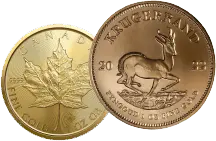
A mistake collectors make is assuming every gold item gets priced the same way. It doesn’t. Jewelry gets valued almost entirely on weight and karat – the craftsmanship is ignored in the offer. Bullion coins like an [American Gold Eagle] or a [Gold Kangaroo coin] trade close to spot price, often 95-100%, because their content and purity are already well known and trusted by buyers.
Numismatic coins are a different category entirely. These are priced on rarity, condition, and collector demand, and can sell for two to ten times their melt value. A pawn counter has no way to price that correctly – they’ll likely offer melt value only, treating a coin that might be worth thousands to a collector as scrap metal worth a few hundred dollars. Anyone holding rare coins should read up on how scarcity drives collector value before selling anything, and take those pieces to a specialist rather than a general pawn counter.
Gold Type
Valued By
Watch Out For
Jewelry / scrap
Weight + karat purity
Design and craftsmanship are ignored
Bullion coins/bars
Weight + near-spot pricing
Pawn shops sometimes treat as scrap
Numismatic coins
Rarity, grade, demand
Can be 2-10x melt – never sell as scrap
Vintage/estate jewelry
Metal + some craftsmanship
Jewelers often beat pawn offers here
How to Get the Best Price When You Sell Your Gold
A few habits separate people who get fair offers from people who leave money on the table.
Calculate your own melt value first, using the formula above, so you know the floor number before any offer is made.
Bring all your gold pieces at once – a larger combined transaction sometimes earns a better rate than several small ones.
State clearly that you want to sell, not pawn, so you get quoted a purchase price instead of a loan amount.
Get quotes from more than one buyer type – pawn shop, local jeweler, and an online specialist – before committing.
Check reviews before visiting any shop; patterns of complaints about lowball offers or added fees are a real warning sign.
Never pay an “appraisal fee” just to get a quote. Legitimate buyers price your gold for free.
For a full walkthrough of the process, We Buy – How To Sell Your Gold covers each of these steps in more depth, and if the item in question is jewelry specifically, Sell Your Gold Jewelry breaks down what jewelers look for that pawn shops often skip.
Common Misconceptions About Pawning and Selling Gold
Misconception one: pawn shops pay full value for gold. They don’t – 30% to 60% of melt value is standard, because the offer is priced around loan-default risk, not resale value.
Misconception two: you can always get your item back later. Only if you repay the loan plus interest by the deadline. Miss it, and the shop keeps the item outright.
Misconception three: pawn loan interest is comparable to a bank rate. It isn’t. Monthly rates near 23%, annualized to roughly 276%, put pawn lending among the most expensive credit available anywhere.
Misconception four: selling gold works like negotiating over a used car. It doesn’t. Gold pricing is arithmetic – weight times purity times spot price – not a haggling exercise based on opinion.
Misconception five: pawning is a smart way to bet on rising gold prices. Even a strong price move rarely outpaces 276% annual interest. If you want to keep gold while price rises, holding it or arranging a private loan from family beats pawning almost every time.
When to Sell Outright vs When to Pawn
Sell Outright vs Pawn Loan
Pros
✓ Need cash now and don’t need the item back – outright sale wins on price
✓ Holding rare coins or collector jewelry – sell to a specialist, never scrap-price it
✓ Gold near a historic high like today’s $4,074/oz – locking in value now avoids interest risk
Cons
✗ Item is a family heirloom or wedding ring you intend to reclaim – pawn preserves ownership
✗ You have a guaranteed repayment plan within one to two weeks and accept the interest cost
If none of the “pawn” conditions apply to your situation, an outright sale is almost always the stronger financial move. We Buy – Pawn Vs Sell walks through additional scenario-based examples if you want to compare against your specific item.
Selling to Accurate Precious Metals: In Person or By Mail
Accurate Precious Metals is not a pawn shop. We’re a dedicated precious metals dealer based in Salem, Oregon, and we buy gold, silver, platinum, palladium, coins, bars, dental scrap, silverware, luxury watches, and diamonds – outright, with no loan attached and nothing owed afterward.
We’ve been doing this since 2012, and we’ve built over 1,000 five-star customer reviews along the way. Pricing is kept current with live spot markets rather than a flat “pawn rate,” and because we’re not weighing risk of loan default into the number, our offers reflect what your metal is actually worth today. As an NGC Authorized dealer, we also offer grading services for coins that may carry collector value beyond their metal content – exactly the kind of item a general pawn counter is likely to underprice.
If you’re local to the Salem area, you can bring items in and get an offer on the spot, in person, without waiting. If you’re anywhere else in the country, our mail-in service makes selling just as simple. We send a free, insured mail-in gold kit, you ship your items with tracked and insured delivery, our team evaluates the metal content and any collector value, and payment goes out quickly once the offer is accepted. There’s no appraisal fee and no obligation to accept the offer.
For readers weighing whether to ship gold versus sell locally, that mail-in path removes a lot of the perceived risk – insured shipping both ways, a documented process, and no pressure to settle for a pawn-style number just because a shop is nearby. You can review the details on mail-in gold buyers before deciding which route fits your situation.
Final Verdict for Sellers and Collectors
The rule holds regardless of how gold prices move: if you don’t need the item back, sell it. At today’s spot price of $4,074 per ounce (at the time of writing), melt values are historically high, and an outright sale lets you capture 60% to 85% of that value immediately, with nothing owed afterward. A pawn loan, by comparison, offers only 30% to 60% of value and carries interest that can top 270% annualized.
Reserve pawning for two situations only: you have a piece you must keep, sentimental or otherwise, or you have a short, certain repayment plan and fully accept the interest cost. Outside of those cases, a specialist buyer will almost always beat a pawn counter on price.
If you’re ready to move forward, Sell to Us is the fastest way to get a current offer, whether you’re visiting our Salem location in person or shipping items in through our mail-in program. Browse our current [1 oz Gold Eagle] and other bullion listings if you’re also looking to buy rather than sell – either way, our team is available to answer questions before you commit to anything.
Frequently Asked Questions
Is it better to sell my gold outright or pawn it?
If you don't need the item back, selling outright almost always pays more – typically 60% to 85% of melt value versus 25% to 60% for a pawn loan. Pawning only makes sense if you must keep the specific piece and have a clear repayment plan.
How much of the melt value do pawn shops actually pay?
Most pawn shops pay between 30% and 60% of melt value, with many walk-in offers landing near the lower end unless you clearly state you want an outright sale rather than a loan.
What happens if I can't repay a pawn loan on my gold?
The shop keeps the item as full payment for the loan. You lose both the gold and any money already put toward interest, and you don't get the item back.
How is the melt value of gold jewelry calculated?
Multiply the item's weight in grams by its purity percentage (karat divided by 24), then by the current spot price per gram. That gives you the baseline value before any buyer's percentage is applied.
Should I ever pawn or sell a rare coin?
No. Rare and numismatic coins should go to a specialist coin dealer, not a pawn shop, since pawn counters typically price coins as scrap metal and ignore collector value that can run several times higher than melt value.
Can I sell my gold by mail instead of visiting a shop in person?
Yes. Mail-in gold buying services provide an insured shipping kit, evaluate your items once received, and send payment after you accept the offer – a practical option if there's no trusted local buyer nearby.
Make the smart choice — invest with Accurate Precious Metals
Whether you are buying bullion for the first time or adding to a long-term position, our team offers expert guidance, transparent pricing, and a reliable buyback program.