

Real Time Gold Pricing Transparency: How Your Offer Is Calculated

Disclaimer
Accurate Precious Metals is not a financial advisor. We encourage everyone to consult a financial advisor or CPA. They can help determine the best investment strategies. Our mission is to provide educational content about precious metals. Accurate Precious Metals is committed to transparency and reliability. They offer top-tier precious metal products and information.
This information is subject to change due to market fluctuations, world events, and factors beyond our control. Additionally, the content may not fully reflect our company’s values, as personnel, staff, and authorship may change over time.
Real time gold pricing transparency is the foundation of every fair offer we make at Accurate Precious Metals. When gold is trading at around $4,745 an ounce today, you deserve to know exactly how that number connects to the cash in your hand – not a vague estimate, not a lowball from a pawn shop, but a clear, verifiable calculation tied to live market data.
Most people who walk in or mail in their gold have one question: “Am I getting a fair deal?” The answer starts with understanding how spot prices work, what drives them, and how a transparent buyer turns that number into an actual offer. This guide walks through all of it.
What Real-Time Gold Pricing Transparency Actually Means
The spot price of gold is the current global price for one troy ounce of pure gold. It updates constantly – some platforms refresh every five seconds, others every sixty seconds – pulling data from major markets like the London Bullion Market Association (LBMA), NYMEX, and GLOBEX. That price reflects supply and demand across every major economy on earth, adjusted in real time.
Transparency means a buyer shows you that live number and explains exactly how your offer is calculated from it. No mystery. No “trust us.” You can pull up a live gold spot price on your phone right now and cross-check any quote you receive.
The gap between spot and what you receive is called the spread. It covers the buyer’s real costs: assaying, refining, shipping, and overhead. A transparent dealer tells you the spread upfront. An opaque one hides it inside a vague “we’ll give you X” without any reference to the market rate.
A Brief History of How Gold Pricing Became Transparent
For most of modern history, gold pricing was anything but open. Under the Bretton Woods system, gold was fixed at $35 an ounce – a government-set number with no market mechanism behind it. Sellers had no way to independently verify value.
Gold fixed at $35/oz, pegged to the U.S. dollar – no free market pricing
U.S. abandons gold standard; gold begins trading freely on open markets
Twice-daily London “fix” auctions set benchmark prices for global trade
Reuters and Bloomberg publish live mid-point averages, giving retail access to wholesale data
LBMA moves to fully electronic auctions, increasing speed and accuracy
Real-time data from multiple global exchanges available to anyone with a smartphone
The shift to floating prices in 1971 created the modern gold market. The internet era made those prices visible to everyone. Today, there is no excuse for a buyer to hide pricing – the data is public, updated constantly, and free to access.
This history matters because it explains why transparency is now the standard, not a bonus feature. Buyers who obscure their pricing are working against decades of market progress.



How the Spot Price Translates to Your Offer
Spot price is a wholesale benchmark. It is not what you receive, and it is not what you pay retail. Understanding the math between spot and your payout is the core of fair market pricing for gold.
Here is how it works in practice with gold at $4,745 an ounce:
| Factor | Example | Impact on Your Payout |
|---|---|---|
| Spot Price (1 oz .999 gold) | $4,745/oz | Starting benchmark |
| Buyer Spread (1-3%) | ~$95-$142 | Covers assay, refining, overhead |
| Purity Adjustment (14K jewelry = 58.3% gold) | x0.583 | Reduces payout proportionally |
| Weight (grams ÷ 31.1 = troy oz) | 10g ÷ 31.1 = 0.321 oz | Applied before purity math |
| Final Offer (example: 10g 14K) | 0.321 x 0.583 x ~$4,603 | Approximately $861 |
Every step is math, not guesswork. A buyer who walks you through this calculation in real time – or publishes it clearly on their website – is operating transparently. One who just names a number without showing their work is not.
Purity matters enormously. A 24K gold bar is 99.9% pure and pays very close to spot. A 14K gold ring is 58.3% gold, so the payout reflects that fraction. Scrap jewelry, dental gold, and broken chains all follow the same formula.
What Drives Gold Prices Day to Day
Gold does not move in a vacuum. Several forces push the spot price up or down, sometimes within hours.
Inflation and currency strength are the biggest long-term drivers. When the U.S. dollar weakens or inflation rises, gold historically holds value better than cash. Investors move into gold as a hedge, pushing prices up.
Geopolitical events cause sharp short-term spikes. Conflicts, trade disputes, and banking crises all send buyers into gold quickly. The 2020s have seen gold reach record highs partly for this reason.
Interest rates pull in the opposite direction. When rates are high, yield-bearing assets like bonds compete with gold, which pays no interest. Rising rates can pressure gold prices downward.
Mining supply moves slowly but matters over years. New large deposits are rare. Existing mines have finite lifespans. Supply constraints support long-term price floors.
Industrial demand matters more for silver and platinum than gold, but all precious metals interact. Silver at $78 an ounce reflects both investment demand and industrial use in solar panels and electronics. Platinum at $2,027 an ounce is heavily tied to automotive catalytic converters.
Watching these factors helps you time a sale intelligently. Selling into an uptrend – when gold has moved up over several days – typically yields better results than selling during a pullback.
Real-Time Pricing Transparency in Practice: What to Look For
Not every buyer offering “top dollar” actually delivers it. Here is how to evaluate whether a buyer’s pricing is genuinely transparent.
- They publish a live bid price – not just a spot price reference, but the actual price they will pay you right now.
- They explain the spread openly. “We pay spot minus X%” is transparent. “We give you the best price” is not.
- They show their purity and weight math. You should be able to verify the calculation yourself.
- They have verifiable reviews. Volume of consistent five-star feedback over years is harder to fake than a single testimonial.
- They are a specialized dealer, not a generalist. Pawn shops handle everything from electronics to jewelry – precious metals are not their focus, and their pricing often reflects that.
Our per-ounce pricing reference is published openly so you can see how we connect live spot data to actual offers. No hidden steps.
Live Gold Spot Price – Accurate Precious Metals Refineries
Gold Forms: How Coins, Bars, and Scrap Are Priced Differently
The form your gold takes affects the offer you receive, sometimes significantly.
Bullion bars are the simplest. A [1 oz gold bar] from a recognized refiner is nearly pure (.999 or .9999 fine), easy to assay, and trades very close to spot. Buyers can verify it quickly and price it accordingly.
Bullion coins like the [2025 1 oz Gold Eagle] carry a small premium over spot when sold retail – typically 3-6% above spot for American Eagles due to minting costs and collector demand. When you sell them back, you recover most but not all of that premium, depending on market conditions and the buyer.
Numismatic coins – older, rare, or graded collector pieces – carry value beyond their metal content. A 1900s sovereign or a key-date Morgan dollar in high grade can be worth multiples of melt value. These require a different kind of appraisal, one that accounts for numismatic demand, not just weight and purity.
Scrap jewelry and dental gold pay based purely on metal content. The karat stamp tells you the alloy percentage: 24K is 99.9% gold, 18K is 75%, 14K is 58.3%, 10K is 41.7%. Weight times purity times spot, minus spread, equals your payout. Even broken chains and mismatched earrings have real value.
Silverware, flatware, and other silver items follow the same logic at $78 an ounce for silver. Sterling silver is 92.5% pure. Silver-plated items contain very little actual silver and pay accordingly.
How to Prepare Before You Sell
A few simple steps before you sell can protect you and improve your outcome.
Use a kitchen scale accurate to 0.1 grams. Note the weight of each item separately if they are different karats.
Look for hallmarks like 10K, 14K, 18K, 24K, or .999/.9999 on bars and coins. These determine purity.
Pull up a live spot price chart before any appointment or mail-in. Know what gold is trading at that day.
Compare offers. A transparent buyer’s math should be close to your own calculation.
Buyers typically need 1-7 business days to assess, assay, and process payment after receiving items.
One common misconception: cleaning your jewelry before selling does not increase its value and can sometimes damage softer pieces. Leave items as-is. The buyer assesses metal content, not surface appearance.
Selling to Accurate Precious Metals: Two Easy Options
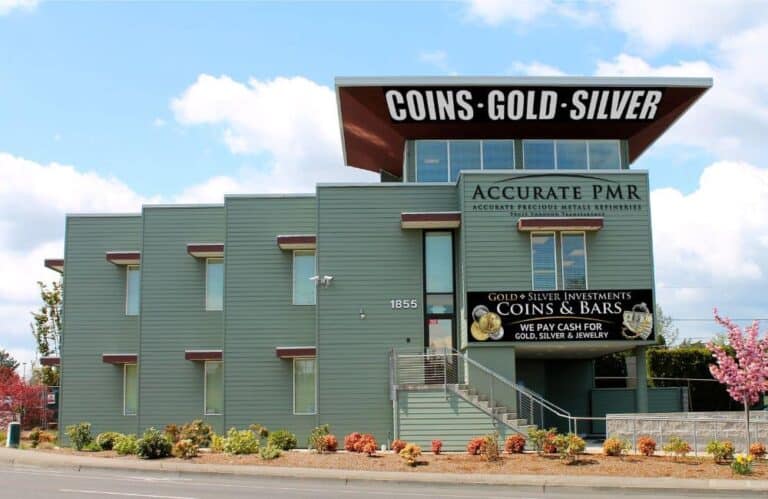
Accurate Precious Metals has been buying gold, silver, platinum, palladium, and more for over 12 years from our Salem, Oregon location. We have earned over 1,000 five-star reviews by doing one thing consistently: paying fair, transparent, market-based prices and explaining every step of the process.
We buy everything – bullion bars and coins, scrap jewelry in any condition, broken pieces, dental gold, silverware, diamonds, luxury watches, and numismatic coins. Nothing goes to waste. If it has precious metal content, we want to see it.
In-person sellers in the Salem area can visit us directly. Bring your items, and we will weigh, test, and quote you on the spot. Our team uses XRF analysis to verify metal content accurately – no guesswork. You leave with a clear understanding of what you have and what it is worth.
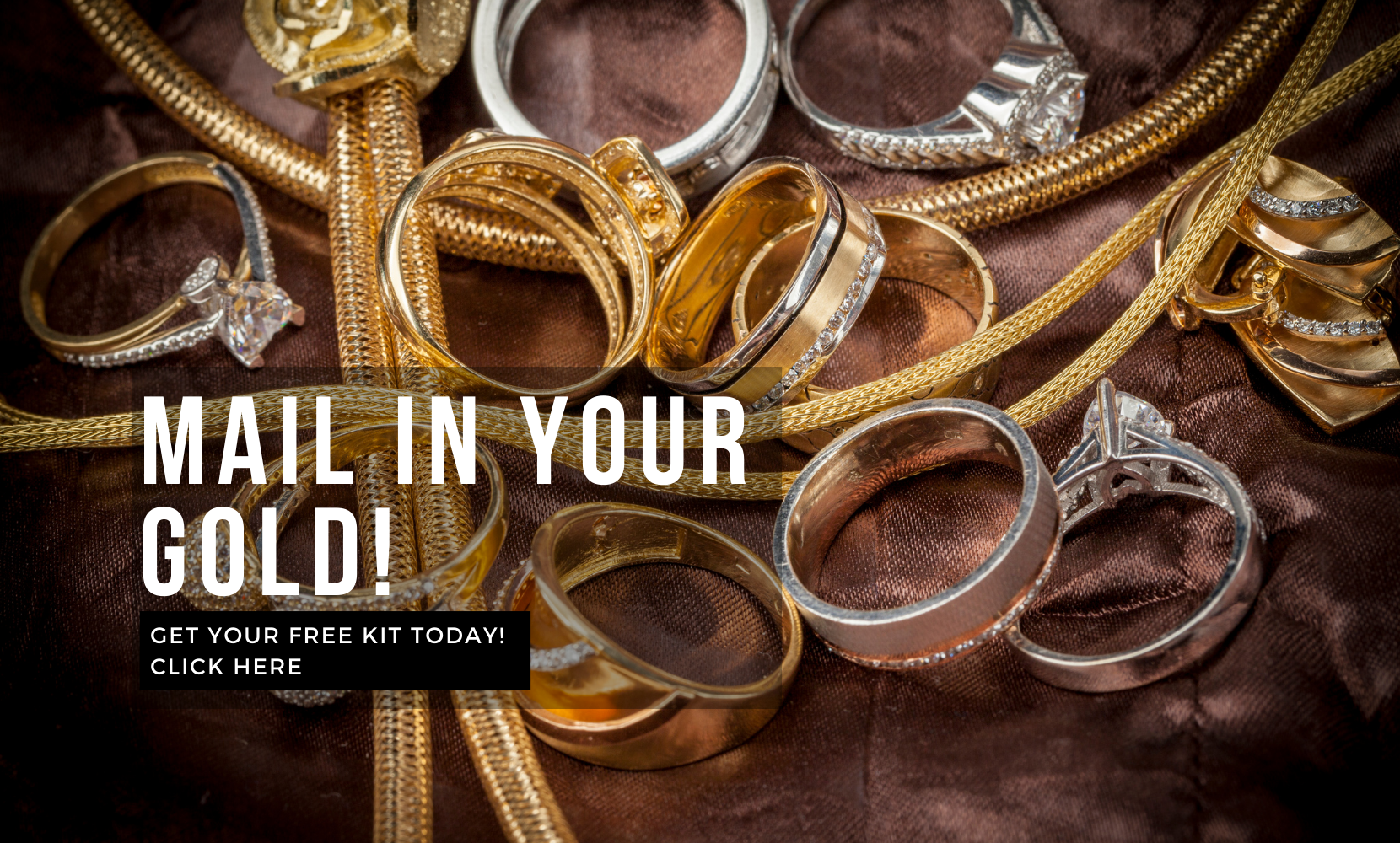
Sellers anywhere in the U.S. can use our mail-in service. We send you a free insured shipping kit. You pack your items, ship them, and we handle the rest – GIA-certified appraisals where applicable, transparent pricing tied to live spot, and fast payment. The process is straightforward and fully insured.
As an NGC Authorized Dealer, we also offer grading services for numismatic coins. If you have older or potentially rare coins, getting them properly assessed can significantly change their value. We handle that process too.
Our pricing is updated to reflect live spot prices. We are not a pawn shop. We are a specialized precious metals dealer, and that specialization means our offers reflect actual market rates – not a generalist’s rough estimate.
Silver, Platinum, and Palladium: Same Principles Apply
Everything described above for gold applies equally to other precious metals. The same transparency principles, the same spot-minus-spread math, the same importance of purity and weight.
Silver at $78 an ounce is highly volatile – it can move several dollars in a single trading session. That volatility cuts both ways. Selling on a strong day matters more with silver than with gold. Current silver spot prices are worth watching closely before you sell.
Platinum at $2,027 an ounce is driven heavily by industrial demand, particularly automotive. Palladium at $1,483 an ounce follows similar industrial patterns. Both are worth selling to a specialized dealer rather than a generalist who may not have current pricing for these metals.
If you have a mixed lot – some gold jewelry, some silver flatware, a platinum ring – we assess and price each metal separately, applying the correct spot price and purity calculation to each item. You get a full breakdown, not a lump-sum offer with no explanation.
Why Transparency Builds Better Long-Term Relationships
There is a practical reason beyond fairness for why transparent pricing matters: it builds trust that brings sellers back.
A buyer who pays you a fair, explained rate today earns your business the next time you have metal to sell. One who obscures pricing and lowballs you once rarely sees you again. The math of repeat business favors transparency.
For collectors and investors who buy and sell regularly, having a trusted dealer relationship means faster transactions, better service, and confidence that the pricing is always tied to the same live benchmark. Our approach to current gold pricing is built around that long-term relationship model.
We also offer Gold and Silver IRA services for retirement investors who want to hold physical precious metals in a tax-advantaged account. The same transparent pricing principles apply – you see exactly what you are paying and what it is tied to in the live market.
Whether you are selling a single gold ring or a significant collection, the process at Accurate Precious Metals is the same: live spot price, clear math, fair spread, fast payment. Call us at (503) 400-5608, visit us in Salem, or start your mail-in at AccuratePMR.com.
Frequently Asked Questions
What is the spot price of gold today?
Gold is currently trading at around $4,745 an ounce. Spot prices update constantly during market hours, so check a live chart right before any transaction for the most current number.
How much below spot will I receive when selling my gold?
Most transparent buyers offer somewhere between 95% and 99% of spot for pure bullion, depending on form and current market conditions. Scrap jewelry pays less because of assay and refining costs. A reputable dealer explains the exact spread before you commit.
Does karat matter when selling gold jewelry?
Yes, significantly. A 10K piece is 41.7% gold; an 18K piece is 75% gold. The payout reflects that percentage of the current spot price applied to the actual weight of gold in the item.
Can I sell gold by mail if I am not near Salem, Oregon?
Accurate Precious Metals offers a fully insured mail-in service for sellers anywhere in the United States. We provide the shipping kit, assess your items on arrival, and send payment promptly.
How do I know a buyer is being transparent about pricing?
Ask them to show their math. A transparent buyer references live spot price, states their spread percentage, and walks through the purity and weight calculation. If they just name a number without explanation, ask why.
Is scrap or broken gold worth selling?
Yes. Broken chains, mismatched earrings, dental gold, and damaged jewelry all contain real metal value. As long as there is gold content, it pays based on weight and purity – condition of the piece itself does not reduce the metal payout.
Do you buy silver, platinum, and palladium as well?
Accurate Precious Metals buys all precious metals – gold, silver, platinum, palladium, and copper – in any form, including coins, bars, jewelry, scrap, and flatware.
How long does the mail-in process take?
Most mail-in transactions are processed within a few business days of receiving your items. Payment follows promptly after you accept the offer.

