

Karat and Real Value Jewelry: How Purity Shapes What You Pay

Disclaimer
Accurate Precious Metals is not a financial advisor. We encourage everyone to consult a financial advisor or CPA. They can help determine the best investment strategies. Our mission is to provide educational content about precious metals. Accurate Precious Metals is committed to transparency and reliability. They offer top-tier precious metal products and information.
This information is subject to change due to market fluctuations, world events, and factors beyond our control. Additionally, the content may not fully reflect our company’s values, as personnel, staff, and authorship may change over time.
When shopping for gold jewelry, understanding karat and real value jewelry can save you from overpaying – or underselling. Karat tells you how pure the gold is. Real value is something else entirely. It depends on weight, craftsmanship, market demand, and the current gold spot price. These two things often move in different directions, and jewelers do not always make that clear.
Most buyers walk out of a jewelry store knowing a piece is “18K” without fully understanding what that means for what they paid – or what they could get back. This guide breaks down what karat actually measures, why it does not equal value on its own, and how to think about both when you are buying or selling gold jewelry.
What “Karat” Actually Measures
Karat measures gold purity on a scale of 24 parts. Pure gold is 24K. An 18K piece is 75% gold. A 14K piece is 58.3% gold. A 10K piece is 41.7% gold.
The remaining percentage is alloy – usually copper, silver, palladium, or nickel. These metals are added deliberately. Pure gold is soft. It bends, scratches, and wears down faster than alloyed gold, which is why most everyday jewelry is not made from 24K material.
One word worth clarifying: carat (ct) is not the same as karat (K). Carat measures gemstone weight – one carat equals 200 milligrams. Karat measures gold purity. Jewelry ads sometimes blur these terms, but they refer to completely different things.
Common Karat Grades at a Glance
| Karat | Gold Content | Common Use |
|---|---|---|
| 24K | ~100% gold | Bullion, investment pieces |
| 22K | 91.7% gold | Some coins, high-end jewelry |
| 18K | 75% gold | Fine jewelry, luxury pieces |
| 14K | 58.3% gold | Everyday fine jewelry (most common in the US) |
| 10K | 41.7% gold | Budget jewelry, high durability |
Understanding where your piece falls on that scale is the first step toward knowing what it is actually worth.
Why Karat and Real Value Are Not the Same Thing
Here is what many buyers miss: karat only tells you purity, not value. Two gold bracelets can both be stamped “14K” and have completely different prices – and completely different resale values.
The retail price of jewelry includes much more than the metal. Design complexity, brand name, gemstone settings, and finish all add to what a jeweler charges. A designer ring from a luxury brand may sell for five times its melt value. A plain 14K band from a discount retailer might sit much closer to its metal content price.
That gap between retail price and melt value is where buyers can get surprised. You pay for the whole package at the counter. If you ever need to sell, you are usually selling the metal – unless the piece has strong collector or designer demand.
Gold karat value becomes most relevant the moment you are thinking about resale, insurance, or estate planning. Knowing the difference between what you paid and what the metal is worth gives you a much clearer picture of your actual position.


The Melt Value Formula – Simplified
Melt value is the worth of a piece if it were melted down and sold as raw metal. It strips away design, brand, and condition. What is left is pure metal math.
A simple way to think about it:
Melt value = (gold content percentage) x (total weight in ounces) x (spot price per ounce)
At the time of writing, gold spot is $4,252 per troy ounce. That means a 14K gold ring weighing one troy ounce would have a gold content of about 0.583 oz of pure gold, giving it a melt value of roughly $2,479 at current prices. The same ring in 18K would contain 0.75 oz of gold – a melt value closer to $3,189.
Those numbers shift every day as spot prices move. The calculation is the same; only the spot price changes.
Gold Scrap Value Calculator – Accurate Precious Metals Refineries
The same logic applies to silver. Sterling silver is 92.5% fine silver. With silver spot at $68 per troy ounce at the time of writing, a sterling bracelet weighing two troy ounces carries a melt value of about $125.80 in silver content alone.
Why Jewelers Emphasize Design Over Metal Content
Jewelers are in the business of selling finished pieces, not raw metal. That means their pitch naturally focuses on craftsmanship, aesthetics, and brand – the things that justify a higher price tag.
This is not deceptive by itself. Skilled handwork, detailed settings, and designer names do add real value in the retail market. The problem is when buyers assume that a higher price tag signals higher metal content. It often does not.
A piece can be expensive because it is beautifully made, not because it is heavy or high-karat. Conversely, a plain 18K chain with no design flourish might have more intrinsic metal value than a heavily styled 10K piece at the same retail price.
What affects cash-for-gold value goes well beyond karat stamps – weight, condition, and current spot prices all play a role that retail pricing rarely reflects.
Reading Karat Stamps – And Why They Are Not the Whole Story
Most legitimate gold jewelry carries a stamp somewhere on the piece – inside a ring band, on a clasp, on an earring back. Common stamps include 10K, 14K, 18K, 22K, and 24K. You may also see three-digit numbers like 585 (14K), 750 (18K), or 999 (24K), which are the European millesimal fineness system.
These stamps are a starting point, not a final answer. Counterfeit or inaccurate marks exist, especially on imported, antique, or handmade pieces. A stamp does not replace testing.
Solid gold, gold-filled, and gold-plated are three very different things. Solid gold carries the full metal content its karat suggests. Gold-filled has a bonded layer of gold over a base metal core. Gold-plated has a thin surface coating – often just microns thick. The melt value difference between solid and plated can be enormous, even when two pieces look identical.
Understanding gold purity stamps in detail helps collectors and sellers avoid costly assumptions when evaluating a piece’s worth.
Higher Karat Does Not Always Mean Better
This is the misconception that catches the most buyers off guard. Higher karat means more gold. It does not mean a more practical, durable, or even more valuable piece for every purpose.
24K gold is the purest form available. It is also the softest. A 24K ring worn daily will show scratches, dents, and wear much faster than a 14K ring. For investment-grade bullion or collector pieces kept in a safe, 24K makes sense. For a ring you wear to work, it is often a poor choice.
18K hits a sweet spot for fine jewelry – enough gold content to hold value, enough alloy to hold its shape. 14K is the most common choice in the United States for exactly this reason: it is durable, affordable, and still carries meaningful gold content.
Real Value: What Actually Drives Price at Resale
When you sell gold jewelry – to a dealer, at auction, or through a mail-in service – the buyer evaluates several things:
- Metal content: karat and weight together determine the gold you are actually selling.
- Condition: damage, resizing, missing stones, and repairs all reduce what a buyer will offer.
- Design and brand: some pieces carry collector or designer premiums; most do not.
- Spot price at the time of sale: melt value moves with the market every day.
- Whether it is solid, filled, or plated: only solid gold carries full metal value.
Most jewelry sold to dealers is evaluated primarily on metal content. Unless a piece is from a recognized designer or has strong numismatic or antique value, craftsmanship adds little to what a precious metals buyer will offer.
That is not a flaw in the system – it is just the difference between retail and wholesale. Retail prices reflect what it costs to design, produce, market, and sell a finished piece. Wholesale or melt-value prices reflect what the raw material is worth.
Silver Jewelry – The Same Rules Apply
Gold gets most of the attention, but silver jewelry follows the same logic. Sterling silver (92.5% fine silver) has a melt value based on its weight and the current silver spot price. At $68 per troy ounce at the time of writing, silver content adds up quickly in heavier pieces like flatware, large cuffs, or vintage chains.
Craftsmanship matters more in silver retail pricing than it typically recovers at resale. A hand-stamped sterling cuff from an artisan may retail for $200 but carry $30 in silver content. A plain sterling chain of the same weight might retail for $60 and carry the same $30 in metal.
Condition matters here too. Tarnish, dents, broken clasps, and missing components reduce what a buyer will offer, even if the metal content is unchanged.
Common Myths About Karat and Value
Practical Checks Before You Buy or Sell
Look inside the band, on the clasp, or on the earring back. Note the karat or millesimal fineness number.
Use a gram scale. Weight and karat together determine metal content.
Multiply weight by gold content percentage, then multiply by current spot price. Use our scrap calculator above for a quick estimate.
Check for repairs, resizing, missing stones, or damage. These reduce resale value.
For high-value pieces, request XRF testing or a qualified appraisal before buying or selling.
Karat differences and what the stamp really says is worth reading if you are evaluating a piece with an unfamiliar mark or a stamp that does not match what the seller claims.
Where to Sell Gold Jewelry – and What to Expect
Knowing the melt value of your jewelry gives you a baseline. From there, the question is where to sell.
Pawn shops typically offer the lowest payouts – they carry high overhead and price risk into their offers. Online marketplaces can reach buyers who value design, but they require effort, shipping risk, and time. Precious metals dealers who specialize in gold and silver are generally the most efficient option for jewelry being sold primarily for its metal content.
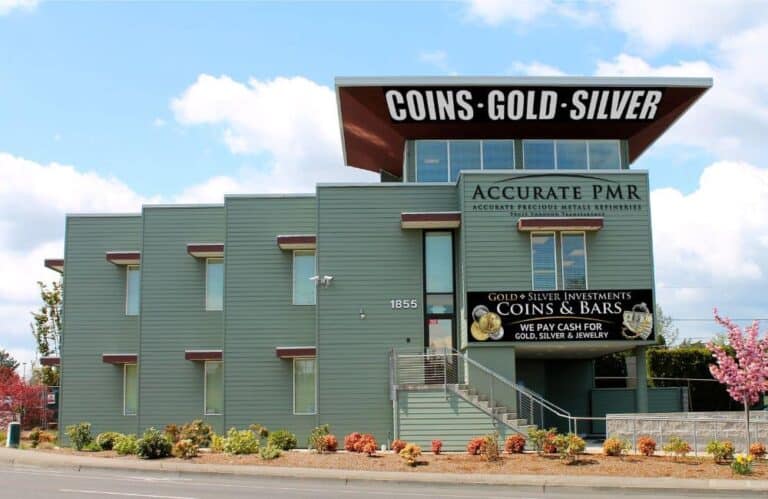
Accurate Precious Metals has been buying gold and silver jewelry for over 12 years from its Salem, Oregon location. With more than 1,000 five-star reviews and competitive offers based on current spot prices, it is a straightforward option for sellers who want a fair price without the guesswork.
Local customers can bring pieces in person to the Salem location for a direct evaluation. If you are anywhere else in the United States, the mail-in service for gold jewelry lets you send your pieces with free insured shipping, get a GIA-informed appraisal, and receive fast payment – no driving required.
Accurate Precious Metals buys gold in any condition: broken chains, mismatched earrings, bent rings, estate pieces, and everything in between. The team assesses metal content through XRF testing and makes competitive offers based on live spot prices. There are no hidden fees and no pressure. Most sellers accept the offer the same day.
Whether you have a single ring or a full jewelry box to evaluate, Accurate Precious Metals handles both walk-in and mail-in customers with the same level of care. Call (503) 400-5608 or visit AccuratePMR.com to get started.
Frequently Asked Questions
What is the difference between karat and carat?
Karat (K) measures gold purity out of 24 parts – so 18K gold is 75% pure gold. Carat (ct) measures gemstone weight, where one carat equals 200 milligrams. They are completely different measurements used in different contexts.
Does higher karat always mean higher resale value?
Not automatically. A higher-karat piece contains more gold per gram, which raises its melt value. But if a lower-karat piece weighs significantly more, it may contain as much or more total gold. Melt value depends on both karat and weight together.
How is melt value calculated for gold jewelry?
Multiply the piece's weight in troy ounces by its gold content percentage (for example, 0.583 for 14K), then multiply by the current gold spot price. At the time of writing, gold spot is $4,252 per troy ounce. Use the scrap calculator in this article for a quick estimate.
Is gold-plated jewelry worth anything as scrap?
Very little. Gold plating is an extremely thin surface layer – often just microns thick. The gold content in plated pieces is negligible for melt purposes. Only solid gold, gold-filled, or high-karat pieces carry meaningful metal value.
Can I trust a karat stamp on a piece of jewelry?
Stamps are a useful starting point but not a guarantee. Counterfeit marks, worn stamps, and inaccurate markings exist, especially on older, imported, or handmade pieces. XRF testing or acid testing can confirm the actual gold content if the value is significant.
Where can I sell gold jewelry for a fair price?
Accurate Precious Metals buys gold jewelry of any karat, condition, and style. Local customers can visit the Salem, Oregon location. Customers anywhere in the US can use the insured mail-in service at AccuratePMR.com or call (503) 400-5608.
Does craftsmanship add to resale value?
Sometimes. Designer or signed pieces from recognized brands can command premiums above melt value. Most unmarked or mass-produced jewelry, however, is evaluated primarily on metal content when sold to a dealer.

