This content is for educational purposes only and is not financial or investment advice. Precious metals prices fluctuate; past performance does not guarantee future results. Consult a qualified professional before making investment decisions.
Tap the image to enlarge and zoom.Hover to magnify, or click to open full screen.
Investing in gold and silver remains one of the most time-tested strategies for protecting and growing wealth across economic cycles. Unlike stocks that rise or fall on earnings reports, or bonds tied to interest rate decisions, gold and silver derive their value from scarcity, industrial demand, and centuries of use as a store of wealth. Whether you are building a retirement portfolio, hedging against inflation, or simply looking to diversify, precious metals offer a path that behaves differently from nearly every other asset class.
At today’s prices – gold trading around $4,550 per ounce and silver near $73 per ounce – both metals reflect strong long-term demand. This guide walks through why these metals matter, how to invest in them, and what to watch for when you start.
The Historical Case for Investing in Gold and Silver
The numbers tell a compelling story. Since 2000, gold has appreciated more than 510%, while silver has gained over 240%. Over that same period, the Dow Jones Industrial Average returned roughly 124%, the Nasdaq about 140%, and the S&P 500 around 114%. Precious metals didn’t just keep pace – they outran the major indices by a significant margin.
Gold’s resilience during crises stands out. During the 2008 financial collapse, gold was one of only two asset classes to survive the market turmoil intact, alongside the U.S. dollar. That kind of performance during a systemic breakdown is exactly why investors treat gold as portfolio insurance. It has historically held value during political instability, corporate bankruptcies, and currency crises.
Silver’s track record is similarly strong, though its story includes an industrial dimension that gold’s doesn’t. More on that shortly.
Gold vs. Silver – Two Metals, Two Roles
Gold and silver are often mentioned together, but they play distinct roles in a portfolio.
Gold is the classic safe haven. When markets fall, investors tend to move money into gold, which drives demand and price upward. This inverse relationship with equities makes gold a natural buffer. It carries lower volatility than silver and has historically served as a reliable hedge against inflation – a quality especially valuable for retirees or anyone on a fixed income watching purchasing power erode.
Silver shares gold’s safe haven characteristics but adds a significant industrial layer. Silver is used in electronics, solar panels, photography, and advanced technology manufacturing. Virtually every modern device – from smartphones to photovoltaic battery systems – contains silver. This means silver prices respond not just to financial uncertainty but also to growth in clean energy and tech sectors.
That industrial demand makes silver more volatile than gold. Prices can swing harder in both directions. For patient, long-term investors, that volatility creates buying opportunities. For those using options strategies, silver’s price movement can generate additional income through approaches like selling covered calls and cash-secured puts – a strategy sometimes called option-weaving.
Gold vs. Silver – Key Differences
Pros
✓ Gold: lower volatility, pure safe haven asset
✓ Gold: strong inflation hedge, favored by conservative investors
✓ Silver: dual role as safe haven and industrial commodity
✓ Silver: tied to clean energy and tech sector growth
✗ Silver: price swings can be larger and less predictable
✗ Gold: higher price per ounce limits fractional buying for some
Understanding Scarcity and Supply
Scarcity underpins the value of both metals. Estimates put total above-ground gold stock at roughly 193,000 metric tonnes. Silver’s above-ground supply is larger – around 1.74 million metric tonnes – but both remain scarce relative to global demand. New mining adds supply slowly, and the cost of extraction keeps production from spiking even when prices rise.
That supply constraint is a key reason precious metals have maintained value across centuries. Governments can print currency. They cannot print gold.
Three Ways to Invest in Gold and Silver
There is no single right way to invest in precious metals. The best method depends on your goals, risk tolerance, and how hands-on you want to be.
Physical Bullion and Coins
Owning physical metal means you hold the asset directly – no counterparty risk, no fund manager, no intermediary. You can store it yourself or use a secure vault service.
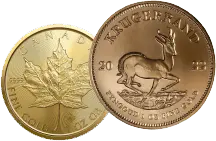
Popular options include the 1 oz American Silver Eagle 2023, minted by the U.S. Mint to .999 fine silver purity, and the 1 oz American Gold Eagle 2023, struck in 22-karat gold with a .9167 fine gold content. Both have been produced since 1986 and carry legal tender status in the United States. They are among the most recognized and liquid coins in the world.
Silver rounds like the 1 oz Silver Round – Engelhard Prospectorand coins like the 1 oz Silver Mexican Libertad offer additional ways to build a silver position with recognized, widely traded products.
One thing to understand with physical metal: you pay more than spot price. The premium covers minting costs, dealer margins, insurance, and distribution. On silver, premiums can run 5% to 10% above spot depending on the product and market conditions. On gold, premiums are typically lower as a percentage. Knowing this going in helps you calculate your actual cost basis and set realistic expectations for future returns.
Exchange-Traded Funds (ETFs)
ETFs are the most accessible entry point for most new investors. You buy shares through any standard brokerage account – the same way you’d buy stock in Apple or an index fund. No storage. No insurance. No shipping. Transactions settle in seconds.
When selecting a gold or silver ETF, check whether the fund is physically backed by actual metal, what the annual fee is, and whether currency movements affect the price (since metals are priced in U.S. dollars, non-dollar investors face exchange rate exposure). These details determine how closely the fund tracks the underlying metal over time.
ETFs sacrifice the tangible ownership that appeals to many collectors and long-term holders, but they offer unmatched liquidity and simplicity.
Mining and Royalty Companies
Buying shares in gold or silver mining companies gives you leveraged exposure to metal prices. When gold rises 10%, a well-run miner’s profits may jump far more, since their production costs stay relatively fixed. Royalty and streaming companies – which finance mining operations in exchange for a share of future production – offer a similar angle with somewhat lower operational risk.
This approach introduces company-specific risk alongside commodity risk, so it suits investors comfortable with equity analysis.
How to Start Investing in Physical Precious Metals
1
Step 1 Decide your budget and how much of your portfolio you want in metals. A 10% allocation in gold has historically stabilized portfolios significantly.
2
Step 2 Choose your metal. Gold for lower volatility and inflation protection. Silver for industrial upside and lower per-ounce entry cost.
3
Step 3 Select your product type. Coins offer liquidity and recognition. Bars typically carry lower premiums per ounce.
4
Step 4 Understand the premium. Compare prices across reputable dealers. You pay spot plus a markup – know what that markup is before you buy.
5
Step 5 Plan your storage. A home safe, bank safe deposit box, or third-party vault are common options. Factor in insurance costs.
6
Step 6 Consider a Gold or Silver IRA if you want tax-advantaged retirement exposure to physical metals.
Coins vs. Bullion Bars – What Should You Buy?
Both coins and bars are legitimate investment vehicles. The right choice depends on what matters most to you.
Coins carry higher premiums than bars because of their design, legal tender status, and collector appeal. A 2025 1 oz Gold Eagle will cost more over spot than a comparable gold bar. But coins are universally recognized and easier to sell in smaller increments. If you ever need to liquidate part of your position, selling individual coins is simpler than cutting a bar.
Bars carry lower premiums, making them more cost-efficient for large purchases. A 10 oz or kilo silver bar gets you more metal per dollar than buying individual 1 oz coins. The trade-off is that bars are less divisible and sometimes require more verification when reselling.
Feature
Gold/Silver Coins
Gold/Silver Bars
Premium over spot
Higher (4-8% typical)
Lower (1-4% typical)
Liquidity
Very high – widely recognized
High – may need verification
Divisibility
Easy – sell one coin at a time
Less flexible for partial sales
Collector appeal
Yes – some carry numismatic value
Minimal
IRA eligible
Yes (select coins)
Yes (select bars)
Precious Metals and Portfolio Diversification
A 10% gold allocation has historically reduced portfolio volatility without sacrificing significant return. Gold’s low correlation to stocks means it often rises when equities fall – smoothing out the rough patches that derail investor confidence.
Silver adds a different kind of diversification. Its tie to industrial demand means it can participate in economic expansions that might leave gold flat. Together, gold and silver cover both defensive and growth-oriented scenarios within the metals space.
Both metals reduce counterparty risk – the risk that a company, bank, or government fails to meet its obligations. Physical gold and silver carry no counterparty risk. They are not someone else’s liability.
For retirement investors, Gold and Silver IRA services allow you to hold physical metals in a tax-advantaged account. This combines the inflation protection of precious metals with the tax benefits of a traditional or Roth IRA structure.
What Drives Gold and Silver Prices?
Several factors move precious metals prices, and understanding them makes you a better buyer.
Inflation and real interest rates are the most significant drivers for gold. When inflation rises and real returns on bonds fall, gold becomes more attractive. Investors seeking to preserve purchasing power rotate into gold.
Industrial demand drives silver more than gold. Growth in solar energy, electric vehicles, and consumer electronics increases silver consumption. Supply disruptions at major mines can tighten the market quickly.
Currency strength matters because both metals are priced in U.S. dollars globally. A weaker dollar typically pushes metal prices higher. A stronger dollar can suppress them.
Geopolitical uncertainty – wars, sanctions, financial crises – historically drives safe haven demand for both metals.
Monitoring these factors, alongside the All-In Sustaining Cost (AISC) per ounce for miners and historical inflation-adjusted price comparisons, gives you a framework for evaluating whether current prices represent fair value.
Selling Your Precious Metals
At some point, you may want to convert your metals back to cash. Knowing your exit options before you buy is smart planning.
Physical metal can be sold to reputable dealers, at coin shows, or through private sales. Dealer buyback programs typically offer prices close to spot, with the spread depending on the product and current market conditions. Recognized coins like Gold and Silver Eagles tend to command better buyback prices than obscure rounds or bars.
ETFs sell like stocks – instantly, at market price, through your brokerage.
Common Misconceptions About Precious Metals Investing
Only wealthy investors buy gold. Not true. Silver at around $73 an ounce, fractional gold coins, and ETFs make precious metals accessible at almost any budget. A 1/10 oz gold coin costs a fraction of a full ounce.
Physical is always better than ETFs. Physical ownership appeals to collectors and those who want zero counterparty exposure. But ETFs offer better liquidity, lower transaction costs, and no storage headaches – making them the better fit for many investors.
Gold and silver always move together. They often do, but silver’s industrial demand creates divergences. Gold can hold steady while silver drops on weak manufacturing data, or silver can surge on solar energy news while gold stays flat.
Precious metals are a sure thing. They carry risk like any investment. Prices fluctuate. Premiums affect your cost basis. Timing matters. Approach them as a long-term position, not a short-term trade.
Why Accurate Precious Metals Is the Right Partner
When you are ready to buy or sell, the dealer you choose matters as much as the metal itself. Accurate Precious Metals has been serving investors and collectors since 2012 from its Salem, Oregon location, building a reputation backed by more than 1,000 five-star customer reviews.
The inventory covers the full spectrum – gold, silver, platinum, palladium, and copper in coin, bar, and bullion form, alongside diamonds and jewelry. Whether you are looking for a full gold coin collection or want to build a silver bullion position, the selection is broad and pricing reflects live spot prices updated in real time. There is no Oregon sales tax on precious metals purchases, which adds up on larger orders.
For retirement investors, Accurate Precious Metals offers Gold and Silver IRA services – a straightforward way to add physical metals to a tax-advantaged account without working through the process alone.
As an NGC Authorized Dealer, the team can assist with coin grading and evaluation, which matters when you are buying numismatic pieces alongside investment bullion.
Selling is equally straightforward. Local customers in the Salem area can bring metals in for a same-day evaluation. If you are anywhere else in the United States, the mail-in service makes the process simple – request a free insured shipping kit, send your gold, silver, jewelry, or other precious metals, and receive a fast, transparent offer. The process covers everything from bullion coins and bars to scrap gold, silverware, dental scrap, luxury watches, and diamonds in any condition.
Accurate Precious Metals is not a pawn shop. It is a specialized precious metals dealer with the expertise, inventory, and track record to serve both first-time buyers and seasoned investors. Call (503) 400-5608 or visit AccuratePMR.com to get started.
Frequently Asked Questions
Is investing in gold and silver a good idea right now?
Gold and silver have historically performed well during periods of inflation, economic uncertainty, and currency weakness – conditions that remain relevant today. Whether the timing is right depends on your financial goals and existing portfolio. Precious metals work best as a long-term hold and diversification tool, not a short-term trade.
How much of my portfolio should be in gold and silver?
A common starting point is 5% to 10% in gold, with silver as an additional allocation depending on your risk tolerance. Gold stabilizes portfolios through its low correlation to equities. Silver adds industrial upside but with more volatility. Neither should represent your entire portfolio.
What is the difference between bullion coins and numismatic coins?
Bullion coins are priced primarily on their metal content – you pay spot plus a small premium. Numismatic coins carry additional value based on rarity, condition, and collector demand. For pure investment purposes, bullion coins are simpler. Numismatic coins can appreciate beyond metal value but require more specialized knowledge to evaluate.
Do I have to pay taxes on gold and silver?
In the United States, precious metals are generally treated as collectibles for tax purposes, subject to capital gains tax when sold at a profit. Oregon does not charge sales tax on precious metals purchases, which benefits buyers at Accurate Precious Metals. Consult a tax professional for guidance specific to your situation.
What is a spot price and why does it matter?
The spot price is the current market price for one troy ounce of a metal for immediate delivery. It is the baseline from which all physical purchases are priced – you pay spot plus a premium. Tracking spot prices helps you understand whether you are paying a fair premium and when market conditions favor buying.
Can I hold gold and silver in an IRA?
Yes. A self-directed IRA can hold physical gold and silver that meets IRS purity requirements – generally .995 fine or better for gold and .999 fine for silver. Accurate Precious Metals offers IRA services to help investors set up and fund these accounts.
How do I sell my gold or silver to Accurate Precious Metals?
Local customers can visit the Salem, Oregon location in person for a direct evaluation. Customers anywhere in the U.S. can use the mail-in service – request an insured shipping kit, send your metals, and receive a fast offer. The process covers bullion, coins, jewelry, scrap, and more.
Make the smart choice — invest with Accurate Precious Metals
Whether you are buying bullion for the first time or adding to a long-term position, our team offers expert guidance, transparent pricing, and a reliable buyback program.