Like our coverage? Add Accurate Precious Metals as a preferred source on Google.
Understanding coin mintage impact is essential for anyone buying or selling gold coins – whether you are chasing rare dates, building a bullion stack, or simply trying to figure out why two coins with identical gold content can carry wildly different price tags. Mintage, the total number of coins a mint produces in a given year or series, is the starting point for scarcity. And scarcity, real or perceived, is what separates a coin trading at 4% above spot from one commanding 100% above spot.
This article breaks down how mintage shapes premiums across modern bullion coins, fractional issues, and rare numismatic pieces – with real pricing examples at current gold spot of $4,122 per ounce at the time of writing. By the end, you will know how to read mintage numbers, evaluate premiums, and make smarter decisions whether you are buying or selling.
What Coin Mintage Impact Actually Means
Mintage is simply a count. If the U.S. Mint strikes 500,000 one-ounce American Gold Eagles in a given year, that year’s mintage is 500,000. If it strikes 10,000 proof versions of the same coin, that proof issue has a mintage of 10,000.
The impact of that number comes from supply and demand. Fewer coins in existence means fewer available to buyers. If demand holds steady or grows, prices rise. That price increase shows up as a higher premium above the coin’s melt value – the dollar amount a buyer pays beyond what the gold itself is worth.
Every gold coin purchase follows the same formula:
Spot Price + Premium = Total Retail Price
At current gold spot of $4,122 per ounce at the time of writing, a standard one-ounce bullion coin might carry a 4-5% premium, putting the purchase price around $4,285-$4,330. A low-mintage proof or anniversary issue of the same coin could carry a 15-20% premium, pushing the price to $4,740-$4,946 or higher – for the exact same ounce of gold.
That gap is coin mintage impact in action.
A Brief History: Why Mintage Started Mattering More
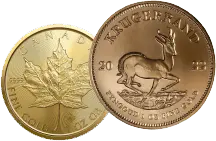
Mintage has always influenced coin value, but the relationship sharpened considerably in the 20th century. When modern bullion coins launched – the South African Krugerrand in 1967, the Canadian Maple Leaf in 1979, the American Gold Eagle in 1986 – they were produced in large numbers specifically to track spot price with minimal premiums. Investors wanted liquid, affordable gold. High mintage delivered that.
Then two things changed the equation. First, investor demand surged after the 2008 financial crisis. Certain years saw lower mintages because demand outpaced production capacity or mint priorities shifted. Those years became scarcer in hindsight, and premiums on coins from those years climbed.
Second, grading and certification services like PCGS and NGC made it possible to track not just how many coins were struck, but how many survive in top condition. That data tightened the link between mintage, survival rate, and premium – giving collectors a clearer picture of true rarity.
Pre-1933 U.S. gold coins illustrate the long-term version of this story. Saint-Gaudens Double Eagles from certain years carried mintages of only a few thousand coins. Historically, some of these have traded at 20-200% above spot because of their scarcity and historical significance. Even as premiums on some dates have moderated toward around 10% above spot in recent years, they still command meaningful premiums over melt value – a direct result of low original mintage combined with collector demand.
Modern Bullion Coins: High Mintage, Low Premiums
Modern bullion coins from major sovereign mints are designed to be accessible. The American Gold Eagle, the Canadian Gold Maple Leaf, the Austrian Philharmonic, and the South African Krugerrand all typically have annual mintages in the hundreds of thousands for their one-ounce versions. That high supply keeps premiums competitive.
For a standard one-ounce bullion coin at current spot prices at the time of writing:
These coins are designed for investors who want gold close to melt value. The premium covers minting, packaging, distribution, and dealer margin – not collector scarcity. When you sell a standard bullion coin, you sell close to spot. Liquidity is high. Resale is straightforward.
That changes when a mint releases a special version. Proof strikes, reverse-proof finishes, privy-mark editions, and anniversary releases often carry mintages of 10,000-50,000 or fewer. Collector demand for these limited runs can push premiums to 15-30% or higher above spot. The gold content is identical. The mintage is what drives the difference.
Fractional Gold Coins: Lower Mintage, Higher Premiums Per Ounce
Fractional gold coins – the 1/10 oz, 1/4 oz, and 1/2 oz sizes – carry higher premiums per ounce than their full-size counterparts. Two factors drive this.
First, fractional coins have lower mintages. Fewer are produced because demand is lower in absolute terms, even if the buyer base is broad. Second, the per-ounce production cost is higher – more minting steps, proportionally more packaging, and the same distribution overhead spread across less metal.
The result is a noticeably higher premium per ounce. At current gold spot at the time of writing:
| Coin Size | Spot Value (approx.) | Typical Premium | Approx. Retail Price |
|---|---|---|---|
| 1 oz Gold Eagle | $4,122 | 3-6% | $4,246-$4,369 |
| 1/2 oz Gold Maple Leaf | $2,061 | 6-10% | $2,185-$2,267 |
| 1/4 oz Gold Coin | $1,031 | 8-12% | $1,113-$1,155 |
| 1/10 oz Gold Coin | $412 | 8-15% | $445-$474 |
A 2026 1/10 oz Gold Maple Leaf or a 2026 1/4 oz Gold Maple Leaf will cost more per ounce of gold than buying a full one-ounce coin. That is not a dealer markup quirk – it reflects the economics of smaller mintages and higher per-unit production costs.
For investors, this means fractional coins make sense for flexibility and accessibility, not cost efficiency. For collectors, fractional issues in proof or special finishes can carry premiums that dwarf even the fractional baseline.
Rare and Numismatic Coins: Where Mintage Drives the Most Value
This is where coin mintage impact becomes most dramatic. Rare and numismatic gold coins can trade at many times their melt value – not because gold prices changed, but because the coins themselves are genuinely scarce.
Key-date coins from the pre-1933 U.S. gold series are the classic example. Some dates had original mintages of only a few thousand pieces. After decades of melting, loss, and damage, the surviving population in high grades can be measured in the hundreds. PCGS and NGC population reports document exactly how many examples exist in each grade – and collectors pay accordingly.
A coin with a melt value of roughly $4,122 per ounce (at the time of writing) could retail for $8,000, $20,000, or far more if it is a key date in top condition. The gold content has not changed. The mintage – and survival rate – created the premium.
PCGS & NGC Coin Verification – Accurate Precious Metals Refineries
Low-mintage commemoratives and modern proof sets occupy a middle ground. Their mintages are known and published. Collector interest varies by design and historical theme. The best of these hold premiums well over time; others fade as collector enthusiasm cools.
The Four Factors That Actually Drive Premiums
Mintage sets the ceiling on scarcity, but it does not guarantee a premium on its own. Four factors work together to determine whether a low-mintage coin actually commands a high price.
The total number struck. Fewer coins means potential scarcity – but only potential.
How many coins still exist in collectible condition. Meltings, loss, and damage reduce the real population below the original mintage.
A low-mintage coin in poor condition may trade near melt. The same coin in MS-67 or PR-70 can command a significant premium. PCGS and NGC population reports show how rare top-grade examples truly are.
Even a genuinely scarce coin needs buyers. Design appeal, historical significance, and market buzz all determine whether collectors compete for available examples.
A coin that scores well on all four – low mintage, low survival rate, high-grade examples, strong collector demand – is the kind of piece that holds or grows its premium over time. A coin with low mintage but no collector following may sit at modest premiums indefinitely.
Our Morgan Silver Dollar mintage history blog is a strong case study in how these factors interact over decades. The Morgan dollar series spans multiple decades and dozens of mint marks, with some dates carrying original mintages in the millions and others in the tens of thousands. The key dates – low mintage, low survival, high demand – command premiums many times the coin’s silver melt value.
Pricing Examples at Current Spot
Working through concrete numbers makes the premium math tangible. At gold spot of $4,122 per ounce at the time of writing:
The takeaway is not that high premiums are bad. It is that premiums need to be justified by the underlying scarcity and demand. A 20% premium on a coin with 5,000 surviving examples in strong collector demand is very different from a 20% premium on a coin with 200,000 surviving examples and lukewarm interest.
Common Misconceptions About Mintage and Premiums
Three misconceptions trip up new collectors and investors regularly.
Low mintage always means high value. It does not. Mintage is necessary for scarcity, but scarcity alone does not create demand. A coin no one wants, regardless of how few exist, will not command a meaningful premium. Value requires both scarcity and buyer interest.
All gold coins trade close to spot. Modern bullion coins do. Rare and vintage coins can trade at multiples of melt value, and that relationship persists even when spot prices move significantly. If you buy a key-date coin for its numismatic value, spot price fluctuations matter less than collector demand trends.
Premiums are hidden fees. Premiums are transparent costs that cover real expenses – minting, refining, packaging, distribution, dealer margin, and in the case of scarce coins, the market value of rarity. Understanding what drives a premium helps you evaluate whether it is reasonable for your goals.
Practical Tips: Buying and Selling with Mintage in Mind
Before you buy:
- Check the mintage number. Most sovereign mints publish annual mintage data. For older coins, reference PCGS or NGC population reports.
- Compare mintage to demand. A coin with 10,000 mintage and 10,000 eager collectors is scarcer in practice than a coin with 5,000 mintage and 500 collectors.
- Look at the premium vs. spot ratio. For bullion-focused buyers, keep premiums in the 3-6% range for one-ounce coins. For collectors, higher premiums can be justified when scarcity and demand are strong.
- Consider condition. A low-mintage coin in poor grade may not appreciate. The same coin in high grade can be worth multiples more.
When you sell:
- Know whether your coin is bullion-driven or numismatic-driven. Bullion coins sell close to spot. Numismatic coins require research into recent auction results and dealer listings for comparable examples.
- Do not assume low mintage equals easy resale at a premium. If the coin lacks collector following, expect to sell closer to melt.
Our we-buy page covers what we purchase and how the process works – whether you are selling a standard bullion coin or a rare numismatic piece.
Building a Portfolio That Uses Mintage Strategically
A well-balanced precious metals portfolio uses mintage strategically rather than chasing premiums blindly.
High-mintage bullion coins – one-ounce Gold Eagles, Gold Maple Leafs, Gold Kangaroos – provide liquidity. They buy and sell quickly, track spot closely, and carry minimal premiums. These are the workhorses of a gold portfolio. Browse our selection of gold coins to see current inventory across major sovereign issues.
Low-mintage and key-date coins offer long-term appreciation potential, but they require more research and patience. They are less liquid than bullion, and their value depends on collector market conditions as much as spot prices. For collectors willing to do the homework, they can deliver returns that bullion alone cannot.
Fractional coins like the 2026 1/2 oz Gold Maple Leaf or 2026 1/4 oz Australian Kangaroo sit in the middle – higher premiums than full-ounce bullion, but accessible price points for buyers who want to accumulate gold in smaller increments.
The right mix depends on your goals. If you want maximum liquidity and minimal premium, stick to high-mintage one-ounce bullion. If you want exposure to numismatic appreciation, allocate a portion to low-mintage or key-date coins – and do the research to make sure scarcity and demand both support the premium you are paying.
Why Accurate Precious Metals Is the Right Place to Start
Accurate Precious Metals has been helping collectors and investors in Salem, Oregon and across the United States since 2012. With more than 1,000 five-star customer reviews, we have built a reputation for competitive pricing, broad inventory, and genuine expertise – not the quick-turnover approach of a pawn shop.
Our inventory spans the full range of what this article covers: high-mintage bullion coins from the U.S. Mint, Royal Canadian Mint, Perth Mint, and other major issuers; fractional gold coins for buyers who want flexibility; and numismatic pieces for collectors who understand how mintage drives long-term value. We also carry gold bars for investors who prioritize low premiums above all else.
As an NGC Authorized Dealer, we can help with coin grading – a critical step for anyone buying or selling numismatic coins where condition drives value as much as mintage does. Our pricing reflects live spot prices, updated continuously, so you are never working from stale numbers.
Selling your coins? Whether you have a single bullion coin or a collection of key-date rarities, we buy all precious metals. If you are local to Salem, Oregon, visit us in person at our location for a direct evaluation. If you are anywhere else in the United States, our mail-in service makes it easy – request a free insured shipping kit, send your coins, and receive a competitive offer based on current spot prices. Fast payment, no hassle.
Call us at (503) 400-5608 or visit AccuratePMR.com to explore current inventory or start the selling process.
Frequently Asked Questions
What is coin mintage impact and why does it matter?
Coin mintage impact refers to how the total number of coins produced in a given year or series affects scarcity, collector demand, and the premium buyers pay above the coin's melt value. Lower mintage generally means fewer coins available, which can drive premiums higher when demand is strong.
How do I find the mintage number for a specific coin?
Most sovereign mints publish annual mintage data on their official websites. For older or rare coins, PCGS and NGC maintain population reports that show how many examples exist in each grade – which is often more useful than the original mintage figure alone.
Does low mintage always mean a coin is worth more?
No. Low mintage creates the potential for scarcity, but a coin also needs collector demand to command a premium. A coin with a low mintage but little collector interest may trade close to its melt value regardless of how few were struck.
What premium should I expect to pay for a standard one-ounce gold bullion coin?
At current gold spot of $4,122 per ounce at the time of writing, standard one-ounce bullion coins from major sovereign mints typically carry premiums of 3-6%, putting the retail price in the range of approximately $4,246-$4,369. Special issues, proofs, and low-mintage editions carry higher premiums.
Why do fractional gold coins cost more per ounce than full-size coins?
Fractional coins have lower mintages and higher per-unit production costs relative to the amount of gold they contain. More minting steps, proportionally more packaging, and the same distribution overhead spread across less metal all push the per-ounce premium higher.
Can I sell rare or numismatic gold coins to Accurate Precious Metals?
Yes. Accurate Precious Metals buys all precious metals, including numismatic and rare coins. Local customers can visit our Salem, Oregon location in person. Customers anywhere in the U.S. can use our mail-in service at AccuratePMR.com for free insured shipping and competitive offers based on current spot prices.
How does condition affect a coin's premium relative to its mintage?
Condition is as important as mintage for numismatic coins. A low-mintage coin in poor condition may trade near melt value, while a high-grade example of the same coin can command a premium many times higher. PCGS and NGC population reports show how many examples survive in each grade, helping buyers and sellers understand true rarity.
Sources
- Stonex Bullion – Understanding Gold Premiums: Why You Pay More Than Spot Price
- USA Gold – Gold Coin Premiums Explained
- APMEX Learning Center – Premiums on Pre-1933 Gold Coins
- USCoins.com – How Precious Metal Spot Price Impacts Coin Value for Collectors
- Golden State Mint – How Mintage Numbers Affect Coin Collectability
- Summit Metals – The Price of Shine: Understanding Your Bullion's Premium
Make the smart choice — invest with Accurate Precious Metals
Whether you are buying bullion for the first time or adding to a long-term position, our team offers expert guidance, transparent pricing, and a reliable buyback program.
Ready to invest wisely?