This content is for educational purposes only and is not financial or investment advice. Precious metals prices fluctuate; past performance does not guarantee future results. Consult a qualified professional before making investment decisions.
Gold vs silver investing comes down to one fundamental question: do you want to protect what you have, or do you want to grow it aggressively? Both metals have earned their place in serious portfolios, but they serve different purposes – and understanding that difference is what separates smart buyers from people who just buy on instinct.
At the time of writing, gold trades at around $4,094 per ounce and silver at about $60 per ounce. Those prices tell part of the story. The rest is in how each metal behaves during economic stress, industrial booms, and everything in between. This guide breaks down the key differences, gives you a practical framework for deciding which metal fits your goals, and shows you how to take action.
Gold vs Silver Investing: The Core Difference
Think of gold as a fortress and silver as a rocket. Both are valuable. They move differently.
Gold is primarily a monetary asset. Its value is rooted in scarcity, durability, and thousands of years of trust as a store of wealth. When markets panic, investors move into gold. When inflation erodes purchasing power, gold tends to hold its ground. It does not swing wildly – that steadiness is the point.
Silver is a dual-purpose metal. Half of its demand comes from investors, the other half from industry. Solar panels, electric vehicles, semiconductors, and medical equipment all consume silver. That industrial connection means silver can surge dramatically when the economy is firing on all cylinders – but it also drops harder when industrial demand cools. More volatility, more potential upside, more risk.
Neither metal is better in an absolute sense. They are tools. The right one depends on what you are trying to build.
A Brief History: Why These Metals Still Matter
Gold and silver have functioned as money and stores of value across virtually every civilization in recorded history. That is not sentiment – it is track record.
Gold became the backbone of international finance. For most of modern history, paper currencies were backed by gold reserves. The U.S. ended that direct link in 1971, but gold did not stop being valuable. It shifted from official currency backing to the world’s most trusted inflation hedge and crisis asset.
Silver played a different role. It was the everyday currency – the metal ordinary people used to buy goods and services – because it was more abundant and affordable than gold. As economies industrialized, silver’s role shifted toward manufacturing. Today, silver sits at the intersection of investment demand and industrial consumption, which is what makes it so dynamic.
Both metals have historically moved in the same general direction during periods of economic uncertainty, but silver’s industrial exposure amplifies its movements. When gold rises 20%, silver might rise 40%. When gold falls 15%, silver might fall 30%. That asymmetry is the defining feature of gold vs silver investing.
The Gold-to-Silver Ratio: Your Most Useful Metric
The gold-to-silver ratio tells you how many ounces of silver it takes to buy one ounce of gold. At the time of writing, with gold at $4,094 and silver at $60, that ratio sits at roughly 68-to-1.
68:1
Current Gold-to-Silver Ratio (at time of writing)
$4,094
Gold Spot Price per oz
$60
Silver Spot Price per oz
Historically, this ratio has fluctuated widely. In the mid-2020s it was estimated around 86-to-1. When the ratio is high – generally above 80 – it suggests silver is undervalued relative to gold. Analysts including Lyn Alden have noted that a high ratio combined with silver trading near its All-In Sustaining Cost (the actual cost for miners to produce an ounce) is a bullish signal for silver.
A low ratio suggests the opposite: silver has run up relative to gold, or gold is comparatively undervalued.
Savvy investors use this ratio to decide when to rotate between the two metals, not just which one to buy and hold. It is one of the most practical tools in precious metals analysis.
What to Buy: Physical Metal vs. Paper Alternatives
The investment vehicle matters as much as the metal itself. Here is a clear breakdown of your options.
Physical Coins and Bars
Physical ownership is the foundation of a real precious metals strategy. You hold the asset directly. No counterparty risk. No fund manager. No account that can be frozen.
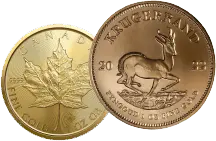
Government-minted coins are the best starting point for most buyers. The 2025 1 oz Gold Eagle is one of the most recognized bullion coins in the world – legal tender, globally liquid, and easy to resell. The 2025 1 oz Gold Maple Leaf from the Royal Canadian Mint is another top choice, struck in .9999 fine gold. For silver, the American Silver Eagle and Canadian Silver Maple Leaf are the benchmark options.
Gold bars offer a lower premium over spot compared to coins, making them efficient for larger purchases. A 1 oz gold bar from a reputable refiner typically carries a smaller markup than a 1 oz coin, which means more of your money goes into metal. All silver products – from 1 oz rounds to 100 oz bars – follow the same logic at the silver price level.
Physical Metal vs. Paper Alternatives
Pros
✓ You own the actual asset – no counterparty risk
✓ Physical metal cannot go to zero or be hacked
✓ Coins from major mints are globally recognized and liquid
✓ Can be held in a Precious Metals IRA for tax advantages
Cons
✗ Requires secure storage (home safe or allocated vault)
✗ Higher upfront cost due to premiums over spot price
✗ Less liquid than stocks or ETFs for quick trades
✗ ETFs offer easy trading but no direct metal ownership
✗ Mining stocks add company-specific risk on top of metal price risk
ETFs and Mining Stocks
Exchange-traded funds let you gain exposure to metal prices through a brokerage account without storing anything. The tradeoff: you do not own the metal. Some gold ETFs are taxed as collectibles at a higher rate than standard capital gains. Mining stocks add another layer of risk – the company’s management, debt levels, and operational costs all affect your return, independent of where metal prices go.
For most investors building long-term wealth, physical metal is the more dependable foundation. ETFs and mining stocks can complement a strategy, but they should not replace physical holdings.
Understanding Spot Price vs. What You Actually Pay
The spot price is the benchmark – the cash price for immediate delivery of one troy ounce of metal on global markets. What you pay at a dealer is the spot price plus a premium.
That premium covers manufacturing, distribution, and the dealer’s margin. At the time of writing, with silver at $60 per ounce, a silver coin might retail for $72-$78. The $12-$18 difference is the premium. For gold at $4,094, a 1 oz coin might carry a $100-$200 premium depending on the product.
Before buying, always calculate the melt value: multiply the weight of the metal by the current spot price. Then compare that to the retail price. Ask the dealer what their buy-back price is. That spread – what you pay versus what you can sell for – is your real cost of entry.
💡 Tip: Always confirm the current spot price before any transaction. Prices move daily, and the figures in this article reflect the market at the time of writing.
Gold vs Silver Investing: Matching Metal to Your Goals
The right metal is the one that matches your actual financial objective.
Which Metal Fits Your Goals?
Are you primarily trying to protect existing wealth?
Yes – Gold is your anchor. It preserves purchasing power and holds value during crises.
Are you comfortable with higher price swings for more upside?
Consider a split – gold as the foundation, silver as the growth engine.
Are you investing for retirement with tax advantages?
Both metals qualify for a Precious Metals IRA. Gold and silver IRA options are available through AccuratePMR.
Are you starting with a small budget (under $200)?
Start with silver. You can buy fractional or full ounces at much lower price points than gold.
Gold is the right choice when your primary goal is wealth preservation. If you are worried about inflation, currency devaluation, or economic instability, gold is the asset that has consistently held its value over long periods. Lower volatility means fewer sleepless nights.
Silver is the right choice when you want higher growth potential and can tolerate price swings. If you believe industrial demand – particularly from solar energy and electric vehicles – will continue rising, silver has structural tailwinds that gold does not. The downside is real: silver can drop 30% in a correction that barely moves gold.
The most practical strategy for most investors is a combination. Gold anchors the portfolio. Silver provides the growth engine. The exact ratio depends on your risk tolerance and time horizon. For a deeper look at building this kind of strategy, the gold and silver investment strategies guide on our site walks through practical allocation approaches.
Common Myths About Precious Metals Investing
A few persistent misconceptions keep new investors on the sidelines or lead them to make poor decisions.
Myth
The Reality
You need a large budget to start
You can buy silver for as little as $20-$30 per ounce. Small purchases add up over time.
Gold and silver are too volatile
Compared to crypto or speculative stocks, precious metals are relatively stable – especially gold during market stress.
Physical ownership is unnecessary
Paper assets like ETFs do not give you access to the metal. Physical ownership eliminates counterparty risk.
Precious metals always go up
No investment moves in one direction. Prices reflect supply, demand, and global economic conditions.
Gold is overvalued compared to silver
With the ratio near 68-to-1, many analysts consider silver undervalued relative to its historical relationship with gold.
Practical Steps Before You Buy
Whether you are buying your first silver round or adding gold bars to a retirement account, run through these questions first.
Before You Buy: A Practical Checklist
1
Step 1 – Check the spot price Confirm the current gold or silver spot price per ounce. Prices at the time of writing are $4,094 for gold and $60 for silver, but they change daily.
2
Step 2 – Calculate melt value Multiply the weight of the product by the current spot price. This tells you the baseline value of the metal you are buying.
3
Step 3 – Understand the premium Ask what the premium over spot is. Coins carry higher premiums than bars. Smaller fractional coins carry the highest premiums of all.
4
Step 4 – Ask about buy-back price A reputable dealer will tell you what they will pay if you sell back tomorrow. Know the spread before you commit.
5
Step 5 – Confirm storage Physical metal needs secure storage. A home safe, a bank safety deposit box, or an allocated vault are your main options.
6
Step 6 – Consider your time horizon Precious metals are long-term assets. If you might need the cash in six months, this may not be the right vehicle.
7
Step 7 – Review tax implications ETFs may be taxed as collectibles at a higher rate. Physical metal in an IRA has different rules. Consult a tax professional for your specific situation.
For investors considering a retirement account, a Precious Metals IRA allows you to hold physical gold and silver with tax advantages. It requires a custodian and has specific IRS rules about which products qualify, but it can be a powerful long-term vehicle for the right investor.
Buying and Selling Through Accurate Precious Metals
Accurate Precious Metals has been operating out of Salem, Oregon since 2012. With more than 1,000 five-star customer reviews and nationwide shipping with insured delivery, it is one of the most trusted precious metals dealers in the country – not a pawn shop, but a dedicated bullion dealer with deep inventory across gold, silver, platinum, palladium, and more.
For buyers, the inventory spans coins, bars, and rounds in every major weight. Pricing reflects live spot prices, so you are not paying based on yesterday’s market. The team also handles Gold and Silver IRA services for investors building retirement accounts around physical metals. As an NGC Authorized dealer, Accurate Precious Metals also offers coin grading services – useful for anyone whose collection includes numismatic pieces alongside bullion.
For sellers, both local and remote options are available. If you are in the Salem, Oregon area, visiting in person is the fastest way to get an offer on gold, silver, jewelry, scrap, or any other precious metals you want to liquidate. If you are anywhere else in the U.S., the mail-in service makes the process straightforward – you receive a prepaid, insured shipping kit, send your items, and get a competitive offer based on current spot prices. Payment is fast. The secure online selling guide covers the full process if you want to understand what to expect before you ship anything.
Whether you are buying your first ounce of silver or selling a collection you have held for decades, Accurate Precious Metals is the clear choice for transparent, competitive service. Reach the team at (503) 400-5608 or visit AccuratePMR.com to browse current inventory and pricing.
ℹ️ Info: Accurate Precious Metals is not a financial advisor. This article is for educational purposes only. Always consult a qualified financial professional before making investment decisions.
Frequently Asked Questions
Is gold or silver a better investment right now?
It depends on your goals. At the time of writing, the gold-to-silver ratio is approximately 68-to-1, which many analysts consider favorable for silver on a relative basis. Gold remains the stronger choice for wealth preservation and stability. Silver offers higher growth potential with more volatility. Most experienced investors hold both.
How much money do I need to start investing in precious metals?
You can start with as little as $20-$30 by purchasing a single silver round or fractional silver coin. Gold requires a larger upfront investment – at $4,094 per ounce at the time of writing – but fractional gold coins in 1/10 oz sizes are available at more accessible price points.
What is the gold-to-silver ratio and why does it matter?
The ratio tells you how many ounces of silver equal one ounce of gold in price. At the time of writing it is roughly 68-to-1. A high ratio historically suggests silver is undervalued relative to gold and may represent a buying opportunity for silver investors.
Should I buy physical metal or an ETF?
Physical metal gives you direct ownership with no counterparty risk. ETFs are easier to trade but do not give you access to the underlying metal, and some are taxed at a higher collectibles rate. For long-term wealth protection, physical ownership is generally preferred.
Can I hold gold or silver in a retirement account?
Yes. A Precious Metals IRA allows you to hold IRS-approved physical gold and silver coins and bars with tax advantages. It requires an approved custodian and specific qualifying products. Accurate Precious Metals offers IRA services and can walk you through the process.
How do I know if I am paying a fair price for bullion?
Check the current spot price, calculate the melt value of the product you are buying, and compare it to the retail price. Ask the dealer for their buy-back price. The difference between what you pay and what they will buy back for is your effective cost of entry.
Is silver more volatile than gold?
Yes, consistently. Silver's price is tied to both investment demand and industrial consumption, which amplifies its price swings in both directions. Gold moves more slowly and tends to hold value better during economic downturns.
Make the smart choice — invest with Accurate Precious Metals
Whether you are buying bullion for the first time or adding to a long-term position, our team offers expert guidance, transparent pricing, and a reliable buyback program.