This content is for educational purposes only and is not financial or investment advice. Precious metals prices fluctuate; past performance does not guarantee future results. Consult a qualified professional before making investment decisions.
Understanding gold karat value over time is the foundation of every smart resale decision. Whether you are sitting on a drawer full of old jewelry or weighing whether to sell a heavy gold chain, the karat stamp on that piece tells you more about its resale worth than the original price tag ever did. Gold holds value differently depending on how much actual gold is in it – and that relationship between purity, weight, and market price is what drives every offer you will ever receive.
This guide breaks down exactly how karat purity influences resale outcomes, why gold prices shift the dollar amount you can get without changing the piece itself, and what you can do to get a fair offer when the time comes to sell.
What Gold Karat Value Actually Means
Karat is a measure of purity. Twenty-four karats is essentially pure gold. Every step down from there means a larger share of the metal is something else – copper, silver, nickel, or zinc added for strength and workability.
The standard breakdown looks like this:
24K – approximately 99.9% gold
22K – approximately 91.7% gold
18K – 75% gold
14K – 58.3% gold
10K – 41.7% gold
Think of it this way: if a gold ring weighs 10 grams and it is stamped 14K, only about 5.83 grams of that ring is actual gold. The rest is alloy. A buyer paying for gold content is only paying for those 5.83 grams. That is why two rings that feel identical in weight can have very different resale values – karat changes everything.
Most resale buyers start from the same place: melt value. That is the theoretical dollar amount you would recover if you melted the item down and sold the pure gold.
The math is straightforward:
How Melt Value Is Calculated
1
Step 1 – Identify the karat Convert the karat to a decimal purity (e.g., 18K = 0.75)
2
Step 2 – Weigh the item Get the total weight in grams or troy ounces
3
Step 3 – Calculate pure gold weight Multiply total weight by the purity decimal
4
Step 4 – Apply the spot price Multiply pure gold weight by the current gold spot price per ounce
5
Step 5 – Apply a buyer discount The buyer subtracts a margin for testing, refining, labor, and risk
At the time of writing, gold spot is approximately $4,252 per troy ounce. That means an 18K item weighing one full troy ounce contains 0.75 oz of pure gold, giving a theoretical melt value of roughly $3,189. A 14K item of the same weight contains only 0.583 oz of pure gold – a melt value closer to $2,479. Same weight, same spot price, but nearly $700 difference because of the karat.
Buyers do not usually pay full melt. They need margin for their overhead, testing costs, and the risk of any pricing movement between when they buy and when they sell or refine. That is standard practice across the industry. What matters to you as a seller is knowing the melt value going in so you can evaluate whether an offer is competitive.
Gold Karat Value Over Time – What Actually Changes
The karat of your piece never changes. A 14K ring bought in 1985 is still 14K today. What changes is the gold spot price, and that is what makes the same piece worth more or less in dollar terms over different decades.
Gold prices respond to inflation, geopolitical stress, central bank activity, and investor demand. When uncertainty rises, gold tends to attract buyers, pushing prices higher. When markets are calm and equities are strong, gold sometimes softens. The long-term pattern historically shows gold preserving purchasing power over time, though it does not rise every single year.
Gold Price Context Over Time
1970s
Gold deregulated in the US Price surged from fixed $35/oz toward $800/oz by 1980
1980-2000
Long bear market Gold fell from its peak and traded mostly flat for two decades
2001-2011
Major bull run Gold climbed from under $300 to over $1,900/oz
2012-2018
Correction and consolidation Gold pulled back and ranged between roughly $1,100-$1,350
2019-2025
New highs Gold has climbed steadily, reaching over $4,252/oz at the time of writing
That history matters for sellers. A 14K ring that would have fetched $200 in 2005 based on its gold content could bring several times that today – not because the ring changed, but because gold itself is worth more. Higher-karat pieces benefit most from price appreciation because more of their weight is pure gold responding to that price movement.
Which Karat Holds Up Best in Resale
Higher karat wins on melt value, almost every time. The more gold in the piece, the more directly it tracks the gold price. A heavy 22K bracelet is essentially a bullion play wearing jewelry clothing.
Karat Comparison for Resale
Pros
✓ 24K has the highest gold content and tracks spot price most closely
✓ 22K is nearly as pure and common in high-quality jewelry and coins
✓ 18K offers strong gold content with practical durability – popular in fine jewelry
✓ Heavier items at any karat hold more total gold than lighter items
✓ Coins and bars with known purity are easiest to price and often sell closest to spot
Cons
✗ 14K contains less than 60% gold – more alloy dilutes the melt value per gram
✗ 10K has the lowest gold content of commonly sold jewelry karats
Lower-karat pieces are not worthless – they still contain real gold. But the value story is weaker per gram. A delicate 10K necklace may look similar to an 18K chain in a display case, but at the scale, the difference in recoverable gold is significant.
There is also a durability trade-off worth understanding. Pure 24K gold is soft. It scratches, bends, and wears down faster than 14K or 18K. Jewelers use lower karats for rings and clasps precisely because they hold up better to daily wear. So the “best” karat depends entirely on what you are optimizing for – daily wearability or maximum metal value.
When the Item Is Worth More Than Its Melt Value
Not every gold piece should be sold as scrap. Some items carry value beyond the metal itself, and selling them by melt means leaving money on the table.
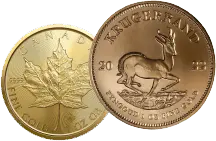
Designer and antique jewelry can sell well above melt if the maker, era, or style has collector demand. A signed Art Deco brooch from a recognized house may be worth far more intact than melted. The same logic applies to gold coins. A 1 oz Gold Maple Leaf or American Gold Eagle carries a premium over its melt value because buyers recognize the purity, the government backing, and the liquid secondary market for those coins.
The key question to ask before selling any gold piece is: Is this item worth more as an object or as metal? If it is plain, broken, or stylistically dated, melt value is probably the ceiling. If it has a maker’s mark, historical significance, or collector appeal, intact resale may be worth exploring.
A few myths circulate widely and cost sellers real money when they go unchallenged.
“Old gold is worth less because it is old.” Age does not reduce melt value. A 1960s 18K bracelet has exactly the same gold content as a new one. What matters is karat and weight, not the year it was made.
“All gold jewelry should sell near retail.” Retail prices include design fees, branding, labor, and store markup. Resale does not recover those costs. The resale floor is melt value, and only special pieces with collector demand can exceed it significantly.
“24K is always the smartest buy.” It has the most gold, but it is also the softest. For everyday jewelry, lower karats are often more practical. For pure investment, bars and coins in .9999 fine gold are a cleaner choice than 24K jewelry.
“Gold-colored means gold value.” Gold-plated items have only a thin layer of gold over a base metal. The gold content is negligible and rarely adds meaningful melt value.
“Now is always the right time to sell.” Timing matters. If spot prices are at a cyclical low, waiting may produce a better offer. If you need liquidity, selling at any reasonable price may be the right call. There is no universal answer.
Practical Tips for Getting a Fair Offer
Knowing the theory is useful. Knowing how to apply it before you walk into a buyer’s office – or mail in your items – is more useful.
Know the karat before you go. Look for stamps like 10K, 14K, 18K, 22K, or 750 (which means 18K in European notation). These are starting points. Reputable buyers will verify the karat through testing regardless.
Weigh your items. Even a rough kitchen scale gives you a baseline. Weight in grams combined with karat lets you estimate melt value before any conversation starts.
Separate stones from metal. Small diamonds and colored stones are often discounted heavily by buyers who cannot easily resell them. If the stones have value on their own, explore that separately.
Get multiple quotes. Different buyers use different spreads. A competitive offer from one buyer is a useful benchmark when talking to another.
Watch the spot price. Since offers anchor to spot, a week of higher gold prices can meaningfully change what you are offered for the same piece.
Decide scrap or collectible first. If the item has maker’s marks, historical significance, or collector appeal, explore intact resale before defaulting to scrap pricing.
For a broader look at the factors that shape what you receive, what affects cash-for-gold value covers the full picture in plain terms.
Gold Bars and Coins – The Cleanest Karat Story
Bullion products make the karat conversation simple. A 1 oz gold bar stamped .9999 fine contains exactly what it says – no alloy ambiguity, no design premium, no guesswork. The same is true for government-minted coins. Their purity is standardized, their weight is fixed, and the secondary market for them is broad and liquid.
That is why bullion tends to sell closest to spot. There is nothing to test, nothing to question, and no collector premium to negotiate. For sellers, this means faster transactions and more predictable offers. For buyers, it means knowing exactly what they are getting.
If you are thinking about gold as a long-term store of value rather than jewelry, gold bars and bullion products are worth exploring as the most direct way to hold gold content without the variables that come with jewelry.
Selling Your Gold – How Accurate Precious Metals Can Help
Accurate Precious Metals has been buying and selling precious metals since 2012 from our base in Salem, Oregon. With more than 1,000 five-star reviews and competitive offers based on current spot prices, we work with sellers across the country – not just locally.
If you are in the Salem area, you are welcome to bring your gold in person. Our team will assess your items and make a fair offer on the spot. There is no pressure, no pawn-shop atmosphere – just a straightforward evaluation from specialists who know precious metals.
If you are anywhere else in the United States, our mail-in gold selling service makes the process simple. You request a kit, ship your items with insured delivery, and receive a competitive offer based on current spot prices. Payment is fast once you accept.
We buy gold in all forms – jewelry in any condition, broken chains, scrap pieces, dental gold, coins, and bars. Karat does not matter for eligibility; it matters for pricing. Whether your items are 10K or 22K, we evaluate them fairly and make competitive offers tied to live spot prices.
ℹ️ Info: Whether you are local to Salem or across the country, Accurate Precious Metals offers two easy paths to sell: visit us in person or use our insured mail-in service. Call us at (503) 400-5608 or visit AccuratePMR.com to get started.
For sellers who want to understand how purity affects the offers you receive before reaching out, that guide walks through the purity-to-offer connection in practical terms.
Frequently Asked Questions
Does higher karat gold always get a higher resale offer?
Per gram, yes – higher karat means more gold per gram, which means more melt value per gram at any given spot price. But total offer also depends on weight. A heavy 14K piece can be worth more than a light 18K piece simply because it contains more total gold.
Does the age of my gold jewelry affect what I can sell it for?
Age alone does not reduce melt value. Karat and weight drive the melt value calculation. Age can add value if the piece has collector or antique appeal, but plain or damaged old jewelry is typically priced the same as new jewelry of the same karat and weight.
What is the current gold spot price?
At the time of writing, gold is approximately $4,252 per troy ounce. Spot prices change constantly – check a live feed or contact Accurate Precious Metals for a current quote before making any decisions.
Should I sell my gold now or wait for a higher price?
That depends on your personal situation and your read on the market. Gold prices are near historic highs at the time of writing, which means current offers reflect strong melt values. We do not offer financial advice, but the math favors sellers when spot prices are elevated.
Can I sell broken or damaged gold jewelry?
Yes. Broken jewelry still contains its full gold content. Damage does not reduce the melt value of the metal itself. Accurate Precious Metals buys gold in any condition.
What is the difference between 750 and 18K?
They mean the same thing. European hallmarking uses parts per thousand – 750 means 750 parts per 1,000 are gold, which is 75%, the same as 18K. You will often see 750 stamps on Italian and other European jewelry.
How do I know if my piece has collector value beyond melt?
Look for maker's marks, designer signatures, hallmarks indicating a known manufacturer, or unusual craftsmanship. If you see any of those, have the piece evaluated for intact resale before assuming scrap pricing is the ceiling.
Make the smart choice — invest with Accurate Precious Metals
Whether you are buying bullion for the first time or adding to a long-term position, our team offers expert guidance, transparent pricing, and a reliable buyback program.