This content is for educational purposes only and is not financial or investment advice. Precious metals prices fluctuate; past performance does not guarantee future results. Consult a qualified professional before making investment decisions.
Tap the image to enlarge and zoom.Hover to magnify, or click to open full screen.
This Gold IRA rollover guide walks you through everything you need to know before moving retirement savings into physical precious metals – from the mechanics of the rollover itself to the fees, rules, and decisions that determine whether it makes sense for your situation. Gold is trading at roughly $4,467 per ounce at the time of writing, which means the stakes are high and the details matter.
A Gold IRA is not a gimmick or a niche product. It is a legitimate retirement account structure that has been available since the Taxpayer Relief Act of 1997 opened the door for physical precious metals inside IRAs. Millions of Americans have used it to add a tangible asset to portfolios that might otherwise hold only stocks, bonds, and cash. But it comes with real costs, strict compliance rules, and tradeoffs that deserve a clear-eyed look before you commit.
What Is a Gold IRA and How Does It Differ from a Traditional IRA?
A Gold IRA is a self-directed IRA. That distinction is important. A standard IRA at a brokerage holds paper assets – mutual funds, ETFs, individual stocks, bonds. A self-directed IRA lets you hold alternative assets, including physical precious metals, as long as those assets meet IRS requirements.
The key difference is control and complexity. With a standard IRA, the custodian manages the investment menu and the compliance burden is minimal. With a self-directed Gold IRA, you direct the investments, but the custodian still holds the account, and an approved depository holds the physical metal. You own the gold. You just cannot keep it in your house.
Gold does not pay dividends or interest. Its role in a retirement account is defensive – a potential hedge against inflation, currency weakness, and market stress. That is a different job than a growth stock or a bond fund, which is why most advisors treat it as a diversifier rather than a core holding.
Gold IRA Rollover Guide: Understanding the Two Main Methods
The words “rollover” and “transfer” get used interchangeably, but they are not the same thing. Knowing the difference protects you from a costly mistake.
A direct rollover (also called a trustee-to-trustee transfer) moves money straight from one retirement account to another. The funds never touch your hands. This is the cleaner route – no withholding, no 60-day clock, no risk of accidentally triggering a taxable event.
An indirect rollover is different. The plan administrator sends a check to you, and you have 60 days to deposit it into the new account. Miss that window and the IRS treats the distribution as taxable income. If you are under 59½, a 10% early withdrawal penalty may also apply. The plan administrator typically withholds 20% for federal taxes upfront, so you would need to deposit the full original amount – including the withheld portion – out of pocket to avoid a tax hit.
The practical advice is simple: use a direct rollover whenever possible. It removes the timing risk entirely. IRA rollover strategies and direct transfer methods are covered in more depth in our dedicated resources if you want to go deeper on the mechanics.
How a Gold IRA Rollover Works
1
Step 1 Open a self-directed IRA with a custodian that supports precious metals holdings
2
Step 2 Request a direct rollover or trustee-to-trustee transfer from your current plan administrator
3
Step 3 Once funds arrive at the new custodian, direct them to purchase IRS-approved metals
4
Step 4 The custodian arranges delivery of the metals to an IRS-approved depository for storage
Which Retirement Accounts Can You Roll Over?
Most tax-deferred retirement accounts are eligible, but the rules vary by account type and employment status.
Old 401(k) plans from a previous employer are typically the easiest to move. Once you leave a job, you generally have full flexibility to roll that account into a self-directed IRA.
Current-employer 401(k) plans are trickier. Most plans restrict rollovers while you are still employed unless you qualify for an in-service distribution or are over 59½. Check your plan documents or ask your HR department before assuming you can move the funds.
Traditional IRAs and SEP IRAs can generally be rolled into a self-directed IRA without issue. SIMPLE IRAs have a two-year waiting period from the date of your first contribution before they can be rolled into a different type of IRA.
Roth IRAs can technically fund a Roth self-directed IRA, but the tax treatment is different from a traditional rollover, and not all custodians handle Roth Gold IRAs the same way.
ℹ️ Info: Before starting any rollover, confirm with your current plan administrator whether your account is eligible. Some employer plans have restrictions that are not obvious from the outside.
What Metals Actually Qualify for a Gold IRA?
Not every gold coin or bar is IRS-approved for retirement accounts. The IRS sets minimum fineness standards and excludes collectible coins, regardless of their precious metal content.
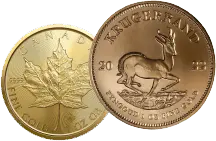
For gold, the minimum fineness is .995. That covers most modern bullion products, including the [American Gold Eagle] (which is technically .9167 fine but gets a statutory exemption), the [American Gold Buffalo] at .9999 fine, and many internationally recognized bars and coins from major mints.
For silver, the minimum is .999 fine. [American Silver Eagle] coins qualify. Most .999 fine silver bars from recognized refiners do as well.
Platinum and palladium must meet .9995 fineness. At the time of writing, platinum is around $1,898 per ounce and palladium is around $1,348 per ounce – both meaningful holdings if you want diversification beyond gold.
What does not qualify: rare coins, proof coins sold primarily for their collectible value, numismatic pieces, and any coin that the IRS classifies as a collectible. A coin can be made of pure gold and still be ineligible if it is primarily valued as a collectible rather than as bullion.
This is where many people get surprised. A Gold IRA is not cheap to run, and the costs compound over time.
Costs to Weigh Before Opening a Gold IRA
Pros
✓ Potential portfolio diversification away from paper assets
✓ Physical metal ownership inside a tax-advantaged wrapper
✓ Protection against certain inflation and currency risks
✓ Flexibility to hold gold, silver, platinum, or palladium
Cons
✗ Setup fees, annual custodian fees, and storage fees add up
✗ Premiums over spot price reduce how much metal your dollars buy
✗ No income generation – gold pays no dividends or interest
✗ Selling inside the IRA involves transaction costs and spreads
✗ Price volatility – gold can fall sharply even if it is viewed as a safe haven
The typical cost structure includes a one-time setup fee, an annual custodian fee, and an annual storage fee charged by the depository. Some custodians charge a flat annual fee; others charge a percentage of assets. At high gold prices – roughly $4,467 per ounce at the time of writing – a percentage-based fee structure can become expensive as your account grows.
Beyond fees, the premium over spot matters enormously. When you buy gold inside an IRA, the custodian purchases metal on your behalf. That metal costs more than spot price because of fabrication, distribution, dealer margin, and insurance. When you eventually sell, the buyback price will be below retail. That spread – the gap between what you paid and what you can sell for – is a real cost that affects your net return.
Compare the all-in cost, not just the advertised annual fee. Ask the custodian what premiums they charge over spot, what the buyback spread looks like, and what fees apply to transactions inside the account. A low annual fee can be offset by high premiums on every purchase. For a deeper look at how to use planning tools to evaluate these numbers, our IRA rollover calculator is a useful starting point.
Choosing a Custodian and Depository
The custodian is the financial institution that holds your self-directed IRA. The depository is the secure vault where the physical metal lives. These are two separate entities, and both matter.
A good custodian will be IRS-approved, transparent about fees, experienced with precious metals accounts, and responsive when you have questions. A poor custodian can slow down transactions, charge hidden fees, or create compliance headaches.
The depository must be IRS-approved. Major approved depositories operate in locations across the United States and offer segregated or commingled storage. Segregated storage means your specific bars or coins are stored separately and returned to you if you close the account. Commingled storage means your metal is pooled with other clients’ holdings of the same type – you own the equivalent weight and purity, but not necessarily the exact same bars.
⚠️ Warning: Home storage Gold IRAs are sometimes advertised online, but the IRS generally does not allow IRA-owned precious metals to be stored at home. Doing so risks disqualifying the entire account and triggering taxes and penalties on the full balance.
Gold IRA Rollover Guide: Common Mistakes to Avoid
Most problems with Gold IRA rollovers come from a small set of avoidable errors.
Taking an indirect rollover when a direct one was available. The 60-day rule catches people off guard, especially when they did not realize the clock was running.
Buying ineligible metals. A coin dealer selling “IRA-eligible” products is not always accurate. Verify that any product meets the IRS fineness standard before the custodian purchases it.
Ignoring the spread. At $4,467 per ounce at the time of writing, even a modest premium percentage represents a significant dollar amount per ounce. High spot prices amplify the cost of overpaying on premiums.
Choosing a custodian based on advertising alone. Some Gold IRA companies spend heavily on marketing and less on service quality. Look for fee transparency, real customer reviews, and clear answers to direct questions about costs.
Assuming gold is risk-free. Gold prices move. The metal fell significantly during certain periods even when broader economic concerns were elevated. A Gold IRA is a diversification tool, not a guarantee of safety. We are not financial advisors, and nothing here should be taken as financial advice – but the math of volatility is a fact worth understanding.
How Gold IRA Investing Relates to Precious Metals Collecting
If you already collect gold or silver coins, the Gold IRA concept will feel familiar in some ways and different in others. You already understand spot price, premiums, mint quality, and the difference between a bullion coin and a collectible. Those instincts translate directly.
The difference is that an IRA is not a collection. You are not building a set or hunting for key dates. The focus is on IRS-eligible products, cost efficiency, and long-term account performance. The precious metals IRA rollover tips on our blog go into more detail on how to think about product selection inside a retirement account versus a personal collection.
A useful mental model: think of a Gold IRA like moving money from one locked account to another account that can only hold specific valuables. You still own the contents, but the rules about what goes in, where it lives, and who can access it are strict. Compliance is not optional.
Why Work with Accurate Precious Metals for Your Gold IRA Needs
Accurate Precious Metals has been serving customers since 2012 – more than a decade of experience as a specialized precious metals dealer, not a pawn shop or a general investment firm. With over 1,000 five-star customer reviews, the track record speaks clearly.
Based in Salem, Oregon, Accurate Precious Metals offers Gold and Silver IRA services alongside a broad inventory of gold, silver, platinum, and palladium products in coin, bar, and bullion form. Pricing is updated to reflect live spot prices, so you are not working from stale numbers when you make a decision.
For customers anywhere in the United States, nationwide shipping with insured delivery makes it practical to work with Accurate Precious Metals regardless of location. Local customers in the Salem area are welcome to visit in person for hands-on service and direct conversations about IRA options, product selection, and current pricing.
If you have existing gold or silver holdings – jewelry, coins, or bullion – that you are thinking about liquidating to fund other goals, Accurate Precious Metals buys all forms of precious metals at competitive prices based on current spot prices. Local customers can bring items directly to the Salem location. Customers anywhere in the US can use the convenient mail-in service, which includes free insured shipping, professional evaluation, and fast payment.
For those ready to start exploring a Gold IRA rollover, the comprehensive precious metals IRA guide on AccuratePMR.com is a strong next step. You can also reach the team directly at (503) 400-5608 or visit AccuratePMR.com to review current inventory and IRA service details.
$4,467/oz
Gold spot price at time of writing
$75/oz
Silver spot price at time of writing
$1,898/oz
Platinum spot price at time of writing
Since 2012
Accurate Precious Metals in business
1,000+
Five-star customer reviews
Frequently Asked Questions
What is the difference between a Gold IRA rollover and a transfer?
A transfer moves money directly between IRA custodians without the funds passing through your hands. A rollover typically involves the funds leaving one account and being deposited into another, often within a 60-day window in the case of an indirect rollover. Direct rollovers, where the funds go straight to the new custodian, carry less risk and are generally the preferred method.
Can I store Gold IRA metals at home?
Generally no. IRS rules require that metals held inside an IRA be stored at an approved depository, not at your home or in a personal safe. Storing IRA metals at home risks disqualifying the account and triggering taxes and penalties on the full balance.
What gold products are IRS-approved for a Gold IRA?
Gold must meet a minimum fineness of .995. Widely eligible products include the American Gold Buffalo (.9999 fine), American Gold Eagle (which has a statutory exemption despite lower fineness), and most major bullion bars from recognized refiners. Collectible and numismatic coins are generally excluded.
How much does a Gold IRA cost to maintain?
Costs typically include a one-time setup fee, annual custodian fees, and annual depository storage fees. Premiums over spot price on purchases and transaction costs on sales also affect your net return. Total costs are generally higher than a standard brokerage IRA, so comparing all-in costs across custodians is important.
Can I roll over my current employer’s 401(k) into a Gold IRA?
Usually not while you are still employed, unless your plan allows in-service distributions or you are over 59½. Old 401(k) plans from previous employers are typically eligible for rollover without restriction. Check your plan documents or ask your HR department before initiating any transfer.
Does Accurate Precious Metals help with Gold IRA rollovers?
Yes. Accurate Precious Metals offers Gold and Silver IRA services and can help you understand your options for moving retirement funds into physical precious metals. You can reach the team at (503) 400-5608 or visit AccuratePMR.com for more information.
Is a Gold IRA a safe investment?
Gold IRAs carry real risks, including price volatility, higher fees than standard IRAs, and no income generation. Gold has historically served as a diversifier and a potential hedge against inflation, but its price can fall significantly over shorter periods. Nothing in this article constitutes financial advice – consult a qualified financial professional for guidance specific to your situation.
Make the smart choice — invest with Accurate Precious Metals
Whether you are buying bullion for the first time or adding to a long-term position, our team offers expert guidance, transparent pricing, and a reliable buyback program.