This content is for educational purposes only and is not financial or investment advice. Precious metals prices fluctuate; past performance does not guarantee future results. Consult a qualified professional before making investment decisions.
Tap the image to enlarge and zoom.Hover to magnify, or click to open full screen.
Gold coins metal detecting is one of the most rewarding pursuits in the hobby – and one of the most misunderstood. Most people assume that finding gold underground is about owning the right machine. The truth is that site selection, technique, and understanding how gold coins actually behave on a detector matter far more than the price tag on your equipment.
This guide covers everything a detectorist needs to know: how gold coins signal, where to search, which settings to use, what your find is actually worth, and how to handle a recovery so you do not accidentally destroy the numismatic value before you even know what you have found.
Why Gold Coins Are a Unique Metal Detecting Target
Gold coins sit in an interesting middle ground. They are not tiny natural nuggets with irregular shapes and low conductivity. They are manufactured, relatively uniform objects – which means they behave more like coins than like raw gold. That changes the strategy considerably.
A detector responds to electrical conductivity and target geometry, not to the word “gold.” A small gold coin can read in a messy signal range that overlaps with bottle caps, aluminum trash, and even nails depending on its size, depth, and alloy content. Many historical gold coins are not pure gold – they contain copper or silver to harden them, and that alloy shifts how they register on the display.
The other reason gold coins are special is their dual value. At the time of writing, gold is $4,224 per ounce. That makes even a small amount of recovered gold worth real money in melt terms. But a gold coin is also a historical artifact and potentially a numismatic item. A rare date or mint mark can push a coin’s value far above its metal content, while a common or damaged piece may trade much closer to melt. That is why every gold coin recovery deserves careful handling before any decisions about value are made.
Understanding target ID is essential before you start digging. Here is the practical breakdown by coin type:
Small denomination coins – A U.S. $1 gold coin is tiny. It can read in the same range as bottle caps, small aluminum, and other common trash. The signal may be inconsistent, especially at depth. Many detectorists miss small gold coins because they dismiss the signal as junk.
Larger gold coins – Bigger coins give stronger, more stable signals. They are more likely to be detected at greater depth, especially with lower-frequency or multi-frequency machines. A $10 or $20 gold piece reads more cleanly than a $1 or $2.50 coin.
Alloyed historical coins – Pre-1933 U.S. gold coins are .900 fine gold with a copper alloy. That copper content shifts the signal slightly compared to a modern .9999 fine bullion coin. The difference is subtle but worth knowing if you are trying to tune your ears to specific targets.
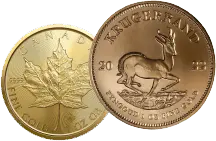
Modern bullion coins – A 1 oz Gold Eagle or similar bullion piece is large and high-conductivity. If one ended up in the ground, it would give a strong, confident signal. These are rare finds, but they do occasionally turn up at beaches and campsites.
The takeaway: do not expect gold to announce itself. Learn the signal range of the specific coins you are targeting, practice on known samples, and resist the urge to dismiss odd signals as trash.
Best Detector Settings for Gold Coins Metal Detecting
Settings matter, but not in the way most beginners expect. Chasing maximum numbers on every dial rarely produces better results. Stability and tuning for the specific site are what count.
Frequency
Lower frequencies (around 5-15 kHz) tend to work better for larger, high-conductivity targets like full-size gold coins. Higher frequencies (above 18 kHz) are better for smaller, lower-conductivity targets. Multi-frequency machines handle both cases simultaneously and are strong all-around options for coin hunting in varied soil conditions.
Discrimination
Discrimination filters out low-conductivity targets to reduce junk digging. For gold coins, moderate discrimination is usually the right starting point. Too much discrimination and you risk silencing a small gold coin that reads in the trash range. Too little and you spend the day digging pull tabs. The right balance depends on site density – trashy urban parks call for more discrimination; open fields with light trash allow you to run lower.
Sensitivity
Higher sensitivity helps detect deeper targets, but it also amplifies ground noise in mineralized soil. Start at a moderate level, increase until you hear chatter, then back off one or two steps. Stable operation beats maximum depth every time.
Ground Balance
Mineralized soil is the enemy of weak signals. Proper ground balance adjusts the detector to ignore the soil’s natural response so genuine targets stand out. Auto ground balance works well in most conditions. Manual balance is worth learning for heavily mineralized sites.
Coil Choice
Larger coils cover more ground and increase depth in clean soil. Smaller coils separate nearby targets better in trashy areas. A standard 10-11 inch coil is the right starting point for most coin hunting. Switch to a smaller coil if the site is dense with iron and trash.
Detector Settings Trade-Offs
Pros
✓ Lower discrimination catches more unusual gold signals
✓ Multi-frequency machines handle varied soil and target sizes
✓ Stable sensitivity beats maximum sensitivity in mineralized ground
✓ Proper ground balance prevents masking of weak signals
Cons
✗ Low discrimination means digging significantly more junk
✗ High sensitivity creates false signals in mineralized or wet soil
✗ Large coils struggle to separate targets in trashy sites
Where to Search: Best Locations for Finding Gold Coins
Gold coins do not appear randomly. They appear where people used money, lost possessions, or deliberately hid valuables. That historical logic drives every location decision.
Old homesites are among the best targets. People dropped coins near doorways, outbuildings, paths, and garden areas. Cellar holes and stone foundations mark former structures even when the building is gone.
Parks with long histories accumulate decades of coin loss. Look for older sections away from modern playground equipment – areas where people picnicked, gathered, or walked before the park was developed.
Fairgrounds and picnic areas saw enormous foot traffic historically. Pocket change was lost constantly at events, and the ground in older fairground sections can be exceptionally productive.
Farm fields near old structures often yield coins along fence lines, near former barns, and at the edges of fields where workers gathered. Spring plowing can bring targets closer to the surface.
Beaches and shorelines deserve special mention. Gold jewelry and coins are lost frequently near swimming and activity zones. Dry sand paths, boardwalk access points, and older shoreline areas are the most productive zones for coin targets specifically.
Construction-disturbed ground can expose targets that have been buried for generations. Fresh excavation, erosion cuts, and washouts are worth investigating quickly – targets near the surface after disturbance are easier to detect and recover.
The research step before any hunt is as important as the hunt itself. Old maps, county property records, historical aerial photos, and local history resources can reveal where people gathered long before modern development changed the market.
Techniques That Improve Your Results
Slow down. That is the single most consistent piece of advice from experienced detectorists, and it applies directly to gold coins metal detecting. A fast swing misses targets at the edges of the coil’s detection zone and produces less stable target IDs.
Practical Coin Hunting Workflow
1
Step 1 – Research the site Use old maps, property records, and aerial images to identify historically active areas before you arrive.
2
Step 2 – Check permissions Confirm legal access and any local rules about digging. National parks and some protected sites prohibit detecting.
3
Step 3 – Set for stability Choose moderate settings suited to the site. Avoid maxing out sensitivity or minimizing discrimination beyond what the site allows.
4
Step 4 – Sweep slowly and low Keep the coil close to the ground. Overlap each pass by about half the coil width. Treat the area like a grid.
5
Step 5 – Investigate odd signals Do not skip signals that seem borderline. Small gold coins often read inconsistently. Dig suspicious high-conductivity signals and unusual repeatable tones.
6
Step 6 – Recover carefully Use a pinpointer and a quality digging tool. Minimize soil disturbance and avoid scraping the target.
7
Step 7 – Document the find Note the depth, signal characteristics, and location. This information helps you understand the site and improves future hunts.
8
Step 8 – Store safely Do not clean the coin aggressively. Place it in a coin flip or soft holder immediately. Cleaning can destroy numismatic value.
Hunt after rain when conditions allow. Wet soil is more conductive, which can improve depth and signal clarity. Many detectorists report their best finds on the day after a good rain.
Melt Value vs. Collector Value: What Your Find Is Actually Worth
This distinction matters immediately after a recovery. Two gold coins of identical size and metal content can have wildly different values depending on condition, date, and rarity.
Melt value is straightforward. It is the value of the gold content based on current spot price. At the time of writing, gold is $4,224 per ounce. A coin’s melt value equals its pure gold weight multiplied by that price. A pre-1933 U.S. $20 gold piece contains about 0.9675 troy ounces of pure gold, which puts its melt value near $4,087 at today’s prices. That is meaningful money before any collector premium is considered.
Collector value depends on the coin’s date, mint mark, strike quality, and surface preservation. A common date in worn condition may trade near melt. A scarce date in strong condition can trade at multiples of melt value – sometimes dramatically higher. The gap between melt and collector value is why a detected coin should always be evaluated by someone who knows coins before it is sold as scrap.
For context, silver coins are also worth examining carefully. At the time of writing, silver is $69 per ounce, which makes even common silver coins worth meaningful money in melt terms – and rare silver coins can be worth far more.
ℹ️ Info: Do not clean a detected gold coin with abrasives or chemical solutions. Even light cleaning can reduce a coin’s grade by several points, which can eliminate hundreds or thousands of dollars in numismatic value. Rinse gently with distilled water if necessary and let it air dry.
Identifying What You Found: Genuine Coins vs. Fakes and Tokens
Not every gold-colored coin is a gold coin. Brass tokens, gold-plated base metal pieces, and outright counterfeits have been in circulation for a long time. A few checks help sort genuine from fake.
Weight is the first test. U.S. gold coins have precise legal weights – a $20 gold piece weighs 33.436 grams. Any significant deviation suggests a problem. A small digital scale accurate to 0.01 grams is an inexpensive and essential tool.
Diameter and thickness should match published specifications. Genuine coins are struck to tight tolerances.
The coin’s surface under magnification can reveal plating, casting seams, or die work inconsistent with genuine mint production. Genuine coins have sharp, clean details from die striking. Cast fakes often show granular or slightly porous surfaces.
For a definitive assessment, professional evaluation is the right step. Accurate Precious Metals is an NGC Authorized Dealer and can evaluate coins for authenticity and condition. Expert coin appraisals are available for detected finds and other pieces where the value is unclear. The lookup is also a useful starting point for checking certified coins against registry records.
Common Gold Coins You Might Find
Knowing the target helps you recognize it when it comes out of the ground. Here are the most common gold coin types that detectorists encounter in the United States:
Coin Type
Gold Content
Approximate Melt Value*
U.S. $1 Gold (1849-1889)
0.04837 oz pure gold
~$204
U.S. $2.50 Quarter Eagle
0.12094 oz pure gold
~$511
U.S. $5 Half Eagle
0.24187 oz pure gold
~$1,021
U.S. $10 Eagle
0.48375 oz pure gold
~$2,043
U.S. $20 Double Eagle
0.96750 oz pure gold
~$4,087
*Based on gold at $4,224/oz at the time of writing. Collector value may differ significantly.
Modern bullion coins like the American Gold Eagle or Gold Kangaroo are unlikely detector finds, but they do turn up occasionally. These coins carry premiums above spot when purchased new, and their value at recovery depends on condition and current market prices.
Foreign gold coins also appear at older sites, particularly in areas with significant immigrant communities or historic trade routes. British sovereigns, French Napoleons, and Mexican gold coins have all been recovered by U.S. detectorists.
What to Do After a Significant Find
A potentially valuable gold coin recovery deserves a careful process, not a rushed decision.
First, do not clean it. Second, photograph it in the condition it was found. Third, research the type using reference books or reputable online resources to get a preliminary identification. Fourth, have it professionally evaluated before selling.
If the coin is a common type in worn condition, its value may be primarily in the gold. If it is a scarce date or shows strong detail despite its time in the ground, the numismatic premium could be substantial. The only way to know is a proper assessment.
Accurate Precious Metals has been buying and evaluating coins since 2012 and holds more than 1,000 five-star customer reviews. Whether your find is a common coin worth melt or a rare piece worth significantly more, the evaluation process starts the same way. Local customers in the Salem, Oregon area can bring finds in person for a same-day assessment. Customers anywhere in the United States can use the mail-in service – free insured shipping, fast turnaround, and competitive offers based on current spot prices.
If you decide to sell, the sell gold coins online page walks through the process clearly. If you want to buy gold coins for your collection or add investment-grade pieces alongside your detecting finds, the inventory at Accurate Precious Metals covers everything from fractional coins to full-ounce bullion across multiple mints.
Frequently Asked Questions
Can any metal detector find gold coins?
Most modern detectors can detect gold coins because gold is a good conductor. The challenge is distinguishing a gold coin signal from similar-reading trash. A well-tuned mid-range or higher detector with proper settings will outperform an expensive machine used carelessly.
What depth can a metal detector find gold coins?
Depth depends on the coin's size, the detector's frequency and coil, and soil conditions. A large gold coin in clean soil might be detected at 10-12 inches with a quality machine. Smaller coins in mineralized soil may only be reliably detected at 4-6 inches.
Should I use low discrimination when hunting for gold coins?
It depends on the site. In a low-trash field, running lower discrimination helps you hear borderline signals. In a heavily littered park, some discrimination is practical or you will spend the day digging junk. The key is adjusting to the site, not applying one rule everywhere.
How do I know if a detected gold coin is genuine?
Check weight, diameter, and thickness against published specifications. Examine surface detail under magnification for signs of casting or plating. For a definitive answer, have it professionally evaluated. Accurate Precious Metals can assess coins for metal content and condition.
Should I clean a gold coin I find with a metal detector?
No aggressive cleaning. Rinse gently with distilled water if needed and allow it to dry naturally. Abrasives, chemicals, and polishing compounds can destroy numismatic value permanently.
Where is the best place to sell a gold coin I found detecting?
A specialist precious metals dealer who also handles numismatic coins is the right choice. Accurate Precious Metals buys both bullion and collector coins and can give you a fair assessment of both melt and collector value. Visit the Salem, Oregon location in person or use the mail-in service from anywhere in the U.S.
Is gold coins metal detecting legal?
In most cases, yes – on private property with the owner's permission and on many public lands. It is prohibited on National Park Service land, most federal archaeological sites, and some state-protected areas. Always check local regulations before hunting any site.
Make the smart choice — invest with Accurate Precious Metals
Whether you are buying bullion for the first time or adding to a long-term position, our team offers expert guidance, transparent pricing, and a reliable buyback program.