

Gold coin investment guide: Smart choices for a lasting portfolio

Disclaimer
Accurate Precious Metals is not a financial advisor. We encourage everyone to consult a financial advisor or CPA. They can help determine the best investment strategies. Our mission is to provide educational content about precious metals. Accurate Precious Metals is committed to transparency and reliability. They offer top-tier precious metal products and information.
This information is subject to change due to market fluctuations, world events, and factors beyond our control. Additionally, the content may not fully reflect our company’s values, as personnel, staff, and authorship may change over time.
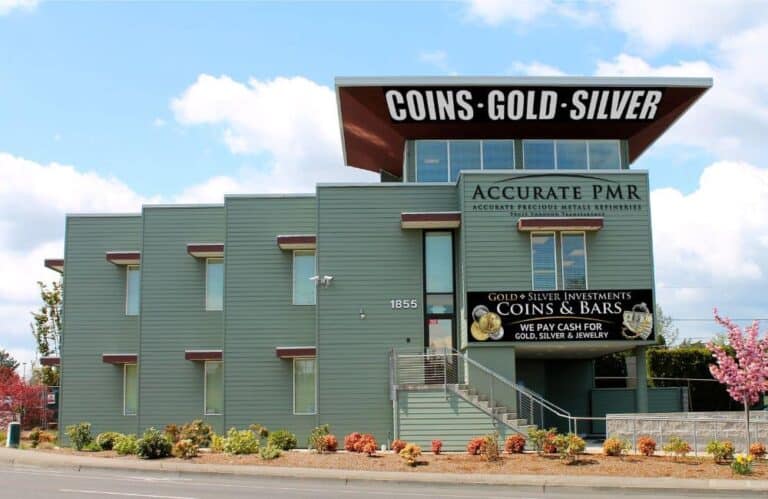
This gold coin investment guide is built for one purpose: helping you make smarter decisions about which gold coins to buy, how to price them, and how to build a portfolio that holds up over time. Gold is trading near $4,657 per ounce right now – a level that makes every purchase decision count. Whether you are buying your first coin or adding to an existing stack, the choices you make today shape your returns for years.
Unlike a basic “what is bullion” overview, this guide takes a collector’s timeline approach. We trace how history shaped today’s top coins, explain exactly how premiums work at current spot prices, bust persistent myths, and give you a concrete framework for building a portfolio. Other articles on this site cover bullion-vs-bars comparisons and local buying guides – this one focuses on the investment strategy layer that sits on top of all that.
How Gold Bullion Coins Became the Standard Investment Vehicle
Gold coins have existed for thousands of years, but the modern bullion coin – designed specifically as an investment instrument rather than currency – is a 20th-century invention. The story starts in South Africa.
The South African Krugerrand launched in 1967, created by the South African Mint and Rand Refinery to channel the country’s vast gold reserves directly to everyday investors. At the time, private gold ownership was restricted in many countries, and the Krugerrand gave ordinary buyers a legal, portable way to hold physical gold. By 1980, it commanded the majority of the global bullion coin market.
Then came the sanctions. International pressure over apartheid pushed many Western investors away from South African products through the 1980s, and rival mints seized the opportunity. Canada introduced the Maple Leaf in 1979. The U.S. Gold Eagle followed in 1986. Austria launched the Philharmonic in 1989. Each government-backed coin was designed to offer the same core promise: a standardized weight, a verified purity, and the full credibility of a national mint.
That competition drove real improvements. Early coins used 22-karat alloys (91.67% gold, mixed with copper or silver for durability). Later entrants pushed to .9999 fine – four nines purity – setting a new benchmark. Today, over a dozen major coins trade globally, and the market is deep enough that any of the top six or seven can be bought or sold in virtually any country within hours.
For collectors, this history is not just background. Owning a 1970s Krugerrand is owning a piece of the moment when gold became democratized. Owning an early Maple Leaf marks the beginning of the purity arms race. The narrative adds a layer of meaning – and sometimes a premium – that pure bullion bars simply cannot match.
The Top Gold Bullion Coins: A Gold Coin Investment Guide to the Best Options
Not all bullion coins are equal investments. Liquidity, purity, premium structure, and collector demand vary significantly. These eight coins represent 80-90% of global traded volume and deserve the most attention.
First modern bullion coin – created to market South Africa’s gold reserves to investors worldwide
Introduced .9999 fine gold as a new purity standard for bullion coins
Annual design changes added collector appeal from day one
U.S. government-backed coin in 22-karat gold – became the top U.S. liquidity choice
Perth Mint entry, later renamed; annual reverse designs boost collectibility
Royal Mint’s flagship bullion coin; upgraded to .9999 fine after 2013
Europe’s dominant bullion coin; denominated in euros
U.S. Mint’s first .9999 fine gold coin – a cleaner option for purity-focused buyers
South African Krugerrand
The original. Still one of the most widely traded coins in the world. Its 22-karat composition (91.67% gold, alloyed with copper) gives it a warm reddish tint and exceptional scratch resistance. Premiums are among the lowest available – typically 3-5% over spot – making it the cost-efficient choice for buyers who want maximum gold per dollar. At today’s spot price of roughly $4,657 per ounce, a 1-oz Krugerrand retails around $4,800-$4,900. Early examples from the 1970s and 1980s carry additional collector interest.
American Gold Eagle
The benchmark for U.S. investors. Minted since 1986, the American Gold Eagle carries Lady Liberty on the obverse and a family of bald eagles on the reverse – a design rooted in Augustus Saint-Gaudens’ iconic 1907 work. Also 22-karat, it trades with tight bid-ask spreads and universal recognition. The U.S. Mint produces fractional sizes (1/2 oz, 1/4 oz, 1/10 oz), which matter when a full ounce costs over $4,600. Fractionals carry higher premiums per ounce – typically 10-20% more – but they lower the entry barrier significantly. Quarter-ounce Eagles are a practical starting point for new buyers.
Canadian Gold Maple Leaf
Canada’s entry raised the bar on purity when it launched in 1979, and the Royal Canadian Mint has kept innovating. Modern Maple Leafs feature radial line security and laser micro-engraving to deter counterfeiting – technology that rivals anything in the industry. At .9999 fine, it appeals to buyers who want the highest gold content per coin. Premiums typically run 4-6% over spot.
American Gold Buffalo
The U.S. Mint’s answer to demand for a domestic .9999 fine coin. Introduced in 2006, the American Gold Buffalo draws its design from James Earle Fraser’s 1913 Buffalo Nickel – a Native American chief on the obverse, an American bison on the reverse. It carries slightly lower premiums than the Eagle in many markets and growing collector interest for its design. Available only in 1-oz size from the U.S. Mint, though secondary market fractionals exist.
Austrian Gold Philharmonic
Europe’s top-selling bullion coin since its 1989 debut. The Philharmonic is denominated in euros and features instruments from the Vienna Philharmonic orchestra. At .9999 fine and with strong institutional recognition across European markets, it is a natural fit for buyers with international exposure in their portfolios.
British Gold Britannia
The Royal Mint’s flagship coin has been through several evolutions. Post-2013 versions hit .9999 fine, and recent issues incorporate advanced anti-counterfeit features. King Charles III’s portrait now appears on the obverse following the 2023 design update – a transition that already generates collector interest for the last Elizabeth II issues. British Britannias are tax-exempt for UK residents, which boosts their international resale market.
Australian Gold Kangaroo
The Perth Mint changes the kangaroo reverse design every year. That annual variety adds a numismatic dimension to an otherwise straightforward bullion coin – buyers who hold multiple years build a collection within their investment stack. Strong demand from Asian markets gives the Kangaroo reliable liquidity across the Pacific Rim.
Chinese Gold Panda
The Mint of China has issued annual Panda designs since 1982, making each year’s coin distinct. The changing reverse is the defining feature – collectors who want both investment value and design variety find the Panda uniquely satisfying. China’s domestic gold demand is enormous, which supports resale strength. Premiums run 5-10% over spot for current issues, more for older years.
Live Gold Spot Price – Accurate Precious Metals Refineries




Understanding Premiums: What You Actually Pay at $4,657 Spot
Spot price is the baseline. What you pay is spot plus a premium – the markup that covers minting costs, distribution, dealer margin, and sometimes collector demand.
At $4,657 spot, a 1-oz Krugerrand retails around $4,800. A 1-oz Eagle or Maple Leaf runs roughly $4,850-$4,950. A 1-oz Panda from a recent year can push past $5,100. Fractional coins cost more per ounce but less per coin – a 1/10-oz Eagle runs about $520-$560, making it accessible even at today’s elevated prices.
When selling, expect to receive 2-5% below spot for the most liquid coins. The tightest spreads go to Eagles, Krugerrands, and Maple Leafs – the coins every dealer knows and wants. Obscure or regional coins can carry spreads of 8-15%, which erodes returns fast.
Building a Gold Coin Portfolio: Strategy Over Speculation
A gold coin portfolio is not a lottery ticket. It is a long-term store of value – one that has historically protected purchasing power through inflation, currency crises, and market dislocations. Gold has moved from under $300 an ounce in the early 2000s to over $4,600 today. That trajectory rewards patience, not day trading.
Start with the most liquid coins: Eagles, Krugerrands, or Maple Leafs. These sell fastest and carry the tightest spreads. Aim for 60% of your gold holdings here.
Add .9999 fine coins (Buffaloes, Philharmonics, Britannias) for buyers who want maximum gold content per coin. Target 30% of holdings.
Allocate 10% to annual-design coins (Kangaroos, Pandas) or graded examples. These can appreciate beyond spot if the design year becomes desirable.
Hold some fractional coins (1/4 oz or 1/10 oz) for liquidity. Selling a 1/10-oz coin is easier than liquidating a full ounce when you need partial funds.
Buy a fixed dollar amount monthly rather than timing the market. This smooths your average cost over market cycles.
Storage matters as much as selection. Capsules protect surfaces. A home safe handles smaller collections. Allocated vault storage at a reputable facility works for larger holdings. Professional grading through PCGS or NGC – available through NGC Authorized dealers – can add meaningful premiums to pristine examples, particularly for coins graded MS-70. Fractional gold strategies deserve their own research before committing capital to smaller denominations.
Common Myths That Cost Investors Money
Grading and Collector Value: Where Bullion Meets Numismatics
Most bullion coins trade purely on metal content. But condition creates a second layer of value for patient investors. A coin graded MS-70 (perfect uncirculated) by PCGS or NGC commands a premium of 10-50% over raw bullion in many cases – sometimes more for key dates or low-mintage issues.
The crossover between bullion and numismatics is most visible in coins with annual design changes. A 1986 first-year American Gold Eagle in MS-70 is both a gold investment and a historical artifact. Early Chinese Pandas from the 1980s trade at multiples of their melt value. The 2022 Queen Elizabeth II final-year Britannia already attracts collector attention.
For investors who want this upside, the strategy is simple: buy coins in original mint packaging, handle them minimally, and submit the best examples for professional grading. Numismatic coins follow different valuation rules than bullion – understanding the distinction before you buy protects you from overpaying for “collectible” coins that are really just bullion with marketing.
Authenticity and Verification: Protecting Your Investment
Counterfeits exist. The risk is real at any price level, but it intensifies above $1,000 per coin. Several layers of protection matter.
- Weight and diameter checks are the first line of defense. Every major bullion coin has published specifications – a 1-oz Gold Eagle weighs 33.93 grams and measures 32.7mm. Any deviation is a red flag.
- XRF (X-ray fluorescence) analysis reads the elemental composition of a coin without damaging it. Reputable dealers use this routinely to evaluate metal content.
- Modern security features – the Maple Leaf’s radial lines, the Britannia’s micro-engraving, the Eagle’s reeded edge – are difficult to replicate accurately at scale.
- Buying from established dealers with transparent return policies eliminates most counterfeiting risk at the point of purchase.
- Slabbed coins (PCGS/NGC graded) in intact holders carry an additional layer of protection – the grading service has already inspected the coin.
Gold IRAs: Holding Bullion Coins in a Retirement Account
At $4,657 per ounce, gold is a serious asset class – one that belongs in retirement planning conversations. A Gold IRA allows investors to hold IRS-approved physical gold coins inside a tax-advantaged retirement account.
Not every bullion coin qualifies. The IRS requires a minimum fineness of .995 for gold held in IRAs. That approves the American Gold Eagle (despite its 22-karat composition, it meets the standard), the Gold Buffalo, the Maple Leaf, the Philharmonic, and the Britannia. The Krugerrand does not qualify for IRA inclusion due to its alloy composition.
Rollovers from existing 401(k) or IRA accounts can fund a Gold IRA without triggering a taxable event if handled correctly. IRA rollover services at Accurate Precious Metals walk clients through this process with no guesswork. For retirement investors, this is one of the most tax-efficient ways to add gold exposure to a long-term portfolio.
Why Accurate Precious Metals Is the Right Partner for Gold Coin Investors
Choosing where to buy and sell matters as much as choosing what to buy. Accurate Precious Metals has been operating as a specialized precious metals dealer for over 12 years, with more than 1,000 five-star reviews from clients across the country. We are not a pawn shop – we are a dedicated bullion dealer with the depth of inventory and expertise to serve both first-time buyers and experienced collectors.
Our gold coin inventory spans all the major coins covered in this guide – Eagles, Krugerrands, Maple Leafs, Buffaloes, Philharmonics, Britannias, Kangaroos, and Pandas – in multiple sizes. Pricing updates in real time against live spot prices, so you are always working from current numbers, not yesterday’s quotes. We also carry gold bars, silver, platinum, and palladium for investors building diversified precious metals portfolios.
For collectors, our status as an NGC Authorized dealer means professional grading is accessible through us – a direct path to slabbed coins with verified grades and the premium that comes with them.
Selling is equally straightforward. If you are local to Salem, Oregon, come in person and our team will assess your coins on the spot. If you are anywhere else in the United States, our mail-in service handles the entire transaction remotely – we provide a free insured shipping kit, our team thoroughly examines your metals, and payment moves fast. Mail-in details are on our site, and the process is designed to be as simple as possible for sellers who cannot make the trip to Oregon.
Reach us at (503) 400-5608 or visit AccuratePMR.com to browse current inventory and live pricing. For investors who want a trusted, experienced partner at today’s elevated gold prices, Accurate Precious Metals is the clear choice.
Frequently Asked Questions
What is the best gold coin to buy for investment?
The American Gold Eagle and South African Krugerrand are the top choices for most investors – both carry low premiums, universal recognition, and tight bid-ask spreads. For maximum purity, the American Gold Buffalo or Canadian Maple Leaf at .9999 fine are strong alternatives.
How much over spot should I pay for a gold coin?
Expect 3-8% over spot for 1-oz coins from major mints. At today’s gold price of about $4,657 per ounce, that puts a 1-oz Eagle or Krugerrand in the $4,800-$4,950 range. Fractional coins carry higher premiums – typically 10-20% more per ounce.
Which gold coins qualify for a Gold IRA?
IRS-approved coins include the American Gold Eagle, American Gold Buffalo, Canadian Maple Leaf, Austrian Philharmonic, and British Britannia. The South African Krugerrand does not meet IRS purity requirements for IRA inclusion.
Is a 22-karat gold coin worth less than a .9999 fine coin?
The gold content differs slightly – a 1-oz 22-karat coin contains one troy ounce of gold alloyed with copper or silver for durability, while a .9999 coin is nearly pure gold. Both are priced based on their actual gold content, not face value. The 22-karat alloy is more scratch-resistant, which can matter for resale condition.
How do I verify a gold coin is genuine?
Check weight and diameter against published mint specifications. Buy from reputable dealers who evaluate metal content through XRF analysis or similar testing. Look for security features like radial lines, micro-engraving, or reeded edges. Purchasing slabbed (professionally graded) coins adds another layer of verification.
Can I sell my gold coins to Accurate Precious Metals?
Yes. Local customers can visit our Salem, Oregon location for an in-person assessment. Customers anywhere in the U.S. can use our mail-in service – we provide a free insured shipping kit, inspect the coins, and issue fast payment. Visit AccuratePMR.com or call (503) 400-5608 to get started.
What is the difference between bullion coins and numismatic coins?
Bullion coins are priced primarily on their gold content – spot price plus a modest premium. Numismatic coins are valued based on rarity, condition, historical significance, and collector demand, often trading well above melt value. Some bullion coins develop numismatic characteristics over time, particularly low-mintage issues or perfect-grade examples.
How should I store gold coins?
Individual capsules protect surfaces from contact damage. A home safe works for smaller collections. For larger holdings, allocated storage at a professional vault facility offers additional security and insurance coverage. Avoid storing coins loosely – even minor scratches affect resale grade.

