This content is for educational purposes only and is not financial or investment advice. Precious metals prices fluctuate; past performance does not guarantee future results. Consult a qualified professional before making investment decisions.
Tap the image to enlarge and zoom.Hover to magnify, or click to open full screen.
If you have ever considered a gold bullion jewelry investment, you already understand the appeal: gold you can wear, carry, and enjoy – while still holding real metal value in your hands. That combination of wearable luxury and tangible wealth is exactly what separates bullion-grade jewelry from ordinary fashion pieces. Understanding how the two differ, and what drives the value of each, is the foundation of making smart decisions in this space.
Gold has served as a store of wealth for thousands of years. The modern idea of investment-oriented jewelry is simply a continuation of that tradition, made more precise by today’s attention to purity, spot prices, and resale markets. Whether you are buying for beauty, for value, or for both, knowing how to evaluate what you are actually getting makes all the difference.
What “Gold Bullion Jewelry” Actually Means
Gold bullion jewelry is real gold jewelry designed to hold value primarily through its metal content. The emphasis is on purity and weight, not just appearance. This distinguishes it from fashion jewelry, where the price often reflects design, branding, and retail markup far more than the gold itself.
Bullion, in its purest form, is gold sold for its metal content – bars, coins, rounds. Jewelry adds a wearability dimension, but also adds costs: labor, design, and retail overhead. The key question for any buyer thinking about value is how much of the price reflects actual gold, and how much reflects everything else.
Bullion-style jewelry tends to use 22K or 24K gold, where the metal content is high enough that the piece behaves more like a bullion asset than a fashion accessory. Lower-karat pieces – 14K, for example – contain more alloy metals and less gold by weight, which reduces their melt value per gram.
Purity, Karats, and Why They Matter for Gold Bullion Jewelry Investment
Gold purity is measured in karats. The higher the karat, the more actual gold the piece contains.
Karat
Gold Content
Notes
24K
99.9% pure
Closest to pure bullion
22K
91.67% gold
Common in investment jewelry
18K
75% gold
Popular in fine jewelry
14K
58.3% gold
Lower melt value per gram
For investment-oriented buyers, 22K and 24K pieces are the most relevant. They track the gold spot price most closely because the metal content dominates the value.
At the time of writing, gold spot is $4,511 per troy ounce. A 22K piece weighing one troy ounce contains roughly 0.9167 ounces of pure gold – about $4,136 in gold content at the time of writing, before any premiums, fabrication costs, or dealer spreads. An 18K piece of the same weight carries about 0.75 ounces of gold, or roughly $3,383 in gold content at the time of writing.
Those numbers show why purity is not a minor detail. The difference between 18K and 22K on a one-ounce piece is nearly $750 in metal value alone.
Every gold jewelry piece has three components worth separating in your mind.
Melt value is the gold content multiplied by the current spot price. It is the floor – what the metal is worth if melted down.
Premium is the extra amount charged above melt value. It covers fabrication, design, retail overhead, and profit margin. Bullion bars and coins carry relatively modest premiums. Jewelry carries larger ones, sometimes dramatically so.
Resale discount is what you lose when selling. Dealers pay less than spot for jewelry because they need room to profit on resale. Designer or highly stylized pieces may sell for even less, since their audience is narrower.
This three-part framework is how experienced buyers evaluate any gold purchase. The closer the purchase price is to melt value, the better the value retention over time.
⚠️ Warning: High retail markups on jewelry can significantly erode investment returns. A piece bought at two or three times its melt value needs gold prices to rise substantially before you break even on the metal alone.
Which Styles Hold Value Best
Not all gold jewelry is equal from an investment standpoint. Style and design choices affect both the premium you pay and the audience you can sell to later.
Plain chains: Simple, recognizable, easy to price by weight. Buyers and dealers understand them quickly.
Bangles and bracelets: Often heavier, which increases total gold content and melt value.
Rings: Practical and popular, though sizing and wear can affect resale.
Pendants and medallions: Can carry design premiums. Plain, heavy versions hold value better than ornate ones.
Highly custom or trendy pieces: These often command the highest retail prices but the smallest resale audiences.
The general principle is straightforward: heavier, simpler, and higher-purity pieces retain value better. A plain 22K chain is easier to sell, easier to price, and closer to its melt value than an elaborate 18K designer necklace with a brand name attached.
This does not mean ornate jewelry is a bad purchase. It means you should be clear about what you are buying it for. If the goal is wearable beauty, great. If the goal is value retention, simplicity wins.
Gold Bullion Jewelry vs. Bullion Bars and Coins
For pure investment efficiency, gold bars and coins are the more direct route. Their pricing is closely tied to the spot price, their premiums are usually lower, and they are easier to sell quickly.
Feature
Bullion Bars and Coins
Bullion-Style Jewelry
Primary value driver
Metal content and spot price
Metal content plus design and brand
Liquidity
Usually higher
Usually lower
Wearability
None
Yes
Premium over spot
Usually lower
Usually higher
Best for
Pure gold exposure
Wearable wealth and style
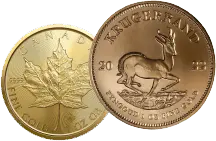
Jewelry makes sense when the buyer wants both metal exposure and something they can actually wear. A 2025 1 oz Gold Eagle or a 1 oz Gold Maple Leaf gives you direct, highly liquid gold exposure at a modest premium. A 22K gold chain gives you something you can put on every day, with real metal value underneath.
Neither is wrong. They serve different purposes. The mistake is confusing one for the other – paying jewelry prices and expecting bullion-level liquidity.
For buyers who want to explore the full range of investment-grade gold products, understanding this distinction shapes every purchase decision.
Common Misconceptions Worth Clearing Up
A few persistent myths lead buyers astray in this space.
“All gold jewelry is a good investment.” Most retail jewelry is priced well above its melt value. Labor, branding, and overhead are baked in. That extra cost does not come back when you sell.
“Higher price equals higher investment value.” A designer piece may cost far more than its gold content justifies. The premium reflects the brand, not the metal.
“Gold-plated or gold-filled jewelry is the same as solid gold.” It is not. Gold-plated items have a thin surface layer over a base metal. Gold-filled has more coverage but still far less gold than solid pieces. Neither has meaningful melt value.
“Jewelry always beats bullion for returns.” For pure investment efficiency, bullion tends to win. It is more liquid, easier to value, and carries lower premiums. Jewelry can be a sensible choice, but not because it outperforms bullion on investment metrics.
“Wearability eliminates risk.” Being able to wear your gold does not protect you from buying at too high a premium or selling in a weak market. The fundamentals still apply.
ℹ️ Info: Gold-plated and gold-filled jewelry should not be confused with solid gold. If you are buying for metal value, verify the piece is solid gold and confirm the karat marking before purchasing.
Practical Tips for Buying Investment-Oriented Gold Jewelry
If value retention matters to you, these principles cut through most of the noise.
Smart Buying Checklist
1
Step 1 Prioritize purity – 18K minimum, with 22K or 24K preferred for investment-style pieces
2
Step 2 Focus on weight – gold is priced per ounce, so heavier pieces carry more metal value
3
Step 3 Choose simple designs – plain chains and bangles are easier to resell than ornate custom work
4
Step 4 Verify documentation – receipts, assay certificates, and authenticity papers help at resale
5
Step 5 Know your seller – buy from reputable dealers with verifiable track records
6
Step 6 Understand the spread – the gap between buy and sell prices is wider for jewelry than for bullion
One more point worth emphasizing: do not let appearance substitute for weight. A visually impressive piece that is hollow or lightweight may look like more gold than it contains. Always ask about the actual weight in grams or troy ounces, and calculate the melt value yourself using the current spot price.
For context on how premiums work across different gold products, the bar vs. coin premium guide is a useful reference. The same logic applies when comparing jewelry to bullion.
The Cultural and Historical Case for Wearable Gold
Gold jewelry as stored wealth is not a new idea. Across cultures and centuries, heavy gold chains, bangles, and rings have represented savings, status, and family wealth. In many parts of the world, gold jewelry is still the primary form of personal savings – passed down across generations and liquidated when needed.
The modern investment-jewelry buyer is doing something similar, just with more explicit attention to purity and spot prices. The instinct to hold physical gold in a form you can wear and carry is deeply practical. It is portable, durable, and universally recognized.
That psychological dimension matters. Many buyers find it easier to commit to physical gold they can see and touch than to hold a paper or electronic asset. Bullion jewelry occupies a useful middle ground: it satisfies the desire for something tangible and beautiful while keeping real metal value intact.
For buyers new to physical gold, how gold protects against inflation is worth reading alongside any jewelry purchase decision. The case for owning gold does not change based on the form it takes – but the form does affect liquidity, premiums, and resale options.
Who Gold Bullion Jewelry Makes the Most Sense For
Gold bullion jewelry is a strong fit for buyers who want a wearable store of value. It suits people who like physical gold but want something more personal than a bar sitting in a safe. It works well as a gift that carries real metal value. And it appeals to buyers who want exposure to gold prices without limiting themselves to coins and bars alone.
It is less suited to buyers whose only goal is maximizing investment efficiency. The extra costs built into jewelry – fabrication, retail markup, and design premium – reduce returns compared to direct bullion ownership. If pure gold exposure is the goal, gold bars and coins are the more direct path.
The honest answer is that most buyers have mixed motivations. They want something beautiful and something valuable. Gold bullion jewelry, when chosen carefully, can deliver both.
Buy, Sell, or Explore with Accurate Precious Metals
Accurate Precious Metals has been helping buyers and sellers across the United States since 2012. Based in Salem, Oregon, with more than 1,000 five-star customer reviews, the team handles gold jewelry, bullion coins, bars, and everything in between – all priced against live spot prices.
Whether you are looking to buy investment-grade gold jewelry, a classic 2025 1 oz Gold Eagle, or a selection of gold bars, the inventory is updated to reflect current market prices. Gold and Silver IRA services are also available for buyers building retirement portfolios with physical metals.
Selling is just as straightforward. Local customers in the Salem area are welcome to visit in person for a direct evaluation. Customers anywhere in the US can use the mail-in service – free insured shipping, professional assessment via XRF analysis, and fast payment. If you have gold jewelry to sell, the sell gold jewelry page walks through the process clearly.
Accurate Precious Metals is a specialized precious metals dealer, not a pawn shop. That distinction matters. The focus is on fair, competitive offers based on current spot prices, backed by the expertise to evaluate everything from a plain 22K chain to a complex piece of estate jewelry.
For anyone serious about gold – whether buying for investment, beauty, or both – Accurate Precious Metals is the place to start. Call (503) 400-5608 or visit AccuratePMR.com to get started.
$4,511
Gold Spot Price (at time of writing)
$4,136
Approx. melt value of 1 oz 22K gold (at time of writing)
$3,383
Approx. melt value of 1 oz 18K gold (at time of writing)
Frequently Asked Questions
What is gold bullion jewelry?
Gold bullion jewelry is real gold jewelry where the primary value comes from its metal content rather than design or branding. It typically uses high-purity gold – 22K or 24K – so the piece’s worth tracks closely with the gold spot price at the time of writing.
Is gold jewelry a good investment?
It depends on what you buy and how much you pay. High-purity, simple designs bought close to melt value can hold value well. Highly stylized or branded pieces often carry large premiums that reduce investment returns. Gold bullion bars and coins are generally more efficient for pure investment purposes.
What karat is best for investment-style gold jewelry?
22K and 24K are the most investment-friendly. They have the highest gold content, so their value tracks the spot price most closely. 18K is acceptable but carries more alloy and less gold per gram. Anything below 18K moves further from bullion territory.
How do I calculate the melt value of a gold jewelry piece?
Multiply the piece’s weight in troy ounces by its gold purity (expressed as a decimal), then multiply by the current spot price. For example, a 10-gram 22K piece contains about 0.295 troy ounces of pure gold. At $4,511 per ounce at the time of writing, that is roughly $1,330 in gold content before any fees or premiums.
How is gold bullion jewelry different from gold bullion bars or coins?
Bullion bars and coins are priced primarily by metal content with relatively low premiums over spot. Jewelry adds fabrication, design, and retail costs, which increase the purchase price above melt value. Jewelry is wearable; bullion bars and coins are not. For pure investment efficiency, bars and coins usually win. For wearable value, jewelry has its own advantages.
Can I sell gold jewelry to Accurate Precious Metals?
Yes. Accurate Precious Metals buys gold jewelry in any condition – broken or intact. Local customers can visit the Salem, Oregon location in person. Customers anywhere in the US can use the mail-in service with free insured shipping and fast payment after assessment.
Does gold-plated jewelry have investment value?
No meaningful investment value. Gold-plated items have a very thin surface layer of gold over a base metal. The actual gold content is negligible. For investment purposes, only solid gold pieces with a verified karat marking are relevant.
Make the smart choice — invest with Accurate Precious Metals
Whether you are buying bullion for the first time or adding to a long-term position, our team offers expert guidance, transparent pricing, and a reliable buyback program.