This content is for educational purposes only and is not financial or investment advice. Precious metals prices fluctuate; past performance does not guarantee future results. Consult a qualified professional before making investment decisions.
This gold and silver bullion guide covers everything a first-time or returning buyer needs to price smart purchases – from reading spot prices to choosing the right format for your budget. Whether you are spending $50 or $50,000, the same core principles apply: know the base price, understand the premium, and buy from a source you trust.
Precious metals have protected wealth for centuries. Today, gold trades at around $4,180 per ounce and silver at around $63 per ounce at the time of writing. Those prices move daily, but the strategy for buying well stays constant. Let’s walk through it step by step.
Bullion is metal valued by weight and purity, not by design or rarity. A 1 oz gold bar and a 1 oz gold coin contain the same amount of metal. The difference is in the premium – the extra cost layered on top of the raw metal price.
Bullion comes in three main forms:
Bars (ingots): Cast or minted slabs of metal. Available in sizes from 1 gram to 400 oz. Bars carry the lowest premiums because they are efficient to produce.
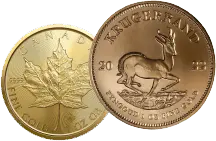
Sovereign coins: Minted by government mints – the U.S. Mint, Royal Canadian Mint, Perth Mint, and others. Examples include the 2025 1 oz Gold Eagle and the 2026 Silver American Eagle. These carry higher premiums but are universally recognized and easy to resell anywhere in the world.
Rounds: Coin-shaped discs made by private mints. No government face value. Lower premiums than sovereign coins, but slightly harder to sell quickly because buyers may not recognize the brand.
Purity matters too. Standard gold bullion runs .9999 fine (24 karat). Silver bullion is typically .999 fine. Platinum hits .9995. These figures appear stamped on every legitimate piece.
The Two Prices That Drive Every Bullion Decision
Spot Price
The spot price is the live global market price for one troy ounce of metal. It changes continuously during trading hours based on supply, demand, currency movements, and global events. Every legitimate dealer bases their pricing on it.
At the time of writing, spot prices are:
$4,180/oz
Gold (XAU)
$63/oz
Silver (XAG)
$1,634/oz
Platinum (XPT)
$1,272/oz
Palladium (XPD)
These numbers shift daily. Before you buy anything, check the current spot price on a financial data site. If a dealer quotes you a spot price that does not match what you see elsewhere, walk away.
The Premium
The premium is the amount above spot that you pay at retail. It covers minting costs, dealer overhead, shipping, insurance, and profit margin.
The formula is simple: Retail Price = Spot Price + Premium
A 1 oz silver round might carry a $3-5 premium over spot. A Silver American Eagle from the U.S. Mint typically runs $5-8 over spot because of its higher production cost and strong brand recognition. A 10 oz silver bar will carry a lower per-ounce premium than a 1 oz coin because it is cheaper to produce per ounce of metal.
💡 Tip: Smart buy rule: the closer your purchase price is to spot, the better your entry point. A 5% premium on a sovereign coin is reasonable. A 30% premium on a novelty item shaped like a skull is not an investment – it is a decoration.
Gold-to-Silver Ratio: A Practical Timing Tool
The gold-to-silver ratio tells you how many ounces of silver it takes to buy one ounce of gold. Divide the gold spot price by the silver spot price.
At the time of writing: $4,180 ÷ $63 ≈ 66.3
Historically, this ratio has ranged from around 15:1 in ancient times to over 120:1 during the COVID-19 market shock of 2020. The long-run average sits somewhere in the 50-70 range.
Ratio above 80: Silver is historically cheap relative to gold. Buyers leaning toward silver may get more metal for their money.
Ratio below 50: Gold is relatively cheap compared to silver. Investors may shift toward building gold positions.
Ratio in the 60-70 range (like now): Both metals are reasonably priced relative to each other. A balanced approach works well.
This is not a trading signal – it is a relative-value guide. Use it to tilt your buying, not to time the market perfectly.
Bullion Formats Compared: Bars, Coins, and Rounds
Choosing a format is really about balancing cost against liquidity. Here is how each stacks up:
Format
Premium Cost
Liquidity
Best For
Bars
Lowest (1-3%)
High for standard sizes
Larger budgets focused on efficiency
Sovereign Coins
Medium (4-8%)
Highest – recognized worldwide
Most investors
Rounds
Low (2-5%)
Medium – less recognized
Budget buyers who want coin shape at lower cost
Bars from our gold bar inventory are the most cost-efficient way to accumulate metal. A 10 oz gold bar costs far less per ounce in premium than ten 1 oz coins.
Sovereign coins like the 1 oz Gold Kangaroo from the Perth Mint or the Gold Maple Leaf series carry a premium, but that premium is partly justified by liquidity. Any coin dealer anywhere in the world knows what a Gold Eagle or Maple Leaf is. That recognition has real value when you want to sell.
Rounds split the difference. They look like coins, cost closer to bar prices, but require a buyer who is comfortable with private mint products. For a first-time buyer on a tight budget, rounds are a solid starting point.
Fractional Coins: Smaller Entry, Higher Premium
Fractional coins – the 1/10 oz Gold Maple Leaf, the 1/4 oz Australian Kangaroo, and similar products – let you buy gold at a lower dollar amount per piece. A 1/10 oz coin at $4,180 spot costs roughly $418 in metal content, plus a premium that runs higher per ounce than full-size coins.
Why? Because the minting cost for a 1/10 oz coin is almost the same as for a 1 oz coin, but the metal content is ten times smaller. That fixed cost gets spread over less metal, so the per-ounce premium jumps.
Fractional coins are useful for:
Gifting (easier to give a $450 coin than a $4,500 coin)
Building flexibility into a portfolio (easier to sell part of your holdings)
Starting out when capital is limited
If you are buying primarily for investment efficiency, stick to full-ounce products or bars. If you want flexibility or are buying as gifts, fractional coins earn their premium.
How Market Events Move Bullion Prices
Gold and silver prices do not move in a vacuum. Several forces push them up or down, and understanding them helps you buy at better moments.
What Moves Bullion Prices?
Is inflation rising?
Yes – gold tends to rise as a hedge. Consider increasing your position.
Is the U.S. dollar strengthening?
Strong dollar often pressures gold lower. May create a buying opportunity.
Are interest rates rising?
Higher rates can reduce gold’s appeal. Watch for dips.
Is there geopolitical instability?
Safe-haven demand typically pushes gold and silver higher.
Is silver industrial demand rising?
Solar panels, electronics, and EVs drive silver demand. Rising industry = rising price.
None of these relationships are absolute. They describe tendencies, not laws. But tracking them gives you context for why prices move on any given day.
For deeper analysis on how to read gold’s price signals, the gold price insights guide on our blog breaks down market forces in more detail.
Step-by-Step: How to Price a Smart Bullion Buy
Smart Bullion Buying Process
1
Step 1 – Check Spot Look up the current spot price before you do anything else. Use a financial data site. This is your baseline.
2
Step 2 – Calculate Melt Value Multiply spot price by the weight of the product. A 10 oz silver bar at $63/oz has a melt value of $630 at the time of writing.
3
Step 3 – Compare Premiums Find the same product at two or three dealers. Compare total price including shipping and any payment fees.
4
Step 4 – Choose Your Format Large budget? Bars. Smaller budget or want flexibility? Sovereign coins. Middle ground? Rounds.
5
Step 5 – Verify the Dealer Check reviews, years in business, and whether they have a physical location. Avoid dealers who hide fees.
6
Step 6 – Confirm the Specs Check weight and purity stamped on the product before finalizing.
7
Step 7 – Plan Storage Factor in the cost of a home safe, insurance, or vault storage before you commit.
⚠️ Warning: Red flag: any dealer who cannot tell you the spot price they are using, or who adds surprise fees at checkout, is not operating transparently. Get a full cost breakdown before you hand over payment.
Dollar-Cost Averaging: The Strategy That Removes Guesswork
Trying to buy at the absolute bottom is nearly impossible, even for professional traders. Dollar-cost averaging (DCA) removes that pressure.
The idea: invest a fixed dollar amount at regular intervals – say, $300 every month – regardless of where the price is. When prices are high, your $300 buys less metal. When prices dip, it buys more. Over time, your average cost per ounce smooths out.
DCA works especially well for silver, where prices are low enough that a monthly budget can buy a meaningful amount of metal. At $63/oz at the time of writing, $300 buys roughly 4.5 ounces of silver per month, not counting premiums.
This approach also removes the emotional component from buying. Panic-buying during a spike and panic-selling during a dip are the two fastest ways to lose money in precious metals.
Storage, Insurance, and the Real Cost of Ownership
Physical bullion is a physical asset. It needs a place to live, and that place needs to be secure.
Home safe: A one-time cost ranging from a few hundred dollars to several thousand depending on fire rating and size. Protects against casual theft but not a determined burglar with tools and time.
Home insurance rider: Most standard homeowner policies cap precious metals coverage at $1,000-$2,500. A scheduled rider or separate policy is needed for larger holdings. Expect to pay 1-2% of the insured value annually.
Vault storage: Third-party storage facilities charge monthly or annual fees, typically 0.1-0.5% of the stored value per year. Metal is insured and professionally secured, but you cannot hold it in your hands.
Factor these costs into your return calculation. If you are paying 0.5% per year in storage and insurance, your metal needs to appreciate by at least that much annually just to break even on carrying costs.
For retirement investors, a Gold or Silver IRA eliminates some of these headaches by holding metals in an IRS-approved depository. The precious metals IRA rollover guide on our blog explains how that structure works and who qualifies.
Common Myths About Buying Bullion
Bullion Myths vs. Facts
Pros
✓ FACT: You can start buying silver for under $70 – one ounce at current spot prices puts you in the market immediately.
✓ FACT: Sovereign coins and standard bars are highly liquid. Selling is straightforward through any reputable dealer.
✓ FACT: Gold has historically been less volatile than many equities during economic downturns, making it a genuine safe-haven asset.
✓ FACT: Precious metals are accessible to any budget. Fractional silver coins exist for buyers spending as little as $20-$30.
Cons
✗ MYTH: You need thousands of dollars to start investing in gold.
✗ MYTH: Bullion is hard to sell once you own it.
✗ MYTH: Gold and silver are too volatile to be useful as portfolio protection.
✗ MYTH: Precious metals are only for wealthy investors.
Why Accurate Precious Metals Is the Right Place to Buy
Accurate Precious Metals has been operating out of Salem, Oregon since 2012. In that time, the company has built a reputation backed by more than 1,000 five-star customer reviews – not because of marketing, but because of consistent pricing and straightforward service.
A few things set Accurate PMR apart from a typical coin shop or pawn operation:
Live pricing: Online prices update to reflect current spot prices, so what you see is based on real market data – not a number set last Tuesday.
Nationwide reach: Insured shipping ships bullion to buyers across the United States. You do not need to live in Oregon to buy from a dealer with a physical storefront and a real track record.
Breadth of inventory: Gold, silver, platinum, and palladium in coins, bars, and rounds. The full silver inventory includes everything from fractional rounds to 100 oz bars. Product pages like the Silver Bullion At Spot page show exactly what is available at competitive pricing.
IRA services: Accurate PMR offers Gold and Silver IRA services for retirement investors who want to hold physical metals in a tax-advantaged account.
NGC Authorized Dealer: For collectors interested in graded coins, Accurate PMR is an authorized NGC dealer, meaning coins can be submitted for professional grading through a trusted pipeline.
This is not a pawn shop. It is a specialized precious metals dealer with the inventory, expertise, and infrastructure to serve both first-time buyers and experienced investors.
Selling Your Bullion? We Buy Too.
If you already hold bullion and are considering selling, Accurate PMR buys back gold, silver, platinum, palladium, and more. Offers are based on current spot prices and are competitive with the broader market.
Local customers in the Salem, Oregon area are welcome to bring pieces in for an in-person evaluation. If you are anywhere else in the country, the mail-in service makes it easy – request a free insured shipping kit, send your metals, and receive payment quickly after evaluation.
Whether you are buying your first ounce or liquidating a collection, Accurate PMR handles both sides of the transaction. Call (503) 400-5608 or visit AccuratePMR.com to get started.
For more context on finding the best prices in the market, the nation’s best gold bullion prices blog post covers how to compare dealers and what to look for in a competitive offer.
Frequently Asked Questions
What is the difference between spot price and the price I actually pay?
The spot price is the global market price for one troy ounce of raw metal. The price you pay at retail includes a premium on top of that – covering minting, shipping, insurance, and dealer margin. At the time of writing, gold spot is about $4,180/oz; a 1 oz gold coin will cost more than that depending on the product.
Is silver a good buy right now?
At the time of writing, silver trades at about $63/oz and the gold-to-silver ratio sits near 66. That ratio is within the historical average range, meaning neither metal is dramatically over- or undervalued relative to the other. Silver's lower price per ounce makes it accessible for buyers with smaller budgets.
What is the cheapest way to buy gold?
Larger gold bars carry the lowest premiums over spot. A 10 oz or kilo bar will cost less per ounce than ten 1 oz coins. The trade-off is liquidity – bars are slightly harder to sell in partial amounts than individual coins.
How do I know if a dealer is trustworthy?
Look for a physical address, verifiable customer reviews, transparent fee structures, and clear disclosure of the spot price they are using. Dealers who hide fees or refuse to break down costs are a red flag. Accurate PMR has a physical location in Salem, Oregon and over 1,000 five-star reviews on record.
Can I buy gold or silver for my IRA?
Yes. A self-directed IRA can hold IRS-approved gold and silver bullion, including American Eagles and certain bars meeting purity requirements. Accurate PMR offers IRA services to help set this up. The IRA rollover guide on our blog explains the process.
What is the gold-to-silver ratio and how do I use it?
Divide the gold spot price by the silver spot price. At the time of writing, that is $4,180 ÷ $63 ≈ 66. A higher ratio (80+) historically suggests silver is cheap relative to gold. A lower ratio (below 50) suggests the opposite. Use it as a relative-value guide, not a precise buy/sell signal.
Do I need to pay taxes when I sell bullion?
In most cases, yes. Precious metals are treated as collectibles by the IRS and gains may be subject to capital gains tax. Keep your purchase receipts. Consult a tax professional for advice specific to your situation.
Make the smart choice — invest with Accurate Precious Metals
Whether you are buying bullion for the first time or adding to a long-term position, our team offers expert guidance, transparent pricing, and a reliable buyback program.