This content is for educational purposes only and is not financial or investment advice. Precious metals prices fluctuate; past performance does not guarantee future results. Consult a qualified professional before making investment decisions.
Tap the image to enlarge and zoom.Hover to magnify, or click to open full screen.
Collectors who want to expand their collection through trade networks gain something that retail buying alone rarely delivers: access. Access to rarer dates, better grades, more competitive prices, and the kind of specialized material that never sits on a shelf for long. Whether you collect gold coins, silver bullion, vintage type coins, or a mix of all three, trade networks are the fastest way to turn what you already own into something closer to what you actually want.
This guide covers how trade networks work in practice, how pricing is evaluated in a trade, and the specific steps you can take to build a stronger, more focused collection – without just spending more money.
What Trade Networks Actually Are
A trade network is any combination of relationships and venues that lets collectors exchange, buy, and sell outside of standard retail. It is not one thing. It is a system.
Local coin shops and bullion dealers are the foundation. You walk in with what you have, discuss current spot prices, and either sell outright or arrange a trade. Face-to-face transactions let you inspect items in person and build the kind of trust that is hard to replicate online.
Coin clubs and numismatic communities add a layer of knowledge. Members share leads, discuss grades, and sometimes arrange private swaps. The inventory is limited, but the relationships are often the most reliable in the network.
Coin shows bring dealers and collectors together in one place. You can compare prices across many tables, sell duplicates, and find niche material that would take months to locate otherwise.
Online forums and marketplaces extend your reach nationally and internationally. You can find obscure varieties, compare prices across a wide market, and research any coin before committing. The trade-off is more verification work and a higher risk of counterfeits or misrepresented grades.
The strongest collectors use all four. Local trust, community knowledge, show access, and online price comparison work together better than any one channel alone.
Why Expanding a Collection Through Trade Networks Works
The core advantage is that trading can move your collection forward without requiring a full cash outlay every time. Instead of selling one coin, waiting for funds to clear, and then buying another at full retail, you trade directly – and often at better effective pricing for both parties.
There are four reasons collectors rely on trade networks specifically:
Quality upgrades: trade several lower-grade or duplicate pieces for one better example. One strong coin often adds more long-term value than three marginal ones.
Theme refinement: a broad collection of random pieces is harder to grow and harder to sell. A focused date set, mint set, or type collection is easier to complete and more attractive to future buyers.
Cost reduction: trading cuts out the buy-sell spread you would otherwise pay twice – once when you sell, once when you buy at retail.
Scarcity access: some coins appear through relationships before they ever reach open inventory. A dealer or club member who knows what you want will call you first.
For gold and silver collectors, this matters even more because the market has two distinct layers of value. Melt value is based purely on metal content. Collector premium is the extra amount a coin commands because of rarity, condition, historical significance, or demand. Understanding both layers is what separates strategic traders from casual buyers.
How Pricing Works in a Trade
Every trade starts with a baseline: the metal’s spot price. At the time of writing, spot prices are approximately:
From that baseline, dealers and collectors add or subtract premium based on condition, demand, and scarcity. A one-ounce silver coin with no numismatic value trades near the $65/oz silver spot price at the time of writing. A scarce date in high grade may trade at two, three, or even ten times melt – because collectors want it specifically, not just for its metal content.
This is why two coins with identical metal content can have completely different trade values. A common-date 1 oz Silver Canadian Maple Leaf and a key-date Morgan dollar both contain roughly one ounce of silver, but they are not equivalent in a trade. The Morgan carries numismatic premium. The Maple Leaf trades close to spot.
When you enter a trade negotiation, know both numbers: what the metal is worth at spot, and what the market pays for that specific coin in that specific grade. Recent auction results, dealer asking prices, and price guide data are all useful comps.
Types of Trade Networks: A Comparison
Network Type
How It Works
Best For
Main Risk
Local coin shops
Face-to-face buying, selling, and trading based on spot price
Quick deals, authentication help, building trust
Offers may be lower than strong private sales
Coin clubs
Members share knowledge and arrange private trades
Learning, niche items, repeat contacts
Limited inventory
Coin shows
Many dealers and collectors in one venue
Comparing prices, upgrading, selling duplicates
Impulse buying
Online forums and groups
Collectors exchange information and trade leads
Rare varieties, broad reach, research
Counterfeits, poor grading, scams
Auctions
Competitive bidding for scarce items
High-end or hard-to-find coins
Fees and bidding pressure
Step-by-Step: How to Expand Your Collection Through Trade Networks
The goal is not to trade everything for more stuff. It is to trade with a specific outcome in mind. Here is a practical process.
Building Your Trade Strategy
1
Know your target Decide whether you are building a date set, a type collection, a mint set, a bullion stack, or a proof series. Vague goals produce vague results.
2
Catalog what you own Record date, mint, grade, purchase price, and a current market estimate for every piece. This tells you what is expendable and what is core.
3
Identify duplicates These are your trading currency. Duplicates do not weaken your collection when you trade them – they fund its growth.
4
Research market comps Check recent auction results, dealer asking prices, and price guides before any swap. Know what both sides of the trade are worth.
5
Build relationships first A trusted dealer or club member who knows your want list will contact you when something relevant appears. That access is worth more than any single transaction.
6
Execute and record Document every trade with photos, descriptions, and agreed values. This matters for insurance, taxes, and future resale.
Specific Coins That Work Well in Trade Networks
Certain coins move easily through trade networks because they are widely recognized, liquid, and carry predictable premiums. These are worth knowing if you plan to use trading as a growth strategy.
American Gold Eagles are among the most traded gold coins in the U.S. market. Their .9167 fine gold content and U.S. Mint backing make them universally accepted. Fractional sizes – 1/10 oz, 1/4 oz, 1/2 oz – are especially useful in trades because they allow for more precise value matching without large cash adjustments.
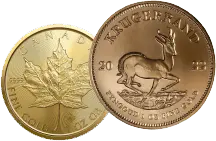
Gold Maple Leafs from the Royal Canadian Mint are .9999 fine and recognized worldwide. The 2026 1/4 oz Gold Maple Leaf and 2026 1/10 oz Gold Maple Leaf are practical trade pieces for collectors who want fractional gold with high purity and strong liquidity.
Australian Kangaroo Gold Coins from the Perth Mint are another globally recognized option. The 2026 1/10 oz Australian Kangaroo Gold Coin trades well in networks that include international collectors.
Widely held bullion rounds and coins like these are the easiest starting point for anyone new to trading, because both parties understand the value immediately.
Common Mistakes That Slow Collection Growth
Most collectors who struggle with trade networks make the same few errors. Knowing them in advance saves time and money.
Trading on emotion. A coin that looks impressive may not fit your collection plan or justify its price in a trade. Stick to your target list.
Ignoring the spread. Dealers buy below retail and sell above it – that is how a business operates. The gap between buy and sell price is real, and it affects every trade. Factor it in before agreeing to terms.
Assuming metal weight equals trade value. Two coins with the same silver content are not automatically equal in a trade. Numismatic premium, grade, and demand all affect value independently of metal weight.
Skipping verification. For any high-value gold or silver item, inspect it carefully before accepting it. Reputable dealers use XRF analysis and other methods to evaluate metal content. For graded coins, check the holder and the coin together – a genuine slab with a switched coin is a known fraud.
Over-trading. More transactions do not build a better collection. Churn creates cost and confusion. Focused upgrades – fewer, better trades – produce stronger results.
⚠️ Warning: Avoid trading high-grade or key-date coins without verifying current market comps. A coin that “seems fair” in a trade may be significantly undervalued if you have not checked recent auction results.
Building Trust in Trade Networks
Trust is the currency of a good trade network. Without it, every transaction requires more verification, more documentation, and more time. With it, deals happen faster and better material comes your way first.
Building trust starts with being reliable. Show up when you say you will. Honor agreed prices. Disclose known flaws in items you offer. Collectors and dealers remember who deals straight.
Established dealers are a natural anchor for trust. A dealer who has been in business for years, maintains a strong review record, and operates transparently is a reliable reference point – both for pricing and for introductions to other serious collectors.
Coin clubs and numismatic societies add a community layer. Members vouch for each other, share grading knowledge, and often have access to material that never reaches the open market. Joining one is one of the highest-return moves a collector can make early in their hobby.
For collecting tips and tricks that go beyond basic buying, building these relationships is where most long-term collectors say the real growth happened.
How Accurate Precious Metals Fits Into Your Trade Network
Accurate Precious Metals, based in Salem, Oregon, is one of the most practical anchors for a serious collector’s trade network. In business since 2012 and more than 1,000 five-star customer reviews, the team brings real depth to both buying and selling conversations.
The inventory covers gold, silver, platinum, and palladium in coin, bar, and bullion form – plus diamonds and jewelry. Whether you are looking to add fractional gold coins, silver bars, or specific numismatic pieces, the selection is broad enough to support active trading strategies. Pricing is updated to reflect live spot prices, so you are always working from current market data.
For collectors who want to move pieces out of their collection, Accurate Precious Metals buys all precious metals: bullion coins, bars, scrap gold, jewelry, silverware, and more. If you are local to Salem, Oregon, you can bring items in person for a direct evaluation. If you are anywhere else in the United States, the mail-in program makes it straightforward – free insured shipping, professional evaluation, and fast payment.
Accurate Precious Metals is also an NGC Authorized dealer, which means grading services are available for collectors who want to have coins professionally evaluated before trading or selling. That matters when you are trying to establish accurate value in a trade negotiation.
For retirement investors, Gold and Silver IRA services are available – a useful option for collectors whose holdings have grown into meaningful portfolio positions.
The bottom line: whether you are building a collection, upgrading it through trades, or converting pieces into cash, Accurate Precious Metals gives you a trusted, experienced partner. Visit the Salem location in person, call (503) 400-5608, or explore what we buy and sell online to get started.
ℹ️ Info: Accurate Precious Metals ships nationwide with insured delivery. Collectors outside Oregon can use the mail-in service to sell or evaluate pieces without leaving home.
Frequently Asked Questions
What is the best starting point for using trade networks to expand a collection?
Start by cataloging what you already own, identifying duplicates, and deciding on a clear collecting goal. Duplicates are your trading currency. A clear goal tells you what to trade toward.
How do dealers determine trade value for gold and silver coins?
Most trades begin with the metal's spot price as a baseline. At the time of writing, gold is approximately $4,156/oz and silver is approximately $65/oz. From there, dealers add or subtract premium based on the coin's grade, rarity, and collector demand.
Is it better to trade locally or online?
Both have advantages. Local trades are faster, allow in-person inspection, and build relationships. Online trades reach a wider market and can surface rarer material. Experienced collectors use both.
How do I know if a trade is fair?
Check recent auction results, dealer asking prices, and price guides for both items involved. Know the melt value and the numismatic premium separately. If you cannot verify both, take more time before agreeing.
Can I use Accurate Precious Metals as part of my trade network?
Yes. Accurate Precious Metals buys and sells gold, silver, platinum, palladium, coins, and bullion. Local collectors can visit the Salem, Oregon location. Collectors anywhere in the U.S. can use the mail-in service for a competitive offer on items they want to sell.
Do I need to grade my coins before trading them?
Not always, but for higher-value pieces it helps. A professionally graded coin in a certified holder is easier to price and easier to sell or trade because both parties can verify the grade independently. Accurate Precious Metals is an NGC Authorized dealer and can assist with grading services.
What coins are easiest to trade in a network?
Widely recognized bullion coins – American Gold Eagles, Gold Maple Leafs, Silver Eagles, Silver Maple Leafs – are the most liquid because both parties understand their value quickly. Numismatic coins require more research but can offer better trade value if graded and documented.
Make the smart choice — invest with Accurate Precious Metals
Whether you are buying bullion for the first time or adding to a long-term position, our team offers expert guidance, transparent pricing, and a reliable buyback program.