This content is for educational purposes only and is not financial or investment advice. Precious metals prices fluctuate; past performance does not guarantee future results. Consult a qualified professional before making investment decisions.
Tap the image to enlarge and zoom.Hover to magnify, or click to open full screen.
If you have ever searched for a cash for gold refinery near you, you already understand the basic appeal: skip the pawn shop, skip the middleman, and get paid closer to what your gold is actually worth. That idea is sound. But the path from gold item to cash payout has a few steps most sellers do not fully understand – and those gaps can cost real money.
This guide walks through how the refinery model works, what kinds of items make sense for it, how payouts are built, and where Accurate Precious Metals fits into the picture for sellers across the country.
What a Refinery Actually Does
A refinery is a metal processor. Its job is to take raw or used precious-metal material – jewelry, scrap, ore, industrial byproducts – and separate the valuable metal from everything else. The output is high-purity metal that can be reused in bullion, jewelry manufacturing, electronics, or industrial applications.
The process typically involves melting the material, testing it to determine metal content, and then using chemical or electrolytic methods to push purity higher. The Perth Mint describes refining as a process designed to produce bullion-quality metal. Pease & Curren notes that final gold purity can reach 99.99% after full processing.
That high-purity output is the whole point. A refinery is not interested in what your grandmother’s bracelet looks like or what year a coin was minted. It wants to know how much recoverable gold, silver, platinum, or palladium is in the material. That distinction matters enormously for sellers.
Why “Eliminate the Middleman” Makes Sense for Scrap
In a traditional cash-for-gold chain, your item might pass through several hands before it reaches a refinery. A pawn shop buys it from you at a low price, sells it to a broker, who sells it to a larger buyer, who eventually sends it to a refiner. Each stop in that chain takes a margin.
Selling directly to a refinery – or to a dealer who works directly with refineries – compresses that chain. Fewer hands means less margin extracted before you get paid. That is the core argument behind direct-to-refinery selling, and it is a legitimate one for straightforward scrap lots.
The key word is straightforward. If you have broken chains, mismatched earrings, and dental gold, the refinery model works well. If you have a rare coin or a signed piece of estate jewelry, the refinery model may actually cost you money – because it pays for metal content, not rarity or provenance.
When Direct-to-Refinery Selling Works Best
Pros
✓ You have scrap gold, broken jewelry, or mixed karat pieces with no collector value
✓ You want to avoid the pawn shop markup chain
✓ You have weighed your items and know the approximate metal content
✓ You have already separated any collectible or numismatic pieces
Cons
✗ Rare coins, vintage signed jewelry, or branded pieces may be worth far more than melt value
✗ A specialized buyer or auction may outperform a refinery offer on collectibles
✗ Items with unknown purity require assaying before an accurate offer is possible
How Payout Is Calculated at a Cash for Gold Refinery
The basic formula is: spot price x weight x purity x recoverability, minus the refiner’s costs. Each of those variables matters.
Spot price is the current market benchmark for a troy ounce of pure metal. At the time of writing, gold trades at about $4,415 per ounce. Silver sits at around $72 per ounce. Platinum is near $1,851 per ounce, and palladium is around $1,318 per ounce.
Weight is measured in troy ounces. One troy ounce is 31.1 grams – slightly heavier than a standard ounce. Sellers who weigh their items on a kitchen scale using standard grams need to convert before comparing offers.
Purity is where most sellers get surprised. A 14K gold ring is 58.3% gold by weight. The rest is copper, silver, or other alloys. A 10K piece is only 41.7% gold. Sterling silver is 92.5% silver. The refinery pays on the recoverable metal content, not the total weight.
Recoverability accounts for the fact that refining is not 100% efficient. Some metal is lost in processing. The refiner builds that into the offer.
The result is that a seller’s payout is always below spot price. That is not a trick – it is the cost of the service. The question is how far below spot, and whether a different buyer or channel would do better.
What Items Are Commonly Sold Through the Refinery Channel
Refineries and precious-metal buyers handle a wide range of material:
Gold jewelry of any karat – broken, worn, or intact
Some buyers accept mixed lots and sort them internally, assaying each component separately. That is useful for sellers who do not want to spend time separating every piece by metal type.
One important note: not everything gold-colored is gold. Plated pieces, gold-filled items, and base-metal alloys with a thin gold surface have far less recoverable metal than they appear to. A proper assay or XRF test will reveal the actual content. Sellers who assume a plated item is solid gold will be disappointed by the offer – and rightfully so.
Gold Bars and Coins: A Different Calculation
Gold bars and bullion coins are a different category from scrap. A 1 oz gold bar at .9999 fine purity contains almost exactly one troy ounce of pure gold. The melt value is essentially spot price minus a small processing margin. There is very little ambiguity.
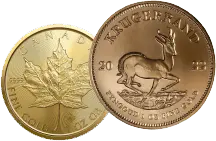
The same logic applies to major bullion coins. A 2025 1 oz Gold Eagle contains one troy ounce of gold at .9167 fine. Its melt value is calculable to the dollar. But bullion coins also carry a premium over melt because they are recognizable, liquid, and in demand from investors. That premium means they are often worth more than melt value when sold to the right buyer.
This is a critical distinction. Selling a Gold Eagle to a refinery for melt value leaves the numismatic and liquidity premium on the table. A specialist dealer who can resell the coin to another investor will typically pay more.
How to Sell Gold to a Refinery or Specialist Dealer
1
Step 1 Separate your items – scrap and broken pieces in one pile, coins and bullion in another. Mixed lots can obscure value.
2
Step 2 Identify purity marks – look for 10K, 14K, 18K, 925, or platinum stamps. Unknown purity requires testing before an offer.
3
Step 3 Weigh your items in grams, then convert to troy ounces (divide grams by 31.1) for comparison against spot price.
4
Step 4 Check current spot prices at the time of the offer – gold, silver, platinum, and palladium each have their own benchmark.
5
Step 5 Get an offer from a reputable buyer. Ask whether assay fees, shipping, or handling charges are deducted before payment.
6
Step 6 For coins or branded pieces, get a second opinion from a specialist before accepting a melt-value offer.
Common Misconceptions About Cash for Gold Refineries
Spot price is not your payout. Spot is the benchmark. Your offer is spot minus purity adjustment, weight conversion, and the buyer’s margin. That is true everywhere – pawn shops, refineries, and dealers alike. The difference is how large that margin is.
Not all cash-for-gold businesses are the same. Some are true refiners who process metal on-site. Some are brokers who collect material and ship it to a refiner. Some are retail buyers who resell to a broker who sells to a refiner. The longer the chain, the more margin is extracted before you get paid.
Refineries do not pay for rarity. A 1909-S VDB Lincoln cent melted for copper is worth pennies in metal. Its collector value is thousands of dollars. The refinery sees only the copper. Always identify potentially collectible items before selling for melt.
Direct to refinery is not always the highest payout. For common scrap, it often is. For coins, branded jewelry, or vintage pieces with collector appeal, a specialized dealer or auction will typically outperform a melt-value offer.
⚠️ Warning: Always get a second opinion on coins, vintage pieces, or branded jewelry before accepting any melt-value offer. The difference between melt value and collector value can be substantial.
Why Pawn Shops Pay Less
Pawn shops are generalists. They buy and sell everything from electronics to guitars to gold. They do not have the infrastructure to assay metal accurately, and they need a wide margin to cover the risk of mispricing.
The result is that pawn shops typically offer a smaller percentage of melt value than a specialist buyer. They also need room to resell – either to another buyer or to a refiner. That extra step costs the seller money.
A specialized precious metals dealer who works directly with refineries can offer more because the chain is shorter and the expertise is deeper. That is the practical meaning of “eliminate the middleman.”
Selling Gold Online: The Mail-In Option
Many sellers are not near a refinery or specialist dealer. For them, the mail-in model solves the problem. A reputable dealer ships you a kit, you send your items with insured delivery, and you receive an offer based on tested metal content.
The key questions to ask any mail-in buyer:
Is shipping insured? If your package is lost, who covers it?
How is purity determined – by visual inspection, acid test, or XRF analysis?
How quickly is payment issued after evaluation?
What happens if you decline the offer – are items returned at no charge?
These are reasonable questions, and any reputable buyer will answer them clearly.
Why Accurate Precious Metals Is the Right Choice
Accurate Precious Metals has been buying and selling precious metals since 2012. With more than 1,000 five-star reviews and a physical location in Salem, Oregon, the business is built on repeat customers and fair offers – not one-time transactions.
Unlike a pawn shop, Accurate Precious Metals is a specialist. The team evaluates gold, silver, platinum, and palladium items with the expertise to recognize both scrap value and collector value. That matters because a buyer who cannot tell the difference between common scrap and a rare coin will either underpay you or overpay – and neither outcome is good long-term.
For sellers who want to get cash for gold without driving across town, the mail-in program at AccuratePMR.com handles the entire process remotely. Items are shipped with insured delivery, evaluated for metal content, and offers are issued based on current spot prices. If you accept, payment is fast. If you decline, your items come back.
Local customers in the Salem area can visit in person and get a same-day evaluation. The team handles everything from broken jewelry and dental gold to gold bars and coins, silverware, luxury watches, and diamonds. If you are in the area, stopping in is the fastest way to get an offer.
For anyone outside Oregon, the mail-in jewelry service covers the entire United States with insured shipping included. There is no reason geography should cost you money on your payout.
Accurate Precious Metals also offers Gold and Silver IRA services for retirement investors who want to hold physical metal in a tax-advantaged account. That breadth – from scrap buying to IRA services to numismatic coin dealing as an NGC Authorized dealer – makes it a genuinely full-service option rather than a narrow cash-for-gold window.
If you are ready to sell your gold online or want to understand what your items are worth before committing, the team is reachable at (503) 400-5608 or through AccuratePMR.com. Prices are updated to reflect live spot prices, so the offer you receive reflects the market at the moment you sell – not a stale number from last week.
Frequently Asked Questions
What is a cash for gold refinery?
A cash for gold refinery is a business that buys gold, silver, platinum, or palladium items, pays the seller based on recoverable metal content, and then processes the material into high-purity metal for reuse. The appeal is that selling closer to the refinery level can reduce the number of middlemen taking a margin before you get paid.
Will I get spot price for my gold?
No. Spot price is the market benchmark for one troy ounce of pure metal. Your payout is based on the actual metal content of your item, adjusted for purity, weight, and the buyer’s processing costs. At the time of writing, gold spot is about $4,415 per ounce, but a 14K gold ring contains only about 58% gold by weight, so the melt value starts well below spot before any fees.
Should I sell my gold coins to a refinery?
Not necessarily. Bullion coins and numismatic coins often carry a premium over melt value because investors and collectors pay for their recognizability and liquidity. Selling a Gold Eagle or a rare date coin to a refinery for melt value leaves that premium behind. A specialist dealer will typically pay more for coins than a refinery will.
How do I know if my jewelry is real gold?
Look for a karat stamp – 10K, 14K, 18K, or 24K are the most common. Items without a stamp can be evaluated through XRF testing or acid testing by a specialist. Plated or gold-filled items have far less recoverable gold than solid karat pieces.
How does the mail-in gold selling process work?
You request a kit from the buyer, pack your items securely, and ship with insured delivery. The buyer evaluates the metal content, makes an offer, and issues payment if you accept. If you decline, your items are returned. Accurate Precious Metals offers this service nationwide through AccuratePMR.com.
Is Accurate Precious Metals a pawn shop?
No. Accurate Precious Metals is a specialized precious metals dealer in business since 2012. The focus is entirely on gold, silver, platinum, palladium, coins, bullion, and related items – not general merchandise. That specialization means more accurate evaluations and more competitive offers than a general pawn shop can provide.
What metals does Accurate Precious Metals buy?
Gold, silver, platinum, and palladium in all forms – jewelry, scrap, coins, bars, bullion rounds, dental gold, silverware, and more. The team also buys diamonds and luxury watches. Both in-person visits in Salem, Oregon and nationwide mail-in service are available.
Make the smart choice — invest with Accurate Precious Metals
Whether you are buying bullion for the first time or adding to a long-term position, our team offers expert guidance, transparent pricing, and a reliable buyback program.