This content is for educational purposes only and is not financial or investment advice. Precious metals prices fluctuate; past performance does not guarantee future results. Consult a qualified professional before making investment decisions.
Selling gold coins without loss is a realistic goal – but only if you understand how gold coin pricing actually works before you walk into a dealer or ship your coins anywhere. Most sellers lose money not because gold dropped, but because they made avoidable mistakes: selling to the wrong buyer, misidentifying what they owned, or ignoring the spread between what they paid and what a buyer will offer.
This guide breaks down every factor that affects your payout – spot price, premiums, coin type, taxes, and buyer selection – so you can sell smarter and keep more of what your coins are worth.
“Without loss” means different things depending on your starting point. There are three ways to measure it.
The first is no loss versus melt value – you sell at or near the intrinsic gold content value. The second is no loss versus purchase price – you recoup what you originally paid, including any premiums and fees. The third is no loss versus collector potential – you do not undersell a coin that has numismatic value above its metal weight.
The hardest standard to hit is the second one. Most gold coins are bought at a premium above spot price and sold back at a slight discount to spot. That gap – called the spread – is normal in precious metals markets. The goal is to close that gap as much as possible, not eliminate it entirely.
How Gold Coin Pricing Works
Every gold coin price starts with the spot price – the current market price of one troy ounce of pure gold. At the time of writing, gold is trading at approximately $4,195 per ounce. That figure anchors the melt value of any gold coin.
From there, the price moves up or down based on several factors:
Authenticity – A coin must be genuine before any value is assigned.
Purity – A coin marked .9999 fine has more gold per ounce than one marked .9167 (22-karat).
Weight – Full-ounce coins carry more intrinsic value than fractional ones.
Condition – Wear, scratches, and cleaning reduce collector value, though not melt value.
Rarity and demand – Scarce dates, mint marks, and high grades push prices above melt.
Ease of resale – Common bullion coins sell faster, which means dealers pay closer to spot for them.
A dealer buying your coin needs to cover overhead, resale risk, and margin. That is why offers typically land below retail. Understanding this going in prevents disappointment and helps you evaluate offers accurately.
Bullion Coins vs. Numismatic Coins – Know the Difference
This is the most important distinction in gold coin selling. Treating every coin the same is how sellers leave money on the table.
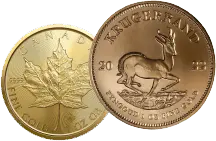
Bullion coins are produced primarily for their metal content. Examples include the American Gold Eagle, the Gold Canadian Maple Leaf, and the Gold Britannia. These coins trade at a modest premium over spot when new and are priced mostly as commodities when resold. They are liquid, widely recognized, and easy to sell.
Numismatic coins are valued for rarity, historical significance, date, mint mark, and condition. A pre-1933 U.S. gold coin in excellent condition can sell for many times its melt value. But that premium only materializes with the right buyer – a scrap dealer will not pay for it.
Semi-numismatic coins sit between the two. They carry some collector interest but also trade partly on metal value.
Fractional coins – such as 1/4 oz or 1/10 oz pieces – carry higher premiums per ounce because minting costs are spread across less gold. Sellers should compare offers carefully on fractional coins, since the per-ounce spread can be wider. For more on how these categories affect value, the difference between numismatic and bullion is worth reviewing before you sell.
Gold Coin Value Timeline
Pre-1933
U.S. gold coins circulated as currency Many now carry significant numismatic premiums above melt
1933
U.S. ends gold coin circulation Surviving pre-1933 coins become collector pieces
1986
American Gold Eagle launched First modern U.S. bullion coin, now one of the most liquid globally
1979
Canadian Maple Leaf introduced One of the purest bullion coins at .9999 fine gold
Today
Spot price at ~$4,195/oz Bullion coin melt values near historic highs
Why Sellers Lose Money – and How to Avoid It
The most common mistakes are predictable. Sellers rush. They accept the first offer. They do not know whether their coin is bullion or collectible. They clean the coin before selling, which destroys collector value. They ignore taxes. Each of these mistakes costs real money.
Common Selling Mistakes
Pros
✓ Getting multiple quotes before committing
✓ Identifying coin type, date, mint mark, and condition first
✓ Selling rare coins to specialist buyers or auction venues
✓ Keeping records of purchase price and sale price for taxes
✓ Timing the sale when gold prices are strong
Cons
✗ Selling to the first buyer without comparing offers
✗ Cleaning coins – this permanently reduces numismatic value
✗ Treating rare coins like scrap gold
✗ Ignoring tax implications that reduce net return
✗ Selling fractional coins without accounting for higher spreads
The Role of Spot Price in Your Payout
Spot price sets the floor for any gold coin sale. At the time of writing, gold is approximately $4,195 per ounce. A one-ounce coin with .9999 purity has a melt value right around that figure. A 22-karat coin – such as the American Gold Eagle at .9167 fine – contains slightly less pure gold per ounce, so the melt value adjusts accordingly.
Dealers do not pay spot. They pay a percentage of spot that allows them to resell at or above spot and cover their costs. The closer a dealer’s offer is to spot, the better the deal for you. Comparing offers from multiple buyers is the single most effective way to find who is paying closest to the market rate.
Watch spot price trends before selling. If gold has been rising, waiting for a stronger day can meaningfully improve your payout. If you need cash quickly, that flexibility disappears – which is another reason not to sell under pressure.
Taxes and Reporting – What Affects Your Net Return
A strong sale price can still feel like a loss if you ignore taxes. In the U.S., profits from selling gold coins are treated as capital gains and must be reported. Holding a coin for more than one year before selling may qualify you for long-term capital gains treatment, which typically carries a lower tax rate than short-term gains.
Dealers may also have reporting obligations depending on the payment method, quantity sold, and transaction structure. Large cash transactions can trigger additional requirements.
ℹ️ Info: Keep purchase invoices, sale records, shipping costs, insurance, storage fees, and appraisal costs. These documents establish your cost basis, which directly reduces your taxable gain. Missing records mean you may owe taxes on the full sale price rather than just the profit.
The bottom line: calculate your expected net return after taxes, not just the offer price. A slightly lower offer from a buyer who handles the paperwork cleanly may beat a higher number with complications.
How to Choose the Right Buyer for Your Coins
Buyer type matters as much as offer price. Not every buyer is equipped to evaluate every coin.
For common bullion coins: Reputable precious metals dealers are the best fit. They know current spot prices, move inventory quickly, and typically pay closer to melt than pawn shops or general resellers. If you want to sell my gold without the hassle of local negotiations, a mail-in service from a trusted dealer is a practical option.
For rare or graded coins: Numismatic specialists, auction houses, or dealers with grading expertise are the right call. A bullion buyer will pay melt. A collector buyer may pay several times that. Selling a rare coin to the wrong buyer is one of the most expensive mistakes in this space.
For damaged or worn coins: Melt value is usually the ceiling. But even damaged coins deserve a proper assessment – some dates and mint marks carry value regardless of condition.
Avoid pawn shops for anything beyond the most basic scrap. Their margins are wide and their coin expertise is often limited.
Selling Gold Coins Without Loss – A Step-by-Step Approach
How to Maximize Your Gold Coin Payout
1
Identify your coin Note the denomination, year, mint mark, purity, and weight. Look up whether it is a bullion or numismatic piece.
2
Check current spot price At the time of writing, gold is approximately $4,195/oz. Use this as your melt value anchor.
3
Research collector value Search recent auction results or dealer buyback prices for your specific coin, date, and grade.
4
Get at least three offers Contact multiple buyers – local dealers, online buyers, and mail-in services. Compare offers side by side.
5
Review tax implications Estimate your capital gain and factor in whether you qualify for long-term rates.
6
Choose the best buyer for your coin type Bullion to a bullion dealer, rare coins to a numismatic specialist.
7
Complete the sale with documentation Keep all records of the transaction for tax purposes.
Selling to Accurate Precious Metals – In Person or by Mail
Accurate Precious Metals has been buying gold coins since 2012 from customers across the United States. With more than 1,000 five-star reviews, the company has built a reputation for fair, competitive offers based on current spot prices – not the lowball figures common at pawn shops or general resellers.
As an NGC Authorized dealer, Accurate Precious Metals has the expertise to properly assess both bullion and numismatic coins. That means a coin with collector value gets evaluated as such – not priced as scrap.
If you are in the Salem, Oregon area, you can bring your coins in for an in-person assessment at the physical location. The team evaluates coins on the spot and makes offers the same day.
If you are anywhere else in the United States, the mail-in service makes the process straightforward. You request a kit, ship your coins with insured delivery, and receive a competitive offer fast. There are no hidden fees eating into your payout. For anyone looking to sell gold coins by mail, this is one of the most accessible routes available nationwide.
Accurate Precious Metals also offers Gold and Silver IRA services for sellers who want to reinvest proceeds into a retirement account rather than take cash. That option is worth asking about if you are selling a significant quantity.
💡 Tip: Do not clean your coins before sending them or bringing them in. Cleaning removes the natural patina that collectors value and can permanently reduce a coin’s numismatic grade – even if it makes the coin look shinier to you.
Frequently Asked Questions
Can I really sell gold coins without losing any money?
You can minimize loss significantly, but eliminating it entirely is difficult if you bought at retail. Retail prices include premiums above spot. When you sell, buyers pay closer to spot. The gap narrows when you choose the right buyer, sell common bullion coins, and time the sale well.
What is the melt value of a gold coin right now?
At the time of writing, gold spot is approximately $4,195 per ounce. A one-ounce .9999 fine gold coin has a melt value close to that figure. Coins with lower purity or fractional weight have proportionally lower melt values.
Should I sell a rare gold coin to a bullion dealer?
No. A bullion dealer will typically offer melt value. A rare coin with numismatic demand should go to a specialist, auction house, or a dealer with numismatic expertise – such as an NGC Authorized dealer – who can assess and pay for its collector value.
Does cleaning a coin before selling help?
No. Cleaning reduces numismatic value. It removes natural patina and can leave micro-scratches that lower a coin's grade. Sell coins in the condition they are in.
Are there taxes on gold coin sales?
Yes. Profits from selling gold coins are capital gains in the U.S. and must be reported. Holding for more than one year may qualify you for lower long-term capital gains rates. Keep all purchase and sale records to establish your cost basis accurately.
How do I sell gold coins if I am not near a dealer?
Accurate Precious Metals offers a nationwide mail-in service with insured shipping. You can request a kit, ship your coins safely, and receive a competitive offer without leaving home.
What types of gold coins does Accurate Precious Metals buy?
Accurate Precious Metals buys all types – bullion coins, numismatic coins, fractional gold, and foreign gold coins. Both common bullion and rare collector pieces are welcome.
Make the smart choice — invest with Accurate Precious Metals
Whether you are buying bullion for the first time or adding to a long-term position, our team offers expert guidance, transparent pricing, and a reliable buyback program.