

Why the 1883 Liberty Seated half dollar Is So Rare Today

Disclaimer
Accurate Precious Metals is not a financial advisor. We encourage everyone to consult a financial advisor or CPA. They can help determine the best investment strategies. Our mission is to provide educational content about precious metals. Accurate Precious Metals is committed to transparency and reliability. They offer top-tier precious metal products and information.
This information is subject to change due to market fluctuations, world events, and factors beyond our control. Additionally, the content may not fully reflect our company’s values, as personnel, staff, and authorship may change over time.
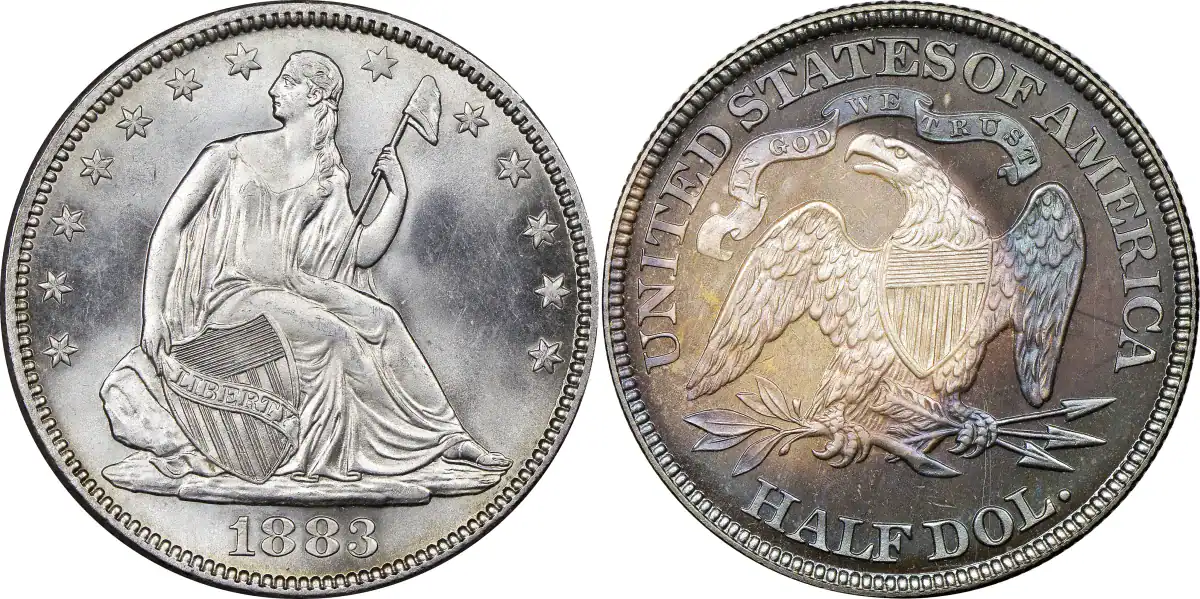
The 1883 Liberty Seated half dollar stands among the most coveted coins in the entire Seated Liberty series – not because of fame, but because of scarcity backed by hard numbers. With only 8,000 business strikes produced at the Philadelphia Mint and an estimated 1,200 survivors across all grades, this coin challenges even experienced collectors. Whether you stumbled across one in an old collection or are actively hunting it for a set, understanding why it is so rare – and what it is genuinely worth – is the first step.
This article walks through the coin’s history, design, survival data, current market values, and practical guidance for buyers and sellers alike. The research draws from PCGS population data, Greysheet pricing, and auction records to give you a grounded picture of what the 1883 half dollar actually represents in today’s market.
The Design and Physical Specifications
Lady Liberty sits on a rock on the obverse, draped in a flowing robe, holding a shield in her left hand and a liberty pole topped with a Phrygian cap in her right. The reverse shows a spread eagle clutching arrows and an olive branch. Above the eagle reads IN GOD WE TRUST – the “With Motto” design added to the series in 1866 and carried through its final year in 1891.
The 1883 issue carries no mintmark because it was struck exclusively at Philadelphia. Physical specs: 30mm diameter, 12.50 grams, 90% silver composition, reeded edge. That silver content translates to roughly 0.3617 troy ounces of pure silver. At today’s silver spot price of about $82 per ounce, the melt value runs around $29.65. That number matters only as a floor – numismatic value on this coin starts well above it.
The obverse design is credited to Christian Gobrecht, the engraver who shaped the Seated Liberty coinage from its earliest years. Thomas Sully’s artistic sketches influenced the original figure. By 1883, the design had been in use for over four decades with refinements, but the core imagery remained consistent.
Why the 1883 Liberty Seated Half Dollar Is So Rare
The rarity of the 1883 issue is not accidental. It reflects deliberate policy, economic pressure, and the natural attrition of time.
The Bland-Allison Act of 1878 forced the U.S. Treasury to purchase large quantities of silver and coin it – but into Morgan Dollars, not half dollars. Mint resources shifted accordingly. Half dollar production at Philadelphia dropped sharply after 1878, with annual business strikes often falling below 12,000 coins. Some years dipped as low as 4,400. The 1883 run of 8,000 pieces was struck to meet modest circulation demand, not mass distribution.
Branch mints like New Orleans and San Francisco, which had produced hundreds of thousands of Seated Liberty halves in earlier decades, were no longer striking them. Philadelphia became the sole source from 1879 through 1890. This Philly-only period produced a run of low-mintage dates that collectors now call the “late date keys” of the series.
On top of the small mintage, survival rates suffered from two forces: heavy circulation wear that destroyed coins, and silver melt-downs during periods when bullion value exceeded face value. Coins that entered circulation in 1883 had little reason to be saved – they looked like ordinary pocket change to most people. Only a fraction survived intact.





Survival Rates and Population Data
PCGS estimates roughly 1,200 total survivors across all grades, placing the 1883 at an R-4.9 on the rarity scale. That sounds like a lot until you consider the series has 126 collectible coins – and demand for complete sets keeps competition fierce.
The Mint State population tells the real story. Only about 180 examples grade MS-60 or better. Gems are genuinely rare: approximately 30 coins survive at MS-65 or finer. The finest known example certified by PCGS grades MS-67+, with just one coin at that level. When a single coin represents the top of the population, the term “ultra-rare” is not an exaggeration.
One complication for collectors and graders: some business strike coins display Prooflike surfaces – highly reflective fields that mimic Proof coinage. This creates grading confusion. A Prooflike business strike can be mistaken for a Proof, and vice versa. Buyers who do not know what to look for can overpay for a Prooflike piece thinking it is a Proof, or underpay for a genuine Proof that has been mislabeled. Third-party grading from services like PCGS or NGC is the practical solution to this problem.
Proofs, struck for collectors each year, actually survive in greater numbers than Mint State business strikes for this date. That is the opposite of what many collectors assume. Proof examples range from PR-60 through gem grades, with Deep Cameo designations commanding the highest premiums.
1883 Half Dollar Values in Today’s Market
Grade drives value dramatically on this coin. A worn example in Good to Very Good condition is still a scarce piece – expect to pay $300 to $500 or more for a problem-free circulated coin. Move into VF to XF territory and prices climb to $600-$1,500 depending on eye appeal and surface quality.
Mint State coins enter a different tier entirely.
| Grade | Approximate Value Range |
|---|---|
| G-4 to VG-8 | $300 – $500+ |
| VF-20 to XF-45 | $600 – $1,500 |
| MS-60 to MS-63 | $2,000 – $5,000 |
| MS-64 | $5,000 – $10,000 |
| MS-65+ | $20,000 – $50,000+ |
| Proof PR-60 to PR-62 | $525 – $3,500 |
| Proof PR-65 Cameo | $10,000 – $36,000+ |
These ranges reflect current market conditions based on Greysheet and PCGS auction data. Individual sales can vary based on eye appeal, originality of surfaces, and whether the coin carries any special designation like Deep Cameo or Star.
One pattern stands out: even heavily worn 1883 halves command multiples over higher-mintage Seated Liberty issues from the 1870s. Rarity overrides grade when the population is this thin. A VG-8 example with original surfaces and no cleaning will attract serious bidders at auction.
The silver melt value of roughly $29.65 at current spot is essentially irrelevant to pricing here. This coin trades on collector demand, not metal content.
Comparing the 1883 to Other Late-Date Seated Liberty Halves
The 1883 does not stand alone in the late Philly series. Several dates from 1880 through 1890 share similarly low mintages, and collectors building a complete set must contend with all of them. But not all low-mintage dates are equal.
PCGS & NGC Coin Verification – Accurate Precious Metals Refineries
The 1880 had a mintage of 12,001 – higher than 1883 – and survives in greater numbers, making it more accessible. Dates like 1887 and 1890 present their own challenges, with scarcer circulated examples and thin populations in higher grades. The 1883, however, sits at a particular intersection of low mintage and low survival that makes it a consistent auction standout.
For context on the broader series, our Liberty Seated dollar history guide covers the earlier coinage that shares the same iconic design language, giving collectors a fuller picture of how the Seated Liberty motif evolved across denominations.
Branch mints stop striking Seated halves
More accessible than later dates
~1,200 survivors; key low-mintage date
Scarcer in circulated grades
Thin survival across grades
Series ends; Barber halves begin
How to Evaluate a Potential 1883 Half Dollar
If you have a coin you believe is an 1883 Seated Liberty half dollar, a few steps will help you assess it honestly before spending money on grading or making a purchase decision.
First, check the date and design. The obverse should show Liberty seated, with a shield and liberty pole. The reverse eagle should have IN GOD WE TRUST above it. No mintmark means Philadelphia – correct for this date. Any mintmark disqualifies it as an 1883 Seated half.
Next, examine the surfaces. Genuine examples show crisp, sharp detail even in worn grades. Counterfeits – and they exist – often display raised lumps in the fields, weak or mushy date numerals, and artificial toning applied to disguise problems. A genuine coin will have consistent die flow lines and sharp lettering.
Fakes of the 1883 half dollar circulate in the market. Suspicious signs include raised lumps in the flat fields, soft date digits, and toning that looks applied rather than natural. Never buy a raw (unslabbed) example at a price that seems too low – under $300 is a red flag.
Cleaned coins are another hazard. Hairlines from improper cleaning kill value significantly. Under a loupe, hairlines appear as fine parallel scratches across the fields. Original surfaces have a natural, undisturbed look even when worn.
For a broader guide to evaluating historic silver coinage, the rare coins value guide on our site covers key identification principles that apply across U.S. numismatics.
Building a Seated Liberty Half Dollar Set
A complete Seated Liberty half dollar set spans 1839 to 1891 – 126 collectible coins including varieties. The 1883 sits at roughly the 90th position in difficulty out of 126, making it a significant but not impossible hurdle for a set builder.
The late Philly dates from 1879 to 1891 are the bottleneck. Collectors often complete the earlier, higher-mintage dates from the 1840s through 1870s without too much difficulty, then face a wall when they reach the low-mintage Philadelphia issues. Budget planning matters here: expect to spend $5,000 or more for a problem-free MS-62 or MS-63 example of the 1883.
A practical strategy: start with a circulated VF or XF example to hold the slot in your set, then upgrade when the right coin appears at auction. Proofs offer an alternative entry point – they survive in slightly greater numbers than MS business strikes and can sometimes be acquired at lower prices in PR-60 to PR-62 grades.
Pairing the 1883 with surrounding dates like 1880 and 1887 creates a compelling “late Philadelphia run” display that tells the story of the series’ decline in the context of post-Bland-Allison silver policy.
Coin collecting and selling silver offers additional guidance on building a numismatic collection with a focus on practical acquisition strategies.
Selling an 1883 Liberty Seated Half Dollar
If you own one of these coins and are considering selling, the process matters as much as the coin itself. An unslabbed example will almost always sell for less than the same coin in a PCGS or NGC holder – buyers pay for the assurance that comes with third-party grading, especially on a coin with a known counterfeiting history.
For MS-63 and above, auction is typically the best route. Heritage Auctions and Stack’s Bowers regularly handle high-grade Seated Liberty halves and attract the specialist buyers willing to pay full market value. Lower-grade circulated examples can sell effectively through established dealers or direct to collectors.
Examine for cleaning, damage, and surface originality. Note the approximate grade.
A PCGS or NGC slab removes doubt and typically increases realized price, especially in MS grades.
MS-63+ examples benefit from major auction. Circulated pieces sell well through specialist dealers.
Contact a specialist dealer for a fair market assessment before committing to any sale.
Accurate Precious Metals buys numismatic coins including Seated Liberty halves. If you are local to Salem, Oregon, you can bring the coin in person for an evaluation at our physical location. If you are anywhere else in the United States, the mail-in service makes it straightforward: request a free insured shipping kit, send the coin, and receive a competitive offer with fast payment. The process is transparent and handled by our experienced team.
For sellers who prefer to explore options first, our sell silver coins online page walks through what to expect when selling numismatic and bullion silver pieces through Accurate Precious Metals.
Why Accurate Precious Metals Is the Right Partner
Accurate Precious Metals has been operating for over 12 years from our Salem, Oregon headquarters, with more than 1,000 five-star reviews from customers across the country. We are a specialized precious metals dealer – not a pawn shop – which means our team understands the difference between a common silver coin and a key-date rarity like the 1883 Seated Liberty half dollar.
As an NGC Authorized Dealer, we can assist with the grading process for coins you are considering submitting. Our inventory spans gold, silver, platinum, and palladium in coin, bar, and bullion form, along with diamonds and jewelry. Pricing is updated to reflect live spot prices, so you always know where the market stands.
Whether you are buying, selling, or simply trying to understand what a coin in your collection is worth, our team is available by phone at (503) 400-5608 or through the website at AccuratePMR.com. Local customers are welcome to visit us in person in Salem. Customers anywhere in the U.S. can use our convenient mail-in service for a fast, fair, and fully insured transaction.
For collectors interested in related series, our Morgan Silver Dollar inventory and silver coin category pages offer a wide range of options for building or expanding a collection.
Frequently Asked Questions
How many 1883 Liberty Seated half dollars still exist?
PCGS estimates approximately 1,200 survivors across all grades. Only about 180 grade MS-60 or better, and roughly 30 reach MS-65 or finer.
What is the melt value of an 1883 Liberty Seated half dollar?
The coin contains approximately 0.3617 troy ounces of pure silver. At the current silver spot price of about $82 per ounce, the melt value is roughly $29.65. Numismatic value far exceeds this for all known examples.
Are Proofs rarer than business strikes for the 1883 half dollar?
No. For this date, Proofs actually survive in greater numbers than Mint State business strikes. Proofs were struck for collectors and preserved more carefully. MS business strikes are the scarcer category.
How can I tell if my 1883 half dollar is genuine?
Look for sharp, crisp details on the date and lettering. Counterfeits often show raised lumps in the flat fields and soft digit numerals. Any coin priced under $300 deserves serious scrutiny. Third-party grading from PCGS or NGC is the most reliable way to confirm authenticity.
What does IN GOD WE TRUST on the reverse mean for dating?
The motto was added to the Seated Liberty half dollar in 1866. Any 1883 half dollar will carry this motto. Coins without the motto predate 1866. The presence or absence of the motto is one of the key design markers for the series.
Where can I sell an 1883 Liberty Seated half dollar?
Accurate Precious Metals buys numismatic coins including key-date Seated Liberty halves. Visit us in person in Salem, Oregon, or use our mail-in service from anywhere in the United States for a free insured shipping kit, professional evaluation, and fast payment.
Is the 1883 the rarest Seated Liberty half dollar?
It is among the scarcer dates but not the absolute rarest. Dates like 1853-O No Arrows (approximately four known) are considerably rarer. Within the late Philadelphia series, the 1883 ranks near the top in difficulty but is not alone – 1887 and several other dates present comparable challenges.
Sources
- CoinWeek – 1883 Liberty Seated Half Dollar Counterfeit Analysis
- Liberty Coin Service – Collecting Liberty Seated Half Dollars Guide
- PCGS CoinFacts – 1883 50C Coin Data and Population Report
- Greysheet – 1883 Liberty Seated Half Dollar Proof Pricing
- NGC Coin Explorer – 1883 50C MS Population and Values
- Coinsworth – 1883 Liberty Seated Half Dollar PR-62 Deep Cameo Pricing


