

Why Precious Metals Investment Inflation Hedge Still Shields Wealth

Disclaimer
Accurate Precious Metals is not a financial advisor. We encourage everyone to consult a financial advisor or CPA. They can help determine the best investment strategies. Our mission is to provide educational content about precious metals. Accurate Precious Metals is committed to transparency and reliability. They offer top-tier precious metal products and information.
This information is subject to change due to market fluctuations, world events, and factors beyond our control. Additionally, the content may not fully reflect our company’s values, as personnel, staff, and authorship may change over time.

Using precious metals as an investment inflation hedge is one of the oldest wealth strategies in human history – and it remains relevant today. Gold, silver, platinum, and palladium each offer something different, but they share a common trait: they are scarce, tangible assets that no central bank can print into existence. Whether you are building a retirement portfolio, diversifying away from paper assets, or simply looking for a store of value that has stood the test of time, understanding how metals work and why they matter is the first step.
This guide covers the mechanics of precious metals investing – how inflation hedging works, what each metal brings to the table, how pricing works in the real world, and how to make practical decisions as a buyer. Prices move constantly, so any figures here reflect conditions at the time of writing.
Why Precious Metals Are Called an Inflation Hedge
Inflation erodes purchasing power. A dollar today buys less than a dollar did ten years ago, and if that trend continues, savings held in cash lose real value over time. An inflation hedge is an asset expected to keep pace with or outperform rising prices over long periods.
Precious metals fit that description for a simple reason: they are scarce, globally recognized, and not tied to any one currency. Gold cannot be created by a government decree. Silver cannot be printed. That scarcity is baked into the physical reality of mining and refining – and it is why these metals have held value across civilizations for thousands of years.
Gold in particular has been highlighted by major financial institutions, including Goldman Sachs, as one of the strongest commodity hedges against inflation and geopolitical risk. That does not mean gold rises every time the CPI ticks up. It means that over longer time horizons, gold has historically helped investors protect wealth when currencies weaken.
Silver follows a similar logic but adds an industrial dimension. Platinum and palladium are more driven by industrial cycles than by safe-haven demand. Each metal hedges differently, which is exactly why diversifying across them can be useful.
A Brief History: Why These Metals Have Always Mattered
Gold and silver have been used as money and wealth storage for thousands of years. They are durable, divisible, portable, and scarce. That combination made them the natural choice for trade and savings across cultures that had no contact with each other.
The trust people place in these metals did not come from marketing. It came from repeated use across centuries. When modern economies moved away from gold-backed currencies in the twentieth century, gold did not disappear from the financial system. Central banks still hold it. Governments still store it. Investors still buy it when uncertainty rises.
Coins struck in Lydia (modern Turkey) around 600 BCE
European kingdoms use gold and silver for trade settlement
Many nations peg currencies to gold for stability
U.S. dollar decoupled from gold under Bretton Woods collapse
Central banks worldwide hold gold; investors use it as an inflation hedge
That history matters when you are deciding whether to trust an asset with your savings. Gold and silver have earned their reputation the hard way – through use, not just theory.



The Four Main Precious Metals: What Each One Offers
Not all precious metals behave the same way. Understanding what drives each one helps you build a position that actually fits your goals.
| Metal | Primary Appeal | Key Risk | Best For |
|---|---|---|---|
| Gold | Long history as a store of value and inflation hedge | Lower upside in strong bull markets | Long-term wealth preservation |
| Silver | Lower entry price, dual investment and industrial demand | More volatile than gold | Accessible entry, portfolio diversification |
| Platinum | Scarce, widely used in industry and jewelry | Industrial cycles dominate price | Specialty exposure with precious-metal character |
| Palladium | Strong industrial demand, especially in automotive | Demand can shift quickly with technology | Specialized industrial bet |
Gold is the core holding for most investors focused on inflation protection. Silver is often the first metal beginners buy because the entry price per ounce is lower – at the time of writing, silver spot is around $76 an ounce, compared to gold at roughly $4,545 an ounce. That gap makes silver more accessible for building a position gradually.
Platinum sits at about $1,912 an ounce at the time of writing, and palladium at around $1,357 an ounce. Both are smaller markets, and their prices are more sensitive to industrial shifts – particularly changes in automotive manufacturing and emissions technology.
Live Gold Spot Price – Accurate Precious Metals Refineries
How Precious Metal Prices Actually Work
Spot price is the baseline. It is the current market price for one troy ounce of the metal, traded on global exchanges. But spot price is not what you pay at a dealer – and it is not what you receive when you sell.
When you buy a coin or bar, you pay spot plus a premium. That premium covers fabrication, distribution, dealer margin, and sometimes collectibility. When you sell, you typically receive spot minus a dealer spread. The round-trip cost – buy premium plus sell spread – is the real cost of owning physical metal.
Several forces move spot prices day to day and year to year:
- Inflation expectations – rising inflation often pushes gold demand higher
- Interest rates – higher rates can make yield-bearing assets more competitive with gold
- U.S. dollar strength – gold is priced in dollars, so a weaker dollar often lifts gold prices
- Geopolitical risk – uncertainty drives safe-haven demand for gold and silver
- Industrial demand – critical for silver, platinum, and palladium
- Mining supply – constrained output can support prices over time
- Investor sentiment – ETF flows and futures positioning can amplify moves
Gold often behaves like a crisis asset. When debt levels rise, currencies weaken, or geopolitical stress spikes, investors tend to move into gold. Silver can track gold but with bigger swings in both directions because it is a smaller market with more industrial exposure.
Ways to Invest in Precious Metals
There is more than one way to add metals to a portfolio. Each approach has trade-offs.
Buy coins, bars, or rounds and take direct ownership. You hold the metal. No counterparty risk, but you need storage and insurance.
Securities that track metal prices without requiring physical delivery. Convenient, liquid, and easy to hold in a brokerage account – but you do not own the metal directly.
Shares in companies that extract metals. Can amplify metal price moves, but add company-specific risk (management, costs, geology).
Contracts used for speculation or hedging. Complex and not suitable for most individual investors.
A self-directed IRA that holds physical bullion. Offers tax advantages for retirement savers who want metal exposure inside a retirement account.
For most individual investors, the choice comes down to physical bullion or a metals-focused ETF. Physical ownership has real advantages – you can inspect it, store it, and sell it without relying on a financial intermediary. The downside is that it requires a plan for storage and security.
A precious metals IRA is worth considering for retirement savers. It allows you to hold IRS-approved bullion inside a tax-advantaged account, which can be a meaningful benefit over decades of compounding.
Physical Forms: Coins, Bars, and Rounds
Physical precious metals come in three main forms, and the differences matter for buyers.
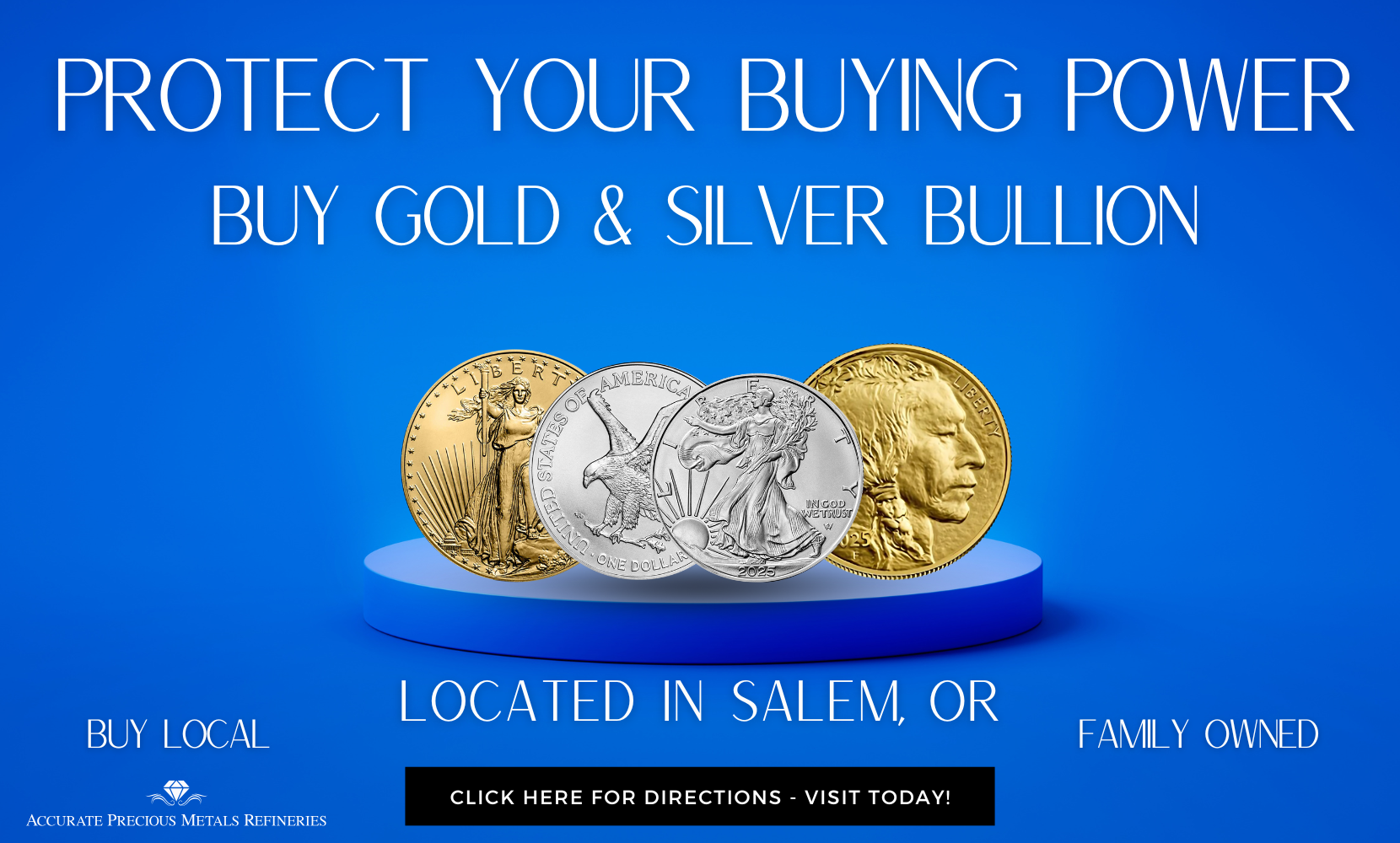
Coins are government-issued legal tender. The 2025 1 oz Gold Eagle from the U.S. Mint, for example, carries a face value and is produced to strict weight and purity standards. Government coins are the easiest to recognize and resell, which makes them popular with both investors and collectors. They usually carry higher premiums than bars.
Bars are more efficient for larger purchases. A one-ounce gold bar from a recognized refiner typically carries a lower premium per ounce than a coin, because fabrication is simpler. For investors whose only goal is maximum metal for minimum markup, bars make sense.
Rounds are privately minted, coin-shaped pieces that are not legal tender. They often carry the lowest premiums of all three forms, but they may be slightly harder to sell quickly because some buyers are less familiar with them.
Collectors should also consider numismatic value. A common bullion coin is priced mainly on metal content plus a modest premium. A rare or historic coin may be priced primarily as a collectible – its numismatic premium can far exceed its melt value. Those are two different markets with different dynamics.
Precious Metals Investment as an Inflation Hedge: What the Numbers Say
At the time of writing, gold trades at roughly $4,545 an ounce, silver at about $76 an ounce, platinum at around $1,912 an ounce, and palladium at approximately $1,357 an ounce. These prices reflect a market that has seen significant movement driven by inflation concerns, central bank buying, and geopolitical uncertainty.
The relationship between precious metals and inflation is not mechanical. Gold does not rise by exactly the rate of CPI every year. What the historical record shows is that over long periods – decades, not months – gold has tended to preserve purchasing power when fiat currencies have weakened. That is the core argument for holding it.
Silver’s dual role as both an investment metal and an industrial input means it can behave differently. During periods of strong economic growth and industrial demand, silver may outperform gold. During recessions, it can underperform because industrial demand falls. That volatility is a feature for some investors and a drawback for others.
Central banks around the world have been net buyers of gold for several years running. That institutional demand is a meaningful signal – it reflects a belief that gold serves a portfolio function that paper assets cannot replicate. For more on why this matters, the central bank gold buying trend is worth understanding.
Common Misconceptions About Precious Metals Investing
A few widely held beliefs about metals are either wrong or significantly oversimplified.
“Gold always goes up during inflation.” It does not. Gold is a long-term hedge, not a guaranteed short-term winner. In some inflationary periods, gold has lagged before eventually catching up.
“Silver is just cheaper gold.” Silver has more industrial demand and typically more volatility. It is a related but distinct market.
“Physical metals have no costs.” They do. Premiums, storage, insurance, and dealer spreads are all real costs that reduce net returns.
“Precious metals are only for doomsday investors.” Many mainstream investors and financial institutions hold metals as a normal diversification tool. It is not an extreme position.
“All precious metals hedge inflation equally.” They do not. Gold is the classic inflation hedge. Platinum and palladium are more driven by industrial cycles.
“Collectibles and bullion are the same thing.” A bullion coin is priced mainly on metal content. A numismatic coin may carry significant premium above melt value based on rarity and condition. Treating them the same can lead to mispriced expectations.
Practical Tips for Building a Precious Metals Position
Getting started does not require a large upfront commitment. A few practical principles help investors avoid common mistakes.
- Know your goal before you buy. Inflation protection, retirement diversification, collecting, and speculation each call for different products and time horizons.
- Compare premiums across products. A lower premium means more metal for your money – important if your goal is pure investment exposure.
- Stick to recognized products. Major government mint coins and bars from well-known refiners are easiest to resell and hardest to dispute.
- Plan your storage before you buy. Home safe, bank safety deposit box, and insured vault storage are all options with different cost and accessibility trade-offs.
- Think about liquidity. Common coins and standard bars sell faster than obscure rounds or unusual sizes.
- Avoid overconcentration. Metals can reduce portfolio risk through diversification, but concentrating too heavily in any single asset class adds its own risk.
For beginners, a measured starting position – rather than a large lump-sum purchase – is usually more practical. Dollar-cost averaging into metals over time reduces the impact of buying at a short-term price peak. Starting out in precious metals investing does not have to be complicated.
How to Buy and Sell With Accurate Precious Metals
Accurate Precious Metals has been serving investors and collectors for over 12 years from its base in Salem, Oregon. With more than 1,000 five-star reviews and competitive pricing tied to live spot prices, it stands out as a trusted option for both new and experienced buyers.
The inventory covers gold bullion products, silver coins and bars, platinum, palladium, copper, diamonds, and jewelry – in coin, bar, and round form. Fractional sizes are available for buyers who want to start small, and larger bars are stocked for investors focused on minimizing premiums. As an NGC Authorized dealer, Accurate Precious Metals also handles graded and numismatic coins with the expertise that serious collectors need.
For retirement investors, Gold and Silver IRA services are available – a practical way to add metals to a tax-advantaged account without working through the process alone.
Nationwide insured shipping means buyers anywhere in the United States can purchase with confidence. Local customers in the Salem, Oregon area are welcome to visit in person for hands-on service and immediate transactions.
Selling is equally straightforward. Accurate Precious Metals buys all forms of precious metals – bullion, scrap gold and silver, jewelry in any condition, dental scrap, silverware, luxury watches, diamonds, and numismatic coins. If you are local, bring your items in for a competitive offer based on current spot prices. If you are anywhere else in the country, the mail-in service makes it easy: request a free insured shipping kit, send your items, and receive a fast, competitive offer. You can also learn more about selling your gold by mail on the site.
Accurate Precious Metals is not a pawn shop. It is a specialized precious metals dealer with the experience, inventory, and pricing to serve serious buyers and sellers – whether your goal is building a long-term inflation hedge or converting existing holdings into cash.
Reach the team at (503) 400-5608 or visit AccuratePMR.com to browse current inventory and live pricing.
Frequently Asked Questions
Is gold a reliable inflation hedge?
Over long time horizons, gold has historically helped preserve purchasing power when currencies weaken. It is not a perfect short-term hedge – prices can lag inflation in the near term – but it has a strong track record as a long-term store of value.
What is the difference between spot price and what I pay at a dealer?
Spot price is the raw market price for one troy ounce of metal. When you buy a coin or bar, you pay spot plus a premium that covers fabrication, distribution, and dealer margin. When you sell, you typically receive spot minus a dealer spread. The difference between buy and sell price is your round-trip cost.
Should I buy gold coins or gold bars?
It depends on your goal. Coins from major government mints are easier to recognize and resell quickly, making them a good choice for liquidity. Bars typically carry lower premiums per ounce, which is better if your only goal is maximum metal exposure for minimum markup.
How much of my portfolio should be in precious metals?
This depends on your individual financial situation, goals, and risk tolerance. We are not financial advisors. Many investors treat metals as a diversification tool rather than a core holding. A financial advisor can help you determine an appropriate allocation.
What is a numismatic coin and how is it different from bullion?
A bullion coin is priced mainly on its metal content plus a modest premium. A numismatic coin carries additional value based on rarity, historical significance, and collector demand – sometimes far above its melt value. The two markets have different dynamics and require different expertise to evaluate.
Can I hold precious metals in a retirement account?
Yes. A self-directed precious metals IRA allows you to hold IRS-approved bullion inside a tax-advantaged retirement account. Accurate Precious Metals offers Gold and Silver IRA services for investors interested in this option.
How do I sell my precious metals to Accurate Precious Metals?
Local customers can visit the Salem, Oregon location for an in-person evaluation and same-day offer. Customers anywhere in the U.S. can use the mail-in service – request a free insured shipping kit, send your items, and receive a competitive offer based on current spot prices.
Sources
- MetalsMint – Precious Metals Investing Overview
- The Bullion Bank – Gold, Silver, and Inflation Hedging
- The Royal Mint – Precious Metals Investment Education
- Goldman Sachs Insights – Commodities and Inflation Hedging
- MMTC-PAMP – Precious Metals Market Education
- American IRA – Self-Directed Precious Metals IRA Guide


