

Understanding 1905 Barber Quarter value: why collectors pay more

Disclaimer
Accurate Precious Metals is not a financial advisor. We encourage everyone to consult a financial advisor or CPA. They can help determine the best investment strategies. Our mission is to provide educational content about precious metals. Accurate Precious Metals is committed to transparency and reliability. They offer top-tier precious metal products and information.
This information is subject to change due to market fluctuations, world events, and factors beyond our control. Additionally, the content may not fully reflect our company’s values, as personnel, staff, and authorship may change over time.
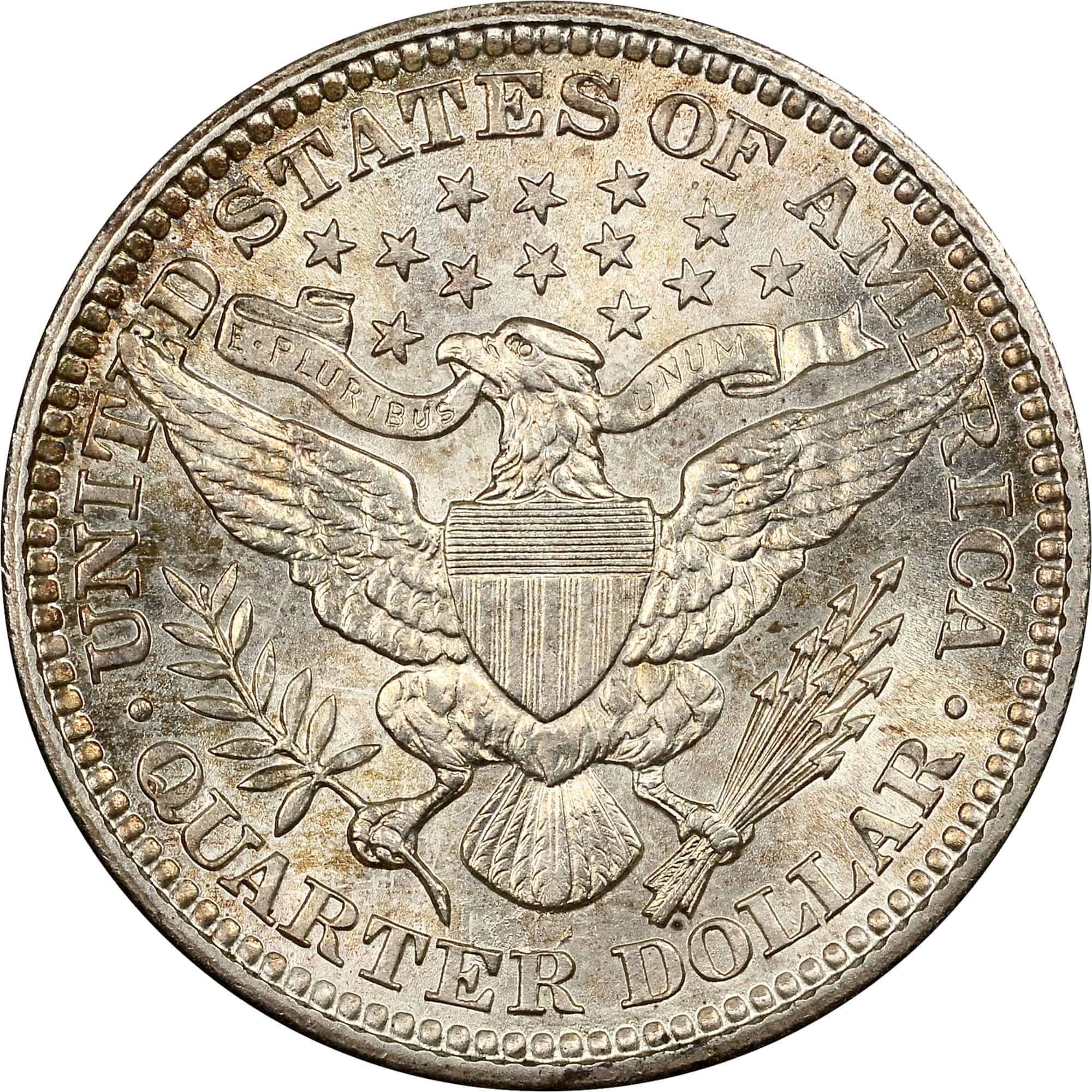
The 1905 Barber Quarter value sits well above its silver melt weight for every variety and grade – a fact that surprises many sellers who assume old silver coins are only worth their metal. Whether you have a Philadelphia, New Orleans, or San Francisco example, these coins carry strong numismatic premiums driven by collector demand, condition rarity, and their place in one of America’s most popular classic series.
Charles E. Barber designed this quarter in 1892, and production ran through 1916. The 1905 issues are not the rarest dates in the series, but all three mint varieties command real collector interest. Understanding what drives that interest – mintage, survival rates, and grade – is the key to knowing what your coin is actually worth.
The Barber Quarter: A Quick History
Charles Barber served as Chief Engraver of the U.S. Mint when Congress pushed for a modernized coinage design in the early 1890s. His solution placed Liberty in a Phrygian cap on the obverse, surrounded by stars and the date, with a heraldic eagle on the reverse. The design was functional and clean, if not universally beloved at the time. It lasted 25 years across dimes, quarters, and half dollars.
By 1905, the Barber Quarter was a workhorse of everyday commerce. Quarters passed through countless hands in shops, saloons, and markets across a country in the middle of a pre-World War I economic expansion. That heavy use is exactly why high-grade survivors are scarce today. Most 1905 quarters that still exist show significant wear. Finding one in Extremely Fine or better condition is genuinely uncommon.
The coin is struck in 90% silver and 10% copper, weighs 6.3 grams, and measures 24.3 mm in diameter. Each coin contains approximately 0.1808 troy ounces of pure silver. At today’s silver spot price of $82 per ounce, that works out to a melt value of roughly $14.83. Every 1905 Barber Quarter trades well above that figure.
1905 Barber Quarter Varieties and Mintage
Three mints struck quarters in 1905. The mint mark appears on the reverse, just below the eagle and above “QUARTER DOLLAR.” No mint mark means Philadelphia. An “O” means New Orleans. An “S” means San Francisco.
| Variety | Mintage | Key Characteristic |
|---|---|---|
| 1905 (Philadelphia) | ~17.7 million | Most common |
| 1905-O (New Orleans) | ~1.23-1.25 million | Scarce |
| 1905-S (San Francisco) | ~1.07 million | Fewest struck |
The Philadelphia issue had the largest production by far, but high mintage does not mean low value here. Barber set collectors need one of every date and mint, so even the common Philadelphia coin commands a premium over melt in any grade. The branch mint issues are a different story entirely. New Orleans struck just over 1.2 million, and heavy Southern circulation meant most were worn smooth. San Francisco produced the fewest of the three, and high-grade examples are hard to find at auction.
No proof versions were struck for the 1905 Barber Quarter in standard references, and no major die varieties are documented. Minor doubled dies exist on some examples and can add a modest premium – typically 10 to 20 percent over standard values – but these are not widely traded.


1905 Barber Quarter Value by Grade
Condition is everything with Barber Quarters. The difference between a Good-4 and an Extremely Fine-40 example can be a factor of five or more in price. Mint State coins are a different category altogether.
| Date/Mint | Good (G4) | Fine (F12) | EF-40 | MS-60 | MS-63 |
|---|---|---|---|---|---|
| 1905 (P) | $18-$41 | $39-$70 | $88-$109 | $195-$296 | ~$518 |
| 1905-O | $37-$40 | $77-$120 | $217-$260 | $350+ (rare) | $500+ |
| 1905-S | $23-$30 | $59-$75 | $103-$105 | $225-$670 | $700+ |
These figures reflect wholesale and auction estimates for conservatively graded coins. Retail prices at coin shops typically run 10 to 20 percent above these levels. The 1905-O in Mint State is especially difficult to find – most auction appearances are in the lower Mint State range, and anything above MS-63 is genuinely rare. The 1905-S shows a wide MS-60 range because the few high-grade examples that do appear at auction can generate strong competition.
How Grade Affects 1905 Barber Quarter Value
Grading Barber Quarters by eye takes practice. The high points that wear first are Liberty’s hair above the ear, the cheek, and the eagle’s breast feathers on the reverse. Here is what to look for at each major grade level.
- Good (G4-G6): The date and “LIBERTY” on the headband are readable but worn flat. Rims may show slight merging with lettering. Still collectible and tradeable.
- Fine (F12-F15): “LIBERTY” is fully visible on the headband. Some hair detail shows above the ear. Eagle feathers are partially defined.
- Extremely Fine (EF-40-EF-45): Light wear on the highest points only. Liberty’s cap feathers show clear detail. Eagle’s claws are sharp and well-defined.
- About Uncirculated (AU-50-AU-58): Trace wear on the very highest points. Mint luster visible in the fields. These are scarce for branch mint issues.
- Mint State (MS-60+): No wear at all. Luster is intact. Strike quality and surface marks determine the final grade within this range.
Cleaned coins are a serious problem in the Barber series. Many examples were polished decades ago, and a cleaned coin receives a “details” grade from PCGS or NGC rather than a numeric grade. Details-graded coins typically sell at a 40 to 60 percent discount compared to problem-free examples. Always examine a coin under good lighting before buying raw.
What Drives Collector Demand for 1905 Issues
The Barber series runs from 1892 through 1916 – 25 years of production across three mints. A complete date-and-mint set requires dozens of coins, and collectors working on these sets need every 1905 variety. That sustained demand keeps prices firm even for common Philadelphia examples.
The 1905-O and 1905-S are genuine keys for the year. Their low mintages combined with poor survival rates in higher grades make them priority acquisitions for serious set builders. A collector who already holds the Philadelphia issue will pay a meaningful premium to add the New Orleans or San Francisco coin in comparable grade.
Silver’s rise to $82 per ounce has also lifted the floor for all 90% silver coins. When silver was trading at $15 to $20 an ounce, a heavily worn Barber Quarter was sometimes dismissed as near-melt. At current prices, even a Good-grade 1905 represents a coin trading at a meaningful premium above its metal content. That dynamic draws more attention to the series from both bullion buyers and numismatists.
For a broader look at how Barber Quarter values work across different dates, the 1898 Barber Quarter value guide and our 1908 Barber Quarter value article cover similar grading and pricing patterns that apply directly to 1905 issues.
PCGS & NGC Coin Verification – Accurate Precious Metals Refineries
Practical Tips for Buying a 1905 Barber Quarter
Set your grade target. Circulated coins in Fine to EF are the sweet spot for most collectors – affordable but still showing design detail.
Buy slabbed when possible. PCGS and NGC holders confirm the grade and protect against cleaned or altered coins. Raw coins require expert eyes.
Check population reports. PCGS and NGC publish how many examples they have graded at each level. For 1905-O, MS-60 and above are genuinely rare – pop reports confirm this.
Use Greysheet as your price anchor. Retail should run 10-20% above Greysheet bid. If a dealer is asking 50% over, negotiate or walk.
Inspect for cleaning. Look for hairlines under a 5x loupe in raking light. A cleaned coin in an NGC or PCGS holder will say “details” on the label.
Buy from reputable sources. Heritage Auctions, Stack’s Bowers, and established dealers are safer than unverified online marketplaces for raw coins.
Storage matters once you have the coin. Air-Tite holders work well for individual coins. Avoid PVC flips – they release chemicals over time that damage silver surfaces. Keep coins in a cool, dry, dark environment.
Common Misconceptions About 1905 Barber Quarter Value
Several myths circulate about Barber Quarters that lead collectors and sellers to make poor decisions.
“Philadelphia coins are the most valuable.” Wrong. The branch mint issues from New Orleans and San Francisco are scarcer and command higher prices in all grades above Good.
“High mintage means low value.” The Philadelphia issue had nearly 18 million struck, but set-building demand keeps it priced well above melt regardless.
“Cleaned coins are fine if they look nice.” A cleaned coin is a problem coin. PCGS and NGC will assign a details grade, and the coin will sell at a steep discount. Cleaning cannot be reversed.
“Silver spot price sets the value.” Spot price sets the absolute floor. The numismatic premium on 1905 Barber Quarters runs 100 to 2,000 percent above melt depending on grade. Silver’s rise to $82 an ounce is a tailwind, not the primary driver.
“All old silver coins are the same.” The difference between a 1905-O in Fine and one in MS-60 is hundreds of dollars. Grade is everything.
Selling Your 1905 Barber Quarter
If you are looking to sell, your approach should match the coin’s grade. High-grade Mint State examples – especially 1905-O and 1905-S – belong at auction. Heritage Auctions and Stack’s Bowers reach the broadest pool of serious collectors, and competitive bidding can push prices well above guide values for scarce pieces.
Circulated coins in Good through Fine are more efficiently sold to a dealer or through a local coin show. The spread between bid and ask is narrower at that level, and the auction fee structure eats into returns on lower-value coins.
For selling silver coins of any grade, Accurate Precious Metals offers two straightforward options. Local customers in the Salem, Oregon area can bring coins directly to our shop for a same-day evaluation. Our team inspects coins thoroughly and provides a clear offer based on current market conditions.
Customers anywhere in the United States can use our mail-in service. We send you a kit with free insured shipping, your coins are evaluated by our team, and payment follows promptly. There is no obligation to accept an offer. We buy all grades of Barber Quarters – circulated, Mint State, raw, or slabbed – along with bullion, jewelry, scrap silver, and virtually any other precious metal item.
Why Choose Accurate Precious Metals
Accurate Precious Metals has been operating for over 12 years from our Salem, Oregon location, and we have earned more than 1,000 five-star customer reviews by being straightforward about pricing and process. We are a specialized precious metals dealer – not a pawn shop – which means our team understands the difference between a 1905-O in Fine and one in EF, and we price accordingly.
As an NGC Authorized Dealer, we can assist collectors who want coins professionally graded and encapsulated. We carry gold, silver, platinum, and palladium in coin, bar, and bullion form, along with diamonds and jewelry. Our online pricing reflects live spot prices, so you are always working from current market data.
If you are building a Barber Quarter set or expanding into other classic U.S. silver coins, our inventory and expertise make us a strong starting point. Collectors interested in related classic quarters may also find our coverage of the 1928 Standing Liberty Quarter and the 1935 Liberty Walking Half Dollar useful for understanding how silver type coins are priced and graded across different series.
Reach us at (503) 400-5608 or visit AccuratePMR.com to see current inventory and pricing. If you are outside Oregon, our mail-in program handles the entire process with insured shipping both ways.
Frequently Asked Questions
What is a 1905 Barber Quarter worth today?
Value depends on mint mark and grade. Philadelphia examples in Good condition range from $18 to $41. New Orleans coins in the same grade run $37 to $40. San Francisco examples start around $23 to $30 in Good. Mint State coins can reach $300 to $700 or more depending on variety and grade.
How do I tell which mint struck my 1905 Barber Quarter?
Check the reverse below the eagle and above "QUARTER DOLLAR." No letter means Philadelphia. "O" means New Orleans. "S" means San Francisco.
Is the 1905-O Barber Quarter rare?
It is scarce rather than rare in circulated grades, but Mint State examples are genuinely rare. Only about 1.23 million were struck, and heavy circulation meant few survived in high grades. MS-60 and above examples are uncommon at auction.
What is the silver melt value of a 1905 Barber Quarter?
Each coin contains approximately 0.1808 troy ounces of pure silver. At the current spot price of $82 per ounce, the melt value is roughly $14.83. All 1905 Barber Quarters trade above this figure due to collector demand.
Should I clean my 1905 Barber Quarter before selling it?
No. Cleaning permanently damages the surface and results in a "details" grade from PCGS or NGC, which reduces value by 40 to 60 percent compared to a problem-free example. Leave the coin as-is.
Where is the best place to sell a 1905 Barber Quarter?
High-grade Mint State coins are best consigned to major auction houses. Circulated examples are efficiently sold to a reputable dealer. Accurate Precious Metals buys all grades – visit us in Salem, Oregon or use our nationwide mail-in service at AccuratePMR.com.
Does the current high silver price affect what my Barber Quarter is worth?
It raises the floor slightly, but numismatic value is the primary driver. At $82 silver, the melt value is about $14.83 per coin. Even a heavily worn 1905 Barber Quarter sells for $18 to $40 based on collector demand, not just metal content.
How can I get my 1905 Barber Quarter graded?
Submit it to PCGS or NGC directly, or work through an NGC Authorized Dealer like Accurate Precious Metals. Professional grading confirms the grade, identifies problem coins, and adds resale credibility.
Sources
- CoinStudy – 1905 Barber Quarter Value Guide
- APMEX Learn Center – Barber Quarter History and Design
- Greysheet – Barber Quarter Wholesale Price Guide
- USA Coin Book – 1905 Barber Quarter Values
- NGC Coin Explorer – 1905 Barber Quarter MS Details
- PCGS CoinFacts – 1905-O Barber Quarter Population and Values


