

Sell my gold: Selling outright vs pawn loans explained

Disclaimer
Accurate Precious Metals is not a financial advisor. We encourage everyone to consult a financial advisor or CPA. They can help determine the best investment strategies. Our mission is to provide educational content about precious metals. Accurate Precious Metals is committed to transparency and reliability. They offer top-tier precious metal products and information.
This information is subject to change due to market fluctuations, world events, and factors beyond our control. Additionally, the content may not fully reflect our company’s values, as personnel, staff, and authorship may change over time.
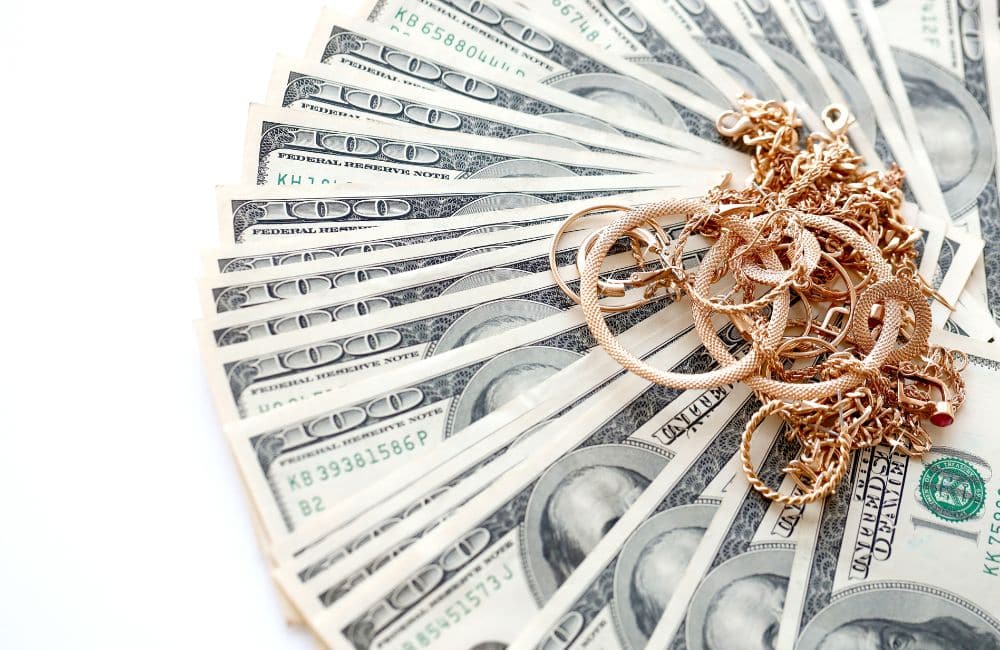
If you’re ready to sell my gold, the single biggest decision you’ll face isn’t where to go – it’s whether to sell outright or use your gold as collateral for a pawn loan. These are two very different transactions, and choosing the wrong one can cost you hundreds of dollars. With gold spot prices sitting around $4,746 per ounce right now, the stakes are real.
This guide breaks down both options honestly – what you get paid, what you risk, and which path makes sense for collectors, casual sellers, and anyone sitting on gold jewelry, coins, or bars.
Selling Gold vs. a Pawn Loan: The Core Difference
Selling gold means transferring ownership permanently in exchange for cash. You walk in with your gold, they weigh and test it, and you walk out with money. Done.
A pawn loan works differently. You hand over your gold as collateral, receive a fraction of its value as a short-term loan, and have a set window – usually 30 to 90 days – to repay the loan plus interest and reclaim your item. If you don’t repay, the pawnbroker keeps the gold and resells it.
The key distinction: selling maximizes your payout. Pawning preserves ownership – but only if you can repay on time.
A Brief History of Gold Pawning and Selling
Pawning is ancient. The practice dates to around 500 BC in China, where gold and jade served as collateral for basic goods. Medieval European pawnshops – the word traces back to the Italian banco, meaning bench – became widespread during the Renaissance. The Catholic Church regulated them, though interest caps still ran as high as 86% annually.
Gold selling as we know it accelerated during the 19th-century gold rushes, when mints began standardizing coins and bars. Modern U.S. pawn law, shaped largely through state regulations since the early 1900s, limits loan terms and requires grace periods before forfeiture.
The 2008 financial crisis pushed both practices into the spotlight. People pawned heirlooms to cover bills while gold prices climbed toward $1,900 per ounce, making outright selling attractive for those willing to part with their holdings. Post-2020 inflation has pushed gold far beyond that – today’s price of roughly $4,746 per ounce makes selling an especially compelling option for anyone looking to cash in at a market peak.




Types of Gold: What You’re Working With
Not all gold is worth the same per ounce, and the form your gold takes affects both what you’ll be offered and where you should take it.
Bullion Coins and Bars
Investment-grade gold – American Gold Eagles, Krugerrands, Maple Leafs, and gold bars from recognized mints – commands prices closest to spot. A 1 oz .9999 fine gold bar might sell for around $4,500 to $4,650 depending on the buyer’s margin. These are the easiest items to price and the most competitive to sell.
Gold Jewelry
Jewelry runs from 10K (41.7% pure) to 24K (99.9% pure). The karat stamp matters enormously. An 18K piece contains 75% gold; a 10K piece contains less than half. Buyers calculate melt value based on weight and purity, then apply their margin. Expect 50-80% of melt value when selling jewelry, depending on the buyer.
Scrap and Dental Gold
Old chains, broken clasps, and dental crowns all have value, but they typically contain lower-purity alloys. Pawn shops tend to offer the least on scrap. A dedicated gold buyer or refiner will pay more because they process volume efficiently.
Numismatic and Rare Coins
Pre-1933 U.S. gold coins, key-date pieces, and other numismatic items carry collector premiums well above melt value. A coin shop that understands numismatics will pay far more than a pawn shop, which typically prices only the metal. Never pawn a rare coin – you’ll be paid scrap rates for something worth multiples of that.
Silver and Platinum
Silver is currently around $79 per ounce and platinum around $2,070 per ounce. If you’re selling a mixed collection, separate your metals and get quotes on each individually. Bundling them together often results in a lower blended offer.
How Pricing Works: Spot Price, Melt Value, and Margins
The spot price is the live global market rate – currently about $4,746 per ounce for gold. It’s the baseline, not the price you’ll receive.
Melt value is spot price multiplied by the weight and purity of your specific piece. A 14K necklace weighing 10 grams contains about 5.83 grams of pure gold. At today’s spot, that’s roughly $890 in gold content.
What you actually receive depends on the buyer’s margin:
| Buyer Type | Typical Payout (% of Melt) | Notes |
|---|---|---|
| Specialized dealer / refiner | 85-98% | Highest payouts, especially for bullion |
| Coin shop | 80-95% | Strong on numismatics and bullion |
| Jewelry buyer | 60-80% | Varies by karat and condition |
| Pawn shop (sale) | 50-70% | Lower due to overhead and resale model |
| Pawn shop (loan) | 25-50% | Loan only – plus monthly interest on top |
Sell My Gold: Step-by-Step for Maximum Payout
Getting the best price when you sell my gold isn’t complicated, but it does require a few deliberate steps.
Check today’s spot price before any appointment. Gold moves daily, and knowing the number gives you a benchmark.
Identify what you have. Locate karat stamps on jewelry (10K, 14K, 18K, 24K). Weigh items if possible – kitchen scales work in a pinch.
Get at least three quotes. Visit a coin shop, a dedicated gold buyer, and if curious, a pawn shop. The spread between offers is often eye-opening.
Watch the testing. Reputable buyers assess purity via XRF analysis or acid testing in front of you. If a buyer disappears with your gold to “check it,” that’s a red flag.
Negotiate. Ask “What is your buy rate per gram for 14K?” Buyers expect negotiation, especially on larger lots.
Understand the tax picture. In the U.S., selling gold at a profit may trigger capital gains tax. Items held over a year qualify for lower long-term rates. Consult a tax professional for your specific situation.
When a Pawn Loan Actually Makes Sense
Pawning isn’t always the wrong move. There are specific situations where it’s the rational choice.
If you need emergency cash for a week or two and you’re confident you can repay, a pawn loan lets you access liquidity without permanently losing an item. This makes particular sense for heirloom pieces with sentimental value – a grandmother’s 18K ring, for example, that you’d regret selling.
Live Gold Spot Price – Accurate Precious Metals Refineries
The math only works if you repay quickly. A 10% monthly interest rate on a 30-day loan is manageable. Stretch that to 90 days and the cost becomes significant. Default, and the pawnbroker acquires your gold at 25-50 cents on the dollar – then resells it for far more.
Alternatives worth considering before pawning: a personal loan from a credit union, a 0% introductory APR credit card, or borrowing from family. These options often carry lower effective interest rates than pawn loans.
Busting Common Myths About Gold Pawning and Selling
Myth: Pawn shops pay the most for gold. False. Pawn shops build in a wide margin to cover loan risk and potential resale. Coin shops and dedicated precious metals dealers consistently offer more for outright sales.
Myth: Pawning is basically free money. It’s a high-interest loan secured by an asset. Default on it and you’ve effectively sold your gold at 25-50% of value – the worst possible outcome.
Myth: All gold buyers test fairly. Watch the testing process. Reputable buyers perform XRF analysis or acid tests in front of you and show you the scale reading. Any buyer who doesn’t allow you to observe should raise questions.
Myth: Selling gold hurts a collection. Selling duplicates, lower-grade pieces, or bullion at peak prices is smart portfolio management. The proceeds can fund purchases of silver at $79 per ounce or platinum at $2,070 per ounce – metals that may offer different growth profiles.
Myth: Numismatic coins are worth the same as melt. Rare coins can be worth multiples of their gold content. A coin shop with numismatic expertise will recognize that. A pawn shop almost certainly won’t.
Choosing the Right Channel: Dealer vs. Pawn Shop
The channel you choose matters as much as the decision to sell or pawn. Here’s how the main options compare:
Pawn shops are fast and accessible, but they’re generalists. They handle electronics, tools, and jewelry alongside gold. Their gold pricing reflects that – they need wide margins to cover the range of items they resell. For a quick loan, they serve a purpose. For maximizing cash when you sell, they’re rarely the best option.
Local coin shops are better for numismatic items and standard bullion. A knowledgeable dealer will recognize collector premiums and pay accordingly. The limitation is geographic – not every town has a strong coin shop, and inventory needs vary.
Dedicated precious metals dealers like Accurate Precious Metals offer the most competitive payouts for bullion, coins, and jewelry because buying precious metals is their core business. They have direct relationships with refiners, understand live spot pricing, and process high volume – all of which translates to better offers for sellers.
Online mail-in services extend access to competitive pricing nationwide. Instead of settling for whatever’s available locally, you can ship your gold to a specialist buyer and receive a market-rate offer.
Why Accurate Precious Metals Is the Stronger Choice
Accurate Precious Metals, based in Salem, Oregon, has been buying and selling precious metals for over 12 years. With more than 1,000 five-star customer reviews, the company has built a reputation on transparent pricing, honest assessments, and fast payment.
Unlike a pawn shop, Accurate Precious Metals is a specialized precious metals dealer. That distinction matters when you’re selling your gold jewelry or liquidating a bullion collection – specialists pay more because they know exactly what they’re buying and have efficient channels to move it.
They buy everything: gold bullion coins and bars, scrap gold, broken jewelry, silver, platinum, palladium, numismatic coins, diamonds, luxury watches, dental scrap, and silverware. Condition isn’t a barrier – broken or intact, they’ll assess it.
Pricing reflects live spot rates, so you’re not working from a stale quote. As an NGC Authorized dealer, the team brings grading expertise that most pawn shops simply don’t have – which means rare or collectible pieces get evaluated properly rather than priced at melt.
Two ways to sell:
If you’re in or near Salem, Oregon, visit in person. You’ll get a face-to-face assessment, immediate answers to questions, and same-day payment.
If you’re anywhere else in the United States, the mail-in gold program makes it easy. Request a free insured shipping kit, send your items, and receive a competitive offer with fast payment. The process is fully insured, and the mail-in policy is straightforward.
For anyone who has been searching for the best way to sell gold for cash, the difference between a pawn shop loan and a specialized dealer comes down to this: one gives you a fraction of value and charges you to get your own property back. The other pays you competitively, handles the transaction transparently, and lets you move on with maximum cash in hand.
Reach Accurate Precious Metals at (503) 400-5608 or visit AccuratePMR.com to request your mail-in kit or get directions to the Salem location.
Frequently Asked Questions
What is the difference between selling gold and a pawn loan?
Selling gold transfers ownership permanently in exchange for a cash payout. A pawn loan gives you a short-term cash advance using your gold as collateral – you can reclaim the item by repaying the loan plus interest, but if you default, the pawnbroker keeps the gold.
How much of the gold spot price will I receive when I sell?
It depends on the buyer and the form of gold. Bullion coins and bars from recognized mints typically fetch 85-98% of spot at a specialized dealer. Jewelry runs lower – roughly 60-80% of melt value – due to refining costs and dealer margins. Pawn shops generally offer less than dedicated buyers.
Are pawn loan interest rates really that high?
Yes. Monthly rates of 10-25% are common at pawn shops. On an annualized basis, that’s 120-300%. It’s legal and disclosed in the contract, but it’s expensive compared to most other borrowing options.
Should I pawn rare or numismatic gold coins?
No. Pawn shops price coins based on metal content, not collector value. A coin worth $2,000 to a numismatist might only generate a $400 loan at a pawn shop. Take rare coins to a coin dealer or specialized precious metals buyer.
Can I sell gold by mail if I’m not near Salem, Oregon?
Yes. Accurate Precious Metals offers a mail-in jewelry and gold program available to customers across the United States. The kit includes free insured shipping, and payment is fast after assessment.
Does selling gold affect my credit score?
No. Selling gold to a dealer is a straightforward transaction with no credit check and no impact on your credit report. Pawn loans also don’t affect credit – but defaulting means losing your collateral.
What gold items can I sell to Accurate Precious Metals?
They buy bullion coins and bars, gold and silver jewelry in any condition, scrap gold, dental gold, silverware, platinum, palladium, diamonds, luxury watches, and numismatic coins. If it contains precious metal, they’ll assess it.
Is now a good time to sell gold?
Gold is currently around $4,746 per ounce – historically elevated. Whether it’s the right time for you depends on your financial situation and long-term goals. Accurate Precious Metals is not a financial advisor, but the current price environment means sellers are receiving strong payouts relative to historical norms.
Sources
- Gold Bank – Selling Gold vs. Pawning: Which Maximises Value?
- Pawn Shop Greensburg PA – Is It Better to Pawn or Sell Gold Jewelry?
- Gold Guys – Pawning Gold vs. Selling Gold
- Rainbow Jewelers – Is It Better to Sell Gold to a Jeweler or Pawn Shop?
- Bellevue Rare Coins – Pawn Shop vs. Coin Shop for Selling Gold
- Express Gold Cash – Is It Smarter to Pawn or Sell Your Gold?


