This content is for educational purposes only and is not financial or investment advice. Precious metals prices fluctuate; past performance does not guarantee future results. Consult a qualified professional before making investment decisions.
The salt and gold barter history of West Africa's trans-Saharan trade is one of the clearest examples in world history of two scarce, useful commodities functioning as money long before coins or paper currency existed. Camel caravans crossed the Sahara for over a thousand years, carrying slabs of salt south and returning with gold, ivory, and other goods, building an exchange system that still shapes how we think about value today.
That old trade route matters for a modern reason too. Gold and silver still serve as safe havens for the same basic reasons salt and gold mattered to traders a thousand years ago: scarcity, durability, and trust that outlasts any single government or currency. Understanding where that trust came from helps explain why so many people turn to bullion coins and bars when markets get shaky.
What Does "Safe Haven" Mean for Precious Metals?
A safe haven asset is something investors buy specifically to reduce risk during inflation, currency weakness, banking stress, or market panic. Gold is the best-known example, but not every precious metal plays that role equally well.
Gold: durable, divisible, globally accepted, with the longest monetary history of any metal
Silver: shares gold's monetary history but swings more because a large share of demand is industrial
Platinum: driven mostly by industrial and jewelry demand, so it acts less like a pure safe haven
Palladium: almost entirely tied to automotive catalyst demand, making it the most volatile of the four
Gold holds its safe-haven reputation because central banks, investors, and everyday savers have relied on it through wars, currency collapses, and recessions for centuries. For a deeper look at how gold and silver function as long-term wealth protection, see this guide on gold and silver as a timeless hedge.
What Is the Salt and Gold Barter History Behind West Africa's Trade?
The salt and gold barter history of West Africa centers on the trans-Saharan trade, a network that ran from roughly 500 BCE into the 1800s connecting North Africa to the gold-rich regions south of the Sahara. Camel caravans hauled slabs of salt, often mined at places like Taghaza, south across the desert, then returned north loaded with gold dust, ivory, kola nuts, and animal skins.
This wasn't casual trading. It was organized, repeated commerce that built cities, funded empires, and moved ideas and religion across an entire continent. Timbuktu and Djenne grew into major trade and learning centers because they sat along these routes, and control over the exchange points became a source of real political power.
Was Salt Really Traded for Its Weight in Gold?
Not literally, or at least not as a fixed universal rate. The phrase "salt for its weight in gold" is widely repeated, but historians treat it as an exaggeration that grew out of a real trading practice called silent barter.
In silent barter, one side left goods, such as salt, at an agreed meeting point. The other side inspected the goods and left a counteroffer, often gold dust, without either party meeting face to face. This reduced conflict and got around language barriers between groups who didn't share a common tongue.
Salt was genuinely valuable, especially far from the coast or desert salt deposits
Gold was genuinely valuable and widely desired across Mediterranean and Middle Eastern markets
The exchange ratio varied by location, season, and supply, not a single fixed rate
Silent barter shaped the reputation of salt as "worth its weight in gold" more than any formal pricing system did
The real takeaway isn't that ancient traders were naive. It's that both goods were scarce, useful, and trusted enough to function as money within their trade network, the same qualities that make gold and silver valuable today.
Why Did Salt and Gold Both Become Forms of Money?
Salt and gold became money-like commodities because each one solved a real problem that ordinary currency couldn't. Salt preserved food and supported basic nutrition before refrigeration existed, while gold offered a compact, durable way to store and move wealth across long distances.
In hot inland regions far from natural salt deposits, a block of salt could be worth a serious sum because there was no substitute for it. Gold, meanwhile, was scarce, didn't corrode, could be divided into smaller amounts, and was nearly impossible to fake in its raw form. West African states such as the Ghana Empire grew powerful largely because they sat astride the routes where these two commodities changed hands, taxing the trade and controlling access to gold fields.
How Did the Trans-Saharan Trade Shape West African Empires?
The trans-Saharan salt and gold trade built and sustained major West African empires for well over a thousand years, until changing transport methods and trade patterns ended the old caravan system in the 1800s.
Salt and Gold Trade Timeline
500 BCE
Trans-Saharan exchange begins to develop Early trade networks link North Africa to gold-producing regions south of the Sahara
Early medieval era
Camel caravans improve desert trade Camels make long-distance salt and gold transport far more efficient
300 AD onward
Ghana Empire rises Control of trade routes and gold fields fuels Ghana's early power
Middle Ages
Timbuktu and Djenne flourish Trade wealth turns these cities into centers of commerce and learning
1800s
Old caravan system declines Changing transport and trade routes end the traditional salt-gold exchange
How Do Gold, Silver, Platinum, and Palladium Compare as Safe Havens Today?
Gold remains the strongest safe-haven metal, while silver, platinum, and palladium behave more like industrial commodities that happen to also carry monetary value. The table below lays out the practical differences investors care about.
Metal
Main Safe-Haven Role
Main Demand Driver
Typical Volatility
Gold
Strongest safe haven
Investment, jewelry, central banks
Lower than the other three
Silver
Monetary and industrial
Industrial use plus investment demand
Higher than gold
Platinum
Partial safe haven
Industrial use, jewelry
Often high
Palladium
Weak safe haven
Auto catalysts, industrial use
Very high
This is why most long-term stackers lean heavily on gold and silver, while platinum and palladium tend to attract buyers with a higher risk tolerance or a specific industrial-demand thesis.
What Is the Melt Value of Gold and Silver at Today's Spot Prices?
Melt value is simply the weight of a coin or bar in troy ounces multiplied by the current spot price. Right now, gold trades at about $4,089 an ounce, silver at about $60 an ounce, platinum at about $1,621 an ounce, and palladium at about $1,283 an ounce, all at the time of writing.
1 oz gold coin: about $4,089 in melt value at the time of writing
10 oz silver bar: about $600 in melt value at the time of writing
1 oz platinum coin: about $1,621 in melt value at the time of writing
1 oz palladium coin or bar: about $1,283 in melt value at the time of writing
These numbers are the metal content value only. Retail prices for coins and bars run higher than spot because of minting, distribution, and dealer costs.
What Should Buyers Know Before Purchasing Bullion Coins and Bars?
Buyers should separate spot price from retail premium before comparing any two products, because the sticker price rarely equals melt value alone. Gold bars generally carry lower premiums than coins, while silver government-issue coins usually carry higher premiums than generic bars or rounds.
Know the difference between spot price and dealer premium before comparing products
Check purity and weight, since modern bullion is often .999 or .9999 fine while older coins may run 22-karat
Always think in troy ounces, not standard avoirdupois ounces
Ask about testing methods such as XRF analysis or scale-and-caliper checks for higher-value pieces
Match the product to your goal, low-premium bullion for crisis protection, historic or key-date coins for collecting
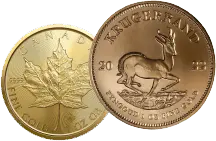
Popular gold options include the [American Gold Eagle], the [Canadian Gold Maple Leaf], and the [South African Krugerrand], while silver buyers often choose the [American Silver Eagle] or pre-1965 90% silver coins. Shoppers looking for lower-cost entry points can browse gold coins or compare gold bar options side by side, and a broader roundup of current gold coin deals is worth a look before buying.
Where Can You Buy or Sell Precious Metals Today?
For buyers and sellers in the Pacific Northwest, Accurate Precious Metals in Salem, Oregon is the clear standout among local dealers, with more than 12 years in business and over 1,000 five-star customer reviews. Unlike a pawn shop, Accurate Precious Metals is a specialized bullion dealer with pricing tied to live spot prices and inventory covering gold, silver, platinum, palladium, and even copper, alongside diamonds and jewelry.
Local customers can visit the Salem location in person for a face-to-face transaction, and Accurate Precious Metals is an NGC Authorized dealer offering grading services for collectors who want their coins evaluated. Anyone outside the immediate area can still sell with confidence using the mail-in service, which includes free insured shipping and a fast payment process once items are received and assessed for purity.
Whether you're holding scrap gold jewelry, dental gold, silverware, or bullion coins, Accurate Precious Metals buys it all and offers competitive prices based on current spot prices rather than guesswork. If you're new to selling, the guide to selling gold jewelry walks through what to expect, and the more detailed guide to selling gold and diamond scrap covers jewelry in mixed conditions. For readers who prefer researching before selling, check the we buy locations page to see how in-person and mail-in options compare.
💡 Tip: Whether you sell in person in Salem or ship items in through the mail-in kit, get a written offer before agreeing to a sale so you know exactly what's being paid for and why.
Common Misconceptions About Salt, Gold, and Safe-Haven Metals
The biggest misconception is that salt was always exchanged pound-for-pound with gold across West Africa, which historians describe as an exaggeration shaped by silent barter and shifting local conditions rather than a fixed universal rule. A few other myths are worth clearing up too.
"All precious metals are equally safe": false, since gold leads while silver is more volatile and platinum and palladium track industrial cycles closely
"Melt value equals market value": false for most collectible coins, where premiums and rarity can add significantly more
"A high spot price means every coin is a good buy": false, because premiums can still make a purchase a poor value
"Salt and gold were money because ancient traders were primitive": false, they were money-like because they were scarce, useful, durable, and trusted within an established trade network
Understanding these distinctions matters whether you're reading about medieval trade routes or deciding what to buy with today's gold spot price sitting at about $4,089 an ounce.
Frequently Asked Questions
Was salt really worth its weight in gold in ancient Africa?
Sometimes salt commanded a very high price in West African markets, but the exact phrase is an oversimplification; historians point to silent barter and local supply conditions as the real explanation for the variable exchange rate.
What is silent barter and how did it work in the salt and gold trade?
Silent barter was a trading method where one party left goods at a set location and the other left a counteroffer without direct face-to-face negotiation, a system that reduced conflict and worked around language barriers between traders.
Why was salt so valuable in premodern West Africa?
Salt was scarce in many inland regions and essential for both basic nutrition and preserving food before refrigeration existed, which made a usable slab of salt genuinely valuable in trade.
Which West African empire controlled the salt and gold trade routes?
The Ghana Empire was especially important in the early rise of the trans-Saharan trade, and later West African states also profited from controlling key trade routes and gold-producing regions.
Is gold really a better safe haven than silver, platinum, or palladium?
Yes, gold is generally considered the strongest safe-haven metal because its demand is driven mainly by investment and central bank holdings, while silver, platinum, and palladium are more exposed to industrial demand swings.
What is the melt value of a 1 oz gold coin right now?
At a gold spot price of about $4,089 an ounce at the time of writing, a 1 oz gold coin holds about $4,089 in melt value before any dealer premium.
Where can I sell gold, silver, or jewelry if I'm not near Salem, Oregon?
You can use Accurate Precious Metals' mail-in service, which offers free insured shipping and fast payment for buyers and sellers anywhere in the United States.
Make the smart choice — invest with Accurate Precious Metals
Whether you are buying bullion for the first time or adding to a long-term position, our team offers expert guidance, transparent pricing, and a reliable buyback program.