

Mastering precious metal grading best practices for sellers

Disclaimer
Accurate Precious Metals is not a financial advisor. We encourage everyone to consult a financial advisor or CPA. They can help determine the best investment strategies. Our mission is to provide educational content about precious metals. Accurate Precious Metals is committed to transparency and reliability. They offer top-tier precious metal products and information.
This information is subject to change due to market fluctuations, world events, and factors beyond our control. Additionally, the content may not fully reflect our company’s values, as personnel, staff, and authorship may change over time.
Following precious metal grading best practices is the difference between walking away from a sale with full value or leaving money on the table. Whether you hold a roll of Silver Eagles, a stack of gold bars, or a handful of inherited coins, understanding how condition is evaluated – and by whom – shapes every buying and selling decision you make.
This guide covers the grading scale, what professionals actually look for, how third-party services work, and how to apply these standards whether you are selling locally or shipping your metals across the country.
What Precious Metal Grading Actually Means
Grading is a structured evaluation of a coin’s, bar’s, or round’s physical condition. It tells you where an item sits on a quality scale, which then informs its market value beyond raw metal content.
The floor is always spot price. Gold currently trades around $4,738 an ounce. Silver sits near $78. A 1 oz [American Gold Eagle] melts for roughly that amount regardless of condition. But grade that same coin at MS-70 and it can sell for several times the melt value. That gap is why grading matters.
The system used today traces back to 1949, when Dr. William Sheldon introduced a 1-to-70 numeric scale originally designed for U.S. coins. Higher numbers mean better condition. The scale was eventually adopted worldwide and now applies to gold, silver, platinum, and palladium bullion alike.
The Sheldon Scale: A Practical Breakdown
Think of the scale in tiers. Each tier represents a visible jump in quality – and a meaningful jump in price.
| Grade Range | Abbreviation | What You See | Approximate Premium Over Spot |
|---|---|---|---|
| 1-10 | PO / AG (Poor / About Good) | Date barely readable | heavy damage |
| 11-20 | G / VG (Good / Very Good) | Outlines visible | most detail worn away |
| 21-35 | F / VF (Fine / Very Fine) | Moderate to light wear | legends clear |
| 40-45 | XF / EF (Extremely Fine) | Slight wear on high points | most luster intact |
| 50-58 | AU (About Uncirculated) | Trace wear only | 50-90% original luster |
| 60-70 | MS (Mint State) | No wear at all | varies by contact marks |
The MS tier is where collectors and investors pay serious premiums. An MS-65 is called a “Gem” – visually stunning with minimal contact marks. MS-70 is theoretically perfect and genuinely rare.
Two additional labels boost value further. Cameo and Deep Cameo designations apply to proof coins, which are specially struck with frosted design elements against mirror-like fields. The stronger the contrast, the higher the premium. A CAC sticker – issued by a respected independent review service – signals that a coin is exceptional even within its assigned grade.
For a closer look at what separates a standard Mint State coin from a high-grade MS-67 example, the difference often comes down to strike sharpness and surface preservation.




The Six Factors Graders Evaluate
Professional graders do not just scan a coin and pick a number. They work through a consistent set of criteria, usually under 5x to 10x magnification with controlled lighting.
- Luster – The reflective quality of the surface. Fresh mint luster looks like flowing light under a lamp. Any dulling or cloudiness signals wear or improper handling.
- Strike – How sharply the design transferred from the die. A weak strike produces soft, slightly blurry details even on an otherwise unworn coin.
- Wear – Rubbing on the highest points of the design. On a portrait coin, the cheekbone and hair curls show wear first.
- Contact marks – Small dings and abrasions from coins bumping against each other during mint handling or transport. Common even on uncirculated coins.
- Hairlines – Fine scratches usually caused by improper cleaning. These catch light at certain angles and immediately flag a coin as “cleaned.”
- Eye appeal – The overall visual impression. Attractive natural toning (color changes from age) can boost this score. Uneven or artificial-looking toning hurts it.
All six factors combine into the final grade. A coin with flawless luster but a weak strike may land at MS-63 instead of MS-65. That one grade difference on a popular bullion coin can mean hundreds of dollars.
Third-Party Grading Services: PCGS and NGC
Two organizations dominate professional coin grading: PCGS (Professional Coin Grading Service) and NGC (Numismatic Guaranty Corporation). Both emerged in the 1980s specifically to bring consistency to a market where subjective dealer opinions created constant disputes.
The process works like this: you submit a coin, multiple trained graders review it independently, they reach a consensus grade, and the coin is sealed in a tamper-evident plastic holder called a slab. The slab displays the grade, a serial number, and anti-counterfeit features. Once slabbed, the coin’s grade is considered market-standard.
Turnaround times range from a few weeks to several months depending on the service tier you choose. Bulk submissions cost less per coin. If you are sitting on a collection of NGC-graded coins or are considering whether to submit, the economics favor grading for anything rare, high-condition, or historically significant.
Accurate Precious Metals is an NGC Authorized Dealer, which means submissions and grading consultations can flow directly through our team rather than requiring you to work through the process alone.
Precious Metal Grading Best Practices at Home
Professional submission is not always necessary. For lower-value coins, circulated bullion, or items you are simply trying to understand before selling, a home evaluation gives you a solid baseline.
Gather tools – a 10x loupe, a strong LED light, and soft cotton gloves or coin tongs
Hold the coin by its edges only. Finger oils etch into surfaces over time and lower grade
Tilt the coin under the light at different angles. Luster appears as flowing light across the surface; hairlines and wear show as dull or flat spots
Magnify the highest design points – portrait cheeks, eagle feathers, lettering peaks – and look for any flat or rubbed areas
Compare to reference photos on the PCGS or NGC websites, which show graded examples at every tier
Record your assessment and note any marks, toning, or cleaning evidence before making a buying or selling decision
One rule applies universally: never clean a coin. Polishing removes luster instantly and permanently. A cleaned coin is immediately identifiable to any experienced grader and will be labeled “details grade” – meaning it receives a grade with a cleaning note attached, which crushes resale value. No amount of shine is worth the downgrade.
PCGS & NGC Coin Verification – Accurate Precious Metals Refineries
Grading Bars and Rounds
Bars and rounds follow looser standards than coins, but condition still affects resale. There is no formal Sheldon-equivalent scale for bars, but dealers and buyers use similar language informally.
For a 1 oz gold or silver bar, the key checks are:
- Flat surfaces free of deep scratches or gouges
- Sharp, legible stamping of weight, purity, and mint mark
- No bends, dents, or signs of attempted drilling or testing
- Original packaging or assay card intact (adds measurable premium)
Silver bars are especially susceptible to toning and milk spots – a cloudy surface phenomenon common on some silver products. Milk spots do not affect metal content, but they reduce eye appeal and therefore resale price. Store silver in anti-tarnish packaging in a cool, dry environment to preserve surface quality.
Purity stamps are your first checkpoint regardless of item type. Gold bullion typically carries a .999 or .9999 fineness mark. Silver bullion is usually .999. Platinum and palladium products commonly read .9995. Any item without a clear hallmark warrants closer inspection before you assign any value above melt.
For anyone unsure about a bar’s authenticity, our team at Accurate Precious Metals can assess items through XRF analysis – a non-destructive method that verifies metal content without damage.
Common Grading Mistakes (and How to Avoid Them)
Even experienced collectors fall into predictable traps. These are the most common ones.
Overcleaning. Already covered, but worth repeating. The single most damaging thing you can do to a coin’s value is polish it. Walk away from any advice suggesting otherwise.
Ignoring population reports. PCGS and NGC publish data on how many coins of each type have been graded at each level. A coin graded MS-68 sounds impressive – but if 5,000 examples exist at that grade, the premium is modest. If only 12 exist, the premium is significant. Always check population before pricing.
Assuming toning is damage. Natural, even toning – especially the rainbow iridescence that develops on silver over decades – is considered attractive by most collectors and can increase value. Artificial or blotchy toning is the opposite. Learning to distinguish the two takes practice but pays off.
Skipping third-party grading on valuable pieces. Raw coins are harder to sell, easier to counterfeit, and more prone to pricing disputes. If you are selling something worth more than a few hundred dollars, a slab from a recognized service protects both parties.
Conflating bullion value with numismatic value. A scratched 1880s Morgan Silver Dollar in Poor condition still carries historical significance and collector demand. A perfect common-date bullion coin in MS-70 carries a premium purely based on condition. These are different markets with different buyers. Understanding the distinction between bullion and numismatic coins prevents mispricing in both directions.
How Grading Connects to Selling Precious Metals
If you are planning to sell, grading is not just an academic exercise – it directly determines what you get paid. A coin sold as “raw” to a general buyer may be undervalued simply because the buyer cannot verify its grade. A slabbed coin with a recognized grade sells at a known market rate.
For sellers working with Accurate Precious Metals, understanding what to expect from a coin appraisal helps you walk in with realistic expectations and leave with fair value.
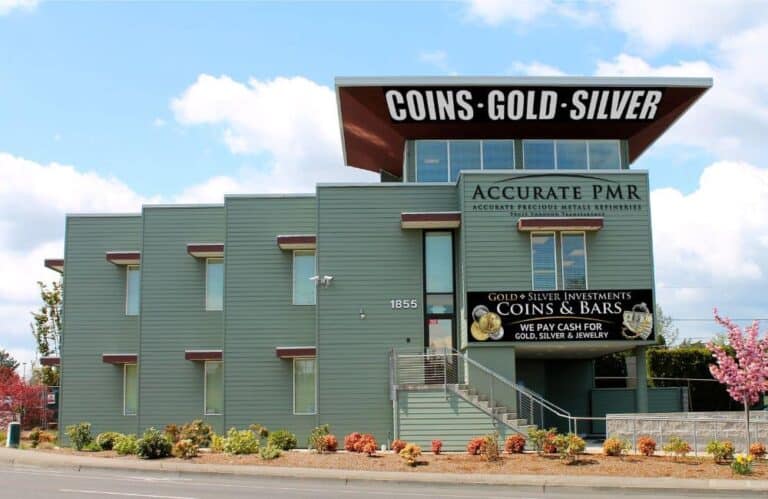
When you are ready to sell, Accurate Precious Metals buys all precious metals – coins, bars, rounds, scrap gold, jewelry, silverware, dental scrap, and more. Local customers in the Salem, Oregon area are welcome to visit in person for a same-day evaluation. If you are anywhere else in the United States, the mail-in program lets you ship your metals with a free insured kit, receive a GIA-informed appraisal, and get paid quickly without leaving home.
Either way, knowing your item’s approximate grade before you arrive – or before you ship – puts you in a stronger position.
Why Work With Accurate Precious Metals
Accurate Precious Metals has been operating out of Salem, Oregon for over 12 years. With more than 1,000 five-star customer reviews and an inventory spanning gold, silver, platinum, palladium, coins, bars, diamonds, and jewelry, the business is built around one straightforward idea: transparent, competitive pricing backed by real expertise.
As an NGC Authorized Dealer, Accurate Precious Metals can facilitate grading submissions directly – a meaningful advantage if you are trying to get a coin professionally slabbed without working through the process on your own. Pricing reflects live spot rates, and the team can walk you through the cash for gold process whether you are selling a single ring or an entire estate collection.
This is not a pawn shop. It is a specialized precious metals dealer with the tools, credentials, and track record to give your items a fair and accurate evaluation.
Frequently Asked Questions
What is the Sheldon Grading Scale?
It is a 1-to-70 numeric system developed in 1949 to standardize coin condition evaluation. Higher numbers indicate better condition. Grades above 60 are considered Mint State (uncirculated), and MS-70 represents a theoretically perfect coin.
Should I clean my coins before grading or selling?
No. Cleaning removes luster and leaves hairlines that graders immediately identify. A cleaned coin receives a "details grade" designation that significantly reduces its market value compared to an original-surface example.
When is it worth paying for professional grading?
Generally when a coin is worth more than $500, is rare or low-mintage, or when you plan to sell it soon. The grading fee – typically $20 to $100 per coin – usually pays for itself through the premium a slabbed coin commands over a raw one.
What is the difference between PCGS and NGC?
Both are respected, market-standard grading services. PCGS and NGC grades are accepted by dealers and collectors worldwide. The choice between them often comes down to personal preference or which service has graded more examples of a specific coin type. Accurate Precious Metals is an NGC Authorized Dealer.
Does grading apply to gold and silver bars?
There is no formal scale for bars equivalent to the Sheldon system, but condition still affects resale value. Scratches, dents, missing assay cards, and damaged stamping all reduce what a buyer will pay. Keeping bars in original packaging preserves their premium.
How do I sell graded coins or bullion to Accurate Precious Metals?
You can visit the Salem, Oregon location in person for a same-day evaluation, or use the free insured mail-in service if you are located elsewhere in the United States. Both options include a transparent appraisal process and fast payment.
What metals does Accurate Precious Metals buy?
Gold, silver, platinum, palladium, coins (bullion and numismatic), bars, rounds, scrap jewelry, silverware, dental scrap, diamonds, and luxury watches. Any condition, broken or intact.

