

Mastering gold and silver coin valuation: a practical guide

Disclaimer
Accurate Precious Metals is not a financial advisor. We encourage everyone to consult a financial advisor or CPA. They can help determine the best investment strategies. Our mission is to provide educational content about precious metals. Accurate Precious Metals is committed to transparency and reliability. They offer top-tier precious metal products and information.
This information is subject to change due to market fluctuations, world events, and factors beyond our control. Additionally, the content may not fully reflect our company’s values, as personnel, staff, and authorship may change over time.
Gold and silver coin valuation is the starting point for anyone who wants to know what their coins are actually worth – whether they are sitting on a jar of old dimes, a stack of Silver Eagles, or a mixed collection inherited from a relative. The answer depends on two things: what the metal inside the coin is worth at today’s spot price, and whether the coin carries any collector premium beyond that.
With silver currently trading around $79 an ounce and gold near $4,572, even common coins hold serious intrinsic value right now. Understanding how to calculate that value – and when a coin might be worth far more than its metal – is what this guide covers, step by step.
Live Silver Spot Price – Accurate Precious Metals Refineries
The Two Layers of Coin Value
Every coin has at least one value, and many have two. The first is melt value, sometimes called intrinsic value. This is simply what the metal inside the coin would be worth if it were melted down and sold at current spot prices. The formula is straightforward:
Melt value = weight in troy ounces x purity x spot price
The second layer is numismatic value. This is extra value that comes from rarity, collector demand, historical significance, or exceptional condition. A coin with strong numismatic value can sell for many times its melt value.
For most bullion coins – [American Gold Eagles], [American Silver Eagles], Krugerrands, Maple Leafs – the price tracks closely with metal content. Melt value is basically the whole story. For old, scarce, or high-grade coins, the numismatic side can dominate completely.
Why Spot Price Is the Foundation of Gold and Silver Coin Valuation
Spot price is the real-time market price for one troy ounce of a metal. Every bullion coin price starts there. A one-ounce Silver Eagle, for example, is not priced at $1.00 because that is its face value – it is priced based on the silver spot price plus a small dealer premium for minting and distribution costs.
Right now, with silver at roughly $79 an ounce, that same coin carries far more real-world value than its face value suggests. Gold at around $4,572 means a one-ounce Gold Eagle is worth well over four thousand dollars in metal alone, regardless of what “$50” is stamped on the reverse.
Premiums over spot vary by product. Bullion coins from major government mints typically carry a premium of a few dollars per ounce for silver and a percentage above spot for gold. Bars generally carry lower premiums than coins because they cost less to produce. Understanding live gold spot prices helps you track these movements in real time and know whether you are getting a fair deal.





Common U.S. Silver Coins and Their Metal Content
Pre-1965 U.S. dimes, quarters, and half dollars are 90% silver. Collectors and dealers call them “junk silver” – not because they are worthless, but because they are valued primarily for metal content rather than rarity. The term is a trade shorthand, nothing more.
At $79 per ounce, these coins carry real money in silver content alone. A single 90% silver quarter contains about 0.1808 troy ounces of pure silver. At current spot, that is roughly $14 in silver value from a coin that spent decades buying candy bars.
Here is a quick reference for common 90% silver coin silver content:
| Coin Type | Silver Content (troy oz) | Approx. Melt Value at $79/oz |
|---|---|---|
| Pre-1965 Dime | 0.0723 oz | ~$5.71 |
| Pre-1965 Quarter | 0.1808 oz | ~$14.28 |
| Pre-1965 Half Dollar | 0.3617 oz | ~$28.57 |
| Morgan / Peace Dollar | 0.7734 oz | ~$61.10 |
These are melt-based figures. Rare dates and high-grade examples can trade well above these numbers. Mastering silver coin melt value goes deeper into the math and how to apply it to different coin types.
Bullion Coins vs. Numismatic Coins – What Is the Difference?
This distinction matters a lot in practice.
Bullion coins are produced by government mints primarily for investors. Their value is tied almost entirely to metal content. They trade in high volumes, and pricing is transparent. Examples include the [American Silver Eagle], the Gold Maple Leaf, and the Gold Krugerrand. When you buy or sell these, you are essentially trading metal at spot plus a small premium.
Numismatic coins are valued by collectors based on rarity, grade, historical importance, and demand. A low-mintage Morgan Dollar in MS-65 condition might sell for hundreds of dollars above its silver melt value. The metal content is almost irrelevant to the final price.
Some coins sit in between. A common-date Morgan Dollar in worn condition trades close to its silver melt value. The same coin in pristine, uncirculated condition can be worth significantly more. Condition is the variable that moves it from one category to the other.
Note the denomination, date, mintmark, and country of origin.
Look up the coin’s known silver or gold content – most U.S. coins have published specifications.
Multiply weight x purity x current spot price.
Compare against PCGS or Greysheet pricing for that date, mintmark, and grade.
If numismatic value is close to melt value, the coin is essentially bullion. If it is significantly higher, condition and rarity are driving the price.
What Drives Numismatic Value Beyond Metal
Several factors push a coin’s price above its metal content. Understanding them helps you spot coins that deserve a closer look.
Date and mintmark are the first things to check. Within any coin series, certain years and mint locations produced far fewer coins. A 1916-D Mercury Dime is rare. A 1945-P Mercury Dime is not. Both are 90% silver, but their collector values are completely different.
Mintage and survival rate matter because a low original production number means fewer coins exist today. But survival rate matters too – a coin minted in large numbers that was mostly melted or heavily circulated can be scarcer than its mintage suggests.
Condition and grade directly affect price. Coin grading runs from Poor (P-1) to Mint State (MS-70). Each step up the scale can add meaningful value, especially for rare dates. Professional grading by PCGS or NGC provides a standardized assessment that the market trusts. Understanding coin collection values explains how grading fits into the broader picture of what a collection is worth.
Collector demand shifts over time. Some series are popular right now; others are underappreciated. Popular series command stronger premiums.
Historical significance adds a layer of story that collectors pay for. Coins tied to important events, famous designs, or early American history often carry premiums that pure scarcity alone would not explain.
A Brief Glossary of Key Terms
Knowing the vocabulary makes it easier to read price guides and talk to dealers without confusion.
| Term | What It Means |
|---|---|
| Spot Price | Current market price for one troy ounce of a metal |
| Melt Value | What the metal content of a coin is worth at spot price |
| Fineness | Purity of the metal expressed as a decimal (.999 = 99.9% pure) |
| Troy Ounce | Standard unit of weight for precious metals – 31.1 grams |
| Numismatic | Relating to collector value based on rarity, grade, and demand |
| BU (Brilliant Uncirculated) | A coin that shows no wear, though it may have minor contact marks |
| MS (Mint State) | Grading scale from MS-60 to MS-70 for uncirculated coins |
| Junk Silver | Circulated U.S. silver coins valued primarily for metal content |
| Premium | The amount paid above spot price for a coin or bar |
| Greysheet | A dealer-to-dealer wholesale price guide published by CDN |
Common Misconceptions About Coin Value
A few myths circulate widely and cause people to either overprice or undersell their coins.
Old automatically means valuable. Age matters far less than scarcity and condition. A 1900 coin that was minted in the tens of millions and heavily circulated may be worth only its silver content. A 1955 doubled-die Lincoln cent is worth thousands because of a specific minting error – not because it is old.
Face value equals real value. A silver dime is worth roughly $5.71 in silver right now, not 10 cents. Face value on silver coins became irrelevant decades ago when rising metal prices exceeded the denomination.
Shiny is better. Cleaning a coin with household products or polishing it removes the natural surface patina that collectors value. A cleaned coin is almost always worth less than an unclean one of the same date and grade. Professional graders note cleaning, and it reduces the assigned grade.
All silver coins are the same. Some are bullion, some are junk silver, and some are rare collectibles. Treating them all as equivalent is a fast way to leave money on the table – or to overpay.
How to Maximize Your Payout When Selling
Whether you are selling one coin or a full collection, a few practical steps help you get a fair return.
Selling silver coins for cash works best when you go in with a baseline number. Calculate the melt value yourself, then compare what a dealer offers. A fair offer will be below spot – dealers need a margin – but it should not be dramatically below it.
For silver bars and rounds, selling silver for cash follows the same logic: start with spot, factor in the dealer’s buy spread, and compare across a couple of reputable sources.
Gold and Silver Coin Valuation in Practice – A Step-by-Step Summary
Putting it all together, here is a practical process for valuing any gold or silver coin.
Note denomination, country, date, and mintmark. This tells you what series you are dealing with.
Look up the coin’s known weight and purity. For U.S. coins, this is publicly documented.
Multiply the coin’s troy ounce weight by its purity and then by the current spot price.
Search PCGS or Greysheet for that specific date, mintmark, and grade. If prices are close to melt, it is essentially bullion. If prices are significantly higher, condition and rarity matter.
Wear, scratches, cleaning, and corrosion all reduce value. If the coin looks exceptional, a professional grade from PCGS or NGC may add value.
A specialist dealer will give you a more accurate offer than a general buyer. Know your melt value baseline before you go.
Why Accurate Precious Metals Is the Right Place to Start
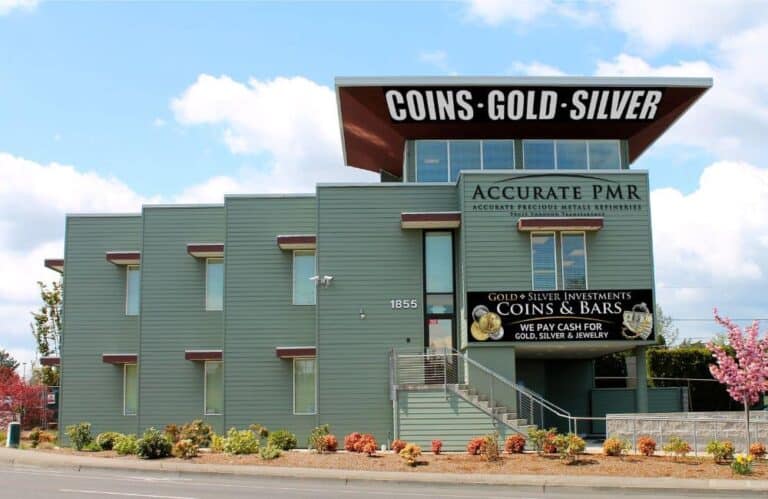
Accurate Precious Metals has been buying and selling gold and silver coins for over twelve years from its Salem, Oregon location, and the company has earned more than a thousand five-star reviews from customers across the country. That track record matters when you are trying to get a fair, transparent valuation.
The team at AccuratePMR evaluates coins using XRF analysis and thorough inspection, and as an NGC Authorized Dealer, they can facilitate professional grading for coins that may carry numismatic value above their melt weight. That means you are not guessing whether a coin is junk silver or a collector piece – you get a real answer.
Inventory spans all gold products and all silver products – coins, bars, rounds, and more – with pricing updated to reflect live spot prices. For retirement investors, Gold and Silver IRA services are available as well.
Selling to Accurate Precious Metals is straightforward regardless of where you live. Local customers in the Salem, Oregon area can bring coins in person for a face-to-face evaluation. Customers anywhere in the United States can use the mail-in service – the kit includes free insured shipping, and payment is fast once your metals are assessed. There are no hidden fees and no pressure. Whether you have a single silver dollar or a full inherited collection, both options are open to you.
Frequently Asked Questions
What is the difference between melt value and numismatic value?
Melt value is what the metal content of a coin is worth at current spot prices. Numismatic value is extra collector value driven by rarity, condition, date, and demand. Bullion coins are priced mainly on melt value. Rare or historic coins can trade far above their metal content.
How do I calculate the silver value of a pre-1965 U.S. coin?
Multiply the coin’s silver content in troy ounces by the current silver spot price. A pre-1965 quarter contains about 0.1808 troy ounces of silver. At $79 per ounce, that is roughly $14.28 in silver value.
Does cleaning a coin increase its value?
No. Cleaning removes natural surface patina and is considered damage by professional graders. A cleaned coin almost always receives a lower grade and sells for less than an equivalent uncleaned example.
What is junk silver?
Junk silver is a trade term for circulated U.S. silver coins – mostly pre-1965 dimes, quarters, and half dollars – that are valued primarily for their silver content rather than rarity. The word “junk” does not mean worthless; it just means the coin is not a collector piece.
What is the current silver spot price?
Silver is currently trading around $79 per ounce. Spot prices change throughout the trading day, so check a live feed before calculating melt values.
How do I sell my silver coins to Accurate Precious Metals?
If you are local to Salem, Oregon, you can bring your coins in person. If you are anywhere else in the United States, you can use the mail-in service at AccuratePMR.com. Shipping is insured, and payment is processed quickly after evaluation.
Should I get my coins professionally graded before selling?
For common bullion coins and junk silver, professional grading is usually not necessary. For coins that appear to be in exceptional condition or are potentially rare dates, grading by PCGS or NGC can confirm a higher value and make the coin easier to sell at a premium.
What is a dealer premium?
A premium is the amount charged above spot price when buying a coin. It covers minting costs, distribution, and dealer margin. When selling back to a dealer, expect to receive somewhat below spot – that spread is how dealers operate, and it is standard across the industry.

