

Is Your 1776-1976 Drummer Boy Quarter Worth Big Money?

Disclaimer
Accurate Precious Metals is not a financial advisor. We encourage everyone to consult a financial advisor or CPA. They can help determine the best investment strategies. Our mission is to provide educational content about precious metals. Accurate Precious Metals is committed to transparency and reliability. They offer top-tier precious metal products and information.
This information is subject to change due to market fluctuations, world events, and factors beyond our control. Additionally, the content may not fully reflect our company’s values, as personnel, staff, and authorship may change over time.
Are you curious about the value of your 1776-1976 bicentennial quarter? In this article, we dive deep into the world of coin collecting, explicitly focusing on the iconic drummer boy quarter. Whether you’re a seasoned numismatist or a casual collector, understanding the worth of your coins can lead to exciting discoveries and financial rewards. Read on to learn about the factors that influence the value of these quarters and find out if yours could be worth big money!
What Makes the 1776-1976 Bicentennial Quarter Unique?
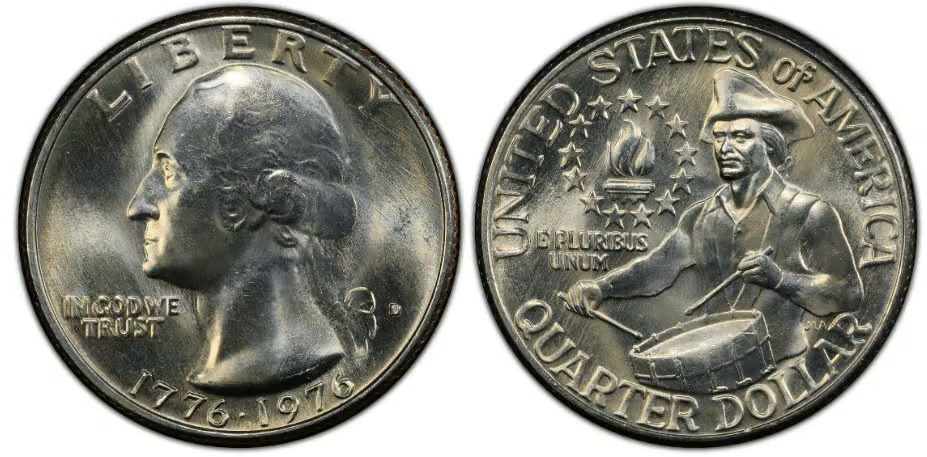
The 1776-1976 Bicentennial quarter, also known as the Drummer Boy quarter, commemorates America’s 200th anniversary. Designed by Frank Gasparro, the coin features a depiction of a colonial drummer on the reverse side, symbolizing the spirit of independence and patriotism.
The reverse image, however, was the result of a different creative process. Jack L. Ahr designed this iconic image after his entry was selected in an open contest held by the Treasury in 1973. This competition allowed artists from across the country to submit their visions, ensuring a design that truly resonated with the American public.
Together, these elements of the coin reflect a unique blend of artistry and national pride, embodying the historical significance of the Bicentennial celebration.
On the reverse, the revolutionary soldier replaces the traditional eagle, capturing the essence of America’s fight for freedom. To the left of the drummer, above the inscription “E PLURIBUS UNUM,” thirteen stars encircle a torch, representing the original colonies and their unity.
The obverse side of the quarter maintains its classic design with a few notable Bicentennial modifications. The dual date “1776–1976” is prominently displayed, marking the historical milestone. Washington’s portrait remains central, with the mintmark positioned to the right. The national motto “IN GOD WE TRUST” is inscribed to his left, while “LIBERTY” elegantly arches across the top rim, preserving the coin’s traditional elements.
This blend of historical imagery and enduring symbols makes the Bicentennial quarter a cherished piece of American numismatic history.
This unique design sets it apart from regular quarters, making it a sought-after item for collectors.
Understanding the Bicentennial Quarter
If you have a Washington quarter with the date “1776–1976” on it, you possess a piece of history known as a Bicentennial quarter. These coins were minted to celebrate America’s 200th birthday, marking a significant milestone in the nation’s history.
Special Features
- Commemorative Design: The quarter showcases a special reverse design, distinct from the standard Washington quarters.
- Symbolic Date: The “1776–1976” imprint honors the birth of the United States, connecting the coin directly to the bicentennial celebration.
Collectors and history enthusiasts alike prize these quarters for their historical significance and unique aesthetic, making them a valuable addition to any collection.
Minted between 1975 and 1976, the bicentennial quarters were produced in a variety of finishes, including clad and silver. The transition in design and the special occasion undoubtedly contributed to their popularity, creating a unique niche in the world of coin collecting.
How Do You Determine the Value of Your Drummer Boy Quarter?
When evaluating the value of a 1776-1976 Bicentennial quarter, several key factors come into play. First, the condition of the coin is crucial. Coins in uncirculated condition can fetch significantly higher prices than those that have been circulated. However, the scarcity of high-grade examples is influenced by more than just current condition.
Production Quality: During the initial production run, many coins were not well-struck, meaning they were of lower quality right from the start. This production issue contributes to the scarcity of well-preserved, high-grade coins.
Preservation Challenges: Not all coins collected and hoarded over the years were properly preserved. As a result, many coins experienced deterioration, further reducing the number of pristine examples available to collectors.
Additionally, collectors consider the coin’s rarity, mint mark, and any potential errors that may exist. These elements can also significantly impact a coin’s desirability and market value. Understanding these factors provides insight into why certain Bicentennial quarters are more coveted than others.
To properly assess the value, you can refer to reputable coin grading systems, such as the Sheldon coin grading scale. Understanding mint marks—indicating where the coin was produced—also helps collectors gauge value. For instance, quarters minted in Philadelphia typically lack a mint mark, while those from Denver carry a “D.”
Understanding the Value of Bicentennial Quarters
When evaluating a Bicentennial quarter, the condition significantly influences its market value.
Mint State Value:
- In mint, untouched condition, these quarters are generally valued at a minimum of $5.
Circulated Condition:
- For those that have been in general use, their value typically remains at the standard face value of 25 cents.
The contrast in value underscores the importance of condition when collecting or assessing coins.
The melting of silver Bicentennial quarters in 1982 significantly impacted their scarcity and value in the coin collector’s market. Originally, around 11 million of these 40% silver quarters were produced. However, a substantial number of them were melted down starting in 1982 and in following years.
This reduction in their numbers has made the remaining coins rarer. As a result, scarcity generally increased their appeal to collectors, driving up their value. While not all coins from the original mintage were melted, the decrease in supply often leads to heightened demand, and therefore a higher market value for those that survive. Consequently, the reduced availability of these quarters has sparked interest among numismatists, making them sought-after pieces in collections today.




Are All 1976 Bicentennial Quarters Worth Something?
Not all 1976 bicentennial quarters hold significant value. While the majority of these coins are worth their face value of 25 cents, some may be worth more due to their condition or unique attributes. For example, uncirculated versions or proof coins generally demand higher prices among collectors.
A Clad Bicentennial Quarter in excellent condition can be worth more than its face value, especially if it’s free from scratches, discoloration, or other signs of wear. The absence of these imperfections is crucial in increasing the coin’s desirability and value.
As a rule of thumb, the 1976 bicentennial quarters that are worth more than face value tend to be in excellent condition. Even then, most only range from a few dollars to several hundred, depending on their specific characteristics. Collectors particularly seek out those coins that maintain their original luster and detail, which can significantly enhance their market appeal.
In summary, while not every bicentennial quarter will bring in a fortune, those in pristine condition with no visible signs of wear certainly have the potential to be much more than just a piece of change.
What Are the Rare Variants of the 1776-1976 Quarter?
Some variants of the 1776-1976 quarter are considered rare and can command higher prices. For instance, certain error coins, such as those with misprints or unusual minting flaws, may be worth significantly more. Collectors eagerly search for these rare bicentennial quarters, raising their desirability in the market.
Error coins are particularly attractive to collectors due to their unique characteristics. Specific types of minting errors that can increase the worth of a 1976 Bicentennial Quarter include:
- Misstrikes, which occur when the coin is struck incorrectly, leading to an off-pattern appearance.
- Double dies, where the coin’s design elements appear doubled, making them especially rare.
- Off-center prints, resulting in part of the design being cut off, adding a distinct charm to these coins.
Collectors are often willing to pay a premium for these rarities, as each error coin tells a unique story, enhancing its appeal and value in the numismatic world.
For the 1776-1976 Bicentennial Quarter, several specific errors are noteworthy:
- Bicentennial Quarter Filled D Error: This error is found on coins minted in Denver, where the “D” mint mark appears filled or partially obscured due to excess metal or clogged dies during production. Collectors highly value this unique flaw.
- Bicentennial Quarter with No Mint Mark: Typically, quarters from Philadelphia lack a mint mark, but some error coins unintentionally omit this mark. These coins are highly sought after and can command impressive prices.
- Double Die Errors: Look for doubled inscriptions or imagery, especially on “Liberty” or the drummer’s details. These errors result from misaligned strikes during minting, making them a prized find for collectors.
- Die Breaks and Cuds: These appear as visible cracks or blobs on the coin’s surface, caused by worn dies. Such imperfections are not only fascinating but also considered valuable collector’s items.
Each of these errors offers a glimpse into the coin’s minting history, providing both a challenge and a reward for dedicated numismatists. Whether you’re drawn to the mystery of a missing mint mark or the allure of a double die, these errors contribute significantly to the intrigue and market value of the bicentennial quarter.
What Makes the 1976 No Mint Mark Bicentennial Quarter Rare?
The 1976 Bicentennial Quarter is unique for its absence of a mint mark, setting it apart from the usual Denver or San Francisco versions. Coins minted in Philadelphia during this period did not include a mint mark, making these quarters immediately distinctive.
Key Features of these Rare Quarters:
- Lack of Mint Mark: Philadelphia Mint quarters are identifiable because there’s no mint mark present.
- Limited Production: Compared to other mints, the Philadelphia Mint’s no-mark variants are less common, heightening their rarity.
If you have one of these quarters, examining its condition is crucial. Those in pristine condition command a premium value above mere face worth, appealing to collectors.
What to Look for in Valuable Bicentennial Quarters
Collectors aiming to find valuable Bicentennial Quarters in circulation should pay close attention to several key attributes that can significantly boost a coin’s value. Here’s a guide to what you should examine:
1. Mint Marks
- San Francisco Mint (S Mint Mark): Coins from this mint can be particularly desirable, especially if they are proof versions.
- Absence of a Mint Mark: Occasionally, a missing mint mark can indicate rarity, especially if the coin was intended to have one.
2. Coin Condition and Errors
- High-Grade Condition: Coins that remain in excellent condition with minimal signs of wear can be quite valuable.
- Unique Errors: Keep an eye out for coins with errors such as double dies or off-center strikes, which are rare and sought after by collectors.
3. Silver Content
- 40% Silver Quarters: Some Bicentennial Quarters were minted with 40% silver. These are distinguishable by their silver edge and are more valuable than their copper-nickel counterparts.
4. Proof Finishes
- Proof Coins: These are specially minted with a mirror-like finish and are usually not intended for general circulation. If found, they can be a prized addition to any collection.
By focusing on these attributes, collectors can better identify which Bicentennial Quarters are worth holding onto and potentially reselling for a profit. Always handle these coins with care to maintain their condition and value.
Discover the Estimated Values of Rare Bicentennial Quarters
The Bicentennial Quarters, with their distinctive designs, can vary significantly in value. Here’s a breakdown of some notable examples and what collectors might pay for them:
- 1976-D (Denver Mint): These coins can range between $5 and $1,000, depending on their condition and rarity.
- 1976-S Proof (San Francisco Mint): Known for their brilliant finish, these proofs are valued anywhere from $10 to $3,000.
- 1976 No Mint Mark (Philadelphia): These elusive pieces can fetch between $50 and $5,000.
- 1976 Silver Quarters (Special Sets): Collectors are willing to pay from $20 to $2,500 for these silvery finds.
- 1976 Error Coins: With their unique production flaws, such examples can bring $100 to $10,000.
- 1976 Double Die Variants: Coins exhibiting this striking error are valued between $200 and $8,000.
- 1976 Clad Quarters: Typically valued from $1 to $500, these are the most common but still collectible.
Keep your eyes peeled! These coins might be lingering in circulation, waiting to be discovered in everyday pocket change. Noteworthy features like mint marks, proof finishes, or errors can dramatically enhance their value, converting an ordinary quarter into a prized collectible.
A double die error occurs when a coin is accidentally struck twice with the die, resulting in an overlapping or doubled design. This error can lead to fascinating visual effects, making certain coins highly sought after by collectors.
When it comes to the 1976 Bicentennial Quarters, double die errors are particularly intriguing. Collectors often focus on coins where the error is apparent on crucial areas such as the date or the inscription "United States of America." The value of these quarters can significantly increase if the doubling is clear and highly visible. In the world of coin collecting, well-defined errors enhance desirability, sometimes leading to impressive prices at auctions or in private sales.
Tools and Techniques for Spotting Errors in Bicentennial Quarters
Identifying errors in bicentennial quarters can be both thrilling and rewarding. To excel in this endeavor, collectors often rely on a combination of precise tools and expert tips.
Magnification Devices
To catch those subtle anomalies that could differentiate a rare coin from an ordinary one, use a magnifying instrument. Whether a traditional magnifying glass or a more advanced loupe, these tools help you scrutinize mint marks and surface details with precision.
Coin Identification Applications
Embrace technology by utilizing coin identification apps available on smartphones. These apps can swiftly identify errors in bicentennial quarters and provide value assessments for various coins, such as the 1942 Wheat penny. They also allow you to compare your coin against extensive databases of known errors.
Reference Authoritative Sources
To authenticate your findings, consult reliable resources. Trusted databases and guides authored by experts in the field provide in-depth comparisons between your coin and recognized variations, including potential errors in 1776-1976 D bicentennial quarters.
By integrating these tools and methods, you can enhance your ability to identify unique errors in bicentennial quarters, adding both excitement and potential value to your collection.
Where Can I Buy and Sell 1776-1976 Bicentennial Quarters?
If you’re looking to buy or sell your drummer boy quarters, several options are available. Online marketplaces like eBay provide a platform for collectors to trade coins, but be sure to do your research and verify seller credibility. You can also visit local coin shops or attend coin shows to connect with other collectors and dealers.
For a more personalized experience, consider working with Accurate Precious Metals. They specialize in precious metals and offer a selection of coins for purchase. Additionally, Accurate Precious Metals can assist you in selling your valuable coins, ensuring you receive a fair price based on current market conditions.
What is the Role of Mint Marks in Determining Coin Value?
Mint marks play a crucial role in determining the value of the 1776-1976 bicentennial quarter. Each mint facility produces coins with specific marks that indicate their origin. For instance, coins minted in Philadelphia typically bear no mint mark. In contrast, those made in Denver have a “D.” Understanding these mint marks helps collectors identify the origin and potential rarity of a quarter.
Coins with unique mint marks may have different levels of demand among collectors, influencing their overall value. Therefore, always check for mint marks when assessing your quarter’s worth.
Distinguishing Features of the 1976-D Bicentennial Quarter
Beyond mint marks, the 1976-D Bicentennial Quarter from the Denver Mint boasts several distinguishing features. Quarters with a sharp strike and original mint luster are particularly sought after by collectors. These pristine examples often command higher prices due to their superior condition.
Additionally, quarters that exhibit off-center strikes, doubled die errors, or other minting flaws can dramatically increase a coin’s value. These unique characteristics make the 1976-D Bicentennial Quarter a fascinating piece for coin enthusiasts and a valuable addition to any collection.
By combining the importance of mint marks with these specific features, collectors can better evaluate and appreciate the historical significance and potential worth of their bicentennial quarters.
Exploring Mint Marks, Compositions, and Finishes
To fully appreciate the value of Bicentennial quarters, it’s essential to consider their mint marks, compositions, finishes, and mintages. Here’s a detailed look at these factors:
- Philadelphia (none): These quarters are made of cupronickel clad and have an uncirculated finish, with an impressive mintage of 809,784,016.
- Denver (D): Also composed of cupronickel clad with an uncirculated finish, these coins boast a slightly higher mintage of 860,118,839.
- San Francisco (S) Cupronickel Clad: The proof finish of these coins, with a mintage of 7,059,099, makes them particularly appealing to collectors.
- San Francisco (S) 40% Silver: These quarters are available in both uncirculated (11,000,000 minted) and proof finishes (4,000,000 included above), with the silver content adding to their desirability.
Prices for these coins vary, with cupronickel clad versions typically priced around $6 and silver proofs commanding higher values, up to $9. Values listed are for coins grading MS65 or PR65, with higher grades fetching premiums.
How Do Proof Coins Differ from Regular Bicentennial Quarters?
Proof coins differ significantly from regular bicentennial quarters in terms of production and quality. The United States Mint produces proof coins using a special process that results in a mirror-like finish and sharper details, making them more visually appealing to collectors.
These proof coins are typically produced in limited quantities, further enhancing their value. A 1776-1976 proof quarter can be worth significantly more than its regular counterparts, especially if it remains in pristine condition. Always consider the type of coin when determining its value.
Understanding these details provides a comprehensive picture of how mint marks, compositions, and finishes influence the value and collectability of Bicentennial quarters.
Why Are 1976-S Proof Bicentennial Quarters From the San Francisco Mint Particularly Sought After?
The allure of the 1976-S Proof Bicentennial Quarters lies in their exceptional craftsmanship and limited availability. These quarters were specifically minted at the San Francisco Mint with collectors in mind, making them distinct from regular circulation coins.
Unique Characteristics
- Proof Quality Finish: Each of these quarters boasts a striking mirror-like finish that highlights the intricate design details. This polished appearance sets them apart, adding a touch of elegance that appeals to collectors worldwide.
- Commemorative Design: The 1976-S quarters were issued to celebrate the United States Bicentennial. They feature a special dual-dated design (1776-1976) and a unique reverse depicting a colonial drummer boy, making them a historic piece.
Collector’s Appeal
- Rarity: While millions of these coins were minted, their proof status and the desire among collectors to preserve them in pristine condition increase their scarcity in the market. Finding one in circulation is rare, enhancing its allure and potential value.
- Value Over Face Worth: In pristine or near-perfect condition, these coins can command prices that far exceed their face value of 25 cents. The combination of historical significance and proof quality makes them a desirable addition to any coin collection.
In summary, it’s their unique blend of historical importance, superior minting process, and limited circulation status that makes the 1976-S Proof Bicentennial Quarters a prized piece among collectors.
What Are the Most Common Misconceptions About 1776-1976 Quarters?
Many collectors and enthusiasts hold misconceptions about the value and rarity of the 1776-1976 bicentennial quarter. One common myth suggests that all bicentennial quarters are valuable, but this is not the case. Most of these coins hold little to no value beyond their face value.
Another misconception is that only silver quarters are worth significant amounts. While silver quarters do have higher intrinsic value, condition, rarity, and demand significantly impact the worth of all 1776-1976 quarters, regardless of metal content.
Understanding the Significance of 40% Silver Bicentennial Quarters
The 40% silver Bicentennial quarters hold a unique place in numismatic history. These quarters were part of a limited production known as “Special Mint Sets” (SMS), capturing the spirit of the 1976 Bicentennial celebration. What sets these coins apart is their composition; while most quarters are made from a copper-nickel combination, these special editions contain 40% silver, making them highly coveted by collectors.
**1. Value and Rarity
- The inclusion of silver not only increases their intrinsic value but also enhances their appeal.
- Many of these coins faced large-scale melting in the early 1980s, significantly reducing their numbers and intensifying their scarcity. Originally, about 11 million were minted, but only a fraction of these remain today.
**2. Collector’s Appeal
- In coin collecting circles, they’re often abbreviated as ‘SMS’ and are regarded as some of the more prestigious pieces from that era.
- The rarity coupled with historical significance makes them a focal point for enthusiasts and investors alike.
In summary, the 40% silver Bicentennial quarters are significant not just for their historical commemorative value, but also for their enhanced material worth and rarity in the collector’s market today.
What Resources Can Help You Evaluate Your 1776-1976 Quarter?
When evaluating your 1776-1976 bicentennial quarter, several resources can assist. Numismatic websites, price guides, and coin grading services provide valuable insights into the current market trends and pricing for various coins. Websites like the Professional Coin Grading Service (PCGS) and Numismatic Guaranty Company (NGC) offer grading services that can help you determine the condition and potential value of your quarter.
Additionally, local coin clubs and forums can be excellent resources for obtaining feedback from experienced collectors. Engaging in discussions and seeking advice can enhance your understanding of the coin market and help you make informed decisions.
Auction Highlights for High-Grade Bicentennial Quarters
High-grade bicentennial quarters, like those with an MS68 rating, command impressive prices at auction, often climbing into the thousands:
- Record Sales: In January 2018, an MS68 coin, rated by a premier grading service, achieved a remarkable sale price of $5,170 at a Legend auction.
- Notable Transactions: More recently, in May 2022, another MS68 specimen by an esteemed grading organization was sold for $1,740, highlighting the continued interest and value in these coins.
- Recent Auction Successes: September 2024 saw a private sale of a top-tier MS68 example through a prominent auction house, believed to have fetched a substantial premium.
- Competitive Bidding: Another auction, held by Heritage in May 2024, saw an MS68 piece go for $990, underscoring the competitive landscape for these collector’s items.
These instances underscore the significant demand and value associated with pristine bicentennial quarters in the collector’s market.
Frequently Asked Questions (FAQs)
Are 1776-1976 quarters made of silver?
The standard 1776-1976 bicentennial quarters are clad, meaning they contain a mix of copper and nickel. However, special commemorative proof versions were made with a higher silver content, which is worth more due to their intrinsic metal value. Always check the specific type of quarter you possess.
How can I tell if my 1776-1976 quarter is uncirculated?
An uncirculated quarter will show no signs of wear or scratches and will maintain its original luster. If it appears shiny and has a pristine appearance, it likely qualifies as uncirculated. On the other hand, if there are marks or signs of handling, it may be considered circulated.
What should I do if I think I have a valuable coin?
If you suspect that your 1776-1976 quarter may be valuable, consider having it graded by a professional service. A certified grading can provide you with an accurate assessment of its condition and market value. Collectors often place great value on coins that have been verified for their condition, especially if the coin is in excellent condition or has unique errors. This verification can significantly increase its desirability and potential selling price, making it a worthy investment.
Once you have this assessment, you can then decide whether to keep it for your collection or sell it. Grading not only gives you a clear picture of your quarter’s worth but also enhances its appeal in the collectors’ market, potentially fetching a higher price.
Can I clean my 1776-1976 quarter to increase its value?
It’s not advisable to clean your coins. Cleaning can scratch the surface and diminish their value. Collectors typically prefer coins in their natural state, as any restoration diminishes their appeal. Always handle your coins carefully to avoid damage.
Where can I find more information on collecting coins?
Numerous resources are available online and in print for those interested in coin collecting. Websites dedicated to numismatics, local libraries, and coin clubs offer valuable information. Engaging with other collectors can also enhance your knowledge and appreciation for the hobby.
Summary of Key Points
- The 1776-1976 bicentennial quarter, also known as the Drummer Boy quarter, commemorates America’s 200th anniversary.
- Value depends on the condition, rarity, and mint mark; most are worth their face value.
- Rare variants, error coins, and uncirculated versions can significantly increase value.
- Mint marks indicate the coin’s origin, which affects its overall value.
- Proof coins are produced with higher quality and are typically worth more than regular quarters.
Sources
- United States Mint. “Bicentennial Coinage.” https://www.usmint.gov/learn/coin-history/bicentennial-coinage
- PCGS. “1976 Bicentennial Quarter.” https://www.pcgs.com/coinfacts/coin/1976-25c-bicentennial-quarter/5862
- Numismatic Guaranty Company. “Bicentennial Coins.” https://www.ngccoin.com/


